Retention reports and market data
Documents
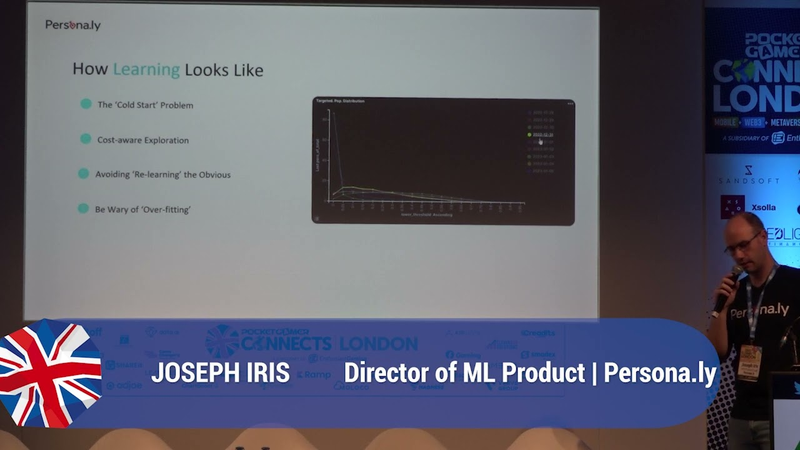
Demystifying Machine Learning for Programmatic UA & Retargeting - Joseph Iris, Persona.ly.
Machine learning in programmatic user acquisition (UA) and retargeting is often misunderstood as a "black box," but it is fundamentally rooted in statistical modeling and data-driven decision-making.
- Machine learning in programmatic UA optimizes bidding and creative selection within a 100 to 300-millisecond window during real-time auctions to maximize ROI.
- Privacy-centric shifts like iOS’s SKAdNetwork require a transition to contextual targeting, utilizing NLP to create app embeddings that identify relationships without granular user-level data.
- Multi-armed and contextual bandits enable real-time creative optimization by dynamically allocating inventory based on specific user attributes.

MobilityWare's Larry Hsieh on LiveOps on a Shoestring Budget
High-level player engagement and retention are achievable for mobile game studios operating with limited resources by adopting a lean, agile approach to LiveOps.
- Lean LiveOps can be achieved by using off-the-shelf tools and flexible backend infrastructure to minimize engineering overhead while maintaining frequent content updates.
- Developers should prioritize skinnable event systems and remote configuration to deploy personalized seasonal challenges and content without requiring large-scale development resources.
- Maximizing retention and lifetime value requires a data-driven approach that integrates player segmentation with rigorous A/B testing to tailor difficulty curves and reward structures.
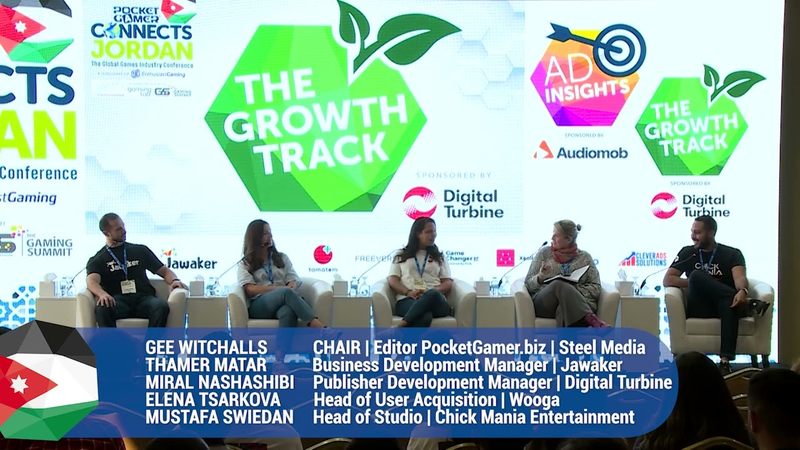
Panel: Growing Strong - Lessons in Levelling Up Your Games Audience & Maintaining a Strong User Base
Achieving sustainable growth in the gaming industry requires a rigorous, scientific approach that integrates marketing strategy into the earliest stages of product development.
- Integrate marketing strategy into the initial ideation phase of product development to ensure product-market fit and validate audience interest before committing significant resources.
- Balance aggressive user acquisition with high-quality retention, as even mature titles reaching five-year milestones rely on consistent live operations and seamless onboarding for long-term viability.
- Avoid misleading advertising practices, as they create false expectations that erode player trust and negatively impact long-term retention metrics.
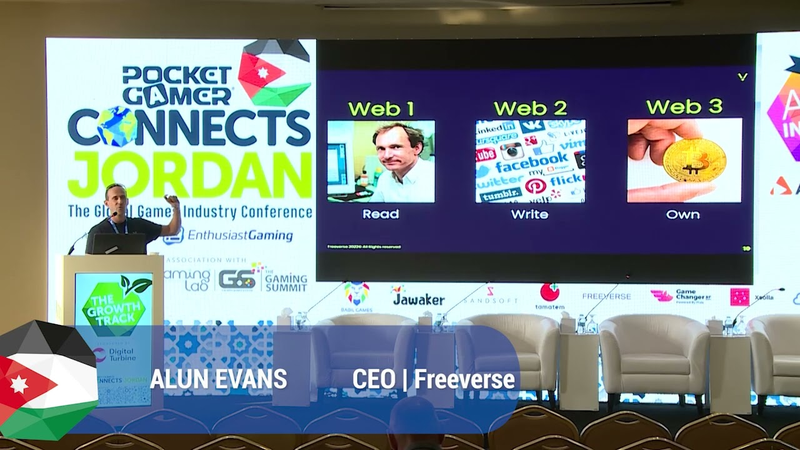
How a Punk Bassist’s Legacy Moves the NFT Conversation to One of Earned Value - Alun Evans
The gaming industry faces a persistent challenge in balancing high development costs with the need for long-term revenue.
- The gaming industry must shift from speculative NFT models toward 'earned value,' where digital asset worth is derived from player engagement and effort rather than artificial scarcity.
- Dynamic NFTs, or 'living assets,' incentivize long-term retention by evolving based on specific in-game actions like training characters or maintaining virtual pets.
- Integrating tokenized user-generated content and social rewards fosters deeper player investment, providing a sustainable alternative to aggressive user acquisition spending.

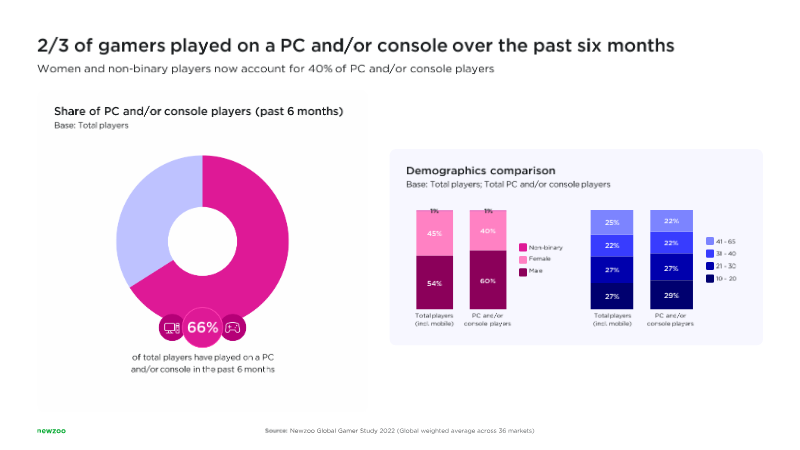
PC & Console Gaming: 2023
The global PC and console gaming market in 2023 is navigating a period of post-pandemic stabilization, marked by a contraction in total playtime as the industry adjusts from the unprecedented surges observed between 2020 and 2022.
- Following a pandemic-era surge, the PC and console market experienced a corrective year in 2022, with console gaming maintaining a 7.8% CAGR from 2015–2022 compared to 3.6% for PC gaming.
- Shooter and Battle Royale titles dominate player engagement, accounting for 37% of all playtime, while Adventure games hold the highest player share at 83%.
- Long-standing franchises dominate monetization, with titles like Fortnite, NBA 2K22, and Apex Legends leading in-game revenue, while Call of Duty: Modern Warfare II/Warzone 2.0 topped premium revenue charts in 2022.


The State of Mobile Gaming in India: 2023
India’s mobile-gaming ecosystem is experiencing rapid expansion, with a projected market value of $8.6 billion by 2027 and more than 600 million active users.
- India’s mobile gaming market is projected to reach a value of $8.6 billion by 2027, supported by a user base of over 600 million active players.
- In-app purchase revenue in the Indian mobile gaming sector is forecasted to reach $284 billion by 2026.
- Retention is critical for profitability, as acquiring new customers is five times more expensive than retaining existing ones.

Mobile App Trends: 2023 Edition
The mobile application market entered a period of significant transition in 2023, navigating a complex landscape defined by economic volatility and evolving privacy regulations.
- The mobile app market reached a record half-trillion dollars in combined advertising and consumer spending in 2023, despite a 2% decline in consumer spending and a cooling of advertising growth to 14%.
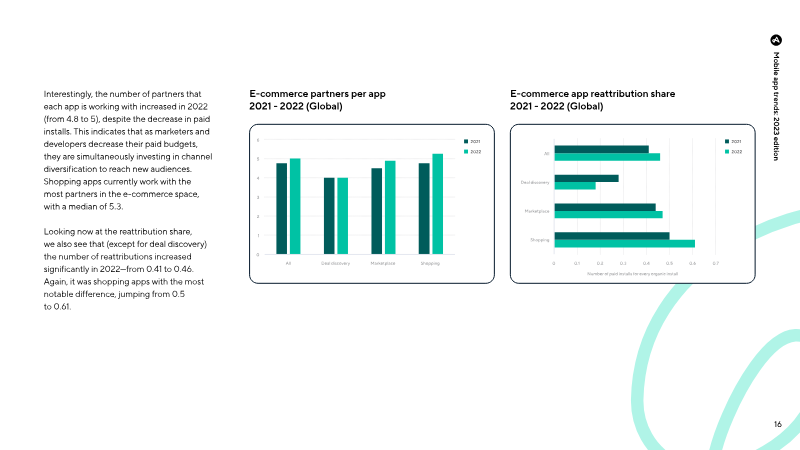
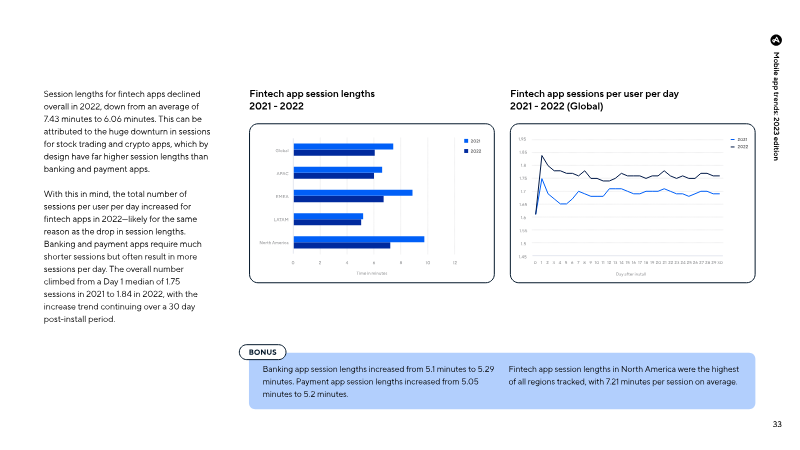
- Fintech in-app revenue surged by over 90% between late 2022 and early 2023, while e-commerce sessions grew by 12%.
- After a difficult 2022 that saw a 12% decline in installs and a 9% drop in consumer spending, the mobile gaming sector showed early 2023 signs of recovery with a 10% increase in installs and an 11% rise in sessions.
Mobile Gaming Loyalty Report 2023
The Mobile Gaming Loyalty Report examines the drivers of player engagement, retention, and spending across the mobile landscape.
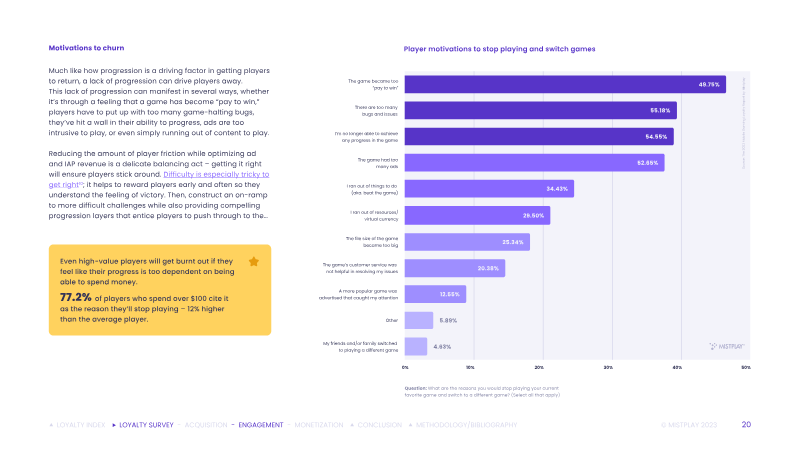
- Progression is the primary driver for both retention and in-app spending, while 'pay-to-win' mechanics and poorly received updates are the leading causes of player churn.
- 53% of mobile spenders concentrate their financial investment on a single title, even though 77% of spenders rotate between two to seven games weekly.
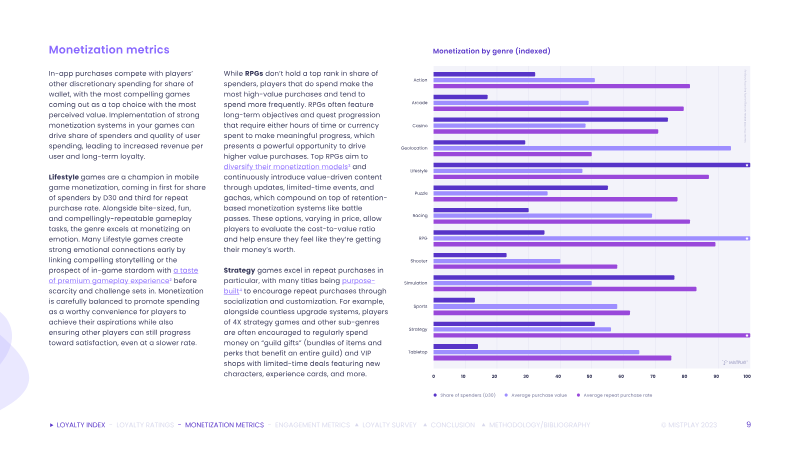
- RPGs are the most loyal genre with a 75/100 Loyalty Index score, driven by deep gameplay loops and compounding monetization systems.

The Economics of Obsession
Modern media and gaming companies increasingly design products to foster consumer obsession, transforming entertainment into a continuous, high-retention engagement loop.
- Modern media and gaming companies intentionally design products to transform entertainment into a lifestyle commitment, ensuring long-term profitability through continuous, high-retention engagement loops.
- The industry utilizes rapid content updates and external media ecosystems—including esports, streaming, and patch notes—to keep users tethered to a franchise even when they are not actively playing.
- The strategy of 'engineered obsession' evolved from early fandom behaviors, such as Star Trek and Star Wars lore analysis, into a formalized corporate sales technique used to maximize market share.
ASO + RETENTION = Game Changer - Sergio Martinez, Agatha Bejan, Phiture
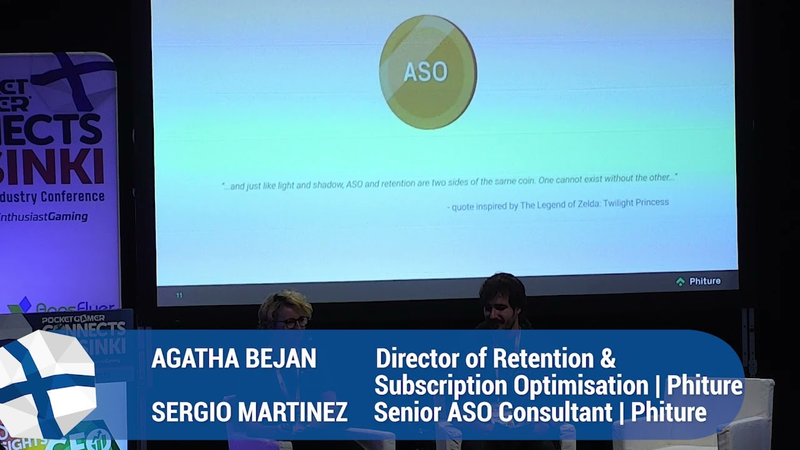
App Store Optimization (ASO) and retention marketing function as interdependent pillars of mobile game success, directly influencing a title's Lifetime Value (LTV).
- ASO and retention marketing must be integrated as interdependent pillars to maximize Lifetime Value (LTV) and signal game quality to platform algorithms.
- ASO success requires a dual-focus strategy: increasing visibility through metadata, localization, and featuring, while simultaneously driving conversion via optimized visual assets like icons and screenshots.
- Retention marketing should be integrated during the pre-production phase of the development lifecycle rather than treated as an afterthought.
Discovery – Conversion – Retention All at Once! - ARUNABH MADHUR, SHAREit
SHAREit operates as a global peer-to-peer file-sharing utility and content platform, positioning itself as a significant, yet often overlooked, player in the mobile user acquisition ecosystem.
- SHAREit operates a global ecosystem with 2.5 billion users across 150 countries, functioning as a 'day zero' utility for app and file transfers without requiring internet connectivity.
- The platform's 'Game Center' hosts 2,500 to 3,000 titles, including APKs and HTML5 games, serving as a primary hub for user discovery and engagement.
- Advertisers can execute full-funnel campaigns—from awareness to performance-based installs—by leveraging device-specific data and usage patterns to create cohorts based on spending potential and interests.
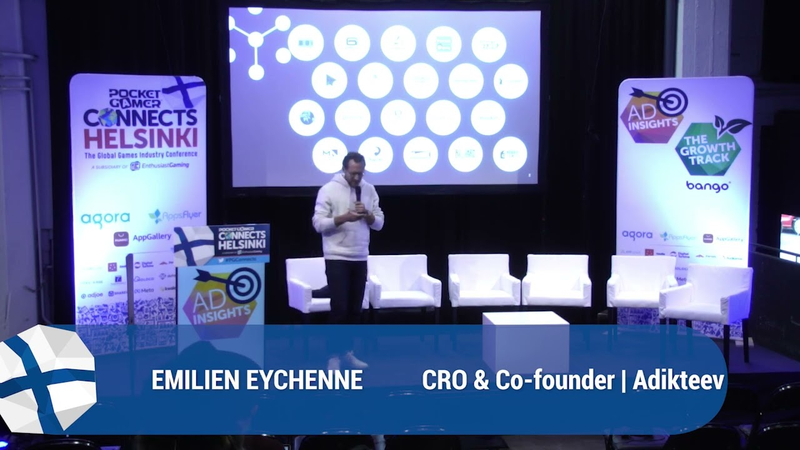
A New Way To Level Up Your Multi platform Strategy - EMILIEN EYCHENNE from Adikteev.
The mobile gaming industry faces significant challenges in user acquisition and monetization following the implementation of App Tracking Transparency (ATT) and increased market competition.
- Publishers are shifting focus toward maximizing the lifetime value of existing players to counter rising user acquisition costs and measurement difficulties following App Tracking Transparency (ATT) implementation.
- Approximately 40% to 60% of revenue remains untapped in many mobile games, representing a significant opportunity to drive repeat transactions among current paying users.
- Publishers are increasingly utilizing predictive modeling and affinity scores to identify potential churners and match them with relevant titles within their own portfolios, moving away from inefficient mediation platforms.