1 free read left. Create a free account for unlimited reading + AI research.
Create free account
How a Punk Bassist’s Legacy Moves the NFT Conversation to One of Earned Value - Alun Evans
Key insights
6 takeaways- 01Transitioning to earned-value models helps stabilize long-tail revenue, addressing the industry's persistent challenge of balancing high development costs with declining player retention.
- 02Integrating tokenized user-generated content and social rewards fosters deeper player investment, providing a sustainable alternative to aggressive user acquisition spending.
- 03Current web3 gaming models often fail due to boom-and-bust cycles caused by a reliance on speculation rather than meaningful gameplay mechanics.
- 04The gaming industry must shift from speculative NFT models toward 'earned value,' where digital asset worth is derived from player engagement and effort rather than artificial scarcity.
- 05Dynamic NFTs, or 'living assets,' incentivize long-term retention by evolving based on specific in-game actions like training characters or maintaining virtual pets.
- 06Layer-two blockchain platforms are effectively mitigating previous technical barriers, such as high transaction costs and scalability issues, to allow for seamless asset integration.
Ask AI about this video
Transcript
[Music] thank you I'd like to welcome to the stage a speaker who you may saw or may have seen already in PGC Helsinki our last conference that we did to talk about the fascinating title of how a punk bassists Legacy moves the nft conversation to one of earned value so let's welcome Alan Evans from free verse [Applause] all right wait till we get the slides up on the screen okay so uh thank you very much everyone
I appreciate your time today um it's middle of the afternoon so we're going to start today's session with a question so I want you to think in your opinion which person has had the most influence on the games industry which one person do you think in your opinion has had the most influence on their games industry think about it still thinking maybe you think it's will right you're a big fan of the Sims and SimCity maybe you've looked out towards the east you played uh some of hideo kojima's games and you're a fan of hideo Kojima maybe you're a tech nerd like I am and you think it's John Carmack could be so hands up in the room how many of you
thought of this gentleman Chris Anderson not a single hand up in the room whose herds of Chris Anderson one person in the room so Chris Anderson is uh was the bass player for a group called a music group called REM and some of you might be thinking hang on a minute the bass player of REM is Mike Mills not Chris Anderson there were in fact two groups called REM that came out of the state of Georgia in the United States of America several decades ago and there could be only one so what they did to decide which group had the rights had the permission to carry on with the
REM name they had a battle of the bands the two bands performed together on stage and unfortunately for our hero Chris Anderson his punk band REM lost and the other band called rem1 and went on to become uh worldwide famous uh American rock group so the punk Industries loss turns out to be the games Industries game because what Chris Anderson went on to do after giving up on his dreams of becoming a music uh a music celebrity where he gave up on his music career and he decided to follow one of his other passions which was economics and what Chris's work
was focused on seen through the lens of the games industry was this problem the problem is is that making games as we know is expensive and so as a result you need a lot of Investments frequently and of course there is a pressure then for the game to be profitable and so the impact of that problem means that when you're making a game there is a large amount of stress and pressure to ensure that you make all as much money as possible after you launch the game and the root cause of this problem is that in traditional games let's say games where you pay up front to buy the game the only real opportunity to make money is when the game is launched in that initial launch window and this is the problem that Chris Anderson was looking at and studying and
so what he was interested in was this idea of monetizing any products not just a game over a long period of time not just in that initial launch window but over a long period of time and so Chris Anderson did a lot of research and published a couple of books and articles around the idea of the long tail so the long tail says that Beyond an initial boom after launching a product or launching a game if you design a game well you can monetize it over a long period of time and thanks to Chris Anderson's work we have well partially thanks to his work we have the free to play game movement which as we all know has been very successful and as is increasingly successful these days and the idea of the free-to-play movement is that we're not just monetizing at the start but we're
monetizing throughout this whole period of the long tail and it's led to in-app purchases adverts as we've just been hearing about in the previous sessions subscriptions and other ways of monetizing beyond that initial purchase and that's had quite a significant success in our industry however it leads to a new problem and that is that any game will start to lose user numbers over time naturally very few of us play games for years and years and years right it's a natural consequence of uh gaming that you tend to lose interest in a game and so the impact of that problem is that the long tail Revenue naturally decreases so if your game hasn't been successful to start off with things are only going to get worse as you lose the opportunity to monetize that long tail and the root cause of
this problem is that your game doesn't have the ways and the mechanics of retaining users of keeping users interested over time the longer a gamer is spending playing the game the more chance you have to monetize that gamer and so to understand the long tail fully what you need to understand is that while it reduces that initial pressure on post-launch sales it increases pressure on perhaps one of the most important metrics that we all know about especially in free-to-play gaming which is player retention and particularly retention in the long term as in Beyond 30 days yeah so many free-to-play games now and in fact non-free to play games many games offer downloadable content and in-app purchases beyond the initial purchase
they focus on retention mechanics different retention mechanics that exist to maintain that player base to keep players interested and keep them playing the game and ultimately paying money right and I've separated these retention mechanics kind of into two different areas um we can call them I guess hard retention mechanics and soft retention mechanics if you like and the hard ones are fairly obvious the first and most important retention mechanic you need to implement is make a great game if your game sucks no one's going to play it for a long time so you need to have a good game uh the second thing you can do is Implement uh cooperative and multiplayer elements to your game yeah so a competitive or cooperative multiplayer modes which engage users as they are not just playing against the game but they're playing against or with other real people and of course you need to have a strong
investment in liveops and updates DLC for your game to maintain fresh content to keep people interested and there are many games that do this very well and we don't have to look further than say Fortnight for an example or World of Warcraft is another one uh for games that Implement these hard mechanics in a very well understood way however there are these soft mechanics as well that we can use to increase our player retention right one is to reward players so when they're carrying out actions in the game we reward them whether it's with um cards or in-game items or soft currency or whatever you like another way is to encourage user generated content that's a huge topic right now in the games industry allowing users to create their own content in the game and share it so adding a personalized element to the game and giving the user more agency and that leads to the third point which
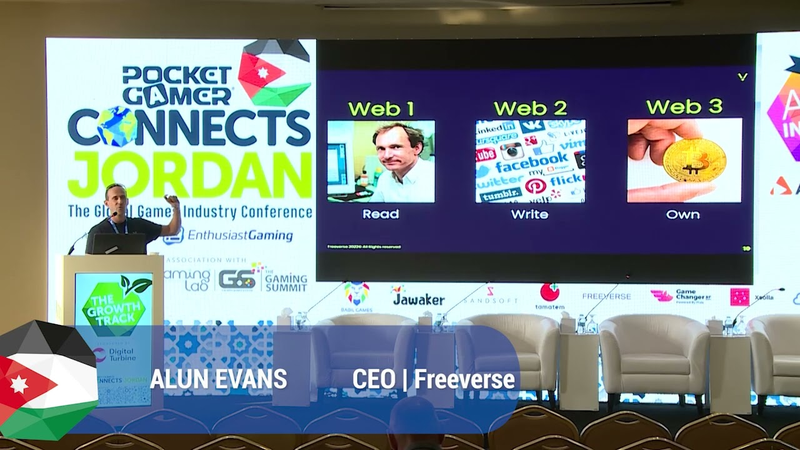
is to build a community if you manage to build a community outside of the game whether it's present in Discord or whether it's present on you know Twitter or Facebook or wherever your community is then you're allowing your users to engage themselves in the game as well and what I want to talk today about more than anything and the reason that I've uh introduced this concept of retention in the long tail is I want to talk about how web 3 Technologies can augment these retention these soft retention mechanics and help increase the retention in the game and therefore help retain users and monetize those users for the game in the future now many of you might have heard of the term web3 but it's worth explaining a little bit where it comes from so web one was back in the day in the 1990s was all about reading consuming content
passively and web one was superseded by web2 where we were allowed allowed where the Technologies were developed that permitted us to contribute to the web yeah so we had blogs and social networks and other elements image sharing sites other elements ways of writing our own content onto the web and so if we want to have one word that describes what web3 is it's ownership it's I own this piece of digital content and therefore I have the right to do whatever I want with it for example I can sell it to somebody else or I can keep it I can loan it I can do whatever I want with it because it's mine and that's a very New Concept on the digital world in the physical worlds I have a phone here it is it's clearly mine I can sell it to you for however many uh dollars or
dinner that I want to offer it for in the digital world the concept of ownership is still quite new but that's what web3 is all about it's all about owning digital content so far in the games industry what that's led to has been essentially games that use ownership and artificial scarcity of ownership as a way as a core game mechanic so you might call these games blockchain games if you want and they generally feature in-app or in-game items um in the form of nfts non-fungible tokens that you own you you can prove that you own them on the blockchain and you can sell them to other people and what traditionally happens here is that you might own a nft in the game it's quite rare it's one of 10 or one of the hundreds and you're waiting for somebody else to come and buy it from you at a price which is set by the
market and the problem with this approach is that that price is set by speculation it's set by people offering you an amount of money for your item based on nothing more than the fact that it's one of ten or one of a thousand and that means that this this model of speculation is only sustained by having more and more players coming into your game if you own a token and uh there's no one there to buy it then what's its value it's kind of worthless right so you have to have a game that has an ever increasing number of players arriving in the bottom of the pyramids uh in order to purchase to provide value to these tokens and as a result you can see that many blockchain games have curves user curves that look a bit like this this comes from axi Infinity which you might have
heard of very successful game uh it had a massive growth of users and now it's dropped down as the number of users has fallen off and the value of the tokens in the game has dropped down as well so that leads us to a final problem right the web 3 problem which is that games that implement this technology if you like this blockchain approach tend towards this boom and bust cycle which is kind of a similar problem to what we had before and so the impact of that is then web3 doesn't really solve anything so why should we bother with it why all the fuss about nft and blockchain at all and the root cause of that in my opinion is because the tokens that you're buying and selling the nfts are these static immutable items you can only use them as Collectibles they have no other value maybe you can use them as part of the
game but they never change you're just collecting them and that means that their value is only going to be based on speculation as to how rare they are so what I'm interested in is can we move that conversation of web3 and digital ownership and games Beyond speculation and one to earned value whereby the value of the tokens is dependent on what the user the gamer actually does with them as opposed to just how rare they are let's see some examples and think of some use cases so for example uh imagine a football game right you have a football manager game a multiplayer game where you're doing the usual things you would do with a football game you set your team your tactics choose the formation of your team choose which players play in which position and so on and so forth and you play games and crucially as you
play the game you can train your players yeah so they get fitter and faster and stronger they score more goals Etc that means that you can turn a three-star player into a six star player by playing the game by spending time playing the game that means the value of that player on the marketplace depends on how well you have played the game if you've played the game well you've turned your player into a superstar and it means you can sell that player at a price determined by how well you've done and not just how rare that player is so this is an example of providing earned value in the game because you've earned it because you've put the work in as opposed to simply waiting for the market uh speculation to assign a price to your token you can also go the other way I don't
know if you remember the Tamagotchis out of Japan 20 years ago they had an amazing retention mechanic these small digital toys digital Pets the unless you went back and gave them virtual food and virtual medicine and virtual attention every day they would die what an amazing retention mechanic and you can do the same Within game assets as well imagine a football player that unless you train that player every day they get fat right so their value obviously their impact in the game goes down and their value on the marketplace also goes down we actually did this in a game called goal Revolution a football manager game which is now being rebranded uh with the with the world famous football IP um it was soft launch in a single country um and you can see the monthly active users in this graph here and as you expect with very little marketing and user
acquisition there was an initial rise of users and as you might expect as we saw in the previous graph the users start going down but look at what happens around day 30 35. suddenly that curve of users flattens off and then begins to go up again this is with no user acquisition no advertising spends no efforts to really gain more users this game had a day 30 retention value of over 40 which is practically unheard of and that's because the users of the game were incentivized to come back not only because it was a great fun football manager game but because they didn't want to lose the value of the assets they were involved in the trading it was another mechanic of the game that drove the retention and again it's a great game which has a web 3 component as opposed to being a blockchain game in fact in this case The Gamers the users didn't even know that
their players were nfts right every single one of their players was an nft and the gamer did not know anything about that they didn't care all they knew is they could sell and buy and sell and trade those players with other users of the game for real money so another retention mechanic as I mentioned was user generated content right the permission or you're giving users permission to customize their own material and then use it in the game why not then allow those users to sell those items to other people as well yeah you're increasing that retention by giving the players the agency the power to create their own custom content and sell it I am proudly from Wales the country in the UK which has the best flag in the whole world if you haven't seen the Welsh dragon on the Welsh flag then go and look it up if I were creating some user generated content in a car game for example I would paint my car with the Welsh flag
right someone else from Wales might find that very valuable and might give me money for the effort that I've made in painting that flag someone from England maybe nesso right Wales and England traditionally uh friends and enemies at the same time so giving users the power to customize their content why not allow them to sell that content as well driving retention in the game another thing we talked about for driving retention is community building and social media engagement so um one thing we do at free verse in another half of our company really is is when we deal with different brands is we allow web 2 methods of Engagement such as you know retweeting making something a trending topic sharing on Instagram posting on discords WE allow that activity we link that activity to a web 3 token almost a rewards token for that brand
so you allow users different access different Rewards for their for their nft based on how active they've been in social media uh and in social media participation uh over over the previous period of time so let's imagine you start off with a level one nft it's literally worthless when you get to level five you get VIP access to a conference when you get to level 10 you get to meet a celebrity or get a discount or get some free uh clothes or free material whatever yeah you can upgrade that nft by engaging with that brand on social media so the brand gets an increased exposure through your through the users uh social media activity and the user gets a rewards which they can then sell for other people as well so again here we're seeing web 3 solving
problems not just existing because it should exist but it's solving problems not only are we rewarding players for the time by allowing nfts to level up right not only are we encouraging user-generative content which we can then tokenize and sell on secondary markets but we're also building communities by linking web 2 engagement to web3 rewards and so this is a benefit these are concrete benefits that web3 technology can bring to your game not only in increased retention but an increased monetization but also an increasing player acquisition as well so what I want to do is is change that conversation around web3 and nfts away from speculation and more to what problems can this technology actually solve in the games industry today and if we do that then the opportunities for this long tail suddenly move in this direction yeah suddenly we can increase that
monetization increase that retention with web 3. and we're flipping this graph around on itself we're acknowledging yes there is a traditional way of monetizing a game at the start we're acknowledging that that monetization will drop and we're using web 3 methods and techniques to increase that monetization gradually over time or at least stabilize it so what's stopping us from doing this there are two things the first is that um nfts if you know anything about blockchain nfts it's quite hard to do them at scale and the second is as I mentioned before is that current nfts are Only Collectibles let's treat both of these in time in turn so the first is scalability so if you're interested in the field you may have heard of cryptokitties it was the first nft game came out about five years ago on the ethereum blockchain and it had ten thousand daily active users
and it crashed the blockchain with 10 000 daily active users uh skipped forward five years to another blockchain game that came out on polygon which is an acceleration layer for ethereum it should go faster and uh with uh 500 000 weekly active users slightly more respectable but still not huge it also crashed polygon now you may think that 500 000 users a lot in the mainstream games industry 500 000 users is peanuts it's a soft launch for a major Studio it's not even that yeah so we have this problem whereby you cannot create enough nfts without crashing the underlying technology the blockchain that goes underneath it you need a way of accelerating those nfts in order to make them Reach the mainstream the second as I mentioned is the nfts right now are static they are just
Collectibles now that's fine because people do collect things in the real world people collect stamps trading cards my colleague Alex collects guitars why not right people like collecting things but if you look at the size of the global economy the collectors of the economy is only a very small fraction of it in the real world and what what I think we can do is extend this idea of the digital economy away from just Collectibles as well if we have nfts that can evolve and change based on how they are used we are changing this passive activity of collecting nfts into an active engagement yeah allowing those nfts to evolve and change based on what the user does at three of us we call this concept the living assets nft yeah nfts that can change and evolve and
have a life and if we do that then we change that conversation of nfts we move it away from this very unpopular conversation that exists in the games industry right now if you mention nfts right now people tend to go oh they either like it or they don't and many of them many of them don't like it because they are associated with speculation and scarcity and if we move that conversation towards earned value then the price that people are going to pay for nfts depends on the user's actions and the engagement and that makes it a much more active and clearly an engaging process and we call this at freebus Living assets and crucially what we think this does is that it solves problems if we look into the past the move from the pay up front gaming model to the free-to-play gaming model took time but ultimately it opens up a completely new Marketplace a completely
new way of creating and playing and monetizing games and that free verse we think a similar thing is going to happen in the blockchain space we're going to move away from nft 1.0 if you like which is all driven by scarcity and hype and boom and bust and move towards this concept of dynamic nfts living assets where you get more attention more engagement and more monetization over that long tail and if we do this then we can really uh pay homage if you like to Chris Anderson's initial vision of how to monetize a product over a long term rather than just over that initial launch period it's kind of what we do at free verse we are a layer two we're a platform that allows game developers to integrate and add and convert I guess any in-game item into an nft without necessarily even the player knowing it all our nfts are dynamic they are evolving they can change according to the rules that you
set that we are scalable you can create thousands tens of thousands hundreds of thousands millions of nfts on our platform we swallow all the gas costs there are no problems with scaling you can charge a recurring Revenue every time your nft is traded or those nfts are traded in between users it can be 2 5 10 you can go full apple and charge 30 if you want because we're a layer two it means we're very eco-friendly we use a fraction of the energy of a regular nft minting service and you can trade all the entities on our platform in pretty much any cryptocurrency and also pretty much any major fiat currency now as well my name's alien Evans that's what we do at freebus if you'd like to contact me or find me then I'm here at our booth and uh or feel free to send me an email or collect me in LinkedIn thank you for your time thank you [Applause]
[Music] [Music]
Summary
The gaming industry faces a persistent challenge in balancing high development costs with the need for long-term revenue. While the transition from upfront purchases to free-to-play models successfully extended monetization through the "long tail," these games often struggle with declining player retention over time. Traditional web3 gaming attempts to address this through digital ownership and NFTs, but these efforts have largely relied on artificial scarcity and speculation, leading to volatile boom-and-bust cycles that fail to provide sustainable value or meaningful gameplay.
To move beyond speculative models, the industry should shift toward "earned value," where the worth of a digital asset is tied directly to player engagement and effort. By implementing dynamic NFTs—or "living assets"—developers can create items that evolve based on in-game actions, such as training a character or maintaining a virtual pet. This approach transforms static collectibles into active gameplay mechanics that incentivize retention. Case studies demonstrate that when players are rewarded for their time and agency, retention rates can remain high even without aggressive user acquisition spending.
Furthermore, web3 technology can augment existing retention strategies by tokenizing user-generated content and social engagement. By allowing players to customize and trade assets or earn rewards for community participation, developers can foster deeper investment in the game ecosystem. Technical barriers, such as blockchain scalability and high transaction costs, are being addressed by layer-two platforms that allow for seamless, eco-friendly integration of these assets. Ultimately, by focusing on utility and earned value rather than hype, developers can leverage web3 to stabilize long-tail revenue and create more engaging, sustainable gaming experiences.