Player Demographics reports and market data
Documents


Gamer Generations Report: How Different Generations Engage with Games 2021
Gaming has evolved into a primary form of entertainment that transcends age groups, though engagement patterns vary significantly by generation.
- Gaming has become a primary entertainment medium, with Gen Z and Millennials dedicating approximately 25% of their total leisure time to it.
- Engagement depth is age-dependent: 81% of Gen Z identify as gamers, compared to 42% of Baby Boomers, with younger cohorts treating games as social hubs rather than just casual pastimes.
- The metaverse is gaining traction, as 70% of Gen Z gamers report an intent to use game worlds for non-gaming activities like socializing and attending events.


Diversity and Inclusion in Gaming: Insights and Opportunities 2021
This analysis examines the state of representation and accessibility within the United States gaming market, challenging the misconception that the gaming audience is primarily composed of young, white males.
- 47% of U.S. gamers avoid titles they perceive as not designed for them, indicating that inclusive character representation is a critical factor for market reach.
- Over half of the gaming audience considers the presence of diverse characters important, with particularly high demand for representation from LGBTQIA+ players and people with disabilities.
- Socioeconomic barriers significantly influence platform choice, as Black and Hispanic/Latinx players are more likely to utilize standard consoles or laptops and subscription services like Xbox Game Pass rather than high-end desktops.



The Gaming Playbook: Everything You Need to Know About the Gaming Audience
Gaming has evolved into a near-universal activity, with 86% of internet users across 15 global markets engaging in play as of 2020.
- As of 2020, 86% of internet users across 15 global markets engage in gaming, with mobile platforms driving significant demographic expansion among women, families, and adults aged 55 to 64.
- Revenue models have shifted toward digital-first ecosystems, where in-game microtransactions and downloadable content serve as the primary financial engines, particularly among high-spending Gen Z and millennial male players.
- Esports followers represent a highly receptive audience for advertising, with nearly 50% viewing brand sponsorships as a natural fit and 40% actively supporting brands that invest in their favorite teams.
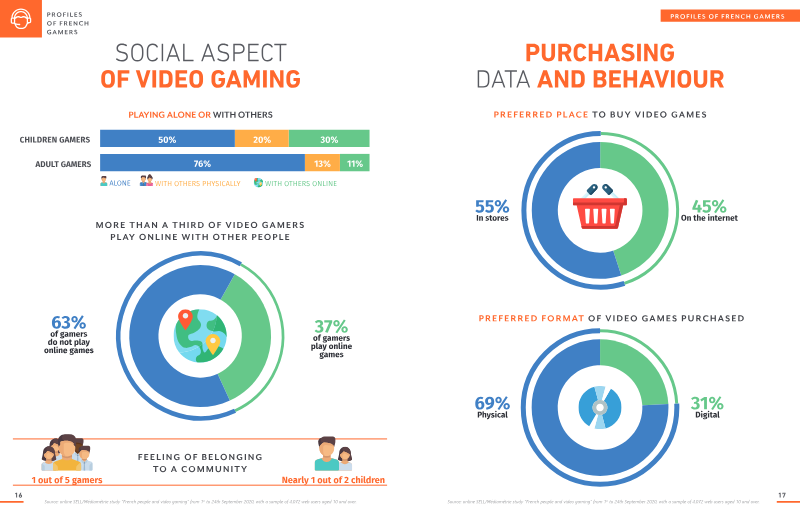

Essential Video Game News: French People and Video Gaming (November 2020)
Video gaming has established itself as a cornerstone of French culture, with 71 percent of the population engaging with the medium as of late 2020.
- As of November 2020, 71 percent of the French population engages with video games, establishing the medium as a cornerstone of national culture.
- Parental awareness of digital safety is high, with 88 percent of parents familiar with parental control tools and a majority actively using the PEGI age-rating system.
- During the COVID-19 pandemic, over 50 percent of French players reported that gaming served as a vital tool for strengthening interpersonal relationships and providing psychological escapism.

How Games Help People with Disabilities Featuring Hawken Miller | Game Dev Unchained Episode 238
Video games function as a critical medium for social connection and competitive engagement, particularly for individuals with disabilities.
- True accessibility in gaming requires integrating people with disabilities directly into development teams to ensure features are core to the design process rather than treated as an afterthought.
- Developers can effectively dismantle physical barriers to entry by prioritizing adaptive hardware and fully remappable control schemes.
- The industry's shift toward aggressive live-service monetization and casino-style engagement loops risks fostering player addiction and contributing to developer burnout.
Video Gaming in Lockdown: The Impact of Covid-19 on Video Game Play Behaviours and Attitudes
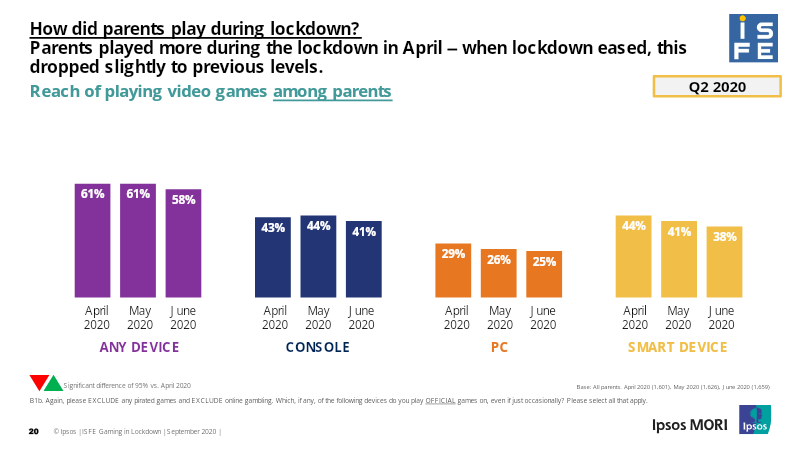
The COVID-19 pandemic served as a significant catalyst for video game engagement across five major European markets during the second quarter of 2020.
- During Q2 2020, average weekly playtime across five major European markets increased by 1.5 hours as individuals used gaming to cope with social distancing.
- Nearly 20% of players reported that video games served as essential support for mental health, helping to mitigate anxiety and isolation during the lockdown.
- Increased engagement was primarily driven by social and psychological needs rather than transactional ones, as the surge in playtime did not lead to a proportional rise in spending on in-game extras.

Anime IP in Games | Crunchyroll's Plans for Gaming
The anime-based gaming market presents a significant opportunity for expansion in Western territories, though it faces distinct challenges regarding audience expectations and localization strategies.
- Western expansion for anime-based games requires moving beyond brand recognition to provide deep game mechanics, robust end-game content, and a high cadence of live operations.
- Japanese publishers frequently struggle in Western markets by treating these regions as an afterthought rather than tailoring localization and strategic focus to local expectations.
- Role-playing games (RPGs) are the most effective genre for the Western anime audience, as they better leverage narrative depth and character-driven experiences compared to casual genres.

Using Accuracy & Realism to Attract New Gaming Audiences PG Connects Digital #2
Integrating scientific accuracy and historical realism into game design serves as a potent strategy for expanding reach beyond traditional gaming demographics.
- Integrating scientific accuracy and historical realism into game design serves as a strategic alternative to expensive licensed intellectual property, helping to differentiate titles from generic fantasy tropes.
- Authentic data sources, such as NASA-based planetary mapping or verified historical contexts, provide a foundation for game mechanics that increases player immersion and gravitas.
- Realism should be prioritized as a gameplay mechanic rather than a simulation, ensuring that authentic data enhances narrative depth and challenge rather than becoming tedious edutainment.
The Explosion of Adult Gaming PG Connects Digital #2
The adult gaming industry represents a significant, often overlooked segment of the broader digital entertainment market.
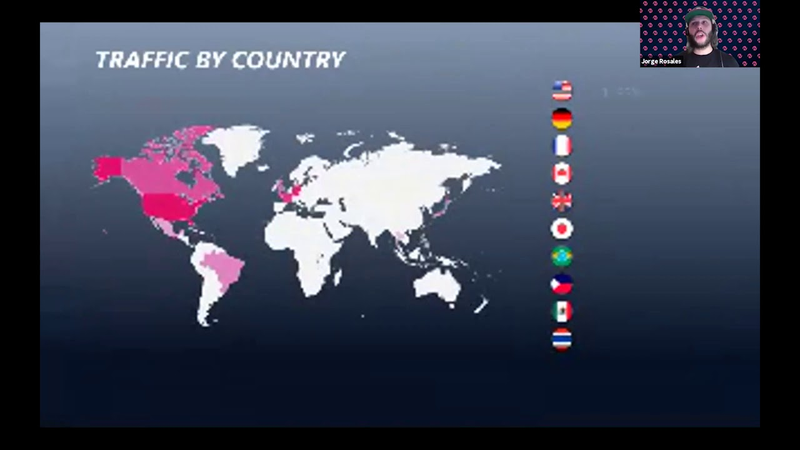
- Nutaku has scaled its adult-focused gaming platform to 50 million registered players as of 2019, maintaining a strong market presence in the United States and Europe.
- The platform serves as an alternative to mainstream storefronts like Steam and Google Play, specifically addressing the discoverability issues faced by independent developers in oversaturated markets where success rates are often below one percent.
- The business model integrates adult content into established, addictive gameplay loops—such as casual RPGs and clickers—to drive higher retention and monetization.

Play Like a Girl: Key Ways to Engage Asia's Growing Female Gaming Audience
The female gaming demographic in Asia represents a primary catalyst for regional market growth, expanding at a significantly faster rate than the male audience.
- Female gamers in Asia grew to 38% of the 1.33 billion total regional gaming population by 2019, up from 32% in 2017.
- Mobile is the primary platform for this demographic, with 95% of female gamers in Asia playing on mobile devices.
- Female gamers contributed 35% of mobile gaming revenue in 2019, with projections estimating an increase to 39% in 2020.

Digital Media for Children - Keeping the Next Generation of Gamers Safe | PGC Digital #1
The regulatory landscape for children’s digital safety is currently defined by the Children’s Online Privacy Protection Act (COPPA) in the United States, which mandates stringent requirements for data collection, parental consent, and content classification.
- Developers must conduct a case-by-case analysis to determine if content is child-directed under COPPA, as this classification legally mandates the disabling of behavioral tracking and personalized advertising.
- The shift toward shared liability between platforms and creators has caused a 50 percent average revenue decline for children’s channels on platforms like YouTube.
- App stores have restricted third-party software development kits, forcing developers to abandon standard analytics and advertising solutions that rely on user tracking.

BITKRAFT Summit LA 2020 | Jeff Chau on The Promise Of Mobile Esports
Mobile esports has ascended to a position of global dominance, currently generating more revenue than PC and console gaming combined.
- Mobile esports is a primary driver of global gaming growth, contributing significantly to a $14 billion market that saw a 16% increase in value, with titles like Free Fire and PUBG Mobile ranking as the most downloaded games globally.
- Mobile esports titles exhibit exceptionally high fan engagement, with top players achieving engagement rates of up to 22% on social platforms, significantly outperforming the 10-15% average seen in traditional PC and console esports.
- Regional dominance is highly localized; for example, Mobile Legends in Indonesia recently hit 476,000 concurrent viewers, rivaling the global viewership of the League of Legends European Championship.