1 free read left. Create a free account for unlimited reading + AI research.
Create free accountReport Video Games Europe
1 free read left. Create a free account for unlimited reading + AI research.
Create free accountReportVideo Games Europe
Individuals used gaming to cope with social distancing across five major European markets. This period saw a significant catalyst for video game engagement.
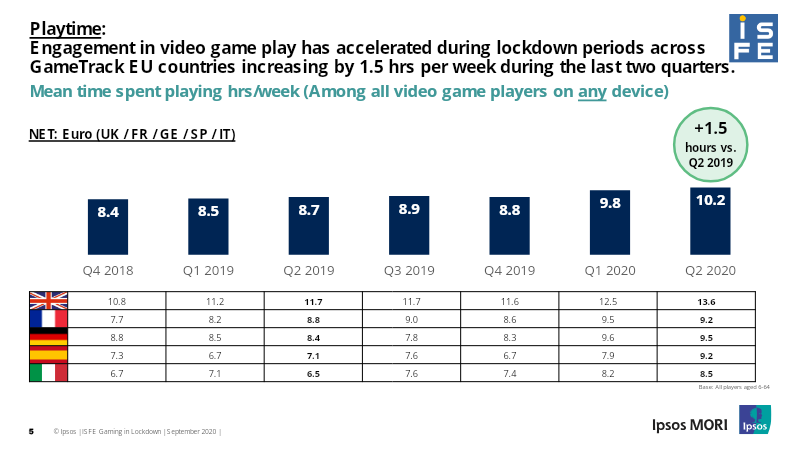
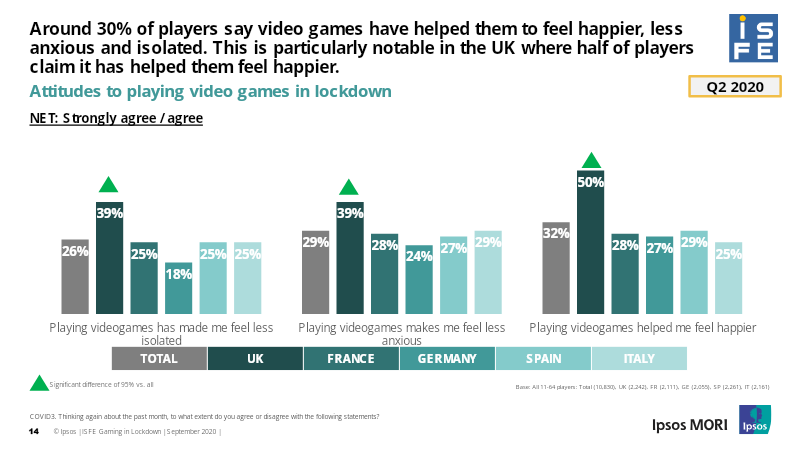
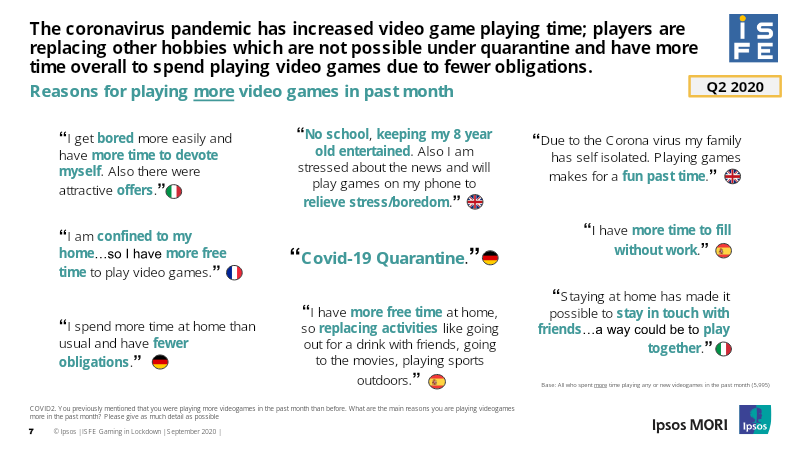
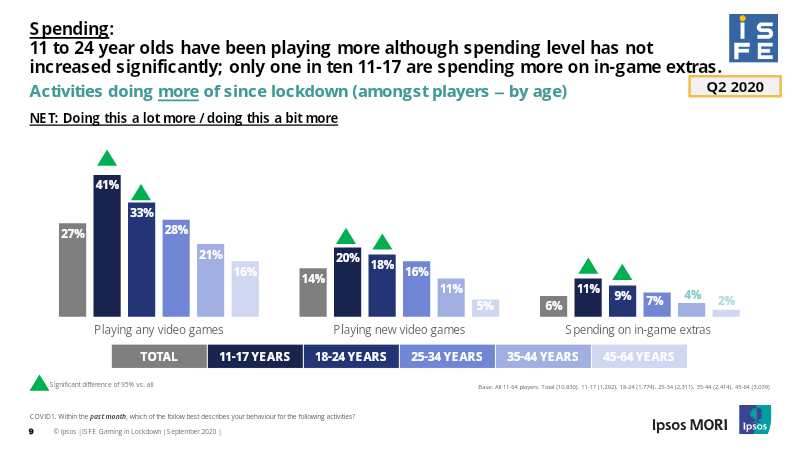
The COVID-19 pandemic served as a significant catalyst for video game engagement across five major European markets during the second quarter of 2020. By analyzing data from 3,000 nationally representative individuals aged 11 to 64, it is evident that the lockdown period fundamentally altered the role of gaming in daily life. Average weekly playtime increased by 1.5 hours as individuals turned to consoles and smart devices to navigate the constraints of social distancing. This surge in activity was driven by a widespread need for digital interaction, with nearly one in five players reporting that gaming provided essential support for their mental health and helped mitigate feelings of isolation and anxiety.
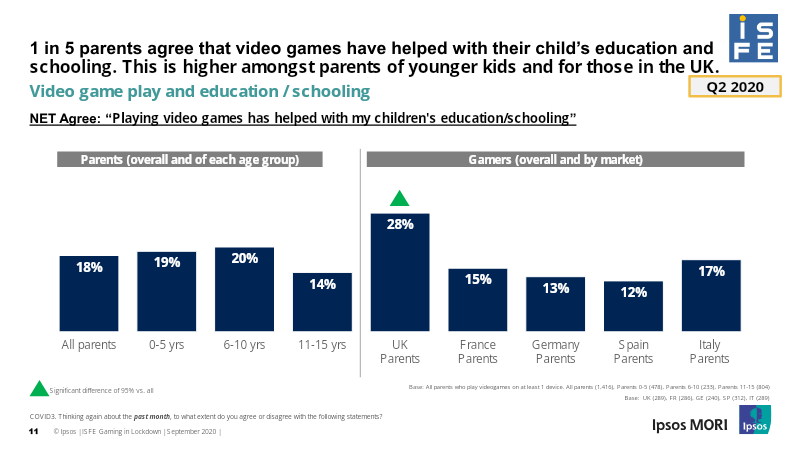
Beyond individual play, the pandemic fostered a notable shift in domestic dynamics, particularly regarding parental attitudes. Parents increasingly embraced video games not merely as entertainment, but as legitimate educational tools and vehicles for family bonding. This trend was especially prominent in the United Kingdom, where institutional support and the rise of multiplayer gaming environments facilitated stronger social connections. Despite the substantial growth in reach and time spent, this heightened engagement did not result in a proportional increase in consumer spending on in-game extras, suggesting that the primary value derived from gaming during this period was social and psychological rather than transactional.
Ultimately, the findings demonstrate that video games functioned as a critical infrastructure for social cohesion during the lockdown. The consistent reach across diverse demographics highlights a broader normalization of gaming as a primary medium for maintaining well-being. While the period was marked by a clear expansion in adoption and usage, the data underscores a complex relationship between increased digital participation and the specific motivations driving players during a global health crisis.
Video Games Europe · 2026
European Games Developer Federation · 2026

Video Games Europe · 2026

Video Games Europe · 2026

Video Games Europe · 2026

Video Games Europe · 2026

Video Games Europe · 2026
Video Games Europe · 2025
Video Games Europe · 2025
Video Games Europe · 2025
Video Games Europe · 2025
Video Games Europe · 2025
Anzu · 2026