Player Behavior reports and market data
Documents
Tutorials 101 - How to Design a Good Game Tutorial - Extra Credits
Effective game design requires integrating tutorials into the core development process rather than treating them as an afterthought.
- Integrate tutorials into the core development process from the start rather than treating them as an afterthought to ensure they remain seamless and invisible to the player.
- Avoid front-loading information, which overwhelms players and hinders retention; instead, introduce mechanics in context-aware, digestible chunks only when they become relevant to gameplay.
- Prioritize interactive learning over text-heavy explanations, as text disrupts flow and is frequently ignored by the players who need it most.

Achievements - Creating a Meaningful Meta-Game - Extra Credits
Achievements serve as a critical meta-game layer that can either enhance or detract from the player experience depending on their design philosophy.
- The primary value of an achievement system is to enrich the core gameplay experience rather than serving as a substitute for high-quality design.
- Inspiring achievements are the most effective category because they challenge players to engage with mechanics in novel ways, such as through pacifist runs or unconventional playstyles.
- Unavoidable achievements, which trigger automatically through standard progression, are often criticized as lazy design that functions as a manipulative Skinner box rather than a meaningful reward.
Playing Like a Designer - I: Examine Your Experiences - Extra Credits
Effective game design requires a transition from passive consumption to active, analytical observation.
- Designers must cultivate a dual-layered mindset that allows them to experience a game while simultaneously deconstructing its mechanics, emotional triggers, and UI conventions.
- Analytical skills should be practiced outside of gaming by observing visceral, non-interactive experiences like roller coasters or concerts to identify the specific environmental factors that trigger emotional shifts.
- Observing how other people react to the same stimuli provides critical data on how different players engage with and process game mechanics.
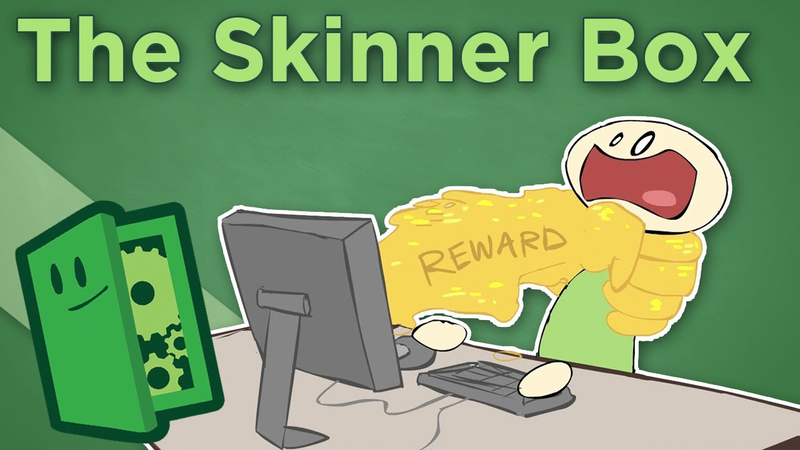
The Skinner Box - How Games Condition People to Play More - Extra Credits
The application of B.F. Skinner’s operant conditioning within game design serves as a mechanism to artificially extend player engagement, often at the expense of genuine quality.
- Game developers use variable reward schedules—unpredictable intervals of points, loot, or social validation—to condition players into repetitive, compulsive behavior that mimics gambling.
- These operant conditioning techniques are frequently used as a design crutch to artificially extend engagement and mask uninspired or hollow gameplay.
- Secondary reinforcers like digital points do not trigger biological satiation, allowing developers to sustain player activity long after the novelty of the game has faded.

"Gamer" - What's in a Name? - Extra Credits
The term gamer serves as a unique, often problematic label that distinguishes video game enthusiasts from the general population in a way not seen with other media like literature or film.
- The 'gamer' label functions as a problematic binary distinction that separates enthusiasts from the general population, unlike labels for film or literature consumers.
- Persistent negative stereotypes—including antisocial behavior, immaturity, and exclusionary gatekeeping—hinder the medium's cultural legitimacy and mainstream acceptance.
- The stigma surrounding the term is reinforced by both external societal neophobia and an internal, insular community culture that often promotes defensive posturing.
European Online Game Survey 2012
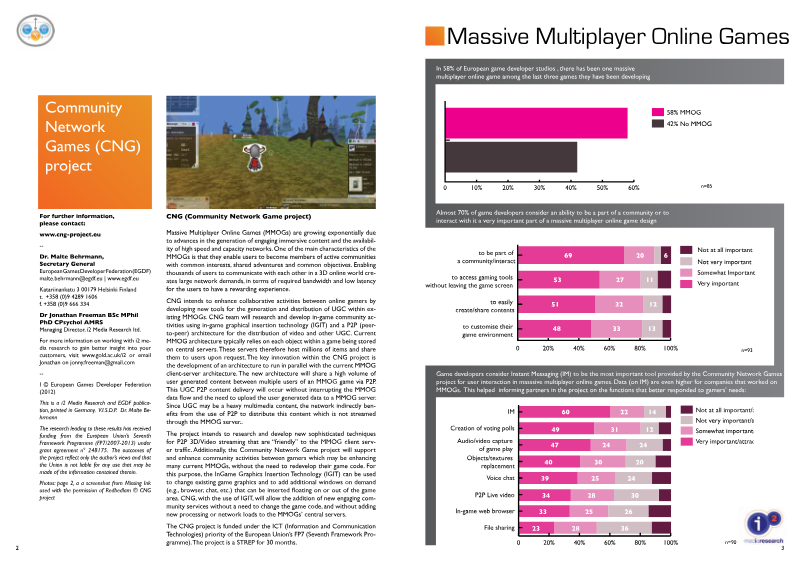
The European Online Game Survey 2012 provides a comprehensive analysis of the European game development landscape, focusing on industry trends, technical infrastructure, and gamer behavior.
- 58% of surveyed European studios have worked on a Massive Multiplayer Online Game (MMOG) within their three most recent projects, signaling a strong industry focus on the genre.
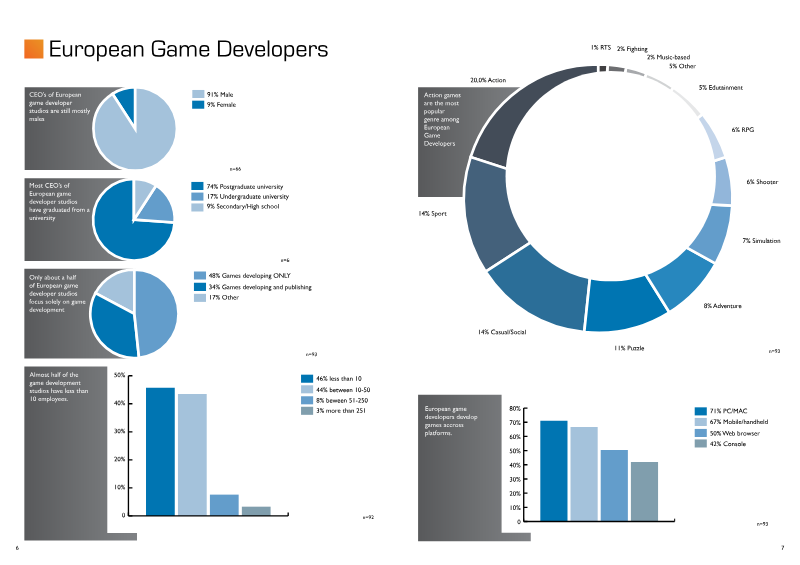
- Nearly 50% of European game studios are small-to-medium enterprises employing fewer than 10 people.
- Developers are increasingly adopting peer-to-peer architectures and in-game graphical insertion technology to integrate social features without the need for expensive central server infrastructure or extensive code modifications.
Observatorio de Piratería y Hábitos de Consumo de Contenidos Digitales: Primer Semestre de 2011
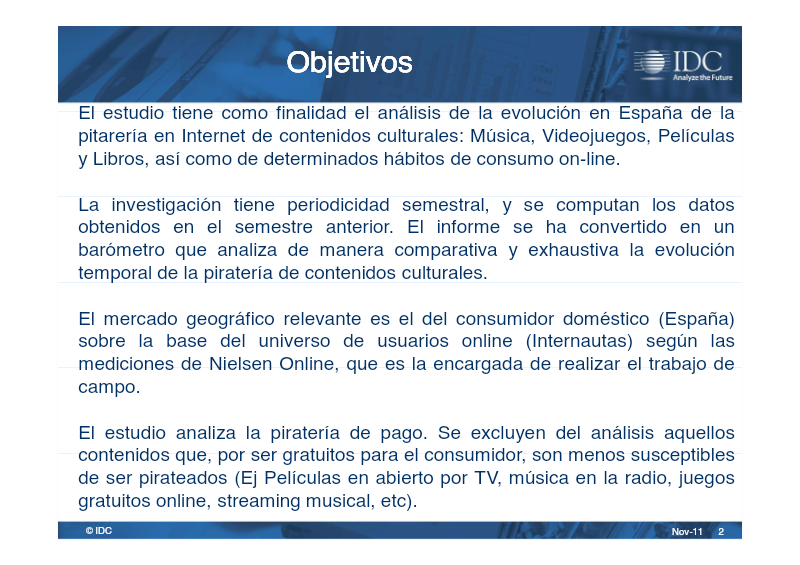
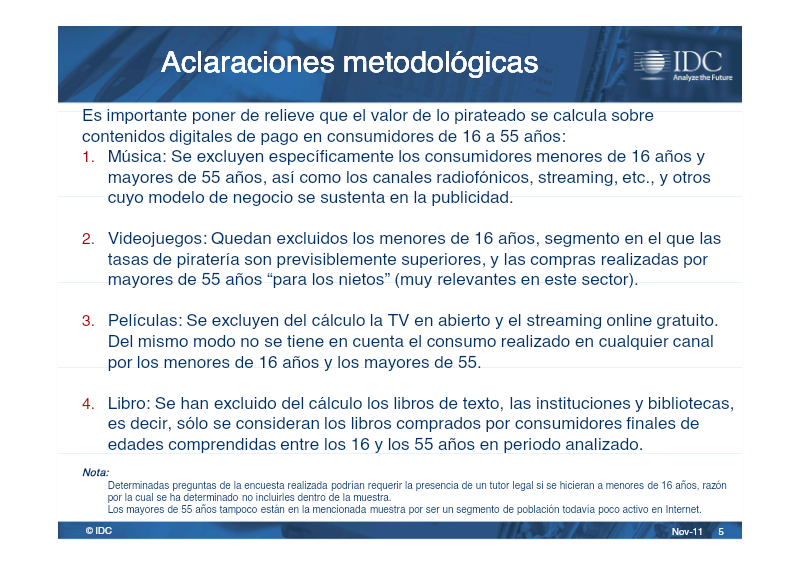
The study evaluates the evolution of online piracy of paid cultural digital content in Spain, focusing on music, video games, films and books during the first half of 2011 and comparing the results with the same period in 2010.
- In the first half of 2011, the value of pirated digital content in Spain reached €5.229 billion, which is nearly four times the size of the €1.538 billion legal market.
- The weighted average piracy rate for digital content in Spain rose to 77.3% during the first half of 2011, representing a 0.4% year-on-year increase.
- Music piracy accounted for the largest share of losses at €2.746 billion, followed by films at €1.402 billion, books at €0.793 billion, and video games at €0.288 billion.
El Videojugador Español: Perfil, Hábitos e Inquietudes de Nuestros Gamers
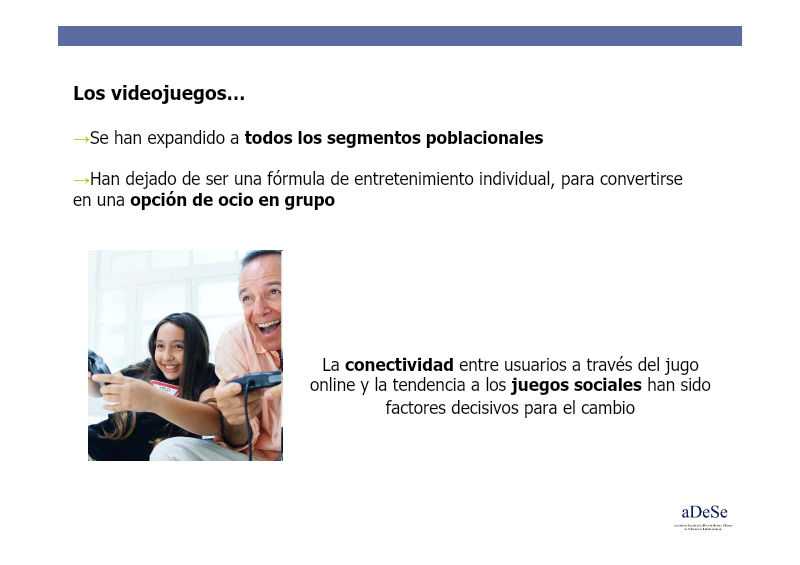
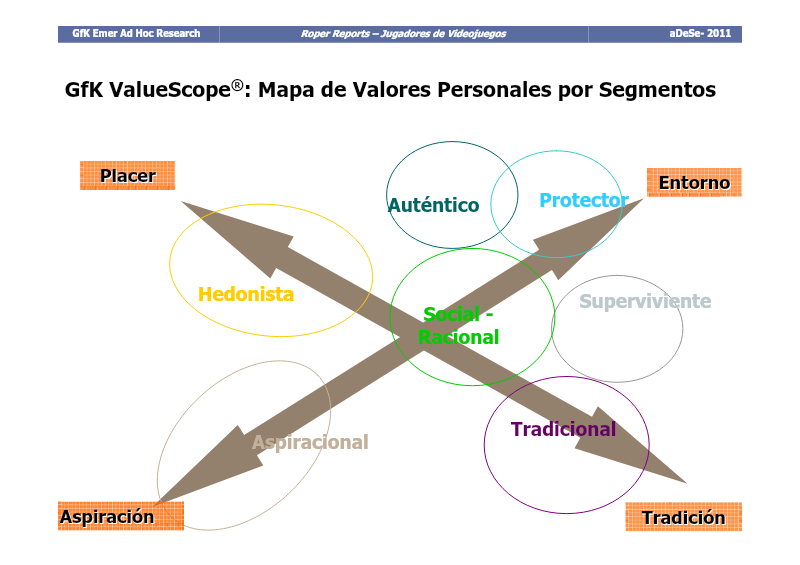
The study commissioned by the Spanish Association of Distributors and Publishers of Entertainment Software aims to map the profile, habits and concerns of Spanish video-game players as of 2011, positioning Spain within the broader European market.
- Spain is the fourth-largest video game market in Europe, generating over €1.245 billion in sales during 2010.
- Gaming penetration among Spanish adults stands at 24%, with the 7–34 age demographic representing 45.3% of the population.
- The typical Spanish gamer is 32 years old, with women comprising 40% of the player base aged 15 and older.

Observatorio de Piratería y Hábitos de Consumo de Contenidos Digitales: España
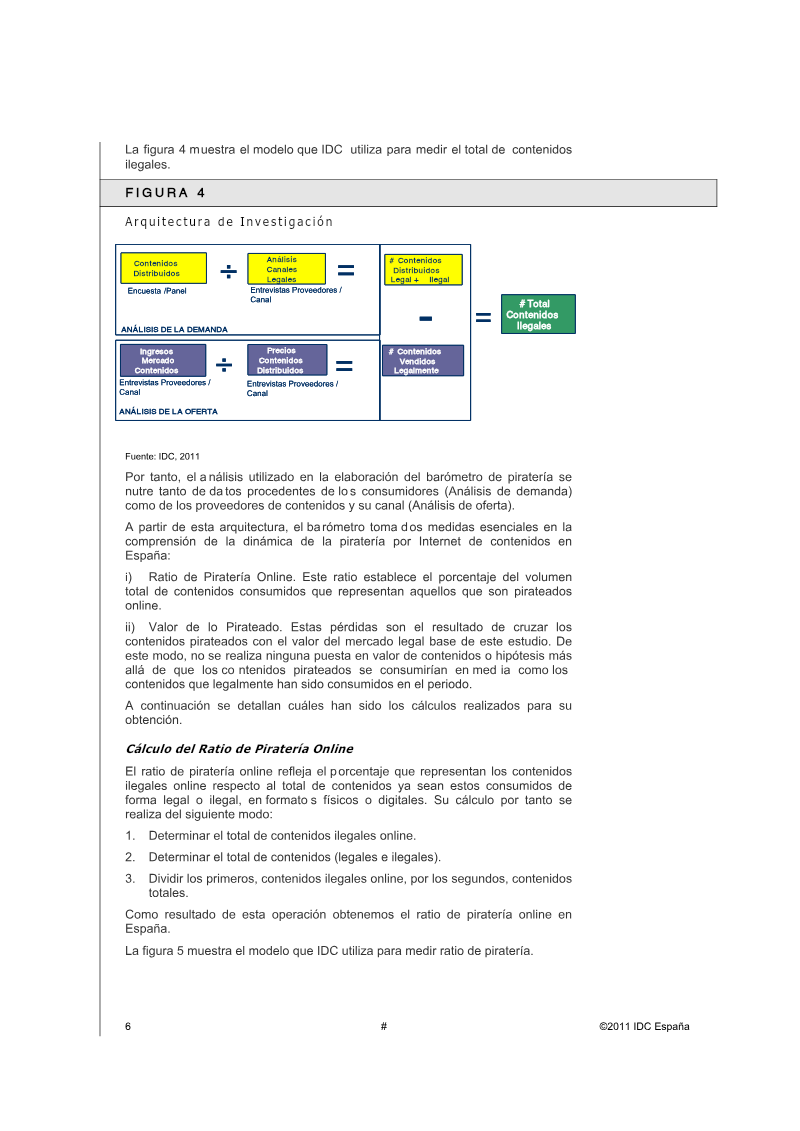
The study quantifies the scale of digital-content piracy in Spain during the first half of 2011 and demonstrates that illicit consumption far exceeds legitimate market activity.
- In the first half of 2011, digital piracy in Spain reached a total value of €5.23 billion, which is nearly four times the €1.54 billion generated by legitimate market sales.
- Music piracy is the most severe sector, with a 98.2% piracy rate accounting for €2.75 billion in lost potential revenue.
- Film piracy accounts for 73.9% of the market, representing a value of €1.40 billion in illicit consumption.
¿Cómo Se Proyecta el Videojuego del Futuro?: España
The study commissioned by ADESE explores how video games are expected to evolve, focusing on technological, social and market dynamics and projecting scenarios up to 2025.
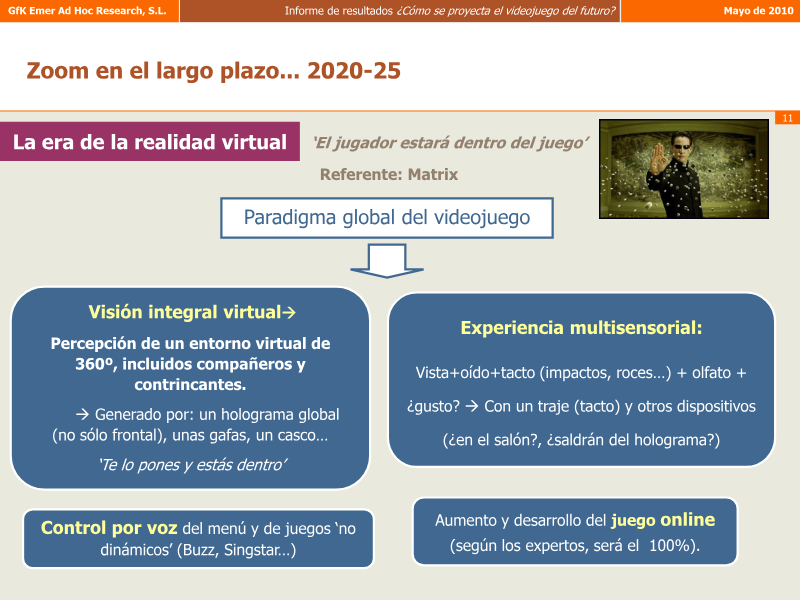
- Industry experts project that 100% of games will transition to online-only ecosystems by 2025, driven by the need for anti-piracy measures, improved matchmaking, and ubiquitous broadband.
- Technological evolution through 2025 will shift from cloud-based distribution and motion-sensing controls toward immersive virtual reality, multisensory holographic interfaces, and voice-controlled navigation.
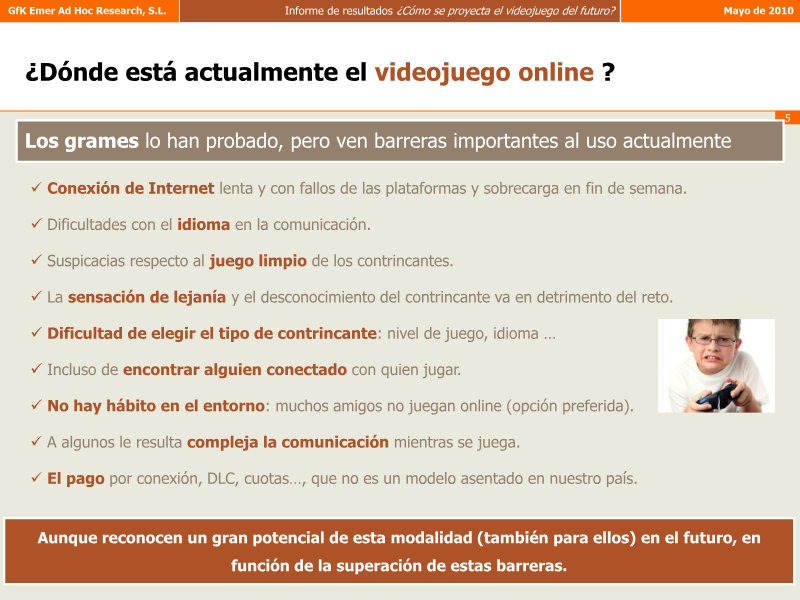
- Casual players currently resist online gaming due to specific barriers, including slow internet connections, language obstacles, distrust of payment models, and a lack of interest in complex online modes.

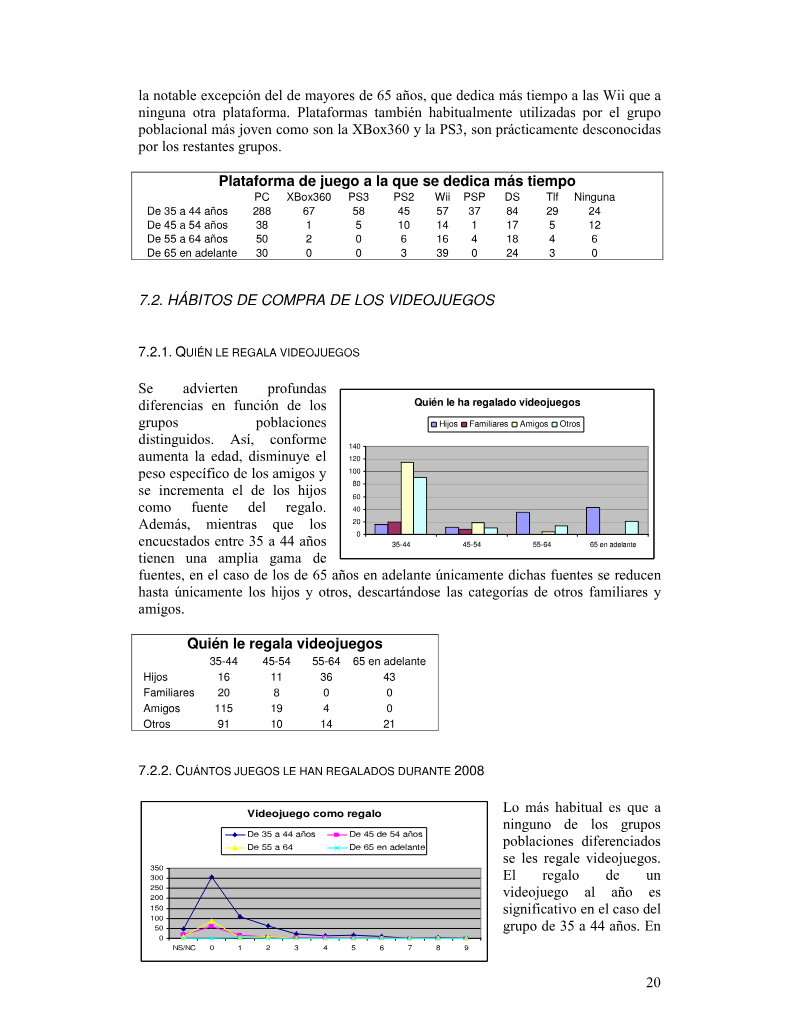

Hábitos e Iniciación a los Videojuegos en Mayores de 35 Años: Diciembre de 2008
I’m ready to synthesize the material, but I need the remaining section summaries to produce a complete, accurate overview. Could you please provide the rest of the section-by-section information?
- The report, published in December 2008, focuses on video game habits and initiation among individuals over 35 years old.
- Among those aged 35-44, 43.4% play video games on weekends, 27.8% daily, and 28.8% did not specify.
- For individuals aged 65 and older, 68.4% play video games on weekends, 7.9% daily, and 23.7% did not specify.
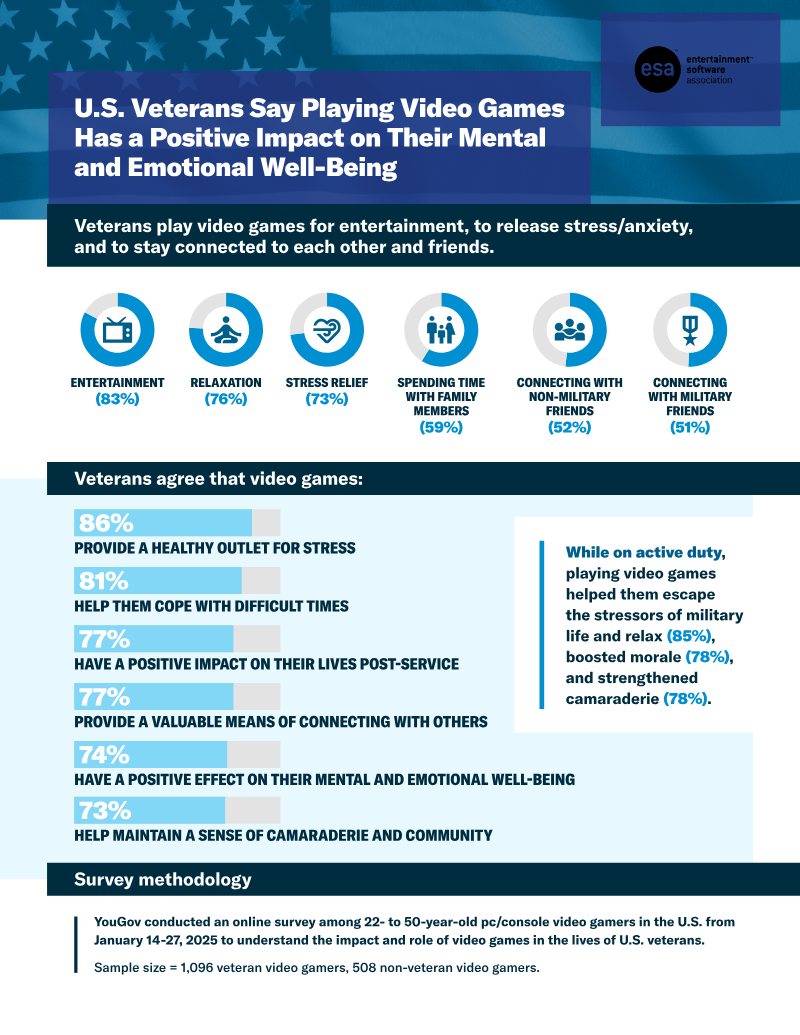
U.S. Veterans Say Playing Video Games Has a Positive Impact on Their Mental and Emotional Well-Being
Video games serve as a significant tool for mental health and social connectivity among U.S. veterans, providing a structured outlet for stress relief and emotional regulation.
- 74% of U.S. veterans report that video games have a positive impact on their overall well-being, while 86% identify gaming as a healthy mechanism for managing stress.
- 79% of veteran gamers use multiplayer gaming at least weekly to maintain social connections with fellow service members and family.
- 77% of veterans report that gaming continues to provide a positive influence during their transition to civilian life post-service.