Player Behavior reports and market data
Documents
Not a Babysitter - Why Parents Should Play Games with their Kids - Extra Credits
The central thesis posits that video games should be viewed as shared experiences rather than solitary activities or passive babysitting tools.
- Parents should treat video games as shared, collaborative experiences rather than passive babysitting tools to foster stronger relationships and communication.
- The educational and social value of a game is primarily determined by the context provided by the parent rather than the game's inherent content or genre.
- Active parental involvement, such as researching game mechanics or assisting with data-heavy tasks, allows parents to contribute meaningfully even if they lack personal gaming proficiency.
Toxicity - Why Players Rage and How to Defuse It - Extra Credits
The gaming industry faces a persistent challenge regarding player-level toxicity, which undermines the medium's potential as an inclusive and positive environment.
- Toxicity often functions as a subconscious defense mechanism where players shift blame onto teammates to protect their self-worth after poor performance.
- Data from approximately 100 multiplayer matches shows a clear correlation between poor individual performance and an increased likelihood of lashing out at others.
- High-performing players are significantly less likely to engage in blame-shifting compared to those who are struggling with their gameplay.
The J.C. Penney's Effect - Designing "Fair" vs "Feels Good" Systems - Extra Credits
The core thesis of this analysis is that in game design, as in retail, objective fairness and efficiency are often secondary to the psychological perception of value.
- Player engagement is driven more by the psychological perception of value and immediate feedback loops than by the objective fairness or efficiency of a game system.
- The J.C. Penney 'Fair and Square' pricing initiative demonstrates that removing deceptive marketing practices like artificial sales can cause catastrophic consumer loss because users prioritize the emotional satisfaction of a 'deal' over honest pricing.
- In the MMO Firefall, replacing traditional rare loot drops with universal crafting components creates a more equitable system but risks failing to trigger the dopamine response associated with receiving a tangible, pre-made item.
Like a Ninja - What Makes a Good Stealth Game - Extra Credits
Stealth games occupy a unique space in game design, often polarizing players because they require a fundamental shift in philosophy compared to traditional action titles.
- Stealth games should be designed as complex, traversal-based puzzle experiences rather than combat-focused power fantasies.
- Successful stealth mechanics require making the act of waiting and observation inherently engaging, shifting the player's focus from high-speed aggression to strategic patience.
- Effective level design must provide a versatile toolkit—including distractions, takedowns, and environmental traversal—to allow for multiple, player-driven solutions to a single challenge.
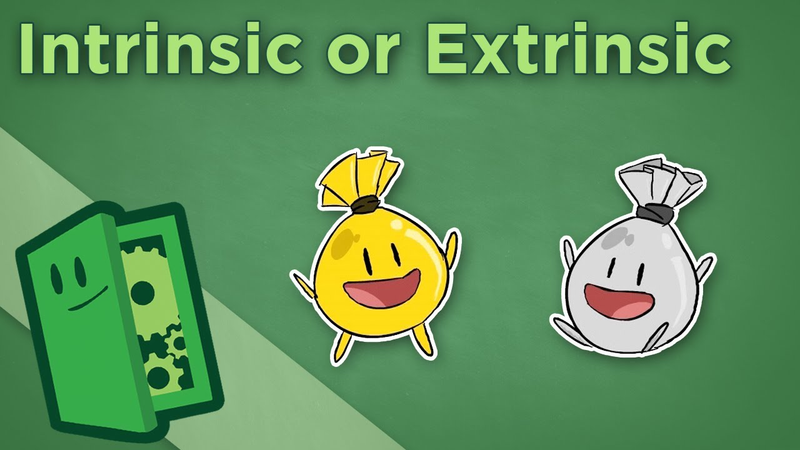
Intrinsic vs Extrinsic - Designing Good Rewards in Games - Extra Credits
Effective game design requires a nuanced understanding of player motivation, specifically the distinction between intrinsic and extrinsic rewards at the granular level of moment-to-moment gameplay.
- Intrinsic rewards are derived from activities that are inherently engaging, such as the combat mechanics in Bayonetta or the puzzle-solving in Professor Layton.
- Extrinsic rewards involve performing unengaging or repetitive tasks, like grinding for gear in World of Warcraft, solely as a means to unlock future content.
- Game designers should prioritize making individual gameplay components intrinsically rewarding rather than using them as gating mechanisms to delay access to content.
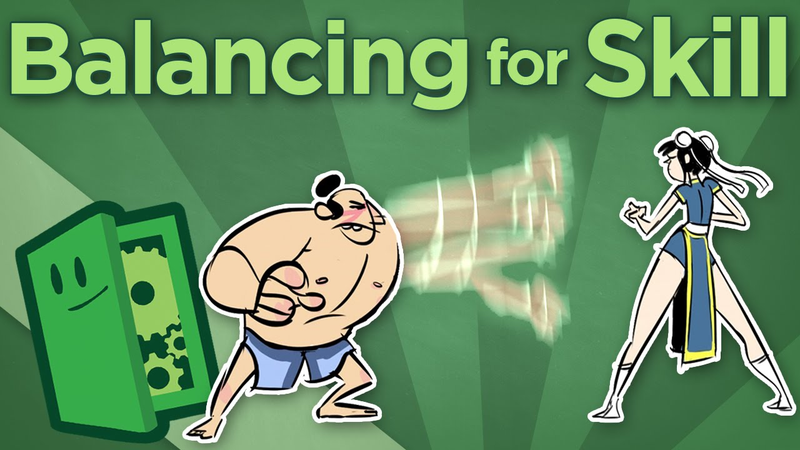
Balancing for Skill - The Link from Optimal Power to Strategy - Extra Credits
Effective game design requires balancing not just the raw power of mechanics, but the relationship between player skill and the power output of those mechanics.
- Game balance requires aligning player skill levels with the power output of specific mechanics to ensure long-term engagement.
- High-power, low-skill entry points are essential for retaining novice players and preventing the formation of exclusionary, stagnant communities.
- Designers must create clear progression paths that incentivize players to move beyond simple, repetitive tactics to avoid hitting difficulty 'brick walls'.
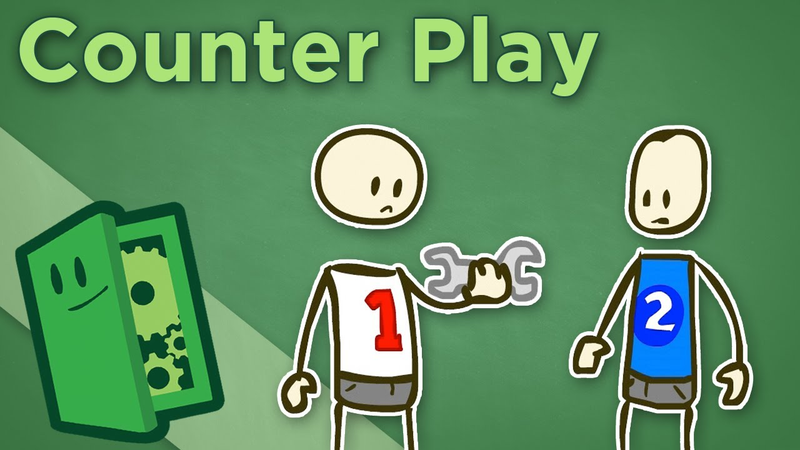
Counter Play - Making Multiplayer Fun for the Opponent - Extra Credits
Effective multiplayer game design requires a shift in focus from individual ability satisfaction to the concept of counterplay.
- Effective multiplayer design requires shifting focus from individual player satisfaction to 'counterplay,' which provides the opponent with meaningful, strategic choices in response to an action.
- Mechanics designed solely to empower the user often create frustration, whereas successful counterplay increases game depth and longevity by forcing tactical decision-making from both parties.
- Designers should evaluate new abilities by asking if they broaden or restrict the target's range of options, prioritizing the collective experience over the 'cool factor' of an individual move.
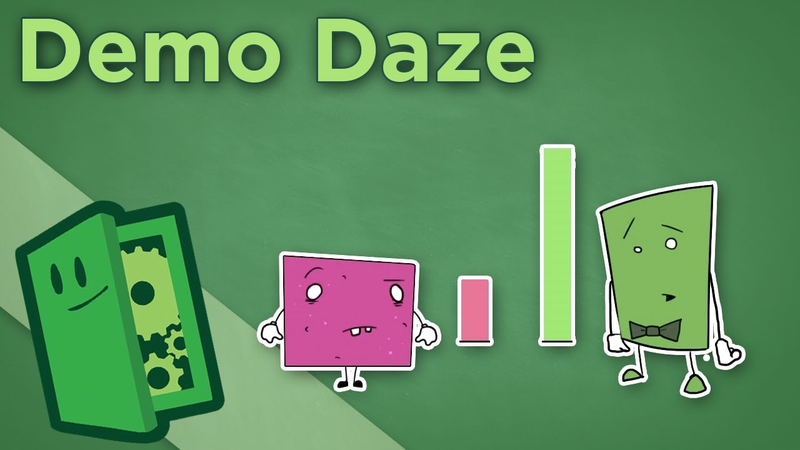
Demo Daze - Why Don't Creators Make Game Demos Anymore? - Extra Credits
The decline of game demos is primarily driven by unfavorable economic outcomes for developers, rooted in shifting consumer purchasing habits.
- Industry data indicates that releasing a game demo frequently results in decreased total sales, as demos often satisfy player curiosity enough to discourage a full-price purchase.
- Developing a demo is a poor business investment for most studios because it requires significant time, money, and certification resources that could otherwise be used to improve the core game.
- An analysis of nine potential outcomes for demo releases shows that only two scenarios result in a net positive for developers, highlighting the high risk of negative financial impact.

Starting Off Right - How the First Five Minutes Draw Players In - Extra Credits
The first five minutes of a game serve as a critical threshold that determines player retention, reviewer perception, and overall engagement.
- The first five minutes of a game act as a critical threshold that dictates player retention, reviewer perception, and long-term engagement.
- Designers should distill the core gameplay loop into a high-intensity, approachable sequence rather than front-loading complex tutorials that stifle pacing.
- Using the 'in medias res' technique allows developers to bypass slow exposition by dropping players directly into high-stakes action or powerful character scenarios.
Energy Systems - How Casual Games Suck You In - Extra Credits
Energy systems in modern gaming serve as psychological tools designed to regulate player behavior through three primary mechanisms: monetization, content restriction, and habituation.
- Energy systems function as psychological tools designed to regulate player behavior through monetization, content restriction, and habituation.
- Developers use artificial scarcity and limited play sessions to integrate games into a user's daily routine, prioritizing long-term retention over one-time engagement.
- Early implementations like World of Warcraft’s 'rested experience' system leveraged the psychological drive for efficiency to encourage regular play without causing user frustration.
Spec Ops: The Line - II: What Does It Mean to be a Hero? - Extra Credits
Spec Ops: The Line serves as a critical examination of the modern military shooter genre, specifically challenging the player’s desire for a hero fantasy.
- Spec Ops: The Line critiques the military shooter genre by intentionally using repetitive, dated gameplay mechanics to induce player discomfort and mirror the protagonist's PTSD.
- The game challenges the traditional hero fantasy by using fourth-wall-breaking loading screens and dialogue to directly question the player's motivations for engaging in virtual violence.
- Designers utilized a holistic approach where visual cues, such as fading to white for hallucinations versus black for reality, effectively map the protagonist's psychological deterioration.

Hard-Boiled - Why Are There So Many Gritty Video Games? - Extra Credits
The modern video game industry is increasingly defined by a trend toward "hard-boiled" aesthetics, characterized by excessive grit, nihilism, and graphic violence.
- The industry frequently equates maturity with excessive grit, nihilism, and graphic violence, mistakenly viewing these superficial elements as substitutes for genuine intellectual depth.
- True narrative maturity requires a balance of gravity and levity, as humor and absurdity are essential for humanizing characters and improving pacing.
- A primary driver of the 'hard-boiled' trend is 'Hollywood envy,' where developers mimic cinematic tropes in a misguided attempt to gain cultural legitimacy.