1 free read left. Create a free account for unlimited reading + AI research.
Create free account
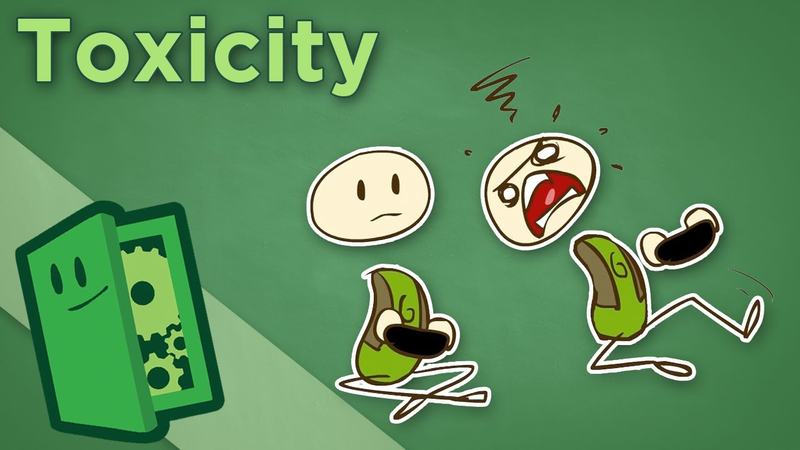
Toxicity - Why Players Rage and How to Defuse It - Extra Credits
Key insights
6 takeaways- 01The emotional investment players place in competitive play causes losing to be perceived as a personal failure, which triggers the externalization of frustration.
- 02Toxicity often functions as a subconscious defense mechanism where players shift blame onto teammates to protect their self-worth after poor performance.
- 03Data from approximately 100 multiplayer matches shows a clear correlation between poor individual performance and an increased likelihood of lashing out at others.
- 04High-performing players are significantly less likely to engage in blame-shifting compared to those who are struggling with their gameplay.
- 05Players are encouraged to redirect frustration toward neutral game mechanics or external factors rather than attacking teammates to prevent the escalation of hostile environments.
- 06Fostering a constructive community requires players to prioritize personal improvement and 'carrying harder' over engaging in vitriol.
Ask AI about this video
Transcript
This has been weighing on me for a while. There's something that comes up all the time in the press, something we've all experienced. It's something endemic in our community, and it's something we've got to talk about. How we treat each other. Not a week goes by that I don't hear about bannings and toxicity within the gaming community. And you know, that just sucks. That's not what games are about, and I think it's absolutely something that negatively impacts the medium as a whole if we don't fix it. But before I get down on us too much, it's worth saying that in some ways the development community's response to this has been downright admirable. There are other sports that don't ban their players for forcing dogs to fight to the death for their amusement, or for being indicted multiple times for homicide. But here in video games, developers are willing to risk alienating their fans or kicking out their top players just to make this a better place to play. That is excellent, and it needs to continue. The development community has their fair share of challenges ahead in tackling the toxicity problem within their player bases. That's not specifically what
we're talking about today, though. Instead, we're going to look at this problem at the player level. We've talked about harassment, but there's more than just harassment happening here. There's bullying, misdirected rage, and a sort of servile cowardice we have to address. Harassment based on gender, sexual orientation, religion, or race is something we've got to fix, but that's also limited to a very small minority of just very unctuous, very noxious, and very unfortunately loud players. Instead, we wanted to talk about some of the other things that many more of us may be prone to doing that make our community a less inviting, less enjoyable place to play. Stuff we've all done at one point or another. First, let's talk about trash talk. I hear players defend this practice of insulting their opponents all the time. We had that famous statement by the cross assault guy about how this was just a part of the fighting game community. It's not, and it's not good play, either. I hear people defend it by saying it's legit because the rules don't exclude it. That it's something you should do because getting your opponent angry helps you win. But you know what? All trash talking means is that you're not good enough at the game to win without getting your opponent angry. You'll notice really good players don't tend to trash talk. They don't throw out racial epithets. They don't
demean people. They don't insult people. They just win. Now, let's talk about shifting blame. It doesn't matter how good of a person you are, this is something all of us end up doing at some point because it's a very natural thing to do in games. If you're playing in a competitive game, you have to invest some of your self-worth into the game. And it may sound odd at first, but think about why winning a match matters so much to us. You're not getting anything for winning. Winning in most competitive games doesn't offer you anything in the real world and often doesn't even give you an advantage in future rounds of that game. So, why do we care so much? Why does it even matter if you win? Because you're invested in it. And because we're so invested in these games, it actually hurts for it to go poorly. You ever get off of a real rough streak of playing games and actually feel irritated? Feel in some ways worse than before you went to do this fun thing you do to relax? It's because of that investment. It's the same reason people have a much easier time ending a play session after a winning match than a losing one. Of course, all this investment is awesome. It makes these things meaningful to us. It's why these games are great, but it does also have a downside. It means that some part of us doesn't often want to accept when we're at fault, when it's our lack of skill that's causing us to
lose. And this isn't usually a conscious thing, but a subconscious one. To protect ourselves, we want to shift blame away from ourselves. If you've ever found yourself saying "zed op" or blaming mana screw for losing a game, you're experiencing a side of this. But that side of things is relatively benign as a designer, James is fine with you blaming him or his game's mechanics all the livelong day. It doesn't really hurt anybody and it doesn't make the place we play in any worse, either. Unfortunately, too often, especially in team games, we end up blaming our teammates. Shifting blame to another person just makes things worse for everybody involved. You end up getting into one of those ugly shouting matches where nobody wins and everyone just leaves miserable and frustrated. That's not really the game anyone came to play. Over the last few months, just for kicks, James has been keeping some private metrics during his multiplayer matches. Not a huge sample size, but closing in on 100 games now. And he's noticing a few trends. In games where people started blaming each other, it's almost never the really good players who are throwing around blame. It's almost always the people who are flailing. And when you think about it, this makes perfect sense. If you played a great game but ended up losing, at least you can say to yourself, "Well, at least I
did awesome." But if you play poorly and took everybody down with you, it's very natural to look for something other than yourself to blame. As with all of the causes of toxicity that we've discussed, there's no better remedy than self-awareness. If you start seeing yourself falling into that pit, just take a step back and remember, it's only a game. That is probably the only time you're going to hear me utter that phrase on this show and one of the very few times it's appropriate. But just whatever happens in that match doesn't carry with you when you step away from the keyboard or even into the next round. Of course, monitoring our own conduct and sportsmanship is one thing, but what do you do when somebody else starts lashing out? There usually aren't many options other than leaving or muting them. It's tempting to call them out for being jerks or blame them for being the truly bad player, but there's not but misery down that road. Alternatively, you could attempt to diffuse the situation. Blame something in the game instead. Like, "Nah, come on, it's not player one's fault. The new tube is just some cheap business." Or, "Eh, no biggie. Trend to me is completely OP in this patch." Or, "Look, we would have done better if the Jaguars had a decent quarterback." That kind of response gives everybody an out and it doesn't back anyone into a corner. Sometimes a tiny bit of empathy, team-oriented
phrasing, and finding something other than ourselves or our teammates to blame is all it takes to cool people's heads and get them back in the game. We could go on for a while, but for now I'll just say this. Games are a place where all of society's standards fall away, where we agree on a shared reality that we can all craft to be better than this one, where everyone can be seen for their strengths and not their weaknesses. It's the place where the child in a wheelchair can run, where the awkward or shy can communicate, where the frightened can be brave. It's a place where we can be colorblind, where we can be free from assumptions and deaf to our differences. For gaming to grow, we need to preserve that. We have to be better. We've got to put aside the rage and the vitriol, move past our toxicity, and embrace the better angels of our nature. Winning is no excuse for poor behavior, and the fear of losing is a trap that, if we aren't cognizant, is set to prey on the best of us. So, you know, don't talk smack. Just carry harder. See you next week.
Summary
The gaming industry faces a persistent challenge regarding player-level toxicity, which undermines the medium's potential as an inclusive and positive environment. While developers have taken commendable steps to curb harassment through bans and moderation, the responsibility also lies with players to address common behaviors such as trash talk and the misdirected rage that stems from personal investment in competitive play. The core thesis posits that toxicity is often a subconscious defense mechanism used by players to protect their self-worth when they perform poorly, leading them to shift blame onto teammates rather than accepting personal shortcomings.
Data collected from approximately 100 multiplayer matches suggests a clear correlation between performance and behavior: high-performing players rarely engage in blame-shifting, whereas those struggling with their own gameplay are significantly more likely to lash out at others. This behavior is identified as a psychological reaction to the high level of emotional investment players place in games, where losing can feel like a personal failure. By externalizing this frustration onto teammates, players create hostile environments that diminish the experience for everyone involved.
To mitigate this, the analysis advocates for increased self-awareness and the adoption of de-escalation tactics. Rather than engaging with toxic individuals or retaliating, players are encouraged to redirect blame toward game mechanics or external factors, which provides a neutral outlet for frustration without alienating teammates. Ultimately, the goal is to preserve the unique, egalitarian nature of gaming spaces where social barriers are minimized. By choosing to focus on personal improvement—or "carrying harder"—rather than resorting to vitriol, players can foster a more constructive community that upholds the medium's capacity for positive social connection.
























Comments