1 free read left. Create a free account for unlimited reading + AI research.
Create free account
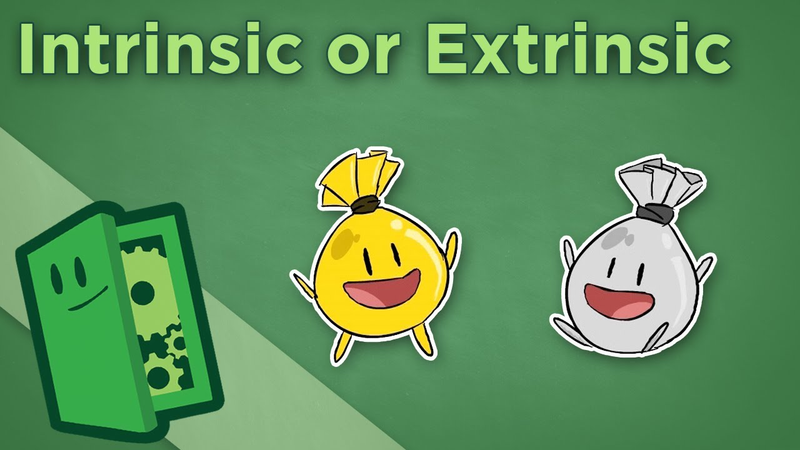
Intrinsic vs Extrinsic - Designing Good Rewards in Games - Extra Credits
Key insights
6 takeaways- 01Intrinsic rewards are derived from activities that are inherently engaging, such as the combat mechanics in Bayonetta or the puzzle-solving in Professor Layton.
- 02Extrinsic rewards involve performing unengaging or repetitive tasks, like grinding for gear in World of Warcraft, solely as a means to unlock future content.
- 03Game designers should prioritize making individual gameplay components intrinsically rewarding rather than using them as gating mechanisms to delay access to content.
- 04Players can improve their gaming habits by distinguishing between activities that provide genuine joy and those that function as tedious, unfulfilling chores.
- 05Shifting the focus toward intrinsic engagement allows for a more conscious approach to interactive entertainment that better respects a player's limited time.
- 06Optimal game design minimizes reliance on psychological traps like the Skinner box by ensuring that core loops are enjoyable in isolation.
Ask AI about this video
Transcript
hey folks before we get started I need to announce a couple of things first off I'm very sad to say that our artist alison has decided to step down and leave the show at least for now we've all been trying to figure out how to juggle schedules and workloads these past months but the truth is with her new job it was just too much work sometimes real life just has to take priority you know we hate seeing her go but we're really excited for her and which are the best of luck maybe someday her workload will even out and she'll be able to jump back in either way it's been an absolute pleasure and we are grateful for everything which brings me to a happier announcement we have a new member on the team Scott do it will be joining Lili as our new official artist so make him feel welcome all right that's enough news let's talk about a video game or something too rarely when playing games do we ask the question why why are we doing the things that we do what makes us want to play this part of the game not on some large philosophical level not asking some big question about why we play though that could be a great topic for an episode too but rather in
the specific why am i bashing this monster right now why do I care to watch this cutscene it's one of the most important questions we can ask both as players and as designers yet it's very often overlooked so though we've talked about it a little bit here and there in other episodes we thought we'd explore this in a bit more depth thus today we are going to talk about intrinsic and extrinsic rewards usually these terms are applied to a game as a whole intrinsic rewards are rewards within the game new challenges new levels more story etc and extrinsic rewards are rewards that exist outside the game itself like money in poker or playing DDR to lose weight but this is too broad a view of the concept we need to look at something more specific and far more important we need to look at each moment of play it's an interesting question when playing a game to ask at any given moment am i doing the activity I'm doing for the activity itself or am i doing it for some other reason for example for me I played through the fights in Final Fantasy 7 in order to get access to more of the story the activity of actually doing the fights themselves wasn't all that engaging it wasn't what I was playing them for rather I was waiting through them because I had to in order
to get something else I wanted another good example of this is World of Warcraft and wow I've been conditioned to want certain pieces of gear so I would grind solely to get that gear but the problem was just that I was grinding to get gear not for the joy of grinding itself if instead of looking at games as a whole and asking whether their rewards are extrinsic or intrinsic we look at each element of play and ask this the question becomes so much more in the preceding examples the rewards are all extrinsic if I look at grinding in Wow or combat and Final Fantasy seven in isolation if I strip away all the other elements of those games I see that they're not that rewarding in and of themselves but the only reason we do them is for the externalities whereas if I look at something like combat in Bayonetta puzzles and Professor Layton or jumping across platforms in a Mario game heck even if we look at experiencing the narrative and a good Final Fantasy or making a really meaningful dialogue choice in Mass Effect or The Witcher Walking Dead these are activities that we do for themselves their rewards are self-contained intrinsic to the activity we're doing as designers we should always be asking this question because optimal game design means having every activity be meaningful in and of itself having each
part of your game being engaging rather than simply being a gating mechanism to keep the player from too quickly consuming the reward they really want and this isn't always possible optimal game design isn't real-world game design but we should always be shooting for it and we should always always be conscious of it as players I think it's a worthwhile consideration as well upon thinking about it I realized how many levels I've beaten how many monsters I've slain how many treasures I've collected that I just wasn't really interested in that were merely stepping stones to something else in the game that I wanted and of late it's helped me to put down games that I wasn't actually that interested in it tells me to say no actually this isn't fair I'm not going through 20 hours of doing an activity I'm not really interested in so you can drip feed me the tiny piece I actually want which has led me to having a much more satisfying experience with games in general it's allowed me in my limited gaming time to really play the things that I find a joy to play and that's not to say that those tiny drip fed things aren't sometimes worth it there are many RPGs where the extrinsic motivation of the characters and the world were more than worth the slog through the parts I didn't find inherently engaging like in persona 4 for example but just thinking about games this way has helped me to make
that assessment to better choose when those extrinsic elements are worth it and not invest time in a game I'm not 100% engaged by when there are so many other amazing games out there to play so look at each part of a game in isolation ask yourself is this engaging by itself am i playing through it for something outside of the actions I'm currently taking and if not ponder how these sections might be made engaging is there anything inherent in the rest of the experience that would be lessened by making any individual component worth doing in and of itself because they're almost never is for example let's take the Kingdom Hearts series and side by side up with final fantasy in Kingdom Hearts I love the world I love the characters and the story when it's not being completely stupid and I also find myself wanting to play the combat sometimes I go fight things in that game just for the fun of fighting them they managed to make the engagement in combat intrinsic without taking away from any of the other parts of the game in an ideal world every part of every game you play would be intrinsically engaging that will never happen but we should be aware of it when it falls apart because we play for joy we play to be engaged and to be entertained we don't play merely to kill hours in our day so we should always be conscious of the parts of our games that are doing
just that it'll help you design better games and it will help pull you out of a skinner box or our other game design psychological traps or on those rare days where you do just want to make the hours disappear it'll tell you what games to turn to see you next week
Summary
Effective game design requires a nuanced understanding of player motivation, specifically the distinction between intrinsic and extrinsic rewards at the granular level of moment-to-moment gameplay. While traditional definitions categorize rewards based on whether they exist inside or outside the game, a more analytical approach examines whether a specific activity is performed for its own sake or merely as a means to reach a subsequent goal. Intrinsic rewards are found in activities that are inherently engaging, such as the combat mechanics in Bayonetta or the puzzle-solving in Professor Layton. Conversely, extrinsic rewards involve performing repetitive or unengaging tasks—such as grinding for gear in World of Warcraft or enduring tedious combat in certain RPGs—solely to unlock future content.
Designers should strive to make every individual component of a game intrinsically rewarding rather than relying on these elements as gating mechanisms that delay the player’s access to desired content. While practical constraints often prevent every moment from being perfectly engaging, the goal of optimal design is to minimize the reliance on psychological traps like the Skinner box. By ensuring that core loops are enjoyable in isolation, developers can create more meaningful experiences that respect the player's time and engagement.
For players, recognizing these motivational structures serves as a valuable tool for evaluating their own gaming habits. Distinguishing between activities that provide genuine joy and those that function as tedious chores allows individuals to make more informed decisions about which games are worth their limited time. Ultimately, shifting the focus toward intrinsic engagement helps players avoid unfulfilling loops and encourages a more conscious, satisfying approach to interactive entertainment.

























Comments