1 free read left. Create a free account for unlimited reading + AI research.
Create free account
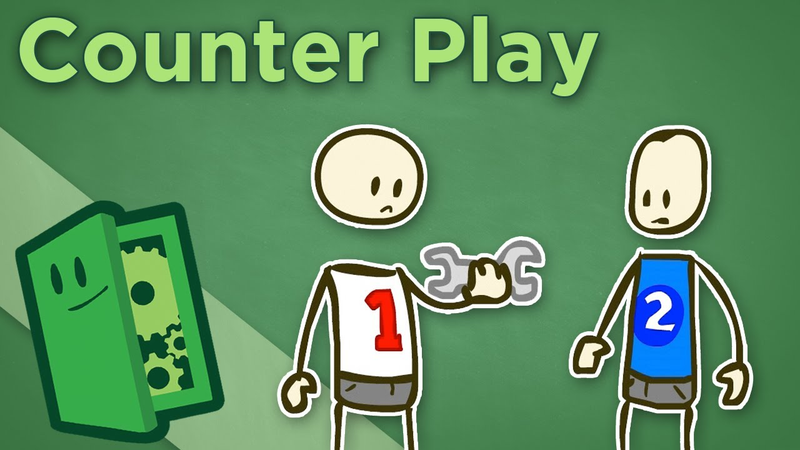
Counter Play - Making Multiplayer Fun for the Opponent - Extra Credits
Key insights
6 takeaways- 01In World of Tanks, the use of spotter units creates a complex tactical environment where opponents can choose to eliminate spotters, set traps, or bait fire toward armored units.
- 02Mechanics designed solely to empower the user often create frustration, whereas successful counterplay increases game depth and longevity by forcing tactical decision-making from both parties.
- 03League of Legends utilizes abilities that can be blocked by minions to force players into an intricate dance of positioning, transforming simple attacks into multifaceted interactions.
- 04Prioritizing counterplay turns potential points of frustration into opportunities for strategic growth, fostering a more sustainable and evolving multiplayer environment.
- 05Designers should evaluate new abilities by asking if they broaden or restrict the target's range of options, prioritizing the collective experience over the 'cool factor' of an individual move.
- 06Effective multiplayer design requires shifting focus from individual player satisfaction to 'counterplay,' which provides the opponent with meaningful, strategic choices in response to an action.
Ask AI about this video
Transcript
[Music] hey everybody today's art is being graciously provided by our pal gray Jenkins recent VFS graduate and we very much appreciate the help so anyway James was talking to Tom Cadwell over at Riot games a few weeks back and Tom brought up a design concept that we thought was fantastic it was so evident and so simple and yet so important to multiplayer design that we asked him if we could do an episode on it being the awesome TI Tom was cool with that so the main idea we're presenting in this episode counterplay is entirely Tom's or at least he's the first person we've heard formalize it and so all credit here goes to him unless of course we screw up some of the finer details while we're discussing it I will take full credit for those parts if we're really lucky Tom will do a talk on this idea at some conference later and give this the full hour it deserves rather than the 5 minutes it's about to get okay so what is counterplay well on a basic level it's the idea that in a multiplayer game when designing an ability or a mechanic you can't only be thinking about how to make that ability or mechanic interesting for the player who gets to
use it you also have to think about how it's interesting for the players who it gets used on on a more rigorous level it's the idea that a mechanic or ability in a multiplayer game should increase the number of meaningful choices available both to the player using it and the player it's being used on now that probably sounds super obvious once it's said out loud but I have seen so many multiplayer games that totally miss that Concept in fact even amongst experienced multiplayer designers I often hear the discussion focusing on abilities that don't drastically reduce the choices of the person on the receiving end rather than focusing on abilities that actually provide more choices so okay any mechanic in a multiplayer game should be exciting for the player using it and the player who it's getting used on sounds simple enough so let's look at some examples both good and bad many of you have probably played a multiplayer shooter at some point in your life where you found yourself getting sniped over and over and over and you couldn't figure out where it was even coming from this is an example of the designers failing at delivering good counterplay now that sniper might have been having the time of his life racking up kills but it didn't create a dynamic environment for the people he was shooting at it just felt frustrating and even if it didn't have a large impact on the game as a whole even if he just ended up getting a
few kills over the course of the match it was a poorly designed mechanic because it didn't add to the enjoyment of the people he was firing at now compare that to something like the artillery or tank destroyer the sniper classes in World of Tanks there are a number of ways that these units create good counterplay but let's just look at one of them spotting see these sniper tanks on team a can't actually see very far so they need other tanks on their team usually light tanks to spot enemies for them but since these spotter tanks tend to be very fragile their enemies on Team B now have a number of interesting tactical decisions in front of them Team B and try to Blind the opposing snipers by destroying the spotters or they can try to drive the spotter units away from anything vulnerable to sniper fire or if Team B is feeling really tricky they can lure the spotter units toward their own heavily armored tanks hoping that the enemy snipers will waste their very limited ammo firing at tankes they can't do much damage to which means Team B can now take the offensive with their high damage units without worrying about incoming sniper fire that's good counterplay not only are the snipers and the spotters enjoying an interesting mechanic but the folks on the receiving end get to feel clever as well the game's made more interesting for team be
because team a has that mechanic or think about League of Legends the simplest examples of this are the skills that can be blocked by the creeps if you know that your opponent has an ability that will hit the creeps instead of you if they're standing in the way of it it completely changes the way you play the initial laning phase of the game it opens up a number of risk reward choices for you as a player you end up doing an intricate dance with your opponent where you're trying to keep the creeps between you and them and they're trying to get you out of position so they have a clear shot but at the same time you're also trying to lure your opponent into a position where they're overextended where they've maneuvered themselves into a place where either you or your jungling teammate can pounce on them because they move just a little too far out in search of that opening to use their ability on you their character ability has made the game more exciting for everybody involved it actually creates more interesting options for both the players playing with these abilities and the players playing against them it's this counterplay that creates depth that helps players to differentiate by skill by increasing the number of valid choices available to everybody in the game good counterplay adds longevity to a game and allows a player's play to evolve as they spend time with it so how do we design for good counterplay I kind of wish I had a more complicated answer because that
would explain why we fail to do this so often but really it's simple be cognizant even if you don't have a prototype ready to try yet just try and close your eyes and think about how your mechanic plays think through not only how it feels to use it but how it feels to play against it put yourself in that player's shoes and ask yourself does this make my game more interesting am I more engaged in the game by someone using this on me does it increase opportunities for skill differentiation or diminish them does this broaden or diminish the number of options I have in play once you do have a prototype test again and again and observe the reactions to your mechanic do players actually pick up on and use the counterplay options you've given them do they end up trying a number of techniques they otherwise wouldn't in response to the mechanics being used on them and if not what can you do to fix that how can you broaden those options or make the counterplay more clear to your player still consistently finding mechanics that create good counterplay is Pretty Tough it requires that you think about the experience you're designing for everyone rather than just dreaming up an ability that feels cool to use it asks us that we be aware of the group experience rather than focusing on a single player or class but doing so will absolutely make better
multiplayer games bad counterplay makes for a multiplayer experience you just don't end up playing for very long so thanks again Tom for letting us talk about your ideas here there are so many elements of game design that many designers know deep down on some gut level but don't consciously pursue because nobody puts those ideas into words and this is one of them thanks for not keeping this gem to yourself thanks for watching [Music]
Summary
Effective multiplayer game design requires a shift in focus from individual ability satisfaction to the concept of counterplay. Counterplay is defined as the intentional design of mechanics that provide meaningful, strategic choices not only for the player executing an action but also for the player on the receiving end. When a mechanic is designed solely to empower the user, it often results in frustration for opponents, which diminishes the overall quality and longevity of the game. Conversely, successful counterplay increases the depth of the experience by creating a dynamic environment where both parties must engage in tactical decision-making.
Practical examples of effective counterplay include mechanics that allow for environmental interaction or risk-reward positioning. In titles like World of Tanks, the reliance on spotter units creates a complex tactical landscape where opponents can choose to eliminate spotters, lure them into traps, or bait fire toward heavily armored units. Similarly, in League of Legends, abilities that can be blocked by minions force players into an intricate dance of positioning. These mechanics transform a simple offensive action into a multifaceted interaction that rewards cleverness and skill differentiation for everyone involved.
To implement these principles, designers must move beyond the "cool factor" of a new ability and rigorously evaluate the experience from the opponent's perspective. This involves asking whether a mechanic broadens the range of available options for the target or restricts them. By prioritizing the collective experience over the individual, developers can foster a more engaging, evolving, and sustainable multiplayer environment. Ultimately, the goal is to ensure that every interaction serves to heighten the engagement of all participants, turning potential points of frustration into opportunities for strategic growth.























Comments