1 free read left. Create a free account for unlimited reading + AI research.
Create free account
Spec Ops: The Line - II: What Does It Mean to be a Hero? - Extra Credits
Key insights
6 takeaways- 01Spec Ops: The Line critiques the military shooter genre by intentionally using repetitive, dated gameplay mechanics to induce player discomfort and mirror the protagonist's PTSD.
- 02The game challenges the traditional hero fantasy by using fourth-wall-breaking loading screens and dialogue to directly question the player's motivations for engaging in virtual violence.
- 03Designers utilized a holistic approach where visual cues, such as fading to white for hallucinations versus black for reality, effectively map the protagonist's psychological deterioration.
- 04The narrative structure functions as a psychological descent, prioritizing the exploration of a mental state over the achievement of traditional victory conditions.
- 05Despite minor inconsistencies in plot logic and character behavior, the title demonstrates that AAA games can successfully function as serious dramas that provoke critical reflection on the player's role in warfare.
- 06The game replaces explicit menu-based moral choices with organic gameplay actions, such as firing into the air to disperse crowds, to test player agency and creative problem-solving.
Ask AI about this video
Transcript
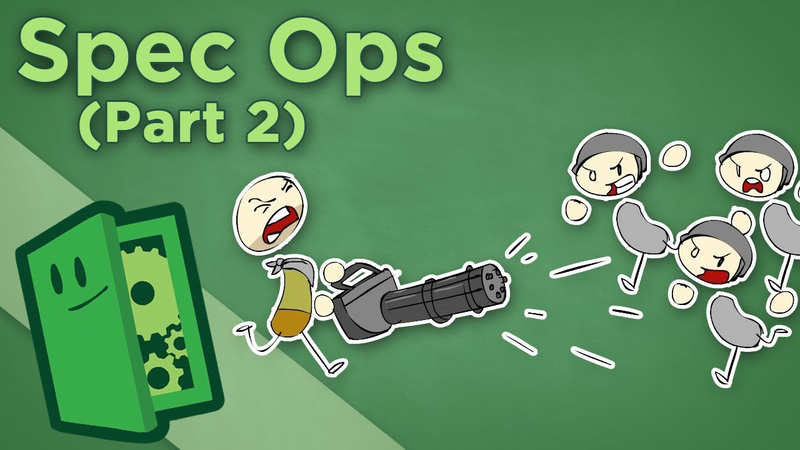
All right, now we can really talk about Spec Ops: The Line. If you weren't around last week, we talked in general terms about why this unfun game is so interesting. Today, we're going to dig into the meat of the game, so be warned. Things are going to get very spoilery. If you haven't played Spec Ops yet, you might want to get out now. The first thing we have to talk about are the themes of this game and how the mechanics interact with the themes. As I see it, there are two main ideas they're trying to explore in Spec Ops: The Line. Post-traumatic stress disorder and just how far removed modern war shooters are from the real thing. So first, let's talk about the moment-to-moment gameplay. If you're a shooter fan, you probably recognize that the shooting in Spec Ops felt a little 2006. It's rife with obvious spawn points, suicidal enemy waves, machine gun turrets, even exploding red barrels. And the actual shooting isn't as tight, nor is the aim assist as strong as we've come to expect on our modern games. And yet, it all still works in this game. Why? Because the team embraced it. I believe
somewhere early in development, the team at Yager realized that they didn't have the budget or the manpower to create gameplay that was going to compete with Call of Duty or Battlefield. So they sat down and asked themselves, "Okay, what does the gameplay we can create say? What does it mean if you really take the time to think about it?" And then they used it to reinforce the narrative, which was at the core of the game. This hearkens back to the mechanics as metaphor episodes we did a few weeks back. Spec Ops turned out to be a great example. The banal gameplay is used to give you a sense of the uncanny. From the very opening where you're shooting down dozens of helicopters in the city that's been blasted back to the Stone Age, you're meant to feel the unreality of what you're doing. They juxtapose a very serious narrative with obviously overtly game-like play to give you a sense that something isn't right here. This continuously off-putting feeling you get as you just mow down waves of enemies and shoot exploding barrels is meant to give you that psychic disconnect that the main character is experiencing. Their exploration of PTSD depends upon you as a player feeling strangely uncomfortable with the actual play of the game. It's designed so you retain that sense of discomfort while eventually becoming numb to the actual actions you're performing in the run and
gun sections of the game well before the narrative gives you any clue that there might be something actually wrong with your main character. You subconsciously feel it through the play and because you feel it, you're even more sensitive to it in the narrative. You pick up on things that you might have missed because they've already clued you in that there's something there through this weird dissociative play. And this is hugely important because they need their audience to be focused and checked in. They need their audience to be thinking about what's going on and observing the details in their game. In a way most of us have been trained not to do in modern war shooters. Now I could talk all day about why this is such a good use of mechanics that engage through something other than fun and there's so much to deconstruct about how the mechanics themselves provide that discombobulated feeling they need to propel the narrative. But man, there's so many other good things to talk about. For one, there's the fact that the game acknowledges the player. Throughout the game is subconsciously aware that this isn't an experience contained on the screen but rather an experience being had by a human being in front of that screen. And so very often the game breaks the fourth wall and talks directly to you. Many of you may have noticed that as the game went on, the load screen started periodically saying odd stuff like, "This is all your fault." "How many Americans have you
killed today?" Cognitive dissonance is a feeling caused by holding two conflicting beliefs simultaneously. Like those first two examples, the third line, the one about cognitive dissonance, isn't really talking about the main character in the game. Rather, it's speaking directly to the player. It's about that disturbing feeling you get from believing that shooting the enemies the thing you're supposed to do because it's a game and that's what you do in shooters when combined with that creeping knowledge somewhere in the back of your mind, knowledge that they have set up throughout the game, that this is all wrong, that you shouldn't be killing those US soldiers or the residents of Dubai who you're ostensibly there to save. And they don't just limit this to loading screen text. The game is filled with these sorts of double lines, comments that appear on the surface to be made to the character but are really talking to the player themselves. The best example comes at the very end of the game when you meet Conrad. Listen for the lines about games and escaping from reality. Those are a clue that we're no longer just talking about the fictional narrative playing out before us. By talking about games, they're setting us up for the roughest line in gaming. A line the character might as well have turned to the camera and said directly to us, "The truth is, you're here because you wanted to feel like something you're not, a hero." Almost
all shooters are built up around this hero fantasy. Every time James has ever worked on a shooter, the team's goal has always been to build up and reinforce this feeling of artificial self-worth you get from blasting through waves of enemies that only you could overcome. And yet here, through a shooter, they're turning to us and saying how pathetic that fantasy is. They're telling us how miserable our need and our longing for being a virtual hero really is. They're critiquing and even eviscerating the very genre they're working in and are intentionally leaving us feeling gutted, feeling pathetic for wanting to be the hero rather than heroic for playing as one. And this self-doubt, this pulling the rug out from under your feet, not only delivers what is perhaps the game's most powerful message, forcing us to examine how we think about games, but also helps to reinforce the emotional space they've been trying to create, this examination of PTSD. And they carry this metaphor into all the elements of the game. We've talked about creating a holistic game before, about using all the various elements in your game to help reinforce the central idea. Here they do it with the art. They do it with the character model not only becoming more haggard, but actually dualistic in nature, almost having a two-face like
quality to him by the end. And they do it with the way they fade out at the end of cutscenes to clue us into what's real and what's not. You might have noticed that on the cutscenes that are showing real events, they fade to black, but on the cutscenes showing hallucinations, they fade to white. They do it through the level design, too. This Dubai is a psychological landscape rather than a physical place. When you play through, notice how much of the time you spend descending. It's actually a little ridiculous if you just look at it independently of the game itself. After the first couple levels, there should be no more down to go, but periodically and with that most a hand wave, they place the player somewhere high at the start of levels simply so they can descend again. And think about how many times you're swallowed up by the ground itself, dragged further downwards toward our metaphorical hell. Even the minutia of the script points us in this direction. Toward the end, when you're going to take out the DJ, he starts telling you personal details about all the men you're shooting. This forces you to get into that psychological space we talked about earlier, where you have to identify these targets as real human beings, people you shouldn't be shooting, but you have to because it's a game and that's what you have to do. So, by putting all this together, by presenting us with such strong metaphors through their mechanics, and by using every element of their game to tell
their narrative, and by talking to us as a player rather than pretending we don't exist, they've managed to use what we're familiar with in games of this genre to critique the genre itself. And they've also done more than that. They've created the first AAA game that is highly engaging without being fun. I might go so far as to say they've created the first true AAA drama, where we're engaged through the exploration of a mental state rather than simply satisfied by achieving a goal. Now, the game does have some story problems. For one, the fact that a pair of well-trained Delta Force operatives continue to follow you against orders from higher up despite your obvious mental instability becomes a little harder to believe with some of the twists revealed at the end. And some of the fourth wall bending doesn't actually make a lot of sense within the context of the story when you take it at face value. Like when you repeat the helicopter sequence near the end and your character says, "Wait, this is all wrong. We've done this before." Taken at face value, that line would seem to suggest that the entire game is some sort of PTSD-driven flashback. Or maybe Walker's delusions happen to let him see into the future. Either way, that sort of thing could take some people out of the experience. Of course, there's always the possibility that Walker died
in the in media res helicopter crash, and the entire game takes place as some sort of trauma-soaked personal hell. I've heard some strong arguments for that possibility, too. Oh man, I could talk about this game for hours. Before we go, I just have to bring up the moral choice moment and how much different they are from how we're usually presented these moments in games. First, there's obviously the game's subject matter, quite different from the content we usually see in these games, but those differences are all pretty evident when you play the game. What I really want to talk about is the actual design. If you remember the moment where you were supposed to choose between whether to kill a civilian who stole water or a soldier who killed the civilian's family trying to apprehend him, you're actually allowed a series of other choices that are never made explicit. When I was playing, I actually shot the snipers, and one of my Delta Force buddies shot out the ropes. Too slow to stop the rest of the snipers shooting both prisoners, but still, the game recognized that as an alternative choice. The same thing occurs again when you're asked by your squadmate to give the order to fire on a crowd of civilians. Instead of doing so, I fired into the air, and to my delight, the crowd actually dispersed. This ability to actually make choices through the mechanics, rather than simply through a menu, is something more games need to integrate. But to implement this sort of choice in a game takes two
fundamental shifts in thinking from what I often see in major studio game making. First, it requires that you trust your player to think past the explicit choices you've given them, and to instead try to create their own. And second, it requires that rather than having a set group of choices that you have declared from on high as a designer, you instead go back and play through your choice moment and try to understand what else a person might want to do given the tools that are normally available to them in the game. And then to embrace those choices and find a way to weave them into your narrative without having it spiral out beyond your control. That last bit is often very hard to achieve, but it is so worth it if your game's looking towards offering more substantive choice. Okay, I think we'll leave it with that. I hope that helped to elucidate some things about choice in games and helps to articulate why a game can be engaging without necessarily being fun. And I really hope Spec Ops also helps to show that we can talk about more substantive things. Being in the modern military is probably one of the hardest, most trying things a person can do, and it's so great to see a game make more of that than a simple power fantasy. See you guys next week.
Summary
Spec Ops: The Line serves as a critical examination of the modern military shooter genre, specifically challenging the player’s desire for a hero fantasy. By intentionally utilizing dated, repetitive gameplay mechanics, the developers create a sense of discomfort and dissociation that mirrors the protagonist’s struggle with post-traumatic stress disorder. The game’s primary thesis is that interactive media can be deeply engaging without being traditionally fun, using the medium to critique the very power fantasies that typically define the genre.
The game employs several sophisticated techniques to achieve this, most notably by breaking the fourth wall to address the player directly. Loading screen messages and dialogue shifts transition from addressing the in-game character to questioning the player’s own motivations for participating in virtual violence. This narrative approach is supported by a holistic design philosophy where art, level design, and mechanics reinforce the central theme. For instance, the game’s geography is structured as a psychological descent, and visual cues—such as fading to white during hallucinations versus black during reality—help the player navigate the protagonist’s deteriorating mental state.
Furthermore, the game distinguishes itself through its approach to player agency. Rather than relying on explicit menu-based moral choices, it allows players to influence outcomes through organic gameplay actions, such as firing into the air to disperse a crowd. This design requires developers to trust players to explore creative solutions within the established mechanics. While the narrative contains some inconsistencies regarding character behavior and plot logic, the game succeeds as a AAA drama that prioritizes the exploration of a mental state over the satisfaction of traditional victory conditions, ultimately forcing an uncomfortable reflection on the player's role in virtual warfare.





















Comments