1 free read left. Create a free account for unlimited reading + AI research.
Create free account
Humane Design - Games Must Be Good to Their Players - Extra Credits
Key insights
6 takeaways- 01Game design should prioritize intrinsic player enjoyment over exploitative, habit-forming mechanics like Skinner boxes that treat users as revenue-generating engines.
- 02Successful titles such as Minecraft and Dota 2 demonstrate that long-term profitability and player loyalty are better achieved through genuine engagement rather than addictive loops.
- 03The industry's reliance on artificial progression, scheduled play, and guilt-based social pressure is a commercially unreliable strategy that contributes to high failure rates.
- 04Designers should intentionally incorporate exit points and avoid punishing players for attending to real-world responsibilities to foster a healthier relationship with the audience.
- 05Ethical design requires refraining from the exploitation of personal relationships for monetization and rejecting the goal of maximizing time-on-device through psychological manipulation.
- 06Adopting a humane design framework helps the industry move past defensive postures regarding its influence, ultimately elevating games as a respected and legitimate art form.
Ask AI about this video
Transcript
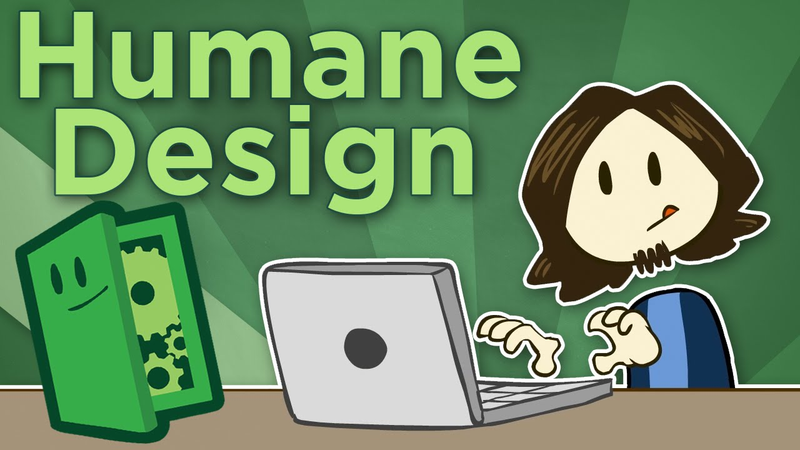
James has been wanting to write this piece for a long time, but he's had trouble working out exactly how to frame it. What I'm going to say here is probably going to play right into the hands of those who would use games as a scapegoat. It's possible that it might even cost James work down the line because it's something that some people in the industry just don't want to hear. But at the same time, we don't want to put kid gloves on this discussion either because this is something we game makers need to honestly face. And if we can't do that, then maybe we deserve the condemnation that gaming's critics have thrown at us. Today, I want to talk about humane game design. As a game designer, it is James' job to craft experiences. The designer is storyteller and psychologist, illusionist and manipulator. They're the perveyor of hope and joy and distraction. They ask for your mind and your heart. They ask for your time and attention and in return they promise you an experience like no other. These facets of what we do can be used in a way that's humane, that respects our player and their life
outside the game. Or they can be used in a way that treats the player as nothing more than the meat needed to feed the game. We can see the player as a person or as an engine to keep up the play. It's the designer's responsibility to understand this and to value the player as more than simply a player, but to value them as a human being. How do we do this? By first accepting the fact that we affect people. All art affects people. It doesn't matter if it's a pop song or a Picasso painting. If you've ever listened to your favorite tune on a bad day and things started to feel a little bit better, then you've been affected by art. If you've ever been in a situation and thought to yourself, "What would my favorite character do?" then you've been affected by art. If you've ever spent time thinking about an idea from a movie or a TV show or a novel, you've been affected by art. And games are no different. They're art. They're a mass medium. They leave a fingerprint on our culture and who we are. And that doesn't mean that we have to endorse any of these ludicrous claims that games have some weird detrimental effect that other media somehow don't have, but we've spent so long fighting
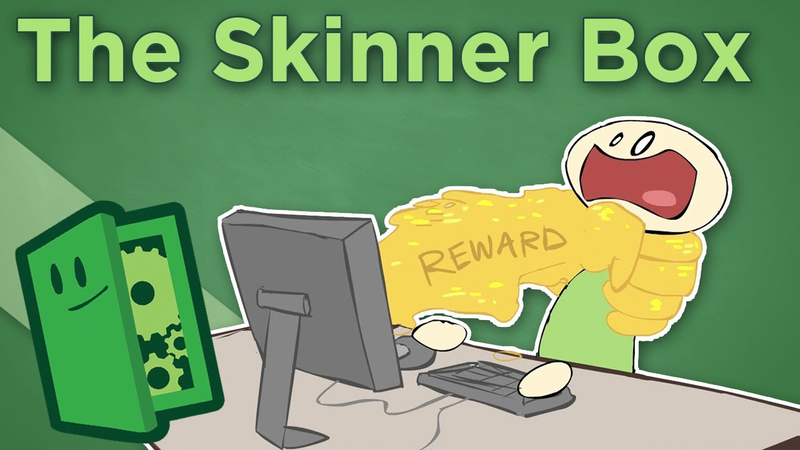
that scapegoat narrative that games are bad for you somehow that we've started to deny that games can affect you at all, and that's just untrue. We need to accept that games can affect us and embrace that fact. This means that yes, we should give a lot of consideration to the subject matter of our games, not just whether it fits a market hole or hits a target demographic, but to reflect on what it means to our players and to our society. And that's not to say we should censor ourselves or shy away from any subject matter, but that we owe it to everybody to spend some time really considering what it is our game say, how it will affect people, and whether or not that's an effect we want to have. We also have to consider what our goals are when we design. And this is the argument that James has been laughed at for, but we have to stop making it our goal to capture as much of the player's time as possible, and instead make it our goal to ensure that they have the best experience possible with our games. Any game designer worth their salt can throw together a Skinner box, one that can sink its hooks in and keep you playing a game long after you
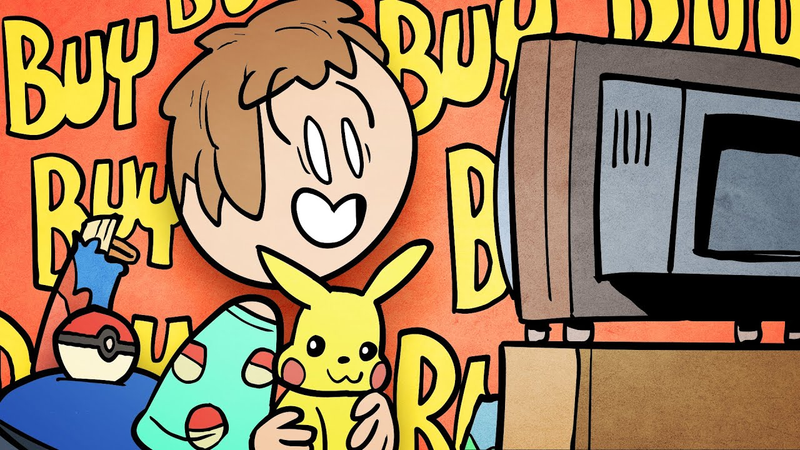
stopped enjoying it. And we do make those a lot because it's sometimes easy to start seeing players as a money-generating engine rather than people. And when we end up forgetting about the human beings who will end up playing our game, we build things into our games that are worse for the player and sometimes worse for the industry, using profitability as an excuse to do lazy design. And this is not just a mobile game and an MMO problem, it's everywhere. This is how Call of Duty keeps you playing and playing until it's time to buy the next one. For those of you who play Madden, have you noticed how they've built in more and more of these systems over the years? The funny thing is that this stuff doesn't guarantee or even really enhance profitability. Think of all the treadmill MMOs and the countless Skinner box social games that have just failed. And wow, how many multiplayer shooters with a progression system have we seen completely flop in the last 5 years? And yet, despite all that, for this lazy easy design, we've ruined lives. It's time we stop denying it. We have. We've impoverished players, we've ruined relationships, we've stolen months and
years of time away from people that could have been spent on things that would bring actual joy. We can't deny that, and we need to stop trying to. Instead, we have to start doing better. The most profitable games in the world, the Leagues, the Dota 2s, the Minecraft, they don't rely on these systems. They rely on the player wanting to play the game rather than making them feel like they have to. Humane design requires that we give players exit points in our games. Humane design involves not trying to habituate players by training them to play on a schedule. Humane design doesn't use guilt as a motivator. It doesn't punish you for having something more important to do on a given day. It doesn't exploit your friendships to get you to push the game on your friends or to pressure you into paying money. It doesn't use adrenaline and empowerment to give you a fix that you might be lacking in your life, but instead uses them to empower you in your life outside the game. It doesn't intentionally waste the player's time or artificially lengthen the experience. If your kid is crying in the other room, humane design doesn't punish you for putting the game down to take care of that. Humane design
thinks about what we say with our mechanics, with our art, with our sound, with our themes. Humane design thinks about the stories we tell with every line of dialogue and every pull of the trigger. It is our job as designers to create a medium where the goal isn't simply to capture as much of humanity's time as possible, but rather to create a medium that brings the most joy. And while that kind of is far more difficult, in the end, it benefits all of us. It benefits the player, it benefits the industry, and it benefits the art. See you next week.
Mhm.
Summary
Game design carries a profound responsibility to treat players as human beings rather than mere revenue-generating engines. The core thesis posits that because games are a powerful art form capable of influencing behavior and culture, designers must move away from exploitative, habit-forming mechanics—often referred to as Skinner boxes—and toward a philosophy of humane design. This approach prioritizes the quality of the player's experience and their well-being over the industry's tendency to maximize time-on-device through psychological manipulation.
The industry frequently relies on lazy design patterns, such as artificial progression systems, scheduled play requirements, and guilt-based social pressures, to retain users. These tactics are not only ethically questionable but also commercially unreliable, as evidenced by the high failure rate of games that prioritize these systems over genuine engagement. In contrast, the most successful titles in the industry, such as Minecraft or Dota 2, demonstrate that long-term profitability and player loyalty are better achieved by fostering an environment where users play because they find intrinsic joy in the experience, not because they are compelled by addictive loops.
Humane design requires designers to intentionally incorporate exit points, avoid punishing players for attending to real-world responsibilities, and refrain from exploiting personal relationships for monetization. By shifting the focus from capturing as much of a player's time as possible to creating meaningful, positive experiences, the industry can move past the defensive posture of denying the impact of games. Ultimately, adopting a more ethical framework benefits the player, strengthens the industry's reputation, and elevates the medium as a legitimate and respected form of art.






















Comments