Player Behavior reports and market data
Documents

Estudio Videojuegos y Adultos 2015: España
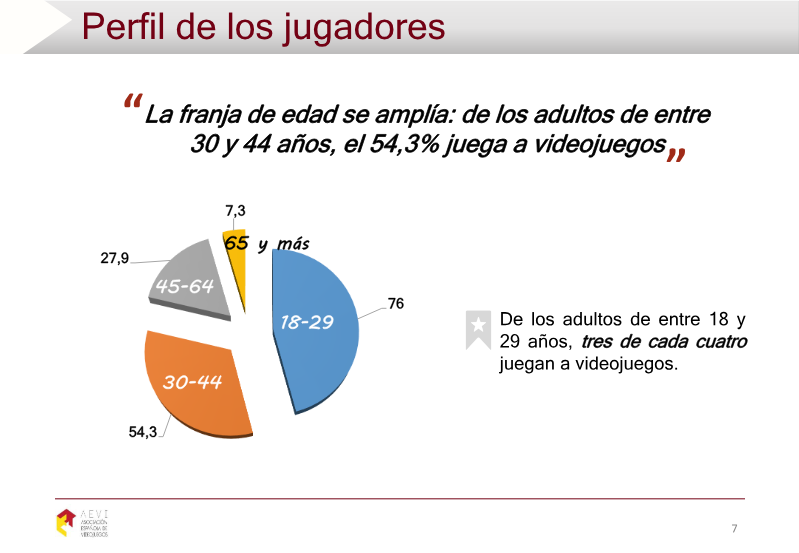
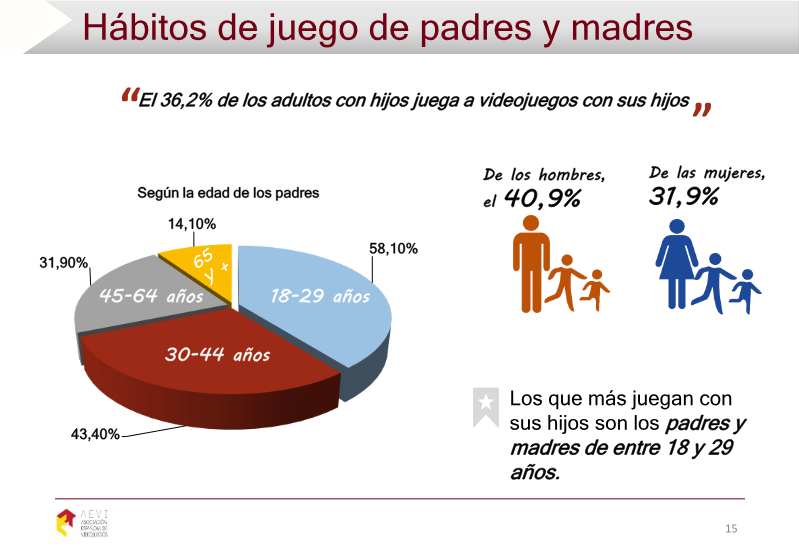
The study aimed to gauge the penetration of video games among Spanish adults, map the demographic profile of adult gamers, explore attitudes and usage habits, compare adults with and without children, and assess purchase intentions for the 2015 holiday season.
- In 2015, 38.9 percent of Spanish adults played video games, with the highest engagement found in the 18-29 age demographic at 75 percent.
- Gaming habits are gender-split by platform preference: men favor consoles (66.2 percent), while women primarily use smartphones (57.6 percent).
- Habitual gamers, defined as those playing weekly or daily, account for 41.5 percent of the gaming population and are 60 percent male.
Destiny is Gaming's "Law & Order" - Video Game Comfort Food - Extra Credits
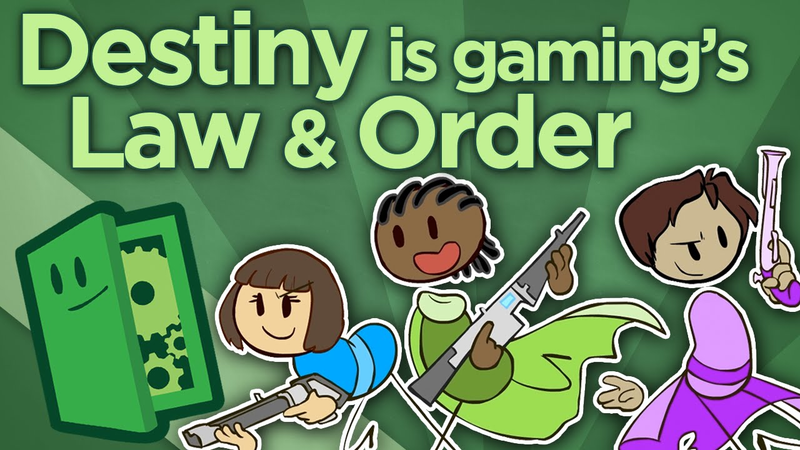
The primary thesis of this analysis is that Destiny functions as the "Law & Order" of the video game industry, succeeding not through singular moments of brilliance, but by providing a consistently reliable, accessible, and high-quality "comfort food" experience.
- Destiny succeeds as a 'comfort food' title by prioritizing a consistent, high-quality experience across all activities rather than attempting to master a single niche.
- The game functions as a unifying platform for diverse friend groups by integrating PvE and PvP progression, allowing players with different preferences to engage in the same ecosystem.
- Destiny offers a low-friction, evergreen model that provides long-term investment value, contrasting with the finite nature of single-player games or annual franchise releases.
Balancing an MMO Ecosystem - Getting a Mix of Player Types - Extra Credits
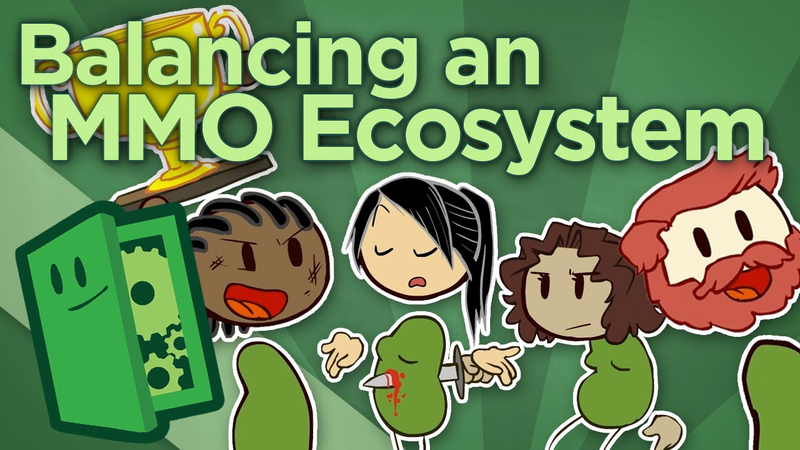
Maintaining a healthy ecosystem in massive multiplayer online games requires a strategic balance between four distinct player types: achievers, explorers, socializers, and killers.
- Long-term MMO sustainability depends on maintaining a balanced ecosystem of four distinct player types: achievers, explorers, socializers, and killers.
- Player types exist in an interdependent feedback loop where the dominance of one group often leads to content stagnation, new player alienation, or total population collapse.
- Achievers focus on progression and mastery, making them primary targets for killers, which creates a tension that can drive achievers out of the game if not properly managed.
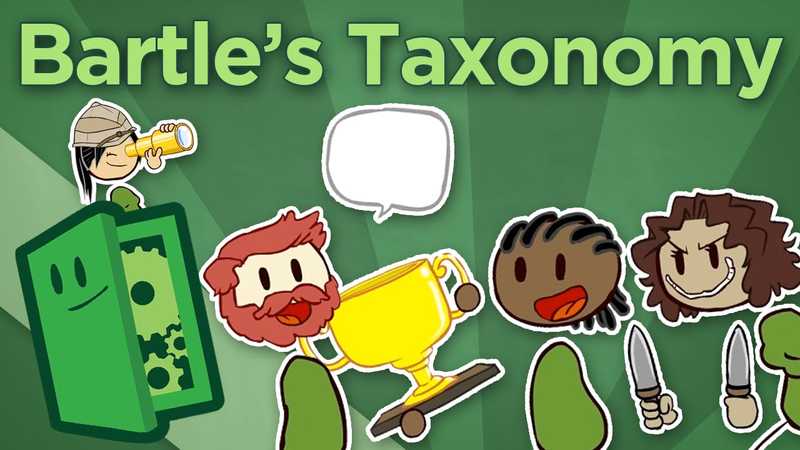
Bartle's Taxonomy - What Type of Player are You? - Extra Credits
Bartle’s Taxonomy serves as a foundational framework for understanding player psychology within multiplayer environments.
- Bartle’s Taxonomy categorizes player motivations into four archetypes—Achievers, Explorers, Socializers, and Killers—based on Richard Bartle’s sixteen years of observation of Multi-User Dungeon (MUD) players.
- The taxonomy utilizes a two-axis coordinate system—acting versus interacting and players versus the world—to map how specific game mechanics influence user behavior.
- Achievers are driven by mastery and status, while Explorers prioritize the discovery of hidden mechanics, lore, and secret areas.

PechaKucha: Mark Val on why games are about people
The pursuit of fame and recognition within the gaming industry is often misaligned with the core purpose of game development.
- The gaming industry is increasingly defined by human experience and personality over technical software specifications, as evidenced by the rise of platforms like Twitch and prominent content creators.
- Weekly engagement in esports has reached over 300 million people, highlighting the massive audience shift toward human-centric content.
- Success in a saturated market is driven by persistent belief in a unique vision and authentic human connection rather than the pursuit of immediate fame or external validation.

Biz Daily: Games industry and mental illness
The public discourse surrounding Markus Persson, the creator of Minecraft, highlights a significant disconnect in how society perceives mental health when wealth and professional success are involved.
- The public discourse following Markus Persson’s $2.5 billion sale of Mojang to Microsoft reveals a systemic bias where mental health struggles are invalidated by high socioeconomic status.
- Media coverage of Persson’s expressions of isolation and lack of purpose frequently dismissed his mental health concerns as superficial or attention-seeking rather than genuine human struggle.
- Societal perceptions of mental health remain inconsistent, as physical illnesses typically garner empathy regardless of wealth, while emotional distress in the wealthy is often met with cynicism.
Speedrunning - Games Done Quick and Developer Tips - Extra Credits
Speedrunning represents a significant phenomenon in gaming, characterized by players attempting to complete games in the shortest possible time.
- Developers should prioritize mechanical consistency and precise, responsive controls, as identical player inputs must yield identical results to support the repetitive nature of speedrunning.
- Designers should avoid singular, forced paths through a game, instead offering versatile problem-solving options that encourage player experimentation.
- Scripted enemy behaviors are preferable to complex AI systems because they reduce unpredictable variables that can frustrate high-level players.
Advanced Social Curve Design - Empowering the Community - Extra Credits
Effective social curve design in multiplayer games relies on treating social interaction as a core gameplay challenge rather than a secondary feature.
- Designers should treat social interaction as a core gameplay challenge, requiring players to solve problems through coordination rather than just mechanical skill.
- Social progression should follow a structured curve, starting with simple group objectives and advancing toward complex leadership and organizational roles.
- As players reach the endgame, social prestige—such as titles, leaderboard status, and visible gear—becomes a more effective motivator than minor statistical upgrades.
Intermediate Social Curve Design - Introducing Cooperation Rewards - Extra Credits
Effective social game design requires a structured progression that transitions players from solitary mechanical mastery to collaborative social engagement.
- Effective social design requires a structured progression that transitions players from solitary mechanical mastery to collaborative engagement without mandating group play.
- Designers should implement low-friction social challenges that offer tangible rewards, such as improved loot drops, faster leveling, or increased success rates, to incentivize cooperation.
- Early-stage social interactions should be designed for short durations with minimal communication requirements to lower the barrier to entry for players.
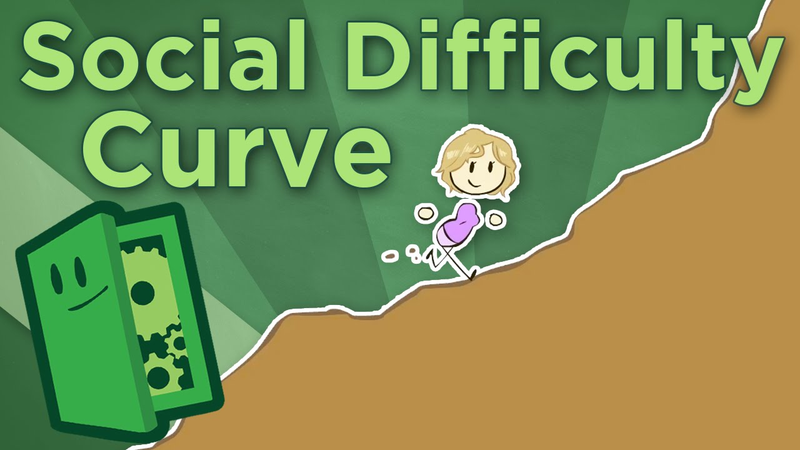
Social Difficulty Curve - Easing Players into Communication - Extra Credits
Game design frequently utilizes a difficulty curve to manage player engagement, ensuring that mechanical challenges scale appropriately with a user's growing skill.
- Game designers must apply the same pedagogical rigor to social interaction that they apply to mechanical difficulty curves to prevent player burnout and improve retention.
- Social skill in gaming should be treated as a progressive competency that evolves from solitary play to complex interpersonal coordination.
- Developers should implement a foundational solo-play phase, such as starting zones or single-player campaigns, to allow players to master core mechanics before introducing social distractions.
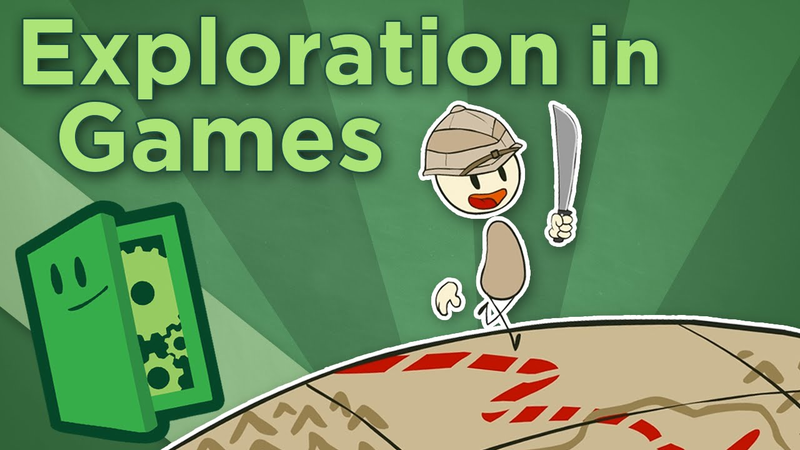
Exploration in Games - Four Ways Players Discover Joy - Extra Credits
The core thesis of this analysis is that the human drive for exploration in games is best understood as the "joy of discovery," a concept that extends far beyond traditional geographic traversal.
- Exploration in games is defined by four distinct pillars: geographic, mechanical, content, and narrative discovery.
- Mechanical discovery, which involves mastering complex systems and hidden strategies, is the most cost-effective method to implement despite presenting the highest design challenge.
- Geographic discovery is the most resource-intensive form of development, requiring significant investment to create new, immersive locations.
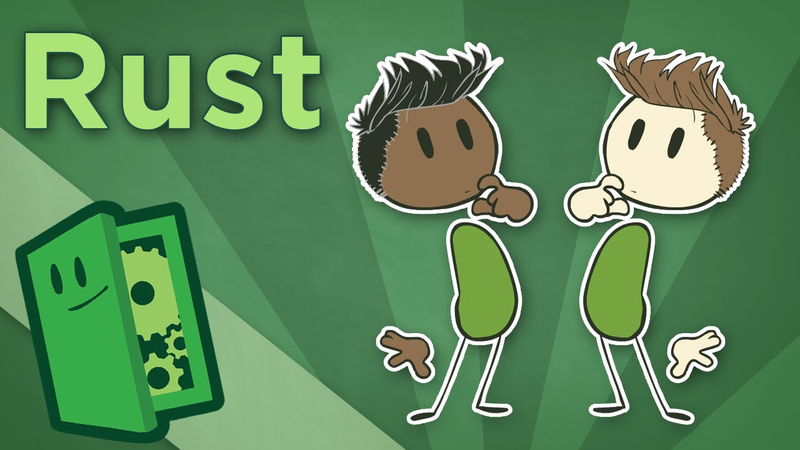
Rust - Representing Race in Games - Extra Credits
The survival game Rust utilizes a unique character creation system that assigns players a permanent skin color tied to their Steam ID, removing all player agency regarding their avatar’s ethnicity.
- Rust enforces permanent, randomized character ethnicity tied to a player's Steam ID, removing all user agency over their avatar's physical appearance.
- This design choice functions as a sociological experiment that forces players to experience the game world through a racial identity they did not choose.
- By intentionally allowing uncensored player communication, the game exposes users to racial discrimination and slurs, compelling them to confront the realities faced by marginalized groups.