1 free read left. Create a free account for unlimited reading + AI research.
Create free account
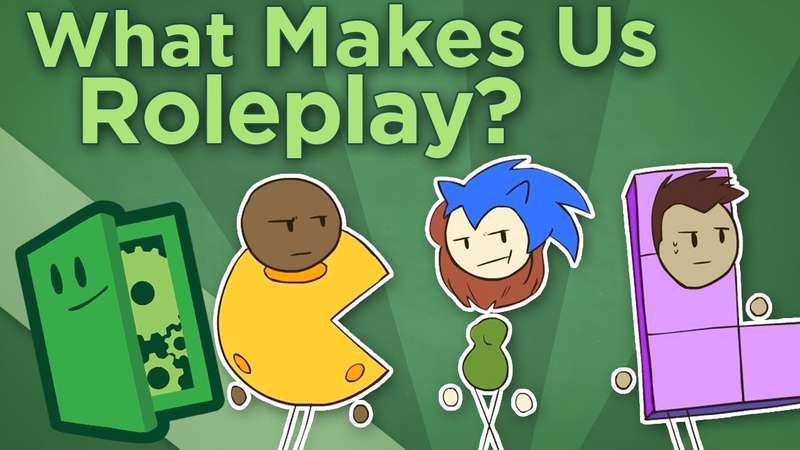
What Makes Us Roleplay? - Why Game Worlds Feel Real - Extra Credits
Key insights
6 takeaways- 01To foster genuine roleplay, developers must move players away from mechanical optimization and toward decision-making driven by character persona.
- 02Incentivizing choices through mechanical rewards like alignment points often discourages immersion by forcing players to prioritize game-state progression over narrative consistency.
- 03Limiting player options through time-sensitive mechanics or non-exhaustive dialogue trees increases the weight of decisions and anchors the player within the game world.
- 04A single, impactful moment of accountability where a player must confront the results of their choices is often sufficient to shift their mindset from viewing the game as a series of puzzles.
- 05Implementing permanent consequences for actions, such as the irreversible loss of a unit or a failed mission, forces players to treat the virtual environment as a consequential, living world.
- 06Games should treat loss as a narrative turning point rather than a failure state to encourage players to act according to their character rather than seeking the most efficient outcome.
Ask AI about this video
Transcript
A few weeks back we were doing a panel at a con and a really interesting discussion cropped up about what makes us role play in games and I don't mean the question of why we role play like what psychological need it fulfills although that would make a great episode too. No, I mean in the sense of mechanically how do games get us to role play? What sort of things do games do to put us in that role playing state of mind because not every game pulls that off not even all role playing games. For a lot of us in many of the games we play we'll enjoy the game play but we won't really get into character. We won't become the hero or take on their persona or make decisions based on what our character would do rather than on what in game consequences the decision might have. Why is that? What drives us to build a tower of cheese wheels for laughs in a role playing game like Skyrim or to simply shoot our way through an FPS without thinking about what it might mean in the context of that world. What makes it so that we might care more about the mechanical game play results that we're getting out of our RPG character skill tree than
about what it says about who our character really is. Actually, maybe it's better to ask the question in reverse. What is it about other games that does make us get into character? What makes it so that we'd rather choose the dialogue option that our character would really say rather than the one that would get us that awesome sword. We've touched on this a little before when we discussed the difference between choices and calculations and all of that's still true. If you mechanically incentivize a choice it becomes a barrier to players role playing around it. If you list a choice as either Renegade or Paragon and the player knows that certain in game abilities can only be accessed by earning a lot of Paragon or Renegade points then the player is going to be torn between choosing what's right for their character and getting to play the game the way they want. Even having to stop and consider this choice will break the player's immersion by making them confront the fact that they are indeed playing a game. Today I'd like to come at this problem from a different angle. I want to look at the sort of things a game can do to positively encourage us to role play or to get into character. The first of these is a demonstration of consequences. This is the swift kick to the head that makes us think about what
our actions mean within the game. For example, in the very beginning of Deus Ex Human Revolution, there's a moment where you're told that you have to save a group of hostages. There's a lot of urgency in the dialogue, but if your head's not in that role-playing mode and you're just playing in the way that most games have trained us to, you know how this works. You have to rescue these hostages. The game's not even going to continue until you rescue these hostages. So, you muck about. You look for all the hidden secrets that the game's trying to trick you into missing with that hostage thing. You flush all the toilets because you can. But, as you're stacking up a pile of tin cans somewhere in the corner, bam, an explosion rips through the building. Those hostages are dead, and the game forces you to confront this. You're reminded that you let them die by not taking the urgency of that situation seriously. And all of a sudden, this world becomes real. The beginning of Chrono Trigger is another good example. Here, you're playing a JRPG, and we've all been trained not to take the worlds of JRPGs too seriously. You walk into people's houses, you steal their stuff, you break their pots, you rummage around in their trash. It's just how these
games work. So, you'll find yourself doing that here, picking up treasure around the town, eating sandwiches that you just find lying around. But, later, a bunch of stuff happens, and your character's put on trial. And all of the townspeople come out and testify as character witnesses. And if you wantonly smashed their stuff or stole their lunch, they're going to call you a jerk, like real people would. This demonstration of consequences, this swift kick to the head, gets us thinking about the game world as a real place, and gets us to act within it as such. And you only have to do it once. You only have to realign the player's thinking one time from this is just a game to wait, what have I done? To make them far more likely to role-play, to act as they would act or as their character would act within that world. Of course, it's even better if the game confronts us with the ramifications of our decisions throughout the experience, but if that's too expensive a prospect from a development perspective, it's surprising how much effect we can get simply by jarring the player into thinking of the world of the game as a real world one time. The other thing that really gets us to dive into the
role of the characters we play is the idea of permanence. Actions which are impermanent draw us away from the reality of the game. They present us with a temptation to trivialize the importance of our own actions. But actions which have a permanent and immutable effect on the world we play in force us to consider our actions more carefully. The simplest example of this is in dialogue trees. If you can go up to an NPC and talk to them over and over and over again to get them to say every single possible line of dialogue, it may tell you more about the world, but it's a very gamey, unrealistic style of conversation, which makes it harder for us to dive in and role play our character. Or consider the calendar system in the Persona series. Each day you have a number of actions you can take and people you can interact with. But whatever action you choose permanently sacrifices your ability to have spent that day in some other way. You've only got one year to spend in this world and that makes the choice of how to spend each day and who to spend it with very important to you. It brings you into being the character rather than just playing them. And then, of course, there's death. If we can make death
important in a game, it makes the world more real and it gives weight to many of our actions, drawing us into role play. And by this I don't just mean permanent death. On the one hand, permanent death feels like an obvious way to make the game world reflect reality and to add weight to decisions. But permanent death can also sometimes be a problem when we feel like it forces us to reset the game because that causes frustration and, ironically, highlights the gamey nature of the experience. If the game makes you feel like you should load a previous save and try to prevent a character from dying, in effect, it's not really permanent death, but rather an alternate lose condition. If anything, that pulls you out of the role play experience. If you can avoid that type of scenario, though, permanent death can be an amazing way to draw the player into the game world. But there are other ways to make death meaningful and to have it act as an anchor to pull us into the living story we're playing. I had one person at the panel tell me about playing gratuitous space battles, and there was a battle early on that he won, but his forces were almost completely wiped out. One single battleship survived to heroically win the day. For that player,
after that battle, the entire game became about the story of this hero battleship and its crew's desperate journey to survive the rest of the war. The game wasn't just about numbers for him anymore. Somebody else had a similar story about a time that they were playing Pokémon and taking on the challenge where if a Pokémon ever gets KO'd, you have to release it. All of a sudden, he was the trainer, and the moment-to-moment play, the minor trainer battles between towns, became their own story. And there were some heroic Pokémon that survived and stuck by his side the whole way until the end, where they sacrificed themselves for him when he needed it most. Heck, when James played Fallout 3, he wouldn't let the dog die, and the whole game for him became about a boy and his dog wandering the wastes. I even heard an amazing story where a fellow lost his memory card and suddenly Spyro became a real adventure for him. He was racing to beat the game without a save to fall back on or any option of stopping to continue the adventure later. The experience took on that urgency he needed to live the adventure. This is just the tip of the iceberg, but it's a good place to start.
That sudden kick to the brain that forces us to think of the game world as a real place, combined with the permanent aspect of play that don't just send us running for the reset button, seem to be two factors that help really bring us into our games and take on a role within them. If any of you watching this have a great role-play story of your own, please, please share it. I just love hearing these things. I'll see you all next week. Woo!
Summary
The primary challenge in game design is transitioning players from mechanical optimization to genuine roleplay, where decisions are driven by character persona rather than systemic rewards. Many games inadvertently discourage immersion by incentivizing choices through mechanical bonuses, such as alignment points, which force players to prioritize game-state progression over narrative consistency. To foster a deeper sense of reality, developers must shift the player’s mindset from viewing the game as a series of puzzles to treating the virtual environment as a consequential, living world.
Two primary mechanisms effectively facilitate this immersion. First, the demonstration of consequences serves as a critical catalyst; by forcing players to confront the irreversible results of their inaction or poor choices—such as failing to save hostages in a time-sensitive mission or being judged by NPCs for petty theft—games can abruptly shatter the "it’s just a game" mentality. A single, impactful moment of accountability is often sufficient to realign the player’s perspective for the remainder of the experience.
Second, the implementation of permanence is essential for grounding the player in their role. When actions cannot be undone or dialogue trees are not exhaustive, the weight of every decision increases. Systems that limit time, such as calendar-based progression, or mechanics that treat loss as a narrative turning point rather than a failure state, transform gameplay from a series of calculations into a personal story. Whether through the loss of a unit in a strategy game or the commitment to a specific character path, these permanent stakes anchor the player within the world, encouraging them to act as their character would rather than as a player seeking the most efficient outcome.



















Comments