1 free read left. Create a free account for unlimited reading + AI research.
Create free account
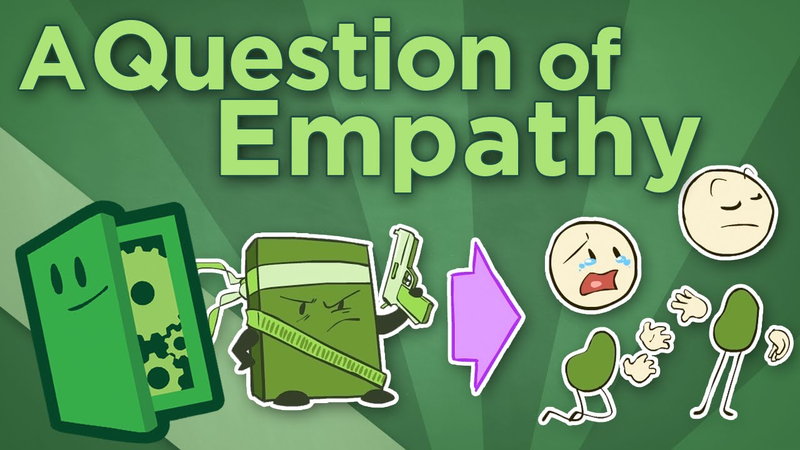
A Question of Empathy - Are There Positive Effects from Gaming? - Extra Credits
Key insights
5 takeaways- 01Video games provide a unique medium for experiential learning that allows players to inhabit the lives of others, potentially bridging the gap between intellectual sympathy and instinctual empathy.
- 02The 2012 Brock University study of 109 eighth-grade students, which suggested a link between violent games and lower empathy, demonstrates correlation rather than causation and fails to account for the possibility that individuals with lower baseline empathy may simply prefer violent media.
- 03The current academic and media discourse is disproportionately focused on negative correlations, creating a significant research gap regarding the potential for gaming to foster emotional intelligence and social understanding.
- 04Games like 'Cart Life' and 'This War of Mine' demonstrate how interactive media can place players in complex, high-stakes scenarios to help them process grief, navigate poverty, and confront moral dilemmas.
- 05Unlike passive media such as books or film, the active decision-making required in video games allows players to explore perspectives and hardships they have never encountered in their own lives.
Ask AI about this video
Transcript
back in 2012 there was a study done by a PhD candidate at Brock University on whether video games affected empathy this was a fairly small study done with 109 eth grade students I have some issues with the study what it actually shows is a correlation between video games and lack of empathy rather than causation and I think it's a little Hasty to jump to certain conclusions kids in the study who said they liked violent video games more than any other kind showed less empathy than other children but I'm willing to bet that people who say I like really violent books or movies or TV shows probably also register less empathy than those that don't it seems as reasonable to me to draw the conclusion that less empathetic people tend to like more violent games as it is to draw the conclusion that violent games make people less empathetic still I don't want to beat up on the researcher I think the study was done in good faith and it's even titled violent video game playing moral reasoning and attitudes toward violence in adolescence is there a connection highlighting that it's a
study of correlation rather than causation even if that line gets a little bit blurry in the conclusions they draw at the end but for some reason over the last few months this study has come up again and again with BBC articles featuring titles like violent video games leave teens morally immature and bdrs fabulously titled researchers playing too much GTA actually can make you a sociopath in fact it seems like the BBC gloss of this study has been making the rounds James has been asked about it at conferences and confronted with it when speaking with politicians but for all that it's not really this study that I want to talk about today I've already covered my issues with it and I think anybody doing even a cursory reading of the study itself will find that it doesn't in any way show or really even attempt to show a direct causal link between violent video games and a lack of empathy in fact if that's an argument you really want to make there are other more robust studies that you could turn to although I think the conclusions they draw are also debatable what I actually want to talk about today is rather the gaping hole the glaring abs that always seems so blindingly
clear when such studies are brought up and that's where are all the studies on the positive effects of games on empathy almost anybody who's played video games for an extended period of time can relate at least one empathetic experience they've had within a game we can almost all point to a time when a game made us better understand a pain that we'd perhaps never felt in our lives and how that helped us be more sensitive to others suffering from that pain and that's the magical thing about games they let us walk a mile in somebody else's shoes they let us take on a life that we'd never actually be able to experience in this world and in doing so help us understand a little bit about it James once told me about this memory he had playing Final Fantasy 4 as a young kid when palum and porum died at that point he had never lost anybody in his life he remembered wanting them back trying everything he could to get them out of that stone but nothing he did could ever bring them back and as silly as it sounds in a tiny way he understood he could feel compassion for friends of his who had lost somebody in a way that he hadn't been able to before
more recently he was playing cart life and he remembered seeing that his character was hungry using his traditional video game logic he thought oh I'll just open up the map and it'll tell me where I can go to find food but when he opened up the map there was nothing just a map in a language that he could barely read he had only a few dollars in his pocket he didn't know where to get a decent cheap meal or how to take public transportation he couldn't even really ask anybody because of the language barrier that moment stopped him it made him empathize on an instinctual level with something that had only before really sympathized with on an intellectual one or even just a few weeks back he was playing this war of mine and one of his characters was out Scavenging and he heard a conversation happening between a soldier and a young woman on the other side of the door he overheard the soldier threatening the woman coercing her into sex he stood on the other side of the door undetected unnoticed his first thought was that he could try to rush in and try to save her his second thought was that he only had a shovel and that he had left three people at home who were depending on him to bring back food and medicine if he let the soldier drag
off this woman and rape her he could almost certainly ensure that his little surrogate family would live for a few more days Gathering the supplies they so desperately needed while the soldier was distracted by this terrible act this Choice wrecked James he had to put the game down for a while all of a sudden he better understood people trapped in these desperate situations circumstances didn't appear so black and white as they had before he is forever thankful that he hasn't experienced anything like that in his life and of course his understanding of the horror and the suffering of even having to make such a choice is still minuscule but it helped bring about in him empathy and understanding so while studies like the Brock University one are bandied about to defend the idea that video games strip us of our empathy I'd like to raise the question where are the other studies where are the studies asking whether video games can make us more empathetic where are the studies asking just in some small fraction whether living somebody else's life rather than simply seeing it on a screen or reading about it on a page might in fact be even more beneficial in helping us to
understand one another if any of you out there happen to be PhD students or professors and looking for research to do I'd like to gently nudge you in this direction and if any of you have done such studies please please send them our way we'll see you guys next week [Music] he [Music]
Summary
The discourse surrounding the relationship between video games and empathy is frequently dominated by studies focusing on potential negative correlations, such as a 2012 Brock University study involving 109 eighth-grade students. While this research suggested a link between a preference for violent video games and lower levels of empathy, it is fundamentally a study of correlation rather than causation. The tendency for media outlets to misinterpret such findings as evidence that games cause sociopathic behavior or moral immaturity ignores the possibility that individuals with lower baseline empathy may simply gravitate toward violent media.
Despite the prevalence of these negative narratives, there is a significant lack of research exploring the positive potential of gaming to foster empathy. Video games offer a unique interactive medium that allows players to inhabit the lives of others, providing experiential learning that transcends the passive observation found in books or film. By placing players in complex, high-stakes scenarios—such as navigating the logistical struggles of poverty in Cart Life or confronting the impossible moral dilemmas of war in This War of Mine—games can bridge the gap between intellectual sympathy and instinctual empathy.
These experiences allow players to process grief, navigate language barriers, and confront the brutal realities of survival, often resulting in a deeper, more nuanced understanding of human suffering. Because games require active decision-making, they provide a framework for players to explore perspectives and hardships they have never encountered in their own lives. There is a pressing need for academic inquiry to shift toward investigating these positive effects, specifically examining how the immersive nature of interactive media can enhance emotional intelligence and social understanding.























Comments