1 free read left. Create a free account for unlimited reading + AI research.
Create free account
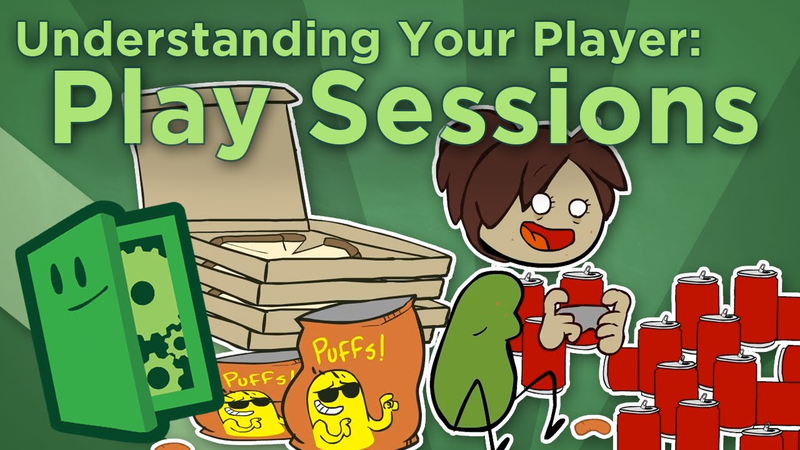
Understanding Your Player: Play Sessions - How Will People Play Your Game? - Extra Credits
Key insights
6 takeaways- 01Design session length as a deliberate constraint that aligns with the player's lifestyle, platform, and core gameplay loop rather than treating it as an arbitrary metric.
- 02Titles designed for daily engagement typically benefit from session lengths of 20 to 30 minutes.
- 03The most effective methodology for validating session design is testing the game within the specific real-world environments where the target audience is intended to play.
- 04Games intended for high-frequency, multiple-times-daily play should prioritize short, satisfying sessions of approximately five minutes.
- 05Games played only once weekly require robust support structures, such as narrative recaps and detailed quest logs, to help players reorient themselves after long absences.
- 06Long-form games, including 80-hour RPGs, must incorporate design elements that ensure a 30-minute session provides a tangible sense of completion or progress.
Ask AI about this video
Transcript
so during these last couple of weeks talking about Humane design and exit points we've touched on the idea that play session length is important well a few developers actually reached out to us and asked us to talk about the idea of a play session in more detail and we thought that sounded fun so here we are later we may even do an episode about design tricks that allow us to deliver on satisfying play sessions in a shorter amount of time but today we're going to focus on how to know how how long a play session for your game should be the idea of a play session is pretty straightforward it's just the amount of time we expect the player to play our game in one sitting at First this may seem arbitrary like how could you predict that doesn't it depend on the person playing but session length is actually something designers can carefully plan and build into their games and it's important they do because the wrong play session length can kill a game the easiest place to clearly see examples of poor play session length is when it's platform dependent like the mobile games that you totally would have played if they were on a console but you
just couldn't get into them because they demanded a half an hour of your time in a single sitting which just isn't how you really want to play games on your phone or those console games that have some bite-sized repeating activity that you would totally have played for a few minutes whenever you were bored if it was on your phone but on the console you never bother loading it up because there's always something more substantial you want to dive into instead but it's important to remember proper play session length is not just a matter of platform it's just easiest to see there because A Game's chosen platform so dramatically impacts the design of of a game which brings us to the big question how should you decide what the ideal play session length is for your game well that depends on how you want the player to interact with it which in turn depends on everything from your platform to your core play to how you monetize so let's look at each of those your chosen platform is the easy one so let's start there how do players generally interact with your platform is it one where they sit down for an entire evening of play or is it one that they just play for a few minutes at a time when they've got nothing else to do or is it one where the players look for
something they can do for an hour at most next we have to look at your target audience do you expect players of this game type to only have a few minutes a day they can dedicate to playing games or do you expect them to Crave those weekend long binges after that we've got to consider the main reason the player came to our game are they here for an intricate narrative or an adrenaline high do they want to kill time for a few minutes while they've got nothing else to do or are they looking to lose themselves in a world totally different from the one they know finally you've got to ask yourselves how do you monetize your game because the truth is money is what allows us to keep making games at the end of the day you need players to pay you we could do a whole episode on properly monetizing different types of games with different play session lengths but I'll just give the simplest example there is a reason old arcade games weren't built to have hour-long play sessions something else worth remembering is that talking about play sessions in units of time isn't actually very useful the exact number of minutes isn't nearly as important as the experience those minutes represent think of how you expect your player to play
your game rather than asking yourself if they'll be playing for 5 or 15 or 50 minutes ask yourself are they going to play it on a bus ride in the bathroom during a lunch break over the weekend of waiting for a commercial to end on TV thinking in these terms will help you to better understand your player and allow you to better craft many elements of your design and really it's also the easiest way to talk about and understand play session length when you're ready to see if you've nailed your intended session length go try it under those conditions you planned for Miss is it a good fit or did you find out that there's actually a much better session length Target you should pivot to embrace this data it's useful next you have to ask yourself about frequency of play how often do you expect your player to play your game every day multiple times a day once a week maybe this too will affect how you design multiple parts of your experience for example if you expect the player only to play once a week because your target audience happens to be people who don't have a lot of free time you're going to want to include more reminder tools like Quest logs and story recap options and it'll
also dictate how long you want your play sessions to be the more frequently you expect the player to play your game generally speaking the shorter you want to design play sessions to be so if you expect them to pick up the game eight times a day a play session should probably be maybe 5ish minutes whereas if you're aiming to get them to play once every day you should probably take a lesson from mobas or Call of Duty and aim for about 20 to 30 minute sessions and this doesn't at all mean that they couldn't binge for far longer than that of course we're just talking about the minimum amount of time that the player has to put in to have a satisfying experience with your game as a side note with games that you expect the player to only play once a week just make sure you're very conscious of who your players are are you aiming for the type of people that like to binge play a game all weekend or the type of people who really only get an hour or so of game time all week very different design requirements for those two types of once a week players lastly we have to think about how long we want to keep the player engaged with our game do you expect them to play play your game for a
weekend for a month a year forever usually this one's more of a business question do you want to make sure they're still playing your game by the time the next DLC comes out do you want them to play your game right up until the sequel lands have you made a Perpetual game like a MOA or an MMO and benefit from each day you can keep them playing this affects session length too because if you only need them to be engaged for a month or so but want them highly engaged when that DLC comes out you generally want slightly longer play sessions where the player can fully and get deeply in mesed in your game of course this also means you have to make enough game for it to last them a month at that rate if you want them playing until the sequel comes out like Call of Duty or Madden you want shorter play sessions something in the range of a half an hour because you're expecting them to invest at least that amount of time a couple times a week for a year if you're making a Perpetual game you have to do both you have to design a satisfying short session experience that the player can do pretty much every day they play games but also a binge experience that allows them to get get deeply deeply invested in your game MMO
RPGs are the clearest examples of this with small quests that can feel rewarding to complete in an hour but also multi-hour dungeons that allow the player to really dive in and one final note I think that even in the PC and console World successful games are trending towards having a satisfying half-hour experience and again that's not to say that we shouldn't build in longer experiences too but 80 hour RPGs that demand at least 3 hours per session to feel satisfying are simply too exclusive illusionary to reach the size of audience they need to so even if you are making that 80h hour RPG and you should cuz those are great you may want to find a way to make even a half hour sitting feel satisfying so that those players who think they only have a half an hour a week to play games find themselves not only wanting to play yours but wanting to find more time in their week for games I hope that helps we'll see you next week [Music]
oh [Music]
Summary
Determining the ideal play session length is a critical design decision that directly influences player retention and overall game success. Rather than viewing session length as an arbitrary metric, developers should treat it as a deliberate design constraint that must align with the platform, target audience, core gameplay loop, and monetization strategy. The primary thesis is that a game’s design must accommodate the specific environmental context in which a player chooses to engage with it, whether that is a brief commute, a lunch break, or an extended weekend binge.
Key findings suggest that session length should be framed by the user's lifestyle rather than raw minutes. For instance, games intended for high-frequency play—such as those played multiple times daily—should prioritize short, satisfying sessions of approximately five minutes. Conversely, games designed for daily engagement often benefit from 20 to 30-minute sessions. Developers must also consider the frequency of play; games played only once weekly require different support structures, such as robust quest logs and narrative recaps, to help players reorient themselves.
The analysis concludes that even large-scale, long-form titles, such as 80-hour RPGs, should incorporate design elements that make a 30-minute session feel rewarding. By ensuring that even short sittings provide a sense of completion or progress, developers can broaden their audience reach and accommodate players with limited time. Ultimately, the most successful designs balance these short-term satisfaction loops with the potential for deeper, longer-form immersion, ensuring the game remains accessible regardless of the player's available time. Testing the game within the specific environments intended for the target audience is the most effective methodology for validating these design choices.























Comments