Player Behavior reports and market data
Documents
Understanding Web3 Player Behavior - Naavik Gaming Podcast
Web3 game development is currently undergoing a critical transition from speculative, macroeconomic-focused analysis toward granular, user-centric behavioral intelligence.
- Web3 game developers are shifting from speculative macroeconomic analysis toward granular, user-centric behavioral intelligence that integrates on-chain activity with traditional off-chain metrics.
- By analyzing wallet-centric data—such as asset holdings, minting history, and secondary market behavior—developers can now construct player personas with a level of sophistication comparable to Web2 analytics.
- A unified view of on-chain and off-chain data allows developers to identify high-value user segments, including liquidity providers, DAO participants, and community influencers, to better calculate network lifetime value.

How Hard Should Quests Be?
The design of quest clarity in video games represents a significant spectrum of player engagement, ranging from fully opaque, lore-heavy exploration to highly guided, objective-driven experiences.
- Quest design must align with a game's core goals, as there is no single superior methodology; mismatching guidance levels with desired narrative intensity risks alienating the target audience.
- Maximal-work designs, exemplified by Elden Ring, prioritize deep immersion and discovery by requiring players to engage directly with world-building and lore to identify objectives.
- Standardized, high-clarity models popularized by World of Warcraft and Assassin’s Creed utilize map markers and indicators to streamline gameplay, though this risks reducing narrative immersion by encouraging players to ignore context.
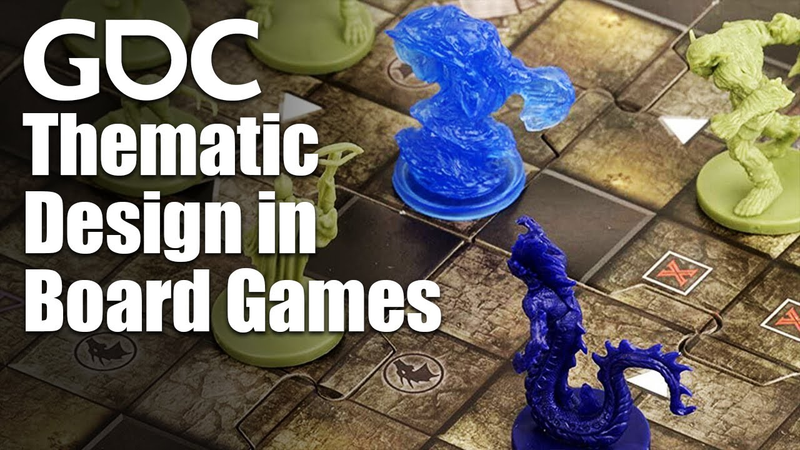
Creating Resonance with Thematic Tabletop Game Design
Board game design functions most effectively as an architectural art form rather than a purely mechanical engineering challenge.
- Resonance in tabletop design is defined by the formula: (Familiarity + Unexpectedness) - Chaff.
- Thematic integration requires that mechanics and win conditions directly mirror the goals and desires of the characters, as seen in the socio-political alignment of factions in the game Root.
- Designers should treat theme as a learnable skill rather than an engineering problem, using it to pull new players into the hobby by focusing on emotional connection rather than just mechanical puzzles.
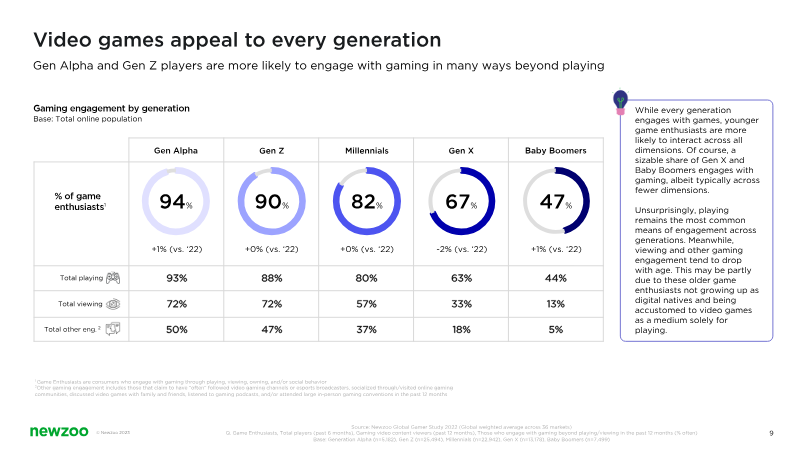
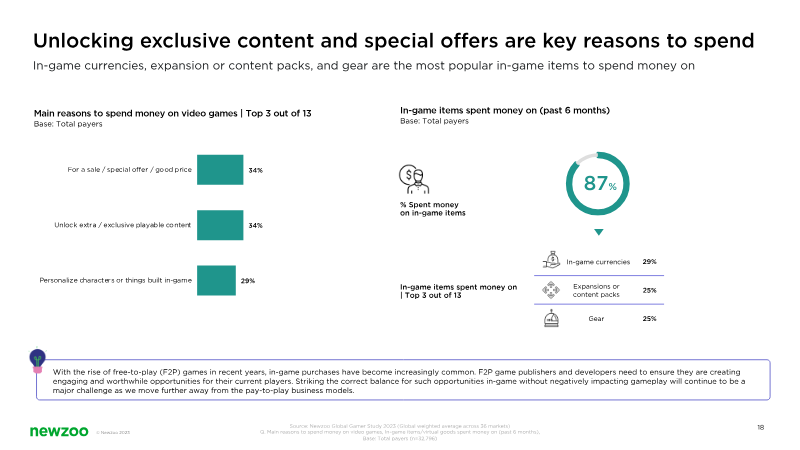
How Consumers Engage with Video Games Today: Global Gamer Study 2023
Gaming has evolved into a pervasive, multi-dimensional activity that now encompasses 79 percent of the global online population.
- Gaming now reaches 79 percent of the global online population, functioning as a primary hub for social interaction and content consumption rather than just gameplay.
- Nearly 50 percent of gamers utilize multiple devices, with 'tri-platform' users demonstrating significantly higher time investment and financial spending than single-platform players.
- While mobile gaming acts as the primary entry point for the broadest audience, console platforms currently maintain the highest play-to-pay conversion rates.


State of Mobile Games: Cognitive and Psychological Benefits
The report investigates how mobile games influence cognitive and psychological well-being, drawing on a large U.S. sample of 483 participants (252 men, 213 women, 18 non-binary) and a series of 28 individual game studies.
- Mobile games function as effective, scalable tools for mental well-being, with specific titles demonstrating significant positive effects on creativity (Colorize, d=1.17), focus (Sound Sky, d=0.90), determination (Nature Video, d=0.76), and calmness (Color Breathing, d=0.61).
- Personality traits significantly dictate user engagement, as extraverts favor social and action-oriented games while introverts prefer relaxation-focused titles, and openness correlates with immersion and inspiration motives.
- Game mechanics directly influence psychological outcomes: puzzle-centric titles consistently boost creativity and curiosity, whereas timed or competitive games are more effective at enhancing focus and grit.


Video Game Streaming Trends 2022 Yearly Report
Western live streaming viewership experienced a 13.5% year-over-year decline in 2022, totaling 29.5 billion hours watched.
- Western live streaming viewership fell 13.5% year-over-year in 2022 to 29.5 billion hours, driven largely by a 14% reduction in unique active channels.
- Twitch maintained market dominance while YouTube Gaming solidified its position as the second-largest platform, despite Facebook Gaming suffering a 56% viewership decline.
- Creator-driven events and original programming frequently outperformed traditional AAA game launches, with individual personalities proving more effective at driving engagement than professional esports matches.


Video Game Live Streaming Trends Report: Q3 2023
The Q3 2023 Video Game Live Streaming Trends Report provides a comprehensive analysis of the global live-streaming market, covering major platforms including Twitch, YouTube Gaming, Facebook Live, Kick, and AfreecaTV.
- The live-streaming market has stabilized with 7.6 billion hours watched in Q3 2023, a 4% year-over-year decline but still 90% higher than 2019 levels.
- Kick has emerged as the third most-watched platform, surpassing Facebook Live and AfreecaTV, with 66% of its viewership driven by non-gaming content.
- Twitch maintains a dominant 71% market share, though its esports viewership experienced an 18% year-over-year decrease.


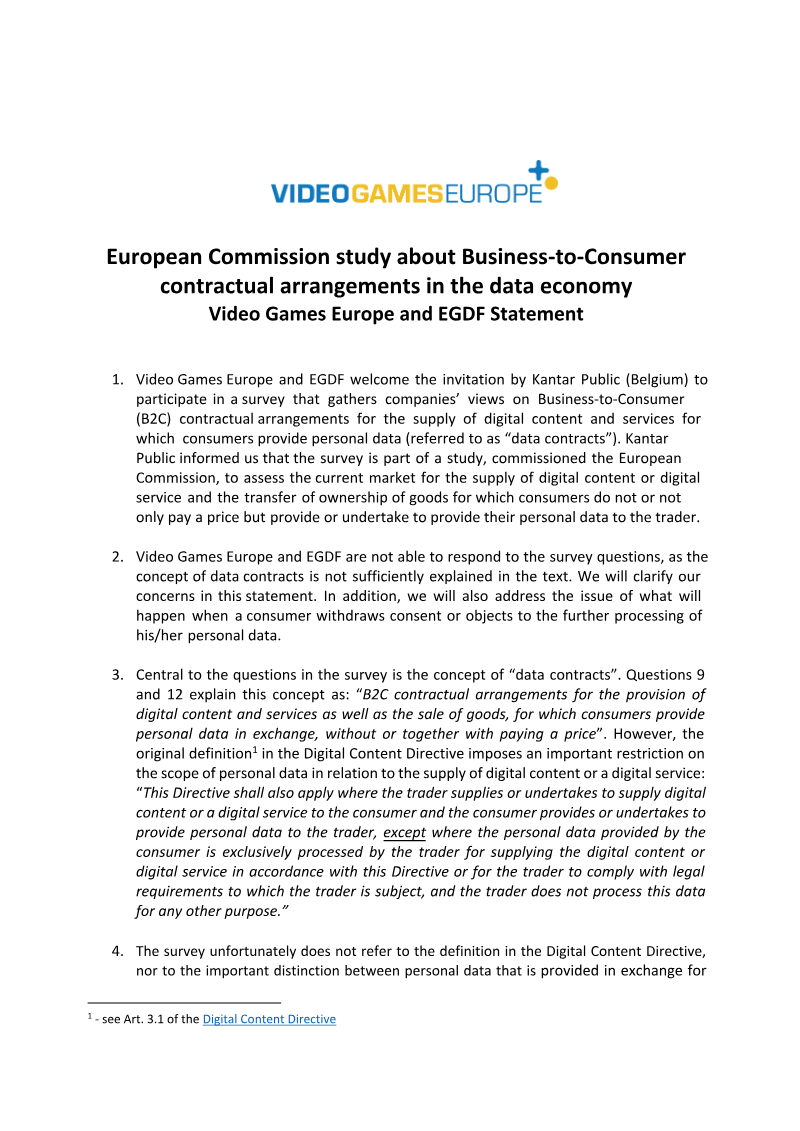
European Commission Study About Business-to-Consumer Contractual Arrangements in the Data Economy
The statement submitted by Video Games Europe and the European Games Developer Federation (EGDF) seeks to clarify the interpretation of “data contracts” within the European Commission’s study on Business-to-Consumer (B2C) contractual arrangements in the data economy.
- Video Games Europe and the EGDF argue that the European Commission’s survey incorrectly classifies routine data processing—such as account registration and technical device information—as a 'data contract' exchange.
- The industry groups contend that most video game data processing is driven by contractual necessity, legal obligations, or legitimate interests, rather than consumer consent.
- The European video game sector generated €23.3 billion in 2021, positioning it as the third-largest global market for the industry.
In-Game Spending: Parents' Supervision of In-Game Spending 2023
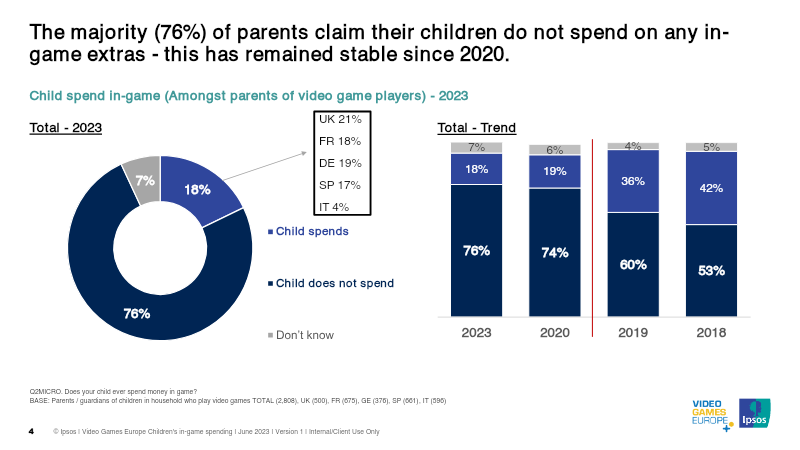
The research investigates how parents supervise and manage their children’s in-game purchases, tracking trends across five European markets—United Kingdom, France, Germany, Spain and Italy—over four survey waves (2018, 2019, 2020 and 2023).
- Three-quarters of children do not engage in in-game spending, a figure that has remained stable since 2020.
- Average monthly in-game spending among children who do spend increased from €33 in 2020 to €39 in 2023, a rise consistent with inflation.
- The majority of in-game spending (64%) is concentrated in the €1–20 monthly range, with gameplay-impacting content (34%) and cosmetic items (33%) being the most popular purchases.


Digital Games' Impact in Denmark
The study evaluates how digital games shape everyday life in Denmark, measuring participation rates, motivations, and social outcomes among a representative sample of gamers.
- Digital gaming is a mainstream activity in Denmark, with 79% of the population having played a game in the past year.
- Engagement is high across all age groups, ranging from 62% of those aged 55–79 to 74% of those aged 16–24 playing on a weekly basis.
- Puzzle games are the most popular genre, preferred by 65% of respondents and yielding the highest relaxation scores among all game types.

Estudio sobre el Consumo de Videojuegos entre la Población Adulta Española y en Familia
The study investigates how video-games are consumed in Spain, focusing on family interaction, the adoption of parental-control tools, and the impact of streaming personalities on player behaviour.
- Shared family gaming in Spain has surged significantly, with nearly 80% of parents playing with their children in 2022 compared to just over 33% in 2015.
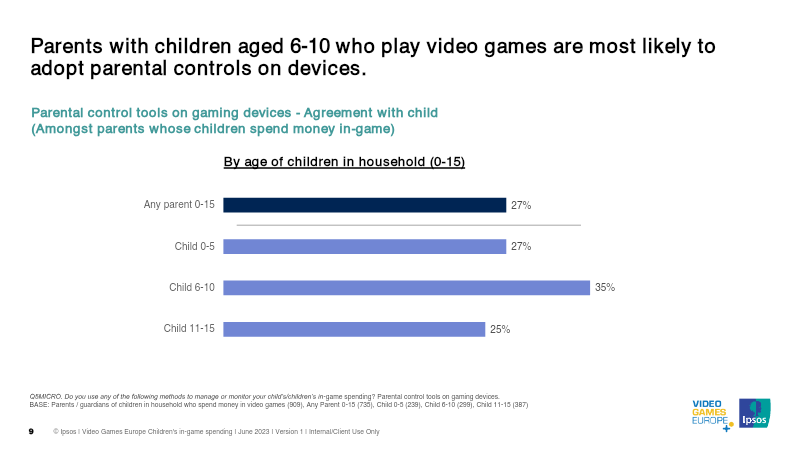
- Parental control adoption remains low, as only 39% of gamers use these tools, with 17.5% using them regularly and 22% occasionally.
- A significant portion of the gaming population is disengaged from safety measures, with over 40% of users never employing parental controls and nearly 20% reporting they are unaware of their existence.



Informe Mundial 2023: Comportamientos e Intereses de los Videojugadores
The 2023 Power of Play survey set out to map the motivations, social impacts and perceived wellbeing benefits of video gaming across a broad international sample.
- Gaming serves as a primary tool for emotional regulation, with 83% of players reporting increased happiness and 71% stating that games reduce stress, anxiety, and isolation.
- Social connectivity is a core outcome of gaming, as 67% of players believe games help them forge new relationships, and 45% have met a close friend, partner, or spouse through the medium.
- Players identify 'having fun' as the primary motivation for gaming (69%), followed by entertainment and stress relief as the leading drivers for engagement.