Player Behavior reports and market data
Documents
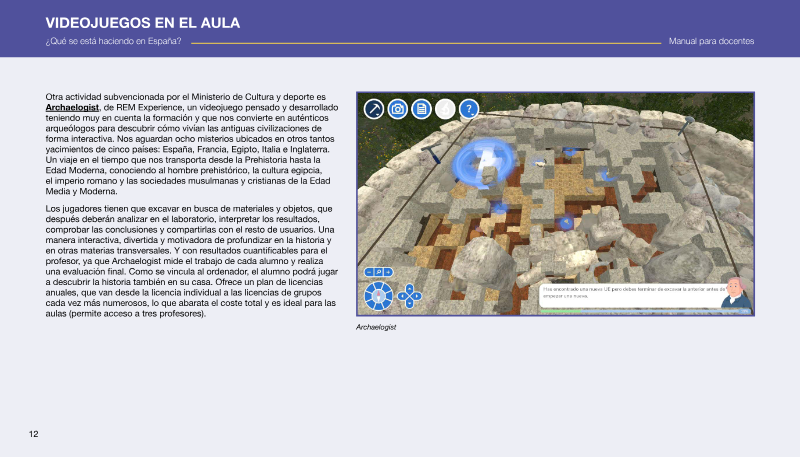
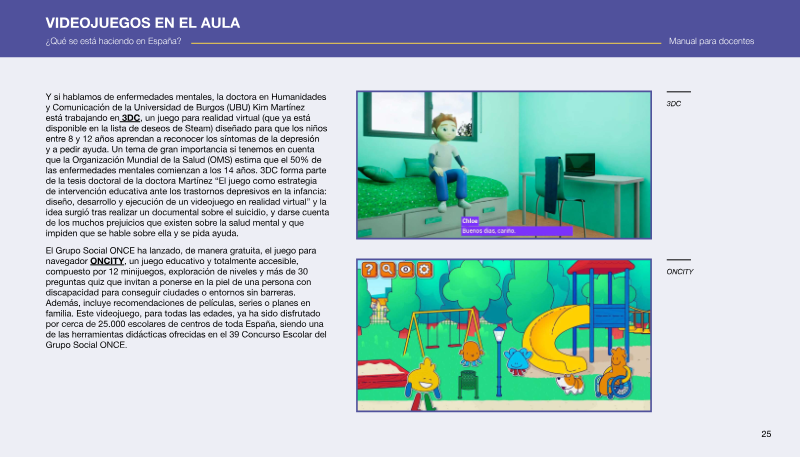

Videojuegos en el Aula: Qué se está haciendo en España
The integration of video games into the Spanish educational system represents a significant shift toward utilizing interactive media as a versatile pedagogical tool.
- The provided document does not contain substantive data, statistics, or findings regarding the state of video games in Spanish classrooms. The content is limited to a meta-discussion about potential ways to summarize a report rather than the report itself. Consequently, no factual insights regarding the integration of video games in education can be extracted from the provided text.



Pour une Pratique Responsable du Jeu Vidéo: France
The guide presents a comprehensive overview of the French video-game ecosystem in 2023, emphasizing the need for responsible consumption and the protection of minors.
- Gaming is a mainstream activity in France, with 70% of residents playing occasionally and 53% playing regularly as of late 2021.
- While 95% of parents are aware of parental-control tools, only 44% actively use them, leaving a significant gap between awareness and implementation.
- Parental involvement in gaming is inconsistent: 40% of parents allow children to play autonomously without consent, while only 13% supervise every session.
Global Report 2023
The 2023 Global Report examines the multifaceted impact of video games on players, moving beyond the traditional perception of gaming as mere entertainment to highlight its significant social, emotional, and cognitive benefits.
- Video games function primarily as a mental health tool, with 71% of global gamers reporting that play reduces stress and 61% noting a reduction in anxiety.
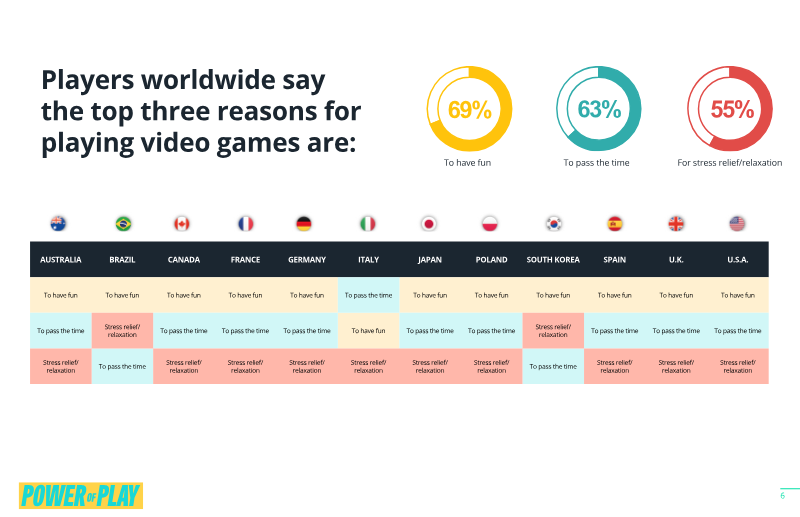
- Fun and enjoyment remain the primary drivers for gaming, cited by 69% of the 12,847 respondents, followed by passing time (63%) and stress relief (55%).
- Social connectivity is a core component of the gaming experience, as 51% of players engage in online multiplayer weekly and 46% have formed meaningful personal relationships, including friendships and marriages, through games.
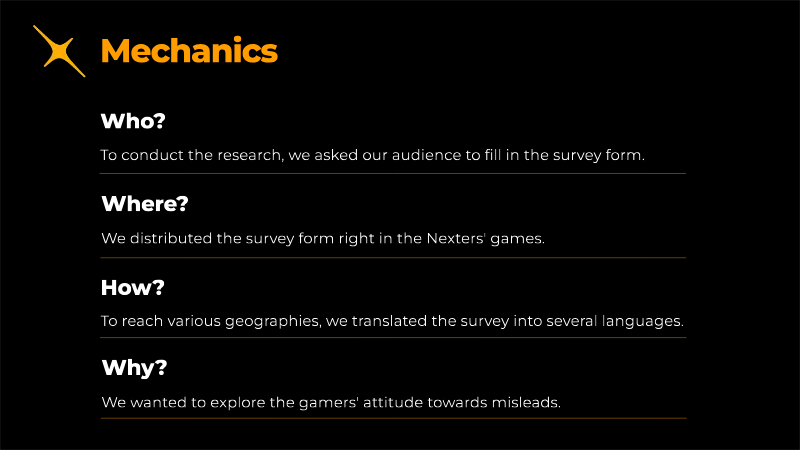
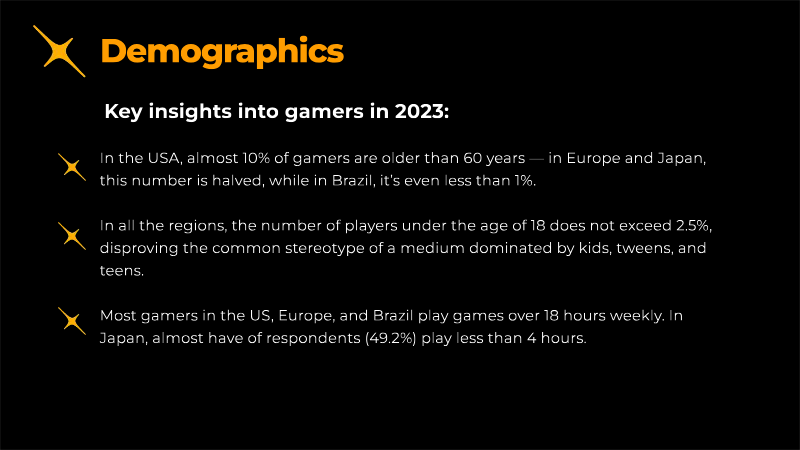

Misleading (Non-Core) Gameplay Ads Research 2023
The prevalence of non-core gameplay advertising—often labeled as misleading—has become a standard industry practice, shifting from deceptive marketing to a strategy of incorporating secondary mini-games within larger titles.
- Approximately 75% of Western players and 70% of Japanese and Brazilian players find the mechanics shown in misleading ads more engaging than the actual core gameplay of the advertised titles.
- Between 35% and 46% of gamers continue playing a title despite recognizing that the advertisement does not accurately represent the core gameplay experience.
- Ad recognition is widespread, with 91% of U.S. respondents and 71% to 77% of respondents in other surveyed regions reporting exposure to non-core gameplay advertisements.
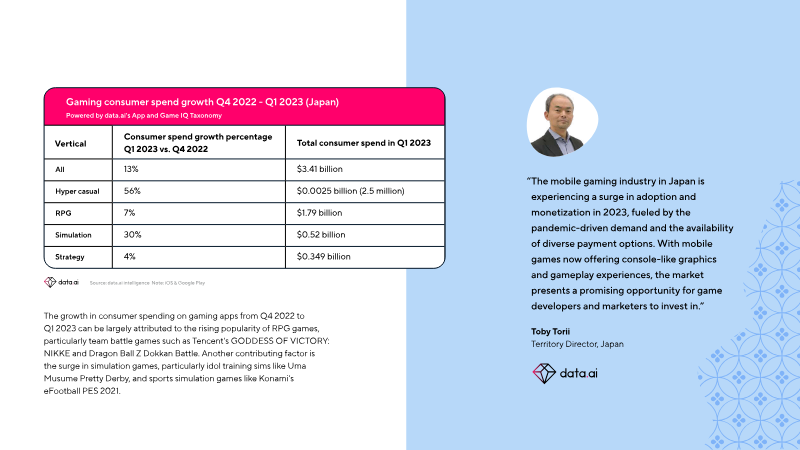
Mobile App Trends 2023: Japan Edition
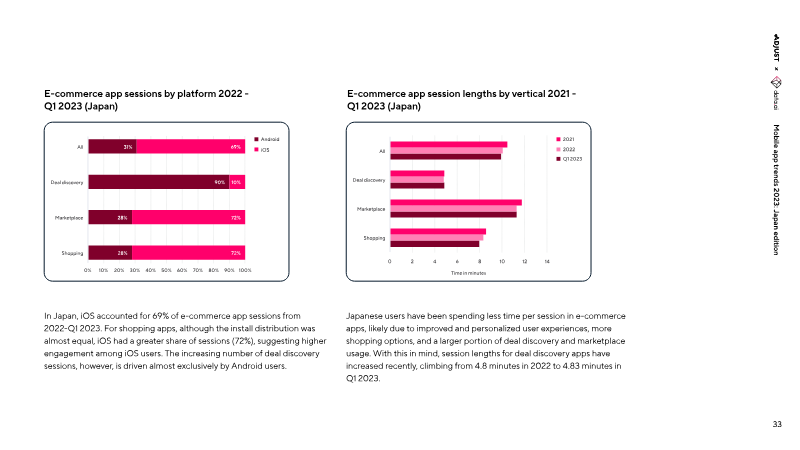
Japan’s mobile app market is undergoing a significant recovery following a downturn in 2022, characterized by a 12% surge in consumer spending to $4.65 billion in the first quarter of 2023.
- Japan's mobile market recovered in Q1 2023 with a 12% surge in consumer spending to $4.65 billion, driven largely by the gaming sector's $3.14 billion contribution.
- The Japanese advertising landscape is shifting toward Connected TV (CTV), with the market projected to reach 169.5 billion yen by 2025 as household ownership hits 30 million.
- Fintech adoption is accelerating rapidly in Japan, highlighted by a 134% quarterly increase in installations for crypto-related applications.
Mobile Growth & Monetization Report 2023
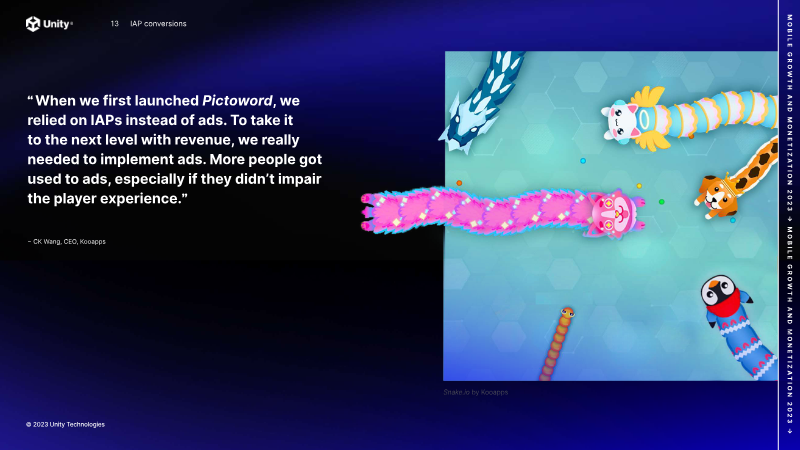
The mobile gaming landscape in 2023 reflects a strategic pivot toward operational efficiency as developers navigate softening in-app purchase (IAP) and advertising revenues.
- 77% of all player conversions occur within the first 14 days, making this initial window the most critical period for monetization.
- Low-friction price points between $1.01 and $5.00 are the primary drivers of in-app purchase revenue, with virtual currencies and limited-time bundles accounting for over 56% of total IAP income.
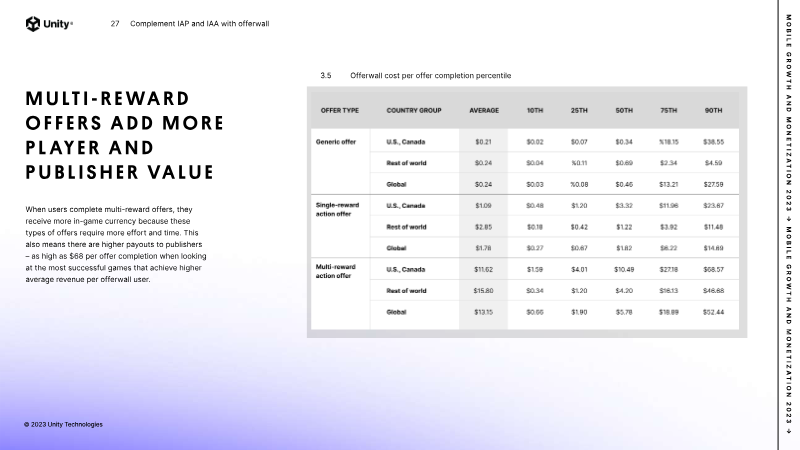
- Offerwalls are a major retention driver, as players who engage with them exhibit a 14% retention rate at Day 90 compared to only 3% for non-converters.
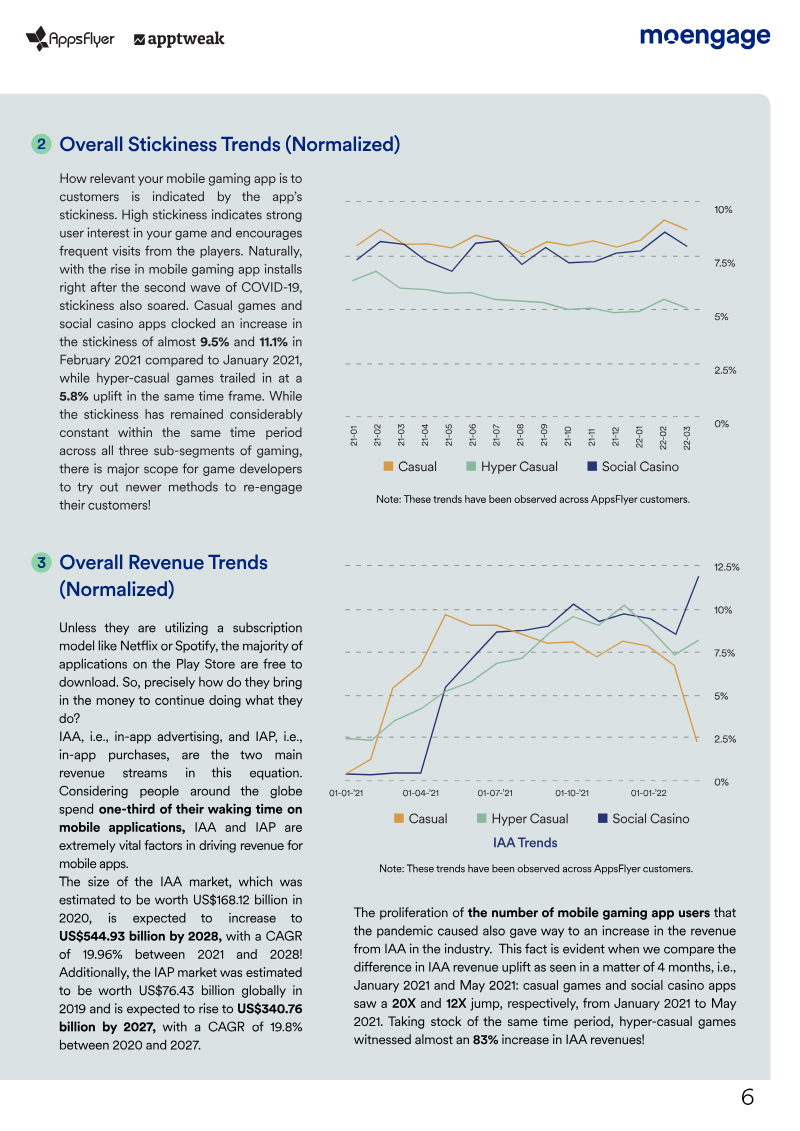
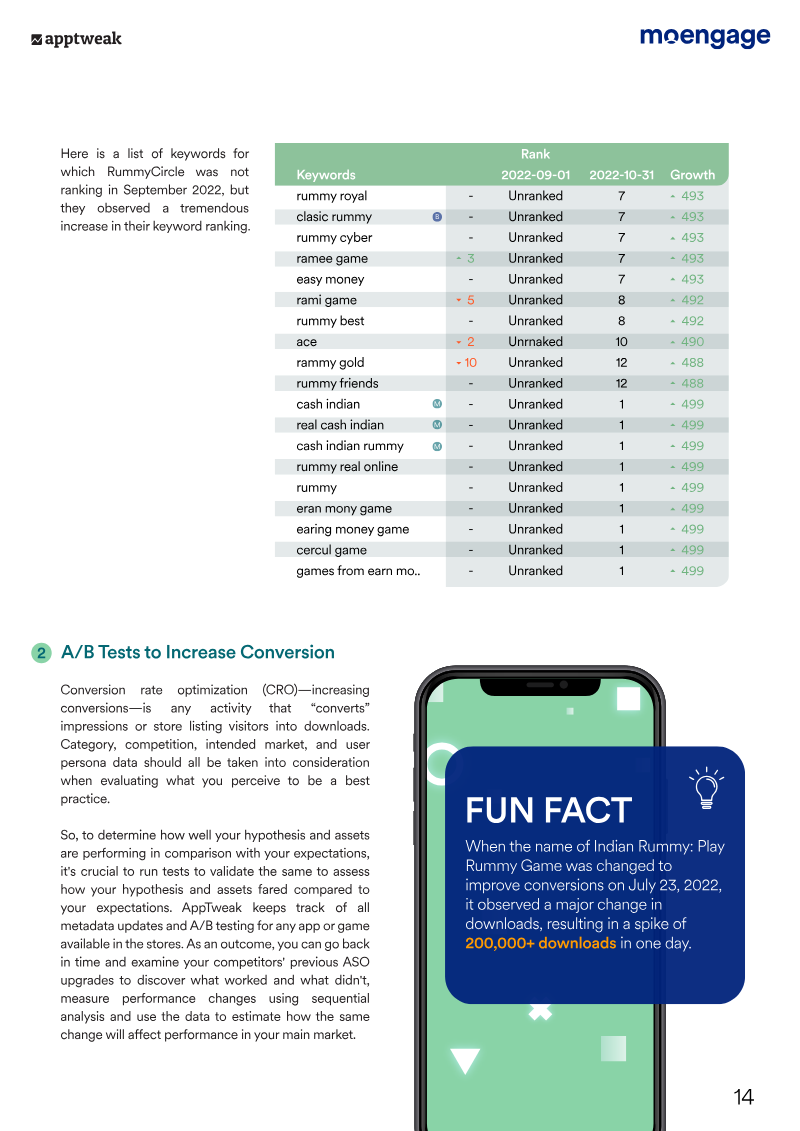
The State of Mobile Gaming in India: A Look at India's Casual, Hyper-Casual, and Real Money Gaming App Industry Trends
This analysis examines the rapid expansion and evolving user behavior within the Indian mobile gaming market, focusing on the casual, hyper-casual, and real-money gaming (RMG) segments.
- The Indian gaming industry is projected to grow from $2.6 billion in 2022 to $8.6 billion by 2027, supported by a user base exceeding 300 million gamers.
- The industry is facing a significant retention crisis, with 68% of users engaging with a gaming app fewer than ten times.
- Following a pandemic-era surge where casual game installs rose 90% and RMG revenue grew 35% in April 2021, organic growth stabilized and declined throughout 2022.
Mobile Gaming Loyalty Report 2023
The Mobile Gaming Loyalty Report examines the drivers of player engagement, retention, and spending across the mobile landscape.
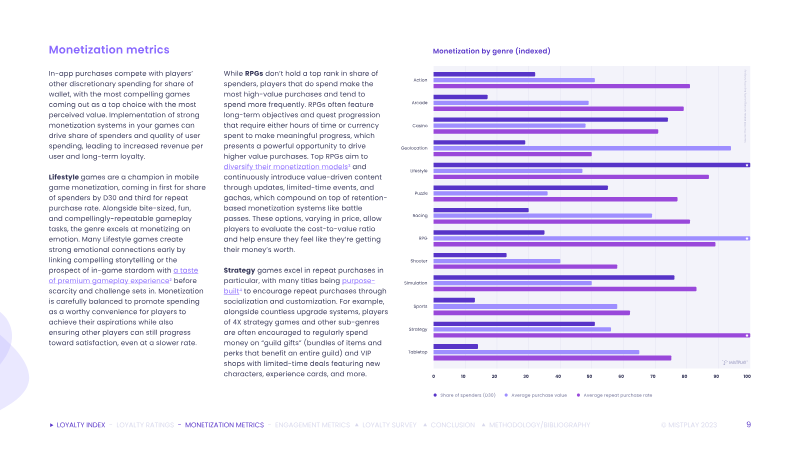
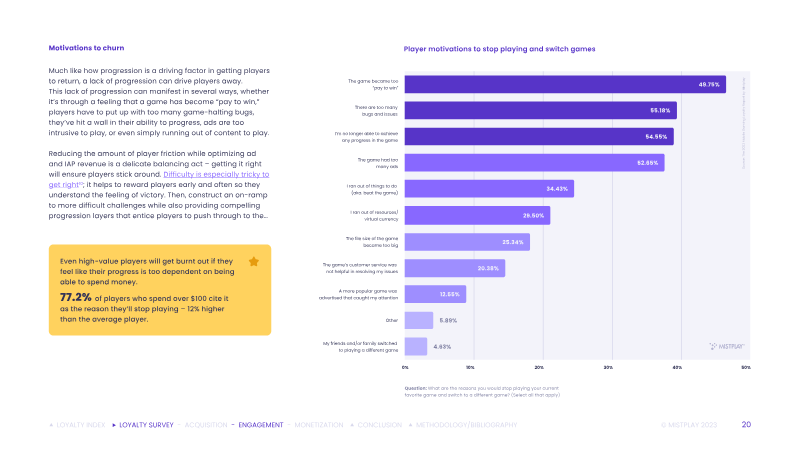
- Progression is the primary driver for both retention and in-app spending, while 'pay-to-win' mechanics and poorly received updates are the leading causes of player churn.
- 53% of mobile spenders concentrate their financial investment on a single title, even though 77% of spenders rotate between two to seven games weekly.
- RPGs are the most loyal genre with a 75/100 Loyalty Index score, driven by deep gameplay loops and compounding monetization systems.


A New Era of Engagement in Media & Entertainment
The media and entertainment landscape is undergoing a fundamental generational shift toward active engagement, characterized by a seamless blend of physical and digital activities.
- Gen Z now spends an average of 12.2 hours per week on video games and virtual worlds, surpassing the time they dedicate to traditional broadcast or subscription television.
- Video games command a 72% active participation rate among US consumers, narrowing the volume gap with traditional media, which currently averages 17 hours of weekly consumption.
- 68% of Gen Z identify as digital creators, spending three times more hours on user-generated content than Gen X.
The Future of NPCs
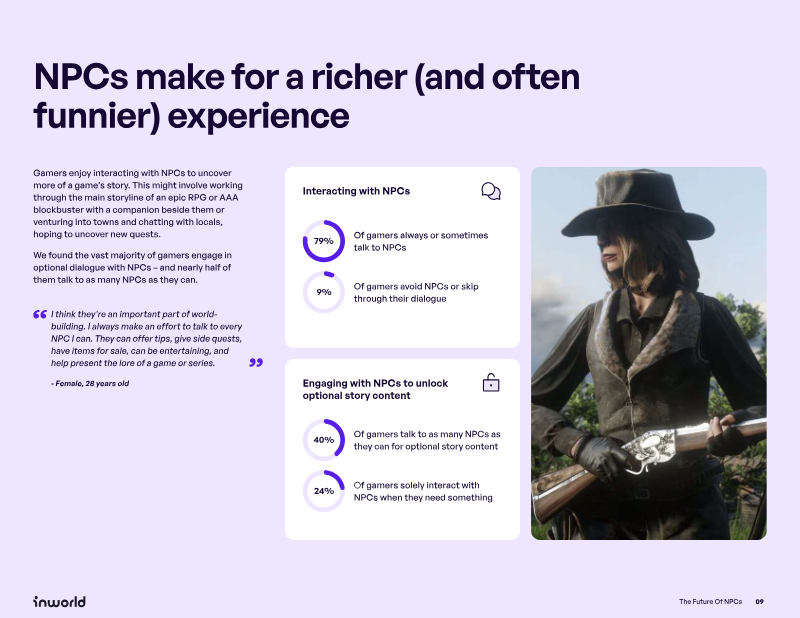
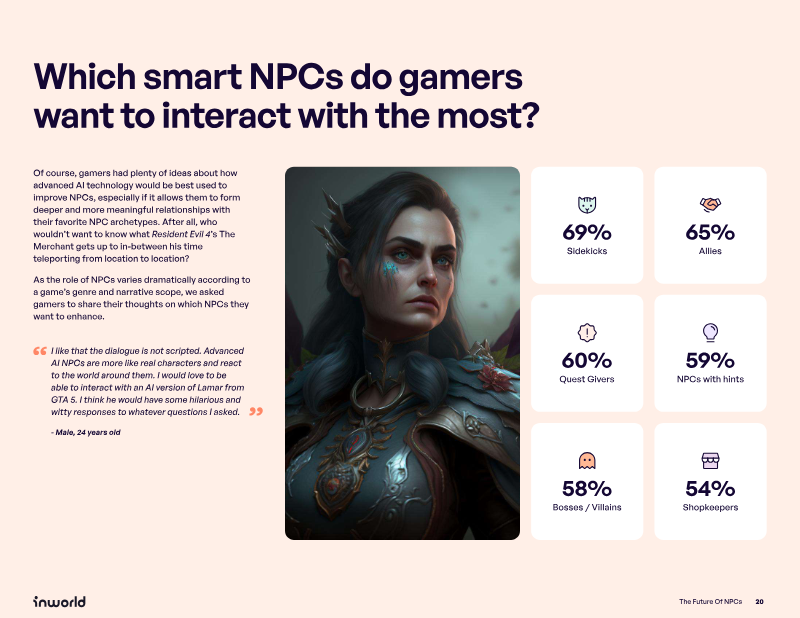
This analysis explores the evolving role of non-playable characters (NPCs) in the video game industry, arguing that while graphical and narrative technologies have advanced, NPC interactivity has remained stagnant.
- 99% of gamers view the integration of advanced AI into NPCs as a positive value add for the industry.
- 81% of players are willing to pay more for games that feature intelligent, AI-driven characters.
- 79% of gamers report an increased likelihood to purchase titles that incorporate advanced AI NPC capabilities.
Newzoo’s Global Gamer Study 2023
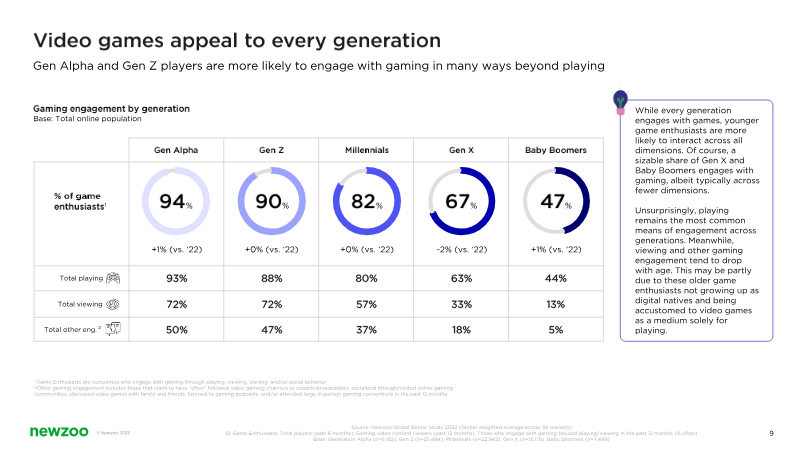
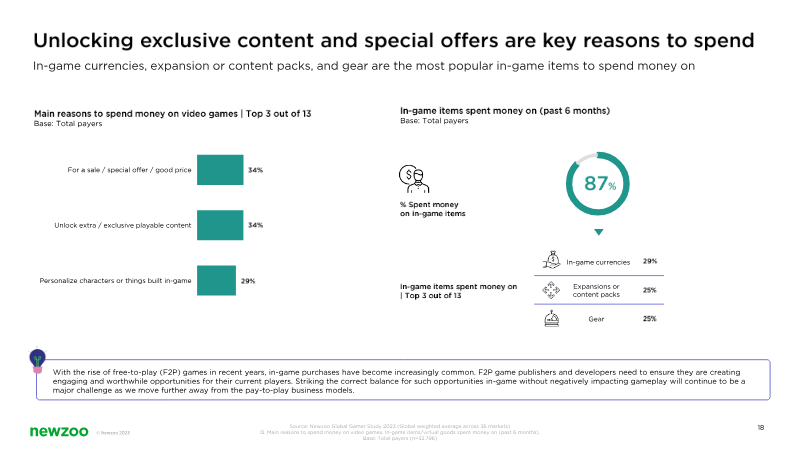
Gaming engagement in 2023 has evolved into a multidimensional experience that extends far beyond active play to include viewing, socializing, and content creation.
- Gaming is now a multidimensional ecosystem where 79% of the online population are enthusiasts, with over 50% of consumers engaging through a mix of playing, viewing, socializing, and content creation.
- Younger demographics show the highest engagement levels, with 94% of Gen Alpha and 90% of Gen Z participating in gaming activities beyond just active play.
- Multi-platform gaming is a significant trend, with 47% of gamers using at least two platforms and a high-value 'tri-platform' cohort (15% of players) averaging over 11 hours of play per week.


Essential Facts About the U.S. Video Game Industry: Power of Play 2023
The global video game industry, represented by various national trade associations, highlights the multifaceted benefits of gaming beyond mere entertainment.
- 71% of global players use video games to relieve stress, while 62% utilize them as a tool to reduce anxiety.
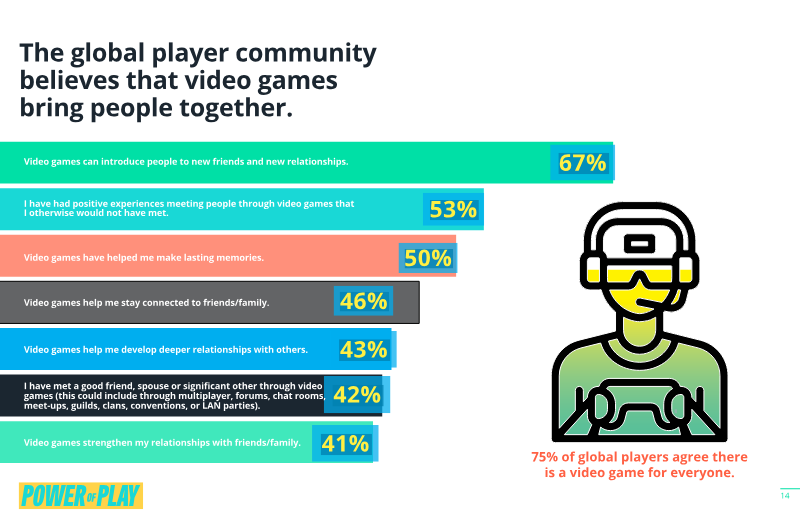
- 67% of gamers believe that video games foster social connection, with nearly 50% of players having met a close friend or significant other through gaming platforms.
- The 2023 survey of nearly 13,000 players across 12 countries confirms that fun remains the primary motivator for gaming, followed by significant mental health and social benefits.