PC reports and market data
Documents

Top Game Creators Academy: Tokyo Game Show 2025 Exhibition
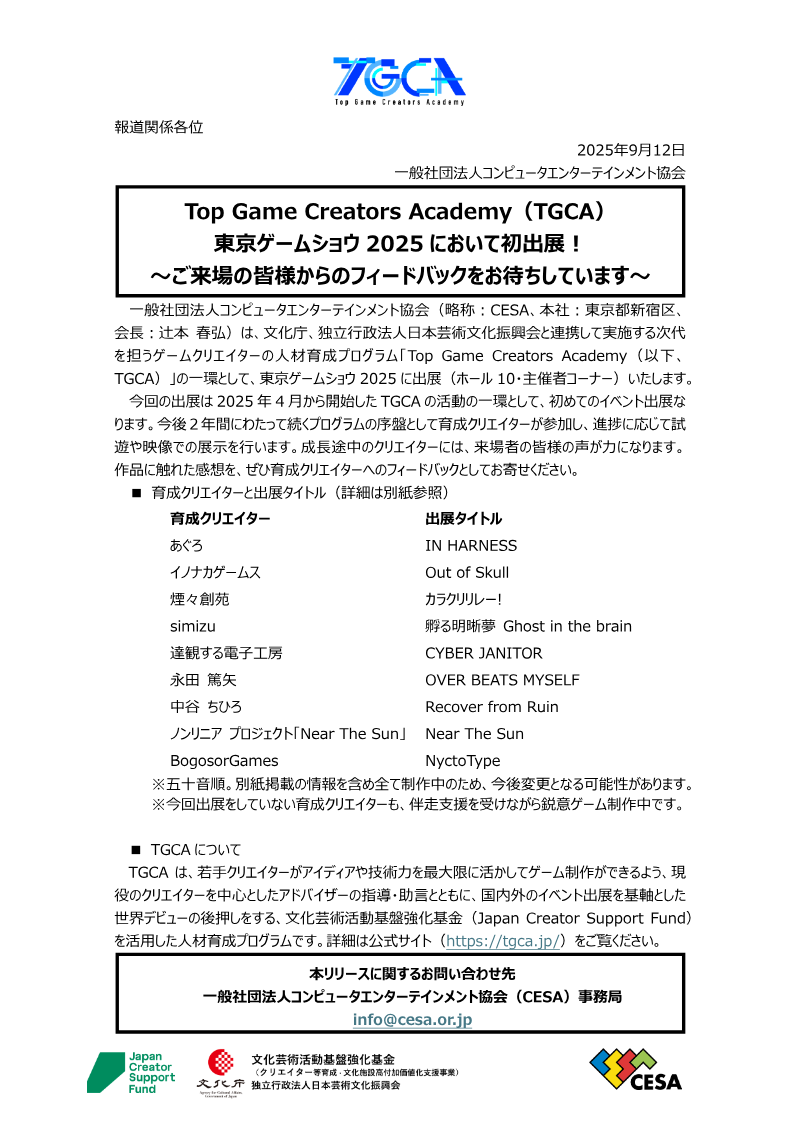
Top Game Creators Academy (TGCA) is being introduced to the public for the first time at the Tokyo Game Show 2025, where it will occupy Hall 10’s organizer’s corner.
- The Computer Entertainment Association, in partnership with the Agency for Cultural Affairs and the Japan Arts & Culture Promotion Agency, launched the Top Game Creators Academy (TGCA) in April 2025 to accelerate the development of next-generation talent.
- The TGCA program utilizes a two-year pipeline structure that pairs emerging developers with active industry advisors to facilitate professional growth and global market entry.
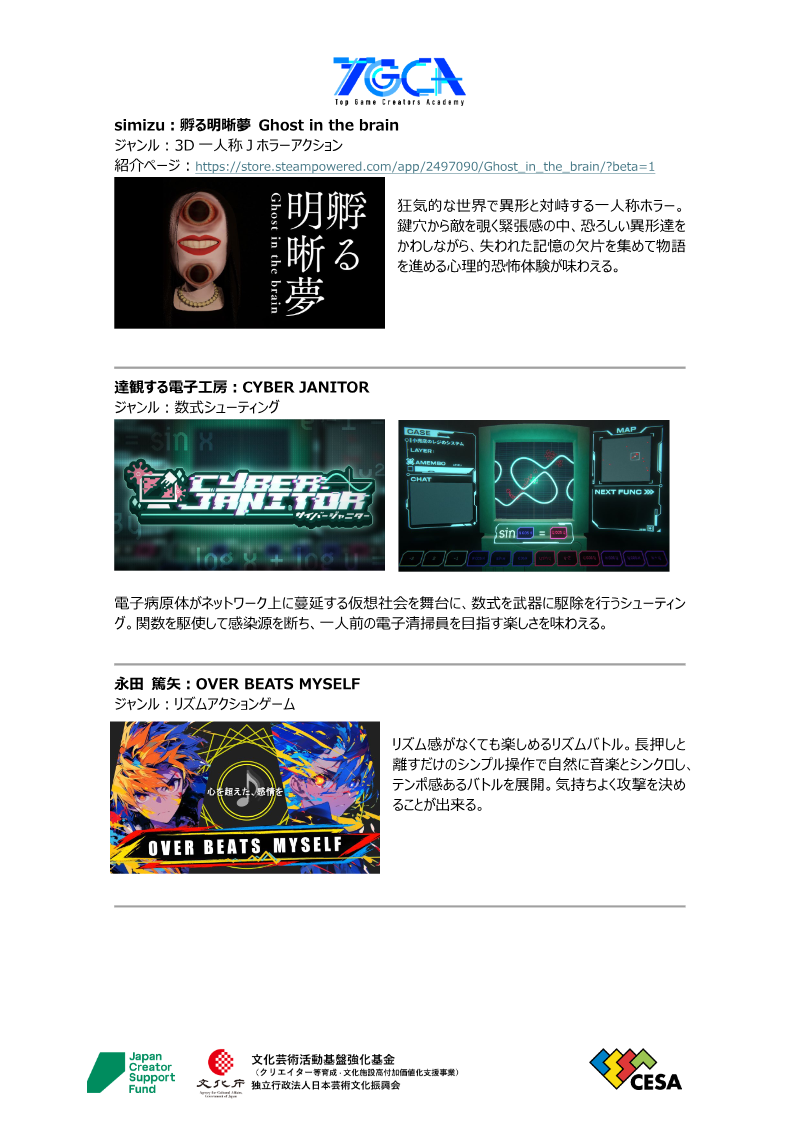
- Ten emerging developers are debuting work-in-progress titles at the Tokyo Game Show 2025 in Hall 10, representing diverse genres including 3D action, 2D puzzle platformers, horror, and rhythm-action.
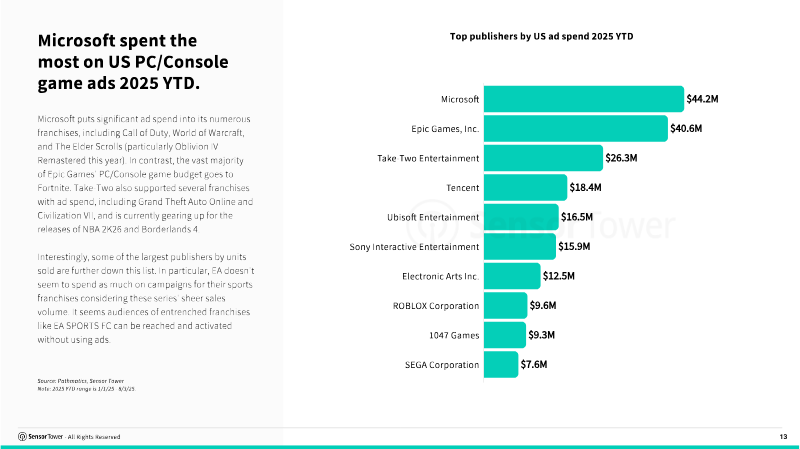
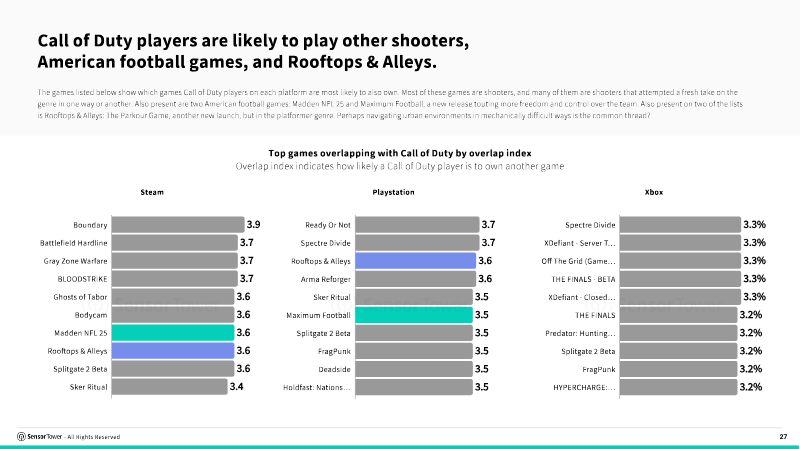
PC/Console Gaming Index: A Look at the Top Games, Publishers, and Platforms in 2025 So Far
The 2025 PC and console landscape is dominated by Steam, which recorded 450 million downloads and is projected to achieve a record $12 billion in premium revenue, reflecting a 15 percent year-to-date increase.
- Steam leads the 2025 PC and console market with 450 million downloads and a projected $12 billion in premium revenue, representing a 15 percent year-to-date increase.
- Premium purchase models remain the primary revenue driver, accounting for 79 percent of Steam's income and 83 percent of PlayStation's earnings.
- Steam outperforms console competitors in user acquisition, recording 450 million downloads compared to 376 million for PlayStation and 283 million for Xbox.
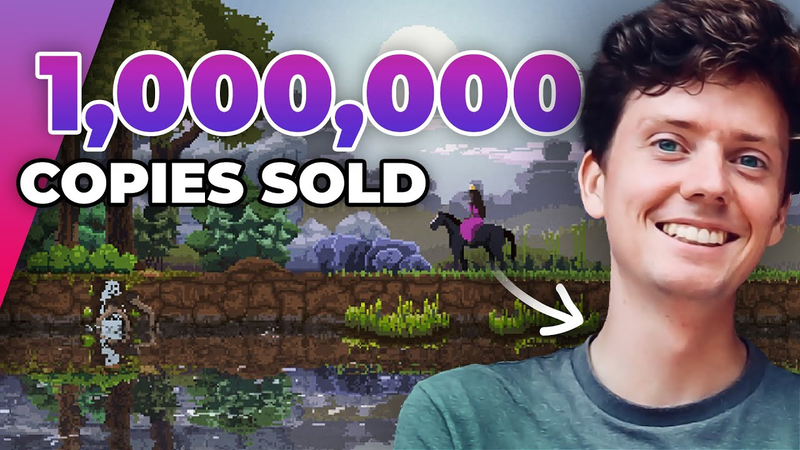
How He Sold 1,000,000+ Copies Of His Game (Thomas Vandenberg) — Full Time Game Dev Podcast Ep. 030
The path to commercial success in independent game development relies on a strategic balance between creative intuition and disciplined project management.
- Publishers provide essential financial stability and de-risking for indie developers, allowing them to focus on development without the mental toll of personal financial insecurity.
- The Kingdom franchise reached a state of 'elegant simplicity' after years of development, leading the creator to sell the IP to Raw Fury to pursue new projects after a decade of work.
- Game development productivity can be optimized by using a prototype-heavy approach, such as creating 20 prototypes in two-week sprints to identify the most viable concept for a six-month production cycle.

TWIG Bonus Episode: Holiday Special (UEFN, Royal Kingdom, and the Steam race)
The Unreal Editor for Fortnite (UEFN) serves primarily as a foundational training ground for Unreal Engine development rather than a viable ecosystem for venture-scale independent studios.
- UEFN is currently better suited as a training ground for Unreal Engine development than as a viable platform for venture-scale independent studios due to limited monetization and restrictive analytics.
- Independent developers on UEFN face an uneven playing field against Epic Games, including a 15% revenue share penalty for projects utilizing licensed intellectual property.
- The mobile puzzle market is closely watching the maturation of Royal Kingdom to determine if it will cannibalize the player base and revenue of established hits like Royal Match.

The Man Who Made Ultima: Lord British | Extra Credits Gaming
Richard Garriott, widely known by his persona Lord British, stands as a foundational figure in the evolution of computer role-playing games (CRPGs) and massively multiplayer online games (MMOs).
- Richard Garriott, known as 'Lord British,' pioneered the RPG genre with the Ultima series, which introduced the concept of the 'avatar' and shifted industry standards toward complex morality systems with 1985's Ultima IV: Quest of the Avatar.
- Garriott founded Origin Systems, which was acquired by Electronic Arts in 1992 for $30 million in stock and later produced the groundbreaking 1997 title Ultima Online, one of the first successful graphical MMOs to utilize a recurring subscription model.
- The commercial success of Ultima Online led to internal conflict at EA, where the company's mandate to pivot toward multiple simultaneous MMO projects resulted in the cancellation of other titles and the eventual stagnation of Origin Systems.
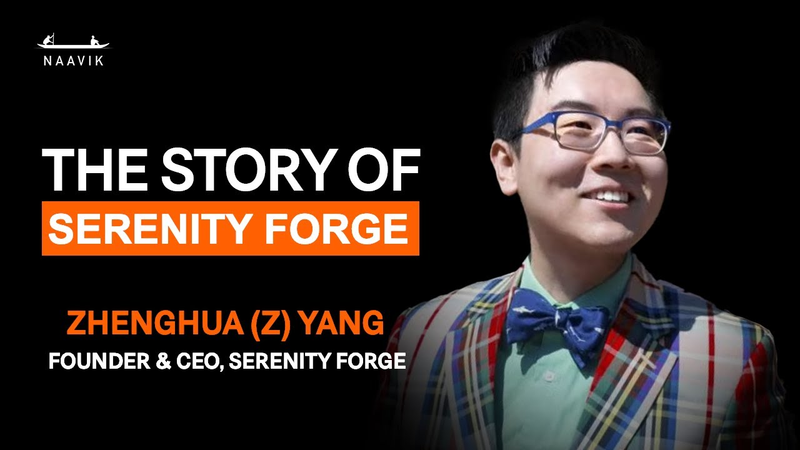
The State of Video Game Publishing (with Serenity Forge)
Serenity Forge operates as a multifaceted publisher and developer based in Colorado, dedicated to producing emotionally resonant, meaningful gaming experiences.
- Serenity Forge has scaled from a small development team to a global publisher managing multi-million dollar productions, including the 30-million-player hit Doki Doki Literature Club.
- The firm’s core business model relies on deep diversification, blending internal development with physical distribution, merchandising, and bespoke co-development partnerships to mitigate market volatility.
- The publisher rejects industry fads like NFTs, instead utilizing a tool-agnostic approach that prioritizes product quality and direct, unfiltered community engagement.
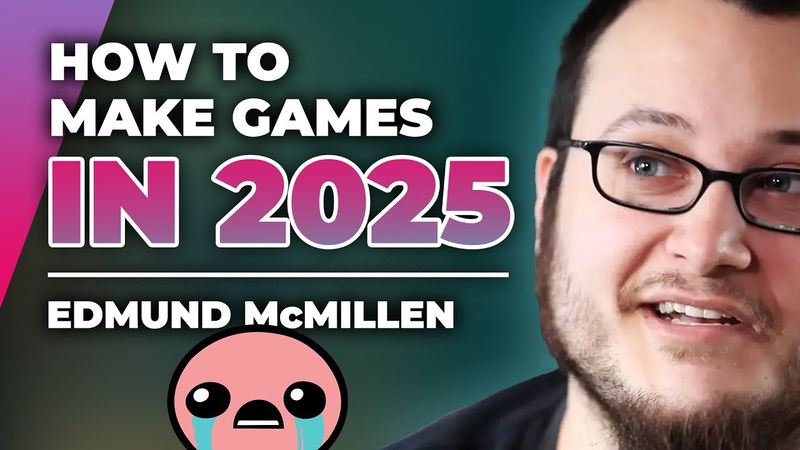
How To Make Indie Games In 2025 w/ Edmund McMillen — Full Time Game Dev Podcast Ep. 029
The independent game development landscape in 2025 demands a departure from trend-chasing in favor of radical creative autonomy and the cultivation of a distinct, uncompromising artistic voice.
- Success in the 2025 market requires prioritizing a distinct, uncompromising artistic voice over trend-chasing to differentiate projects in a saturated industry.
- Developers should adopt an organic, discovery-based development process that favors iterative idea-volleying over rigid design documents or speculative high-budget models.
- Financial constraints should be leveraged as catalysts for innovation rather than viewed as hindrances, as the industry shifts away from bloated, speculative investment models.

TWIG #312 THE GREATEST WEEK IN F2P. EVER? EVER!
The gaming industry is currently navigating a period of intense volatility defined by a surge in high-profile free-to-play releases alongside a contraction in studio stability.
- Steam reached a record 39.2 million concurrent users, a milestone driven primarily by growth in the Chinese market.
- Developers are increasingly adopting a dual-skew strategy, launching high-fidelity titles like Marvel Rivals, Delta Force, and Infinity Nikki simultaneously across mobile, PC, and console.
- Traditional pre-launch metrics such as wishlists are becoming unreliable indicators of success, as many new releases experience rapid post-launch retention decay.

Let's Review Your Games — Ep. 001
The indie game development landscape relies heavily on the balance between innovative core mechanics and accessible visual presentation.
- Indie game success depends on the synergy between innovative core mechanics and high-quality aesthetic execution, as visual polish is a primary driver of long-term player satisfaction.
- Unique gameplay hooks, such as Morse code interactions or physics-based movement seen in titles like SOS: Forgotten Planet and Chickens Don't Fly, are frequently undermined by poor environmental design and inadequate visual clarity.
- Developers must prioritize visual storytelling and intuitive onboarding to ensure players can navigate systems during unguided play sessions.
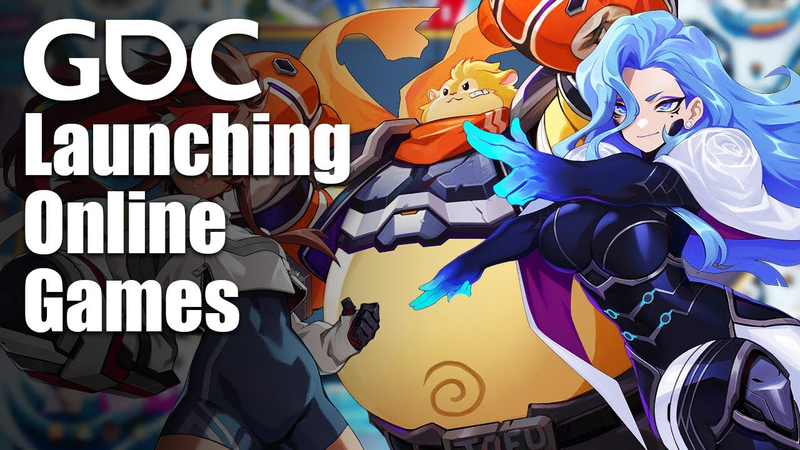
How to Launch an Online Game and Still Attend the Launch Party
Launching a cross-platform online game with a lean engineering team requires a fundamental shift away from traditional, manual server management toward managed infrastructure and high-level observability.
- Odyssey Interactive successfully launched Omega Strikers on 8 platforms with a services team of only 2–3 engineers by relying on robust observability to maintain system stability.
- The team utilized a 'single environment' strategy where all development features and upcoming content were always in production, managed through logical barriers and feature flags to simplify the deployment process.
- Observability was implemented using OpenTelemetry standards, resulting in approximately 1,200 instrumentation points that allowed engineers to proactively inspect system states in real-time.

Why Do Unreal Games All Look This Way — PontyPants
The discussion centers on the growing trend of asset-flipping in the indie game industry and the resulting homogenization of visual aesthetics, particularly among games developed in Unreal Engine.
- Creating custom assets instead of using store-bought ones ensures visual cohesion and prevents the 'generic' look often associated with Unreal Engine 5 titles.
- Relying on third-party assets carries legal risks, as demonstrated by the removal of the game 'Only Up' from Steam due to copyright issues regarding asset ownership.
- Players possess a subconscious ability to distinguish between 'asset-flipped' games and those with custom, intentional design, which can negatively impact the perceived quality of a title.
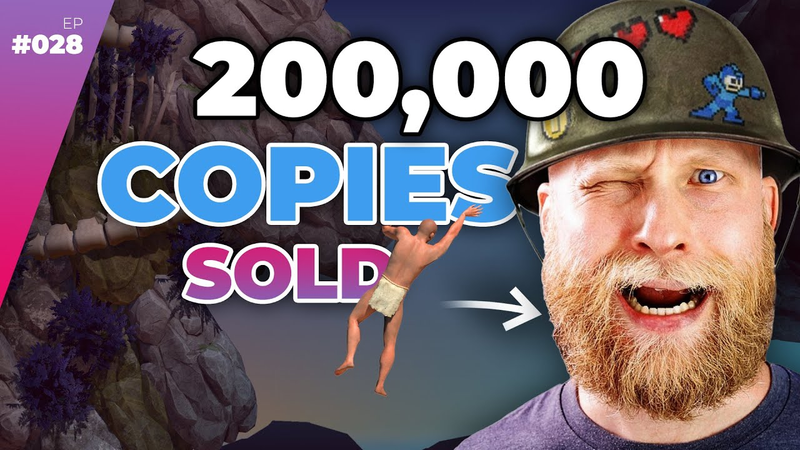
How He Sold Over 200,000 Copies Of His Game w/ PontyPants — Full Time Game Dev Podcast Ep. 028
Achieving commercial success in the independent game industry requires a strategic pivot from technical documentation toward high-impact, curiosity-driven marketing.
- Commercial success is driven by high-impact, curiosity-driven marketing that targets the general gaming public through streamer exposure rather than technical development logs that primarily attract other developers.
- Projects like 'A Difficult Game About Climbing' demonstrate that prioritizing entertainment value and narrative-focused content is essential for driving wishlists and achieving significant market penetration.
- Design should focus on refining a single, core mechanic through iterative prototyping while stripping away extraneous elements like tutorials and dense narratives to foster discovery and speedrunning potential.