PC reports and market data
Documents

Global Gaming Report 2025
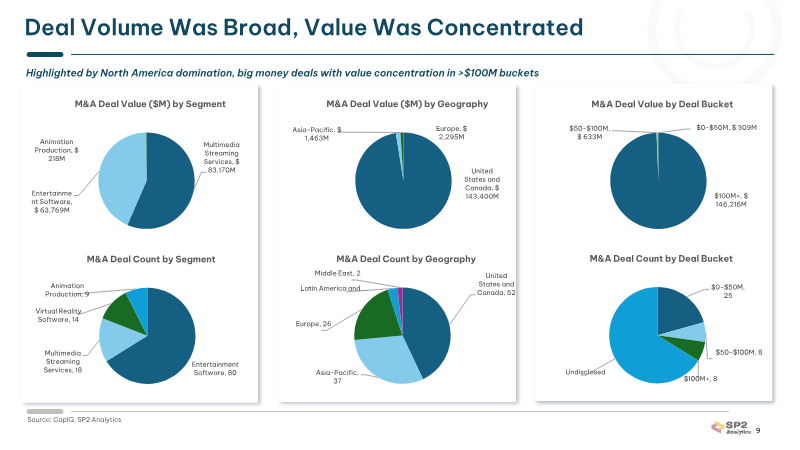
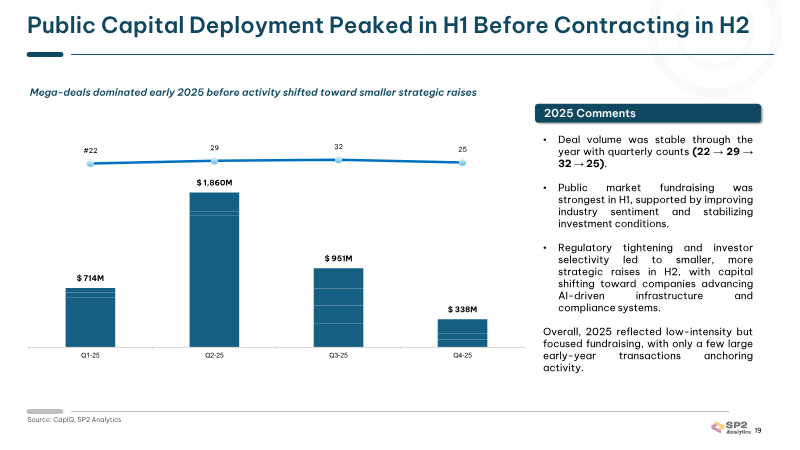
The 2025 Global Gaming Report characterizes the gaming industry as a capital-intensive, scale-driven sector where competitive advantage is increasingly defined by platform ownership, intellectual property (IP) aggregation, and long-term strategic positioning rather than individual title performance.
- The gaming industry saw $147 billion in M&A activity in 2025, headlined by the $83 billion Netflix-Warner Bros. merger and the $55 billion take-private acquisition of Electronic Arts.
- Market valuation is increasingly driven by platform ownership and IP aggregation, with top-tier strategic players now commanding EV/EBITDA multiples exceeding 25x.
- Capital deployment has become highly concentrated, with private placement rounds for AI-driven simulation and development tools consistently exceeding $100 million per transaction.

U.S. Video Game Industry: Technological Advancements and Privacy Issues
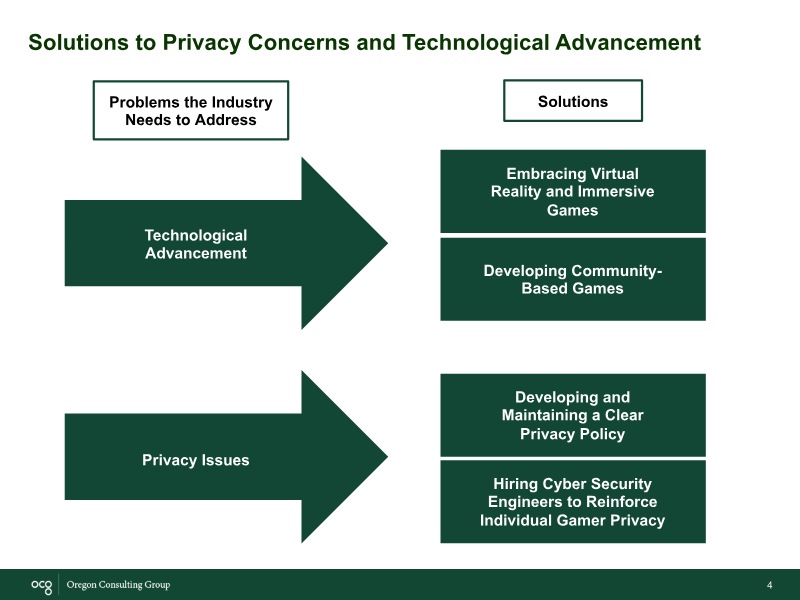
The U.S. video game industry, a significant global economic force, faces a critical juncture defined by rapid technological evolution and escalating privacy vulnerabilities.
- The U.S. video game industry is a $60.4 billion annual revenue sector employing 240,000 people across more than 42,000 businesses.
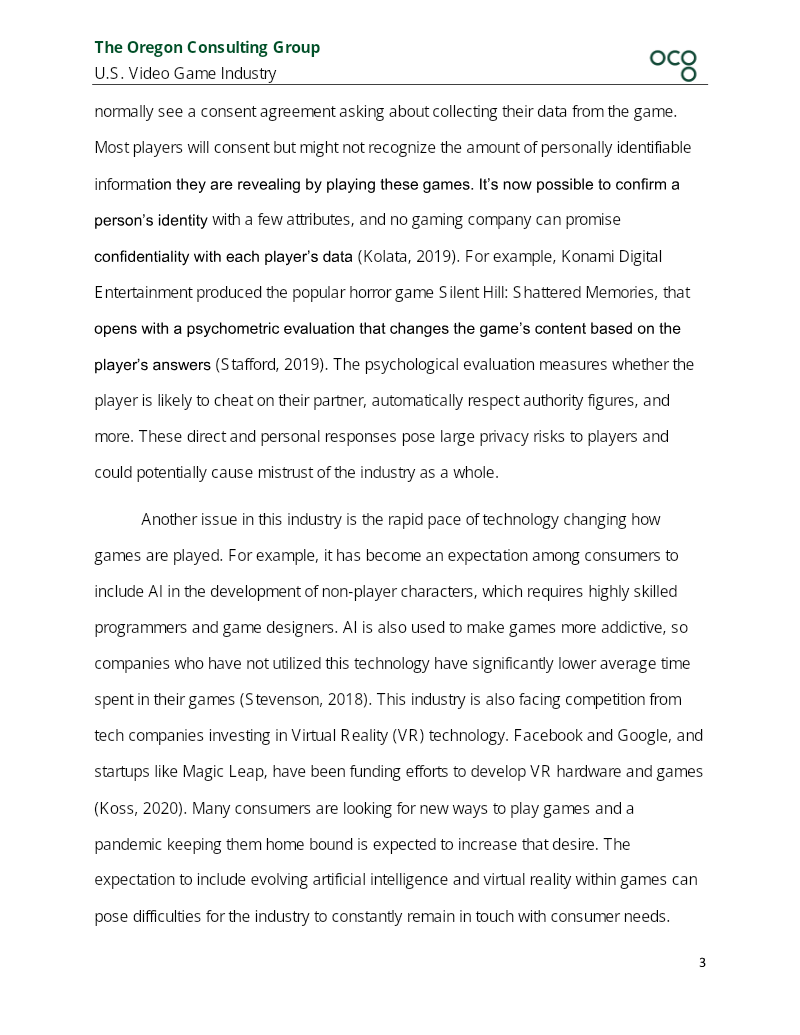
- Gaming platforms face severe cybersecurity threats, evidenced by 12 billion cyberattacks recorded against gaming websites over a 17-month period.
- Privacy risks are exacerbated by the re-identification of anonymized data and the use of psychometric evaluations, necessitating investments in specialized cybersecurity engineering similar to models used by Microsoft.
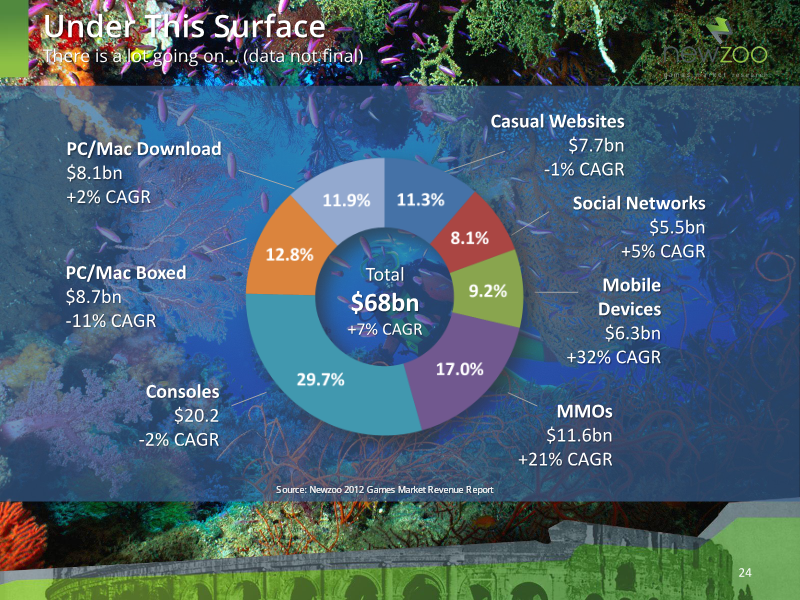


Impact of Free-to-Play: Online, Mobile & Cross-Platform
The global games industry is undergoing a fundamental transformation as the traditional boxed product model stagnates in favor of free-to-play mechanics and cross-platform accessibility.
- The global games market is shifting from boxed products to a service-oriented model, with mobile revenue projected to grow at a 32% compound annual growth rate.
- Success in the current market requires treating free-to-play as a holistic business strategy rather than a pricing tactic, as evidenced by the performance of titles like League of Legends and Kingdoms of Camelot.
- Publishers must shift focus from legacy revenue metrics to tracking granular data points, specifically player engagement time and the conversion rates of paying users.
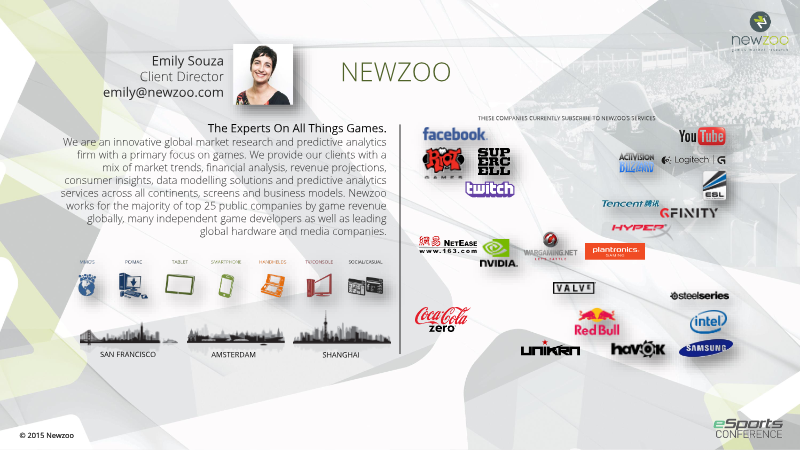


The eSports Industry to Date: The Drivers Behind Current and Future Growth
The global esports industry is undergoing a rapid transformation from a niche gaming subculture into a significant, multi-billion dollar economic force.
- The esports industry is on a trajectory to grow from $252 million in 2015 revenue to a $1 billion economy by 2019.
- Industry growth is driven by high engagement on streaming platforms like Twitch and a transition toward mainstream professionalization.
- Significant capital is entering the market, evidenced by a $26 million venture capital investment in Super Evil Megacorp.
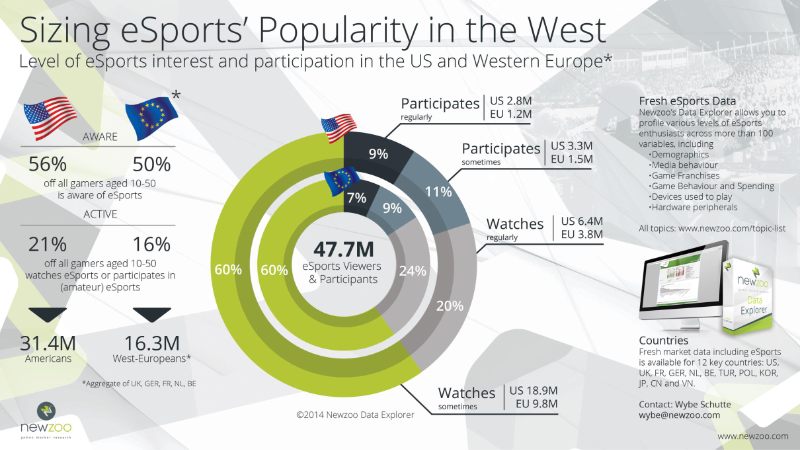
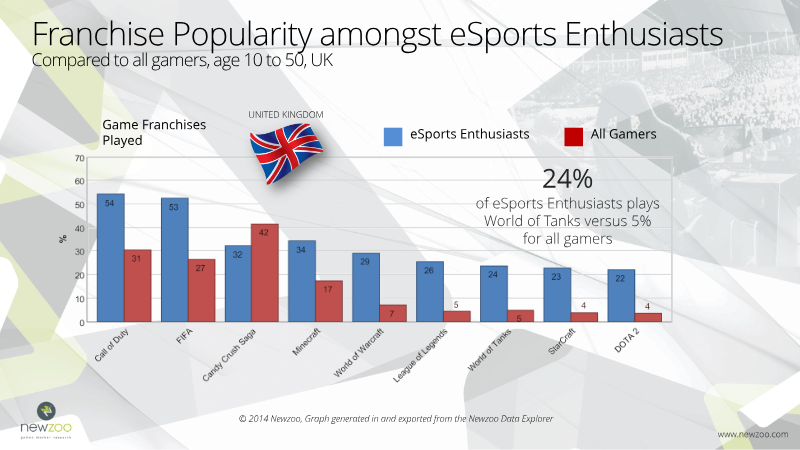

Sizing & Profiling eSports' Popularity: The West
The rapid expansion of eSports in Western markets represents a significant shift in the gaming industry, driven by the rise of free-to-play titles such as League of Legends, Dota 2, and World of Tanks.
- eSports viewership is doubling year-over-year, with the average viewer watching over 10 times per month for an average session length of 2.2 hours.
- Total eSports prize money increased by 350% over the four-year period ending in 2013, with top events like The International 2013 awarding $2,874,381.
- eSports enthusiasts are significantly more valuable to publishers than the average gamer, with 22% of enthusiasts identified as 'big spenders' compared to only 8% of the general gaming population.

PC Gaming: Power to the People
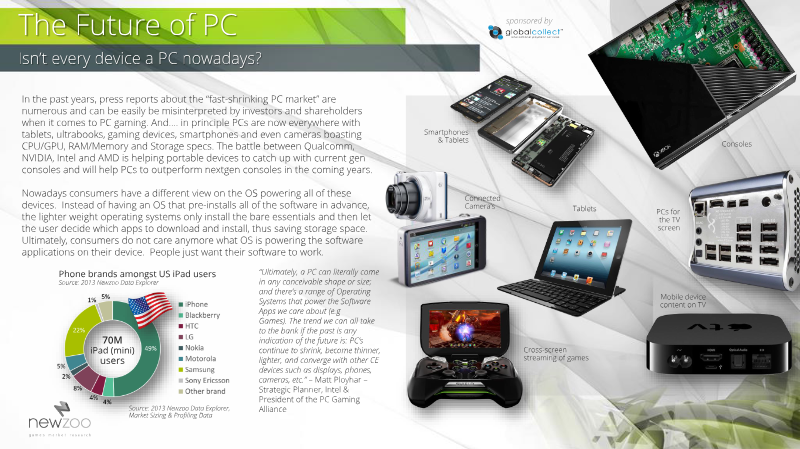
PC gaming currently stands as the dominant force in the global interactive entertainment industry, commanding a 39% market share with $27.6 billion in annual revenue.
- PC gaming leads the global interactive entertainment industry with a 39% market share, generating $27.6 billion in annual revenue from a base of approximately 900 million players.
- The free-to-play business model is the primary financial driver for the sector, with revenues projected to reach $13.3 billion by 2016.
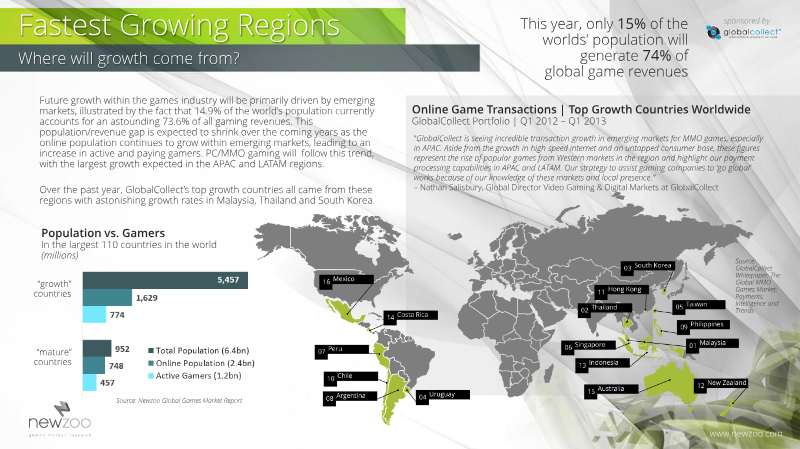
- The core PC and MMO gaming segment consists of 168 million players, with significant growth occurring in the APAC and LATAM regions.

Introduction to the Chinese Games Market: Opportunities in This Expanding Market
The Chinese gaming market stands as the world’s largest and most dynamic digital ecosystem, characterized by a massive user base of 490 million gamers and a rapidly evolving technological landscape.
- The Chinese gaming market reached RMB 83.2 billion in revenue in 2013, representing a 38% year-on-year increase driven by a massive base of 490 million gamers.
- Mobile gaming is the primary growth engine, experiencing a 248.5% increase in users and a 246.9% surge in revenue during the observed period.
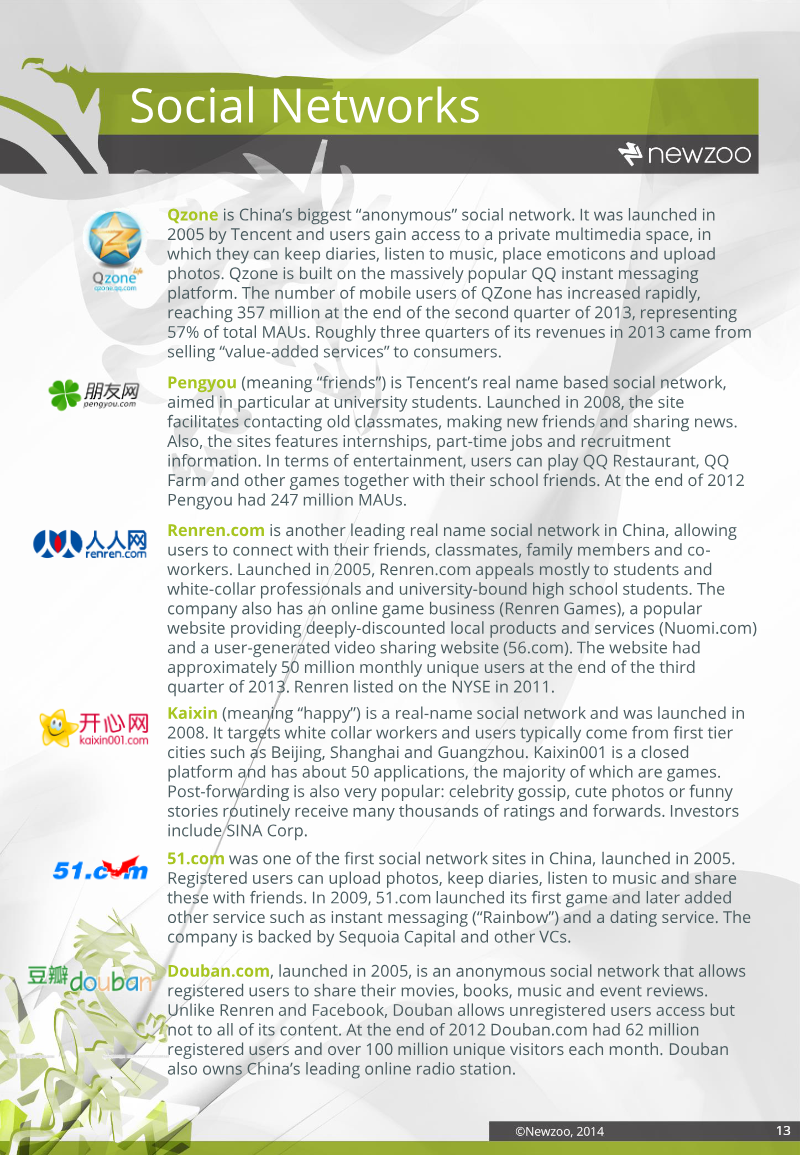
- Success requires navigating a fragmented distribution landscape dominated by domestic giants Tencent and NetEase, necessitating strategic partnerships for foreign entities.


Esports in the Americas: Sports, Spanish, and Spending
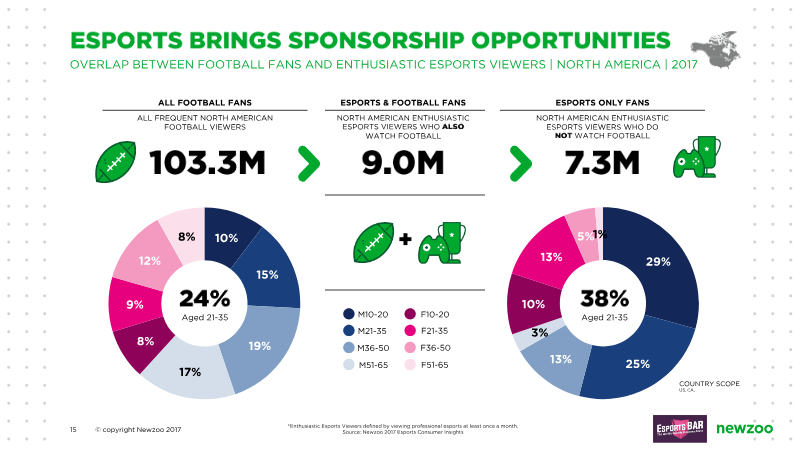
The Americas represent a critical hub for the global esports industry, accounting for 25% of the worldwide audience and 40% of total industry revenues.
- The Americas represent a major global esports hub, accounting for 25% of the worldwide audience and 40% of total industry revenues.
- Nearly 50% of the regional esports audience speaks Spanish or Portuguese, necessitating localized strategies rather than a unified approach for North and Latin American markets.
- Traditional sports organizations are increasingly acquiring esports teams to diversify fan engagement and reach younger demographics across both continents.
China Steam & PC Gaming Market Report: 2025
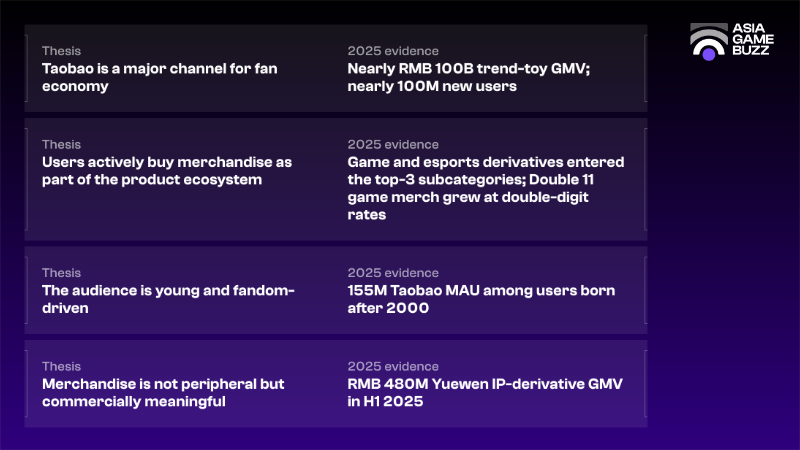
The Chinese PC gaming market has reached a valuation of approximately $11–12 billion within a broader national gaming industry worth RMB 350.78 billion.
- Steam dominates the Chinese PC gaming market with an 87% share, contributing to a total PC gaming valuation of approximately $11–12 billion.
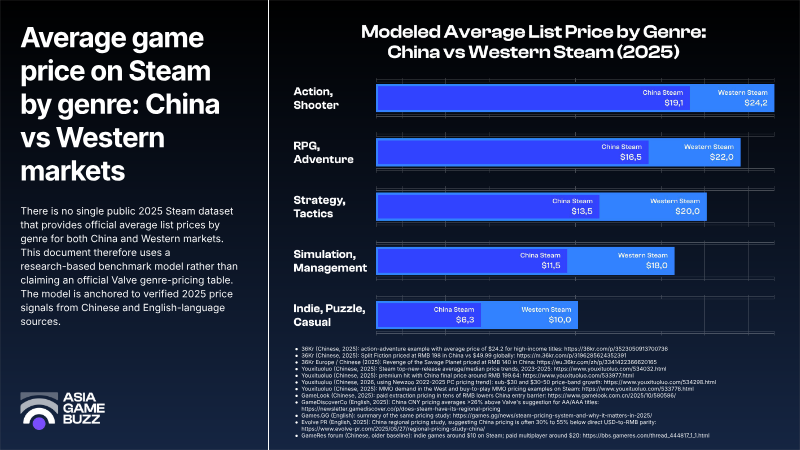
- Pricing for Steam titles in China must be adjusted 21% to 37% lower than Western benchmarks to align with local purchasing power and consumer expectations.
- Market discovery is driven by community-led engagement on platforms like Bilibili, TapTap, Heybox, and Sonkwo rather than traditional store-page traffic.

Essential Facts about Video Games in Italy: 2025
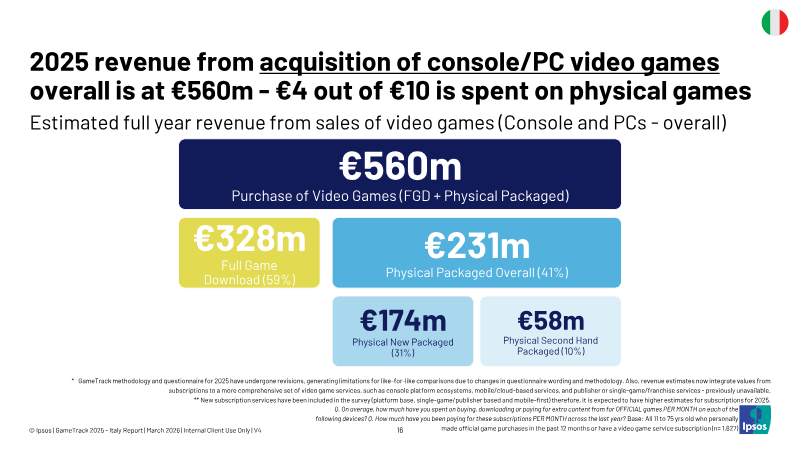
In 2025, roughly 14.2 million Italians—about a third of the population aged six to seventy-five—engage in video gaming, with a pronounced male bias and a concentration of players under 35.
- The Italian video game market generated €2.4 billion in 2025, with game sales accounting for 77 percent (€1.8 billion) of total revenue.
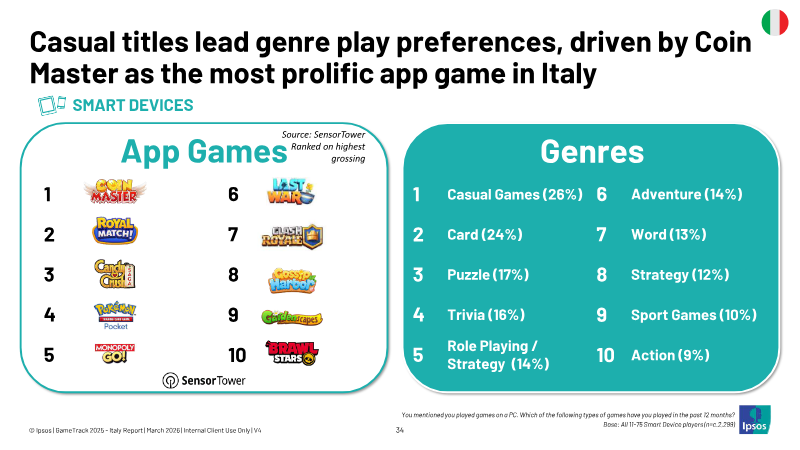
- App-based gaming dominates the market, representing over half of total revenue with a freemium model where only one percent of earnings come from upfront purchases.
- Smart devices are the primary revenue driver at €929 million, while console gaming accounts for €643 million, supported by an average of eight hours of gameplay per week across the population.

Asia Pacific Market Report 2025: Creating Opportunities for Video Games in Asia
Asia’s gaming landscape in 2025 is dominated by a triad of regional strengths that together shape the global market.
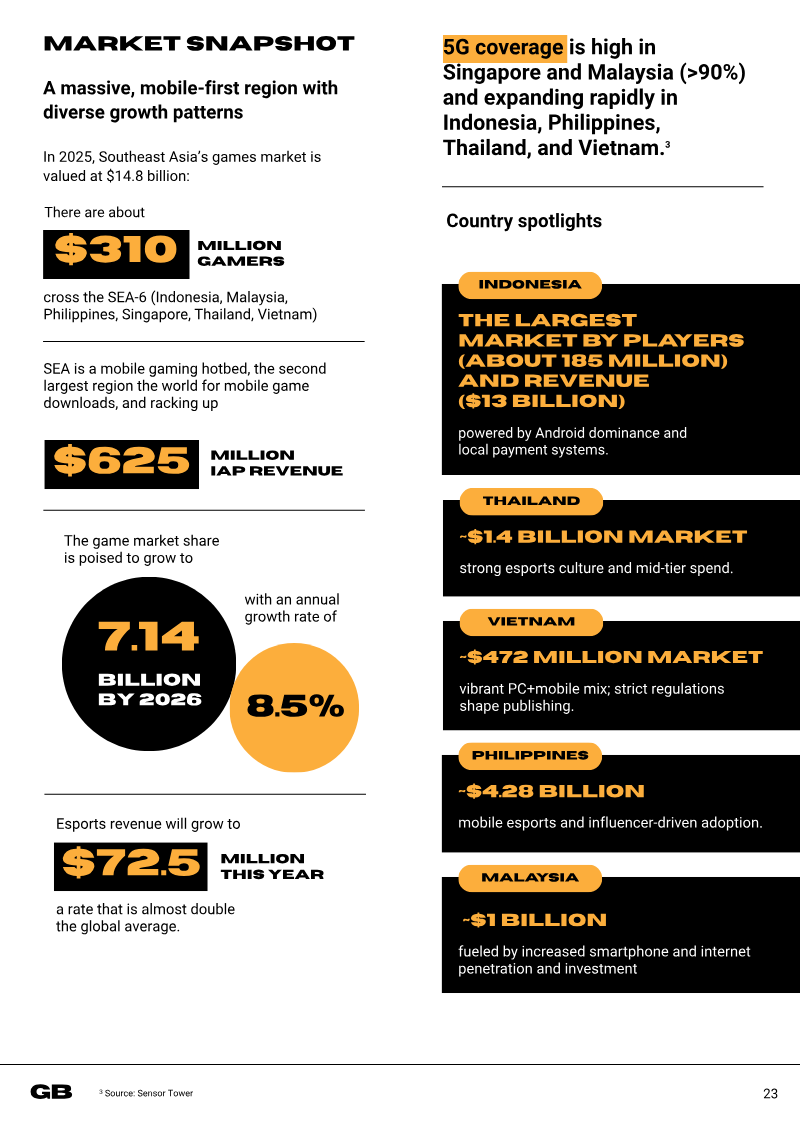
- Southeast Asia is the region's fastest-growing mobile-centric market, currently valued at $14.8 billion and driven by a demographic of 680 million residents under the age of 30.
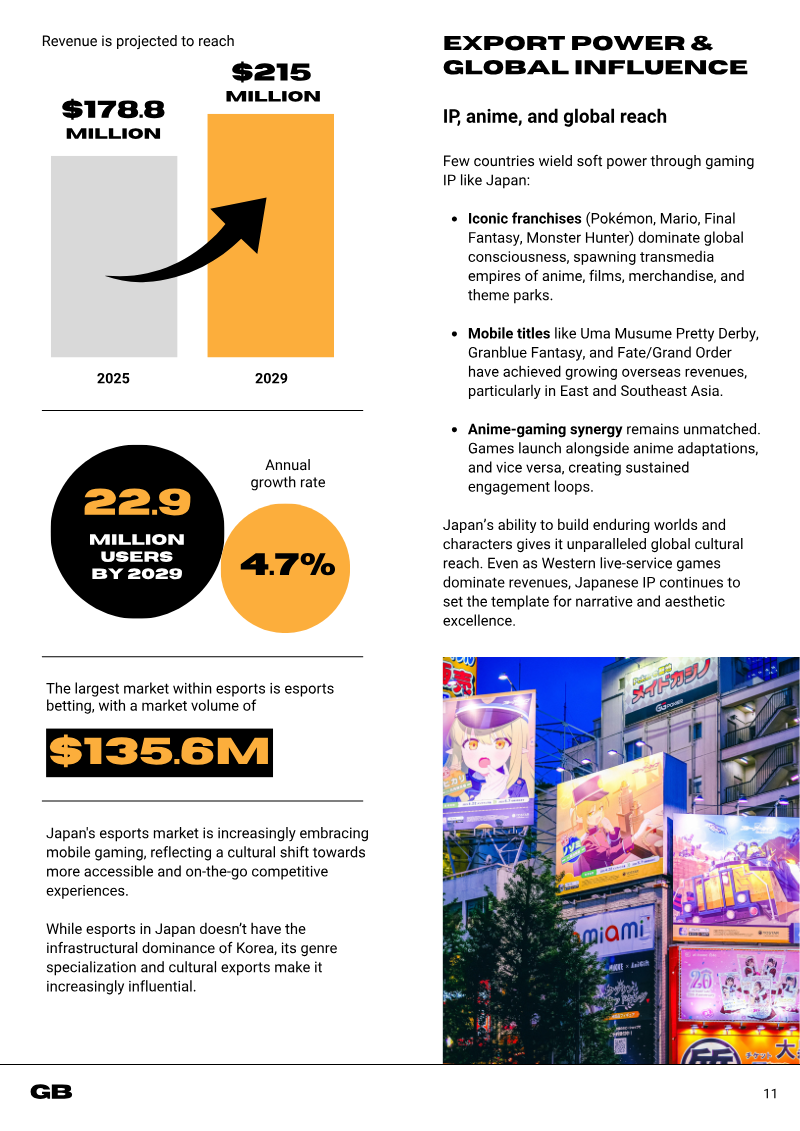
- Japan remains a global cultural powerhouse, with iconic franchises generating $215 billion in worldwide influence and $178.8 million in IP-specific revenue.
- Esports in Southeast Asia is a significant economic driver, with projected revenue between $350 million and $380 million.

Capital Markets Event 2025: Coffee Stain Group
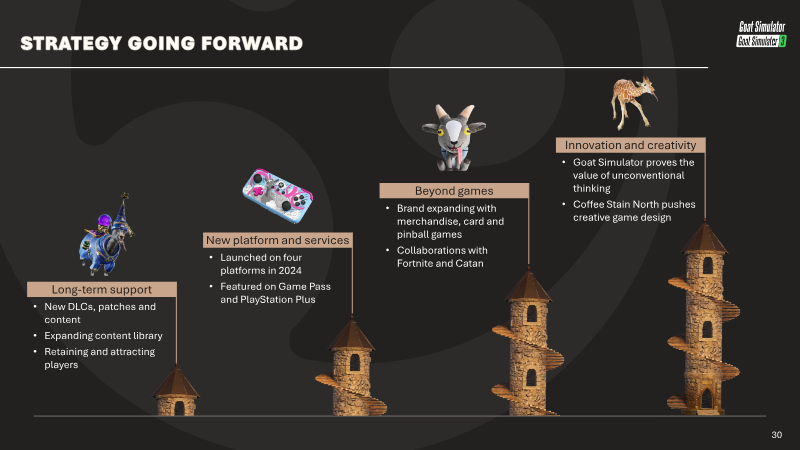
Capital Markets Event 2025 showcases the Coffee Stain Group’s strategy of building a portfolio around small, autonomous teams that prioritize gameplay quality and community engagement.
- Coffee Stain Group maintains strong financial health with a 34% net-sales CAGR to SEK 1.2 bn, a 44% cash EBIT margin, and 120% cash conversion.
- The company holds SEK 472 m in cash reserves with zero external debt, providing significant flexibility for future M&A and capital allocation.
- Ninety percent of net sales are generated by a core portfolio of flagship titles—Goat Simulator, Deep Rock Galactic, and Satisfactory—which consistently maintain review scores above 96%.