Key insights
6 slides
Market Shift
The global games market is moving from boxed products to a service-oriented model.
Mobile devices and massively multiplayer online games are the primary engines for growth.

Growth Driver
Mobile revenue is projected to expand at a 32% compound annual growth rate.
This significant growth rate for mobile revenue is outpacing the decline of dedicated handheld consoles.
New Metrics
Publishers must shift focus from legacy revenue metrics to granular data points.
This includes specifically tracking player engagement time and the conversion rates of paying users.

Player Behavior
The industry is moving toward a multi-device reality for high-value gamers.
These gamers fluidly transition between computer, personal, and mobile screens.
Like a person seamlessly switching between a laptop, tablet, and phone for different tasks.

Operational Change
Publishers must reorganize operations to support cross-platform experiences.
This is necessary to maintain competitiveness and provide consistent value across diverse digital touchpoints. Modern players distribute their gaming budgets across various platforms.
Global Impact
Mobile monetization's expansion is creating a global footprint.
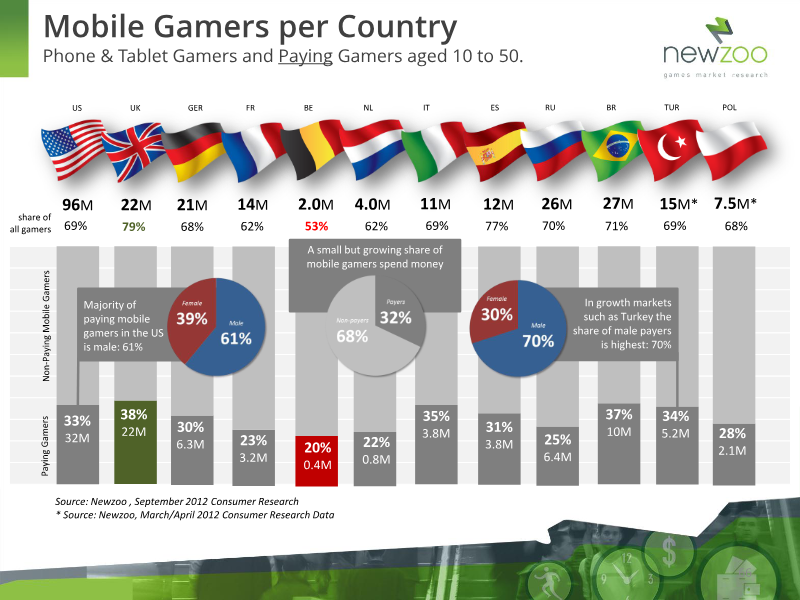
This challenges established retail norms, despite the paying demographic remaining predominantly male as of 2012.
1 / 6
Ask AI about this report