Key insights
6 slides
Rapid Growth
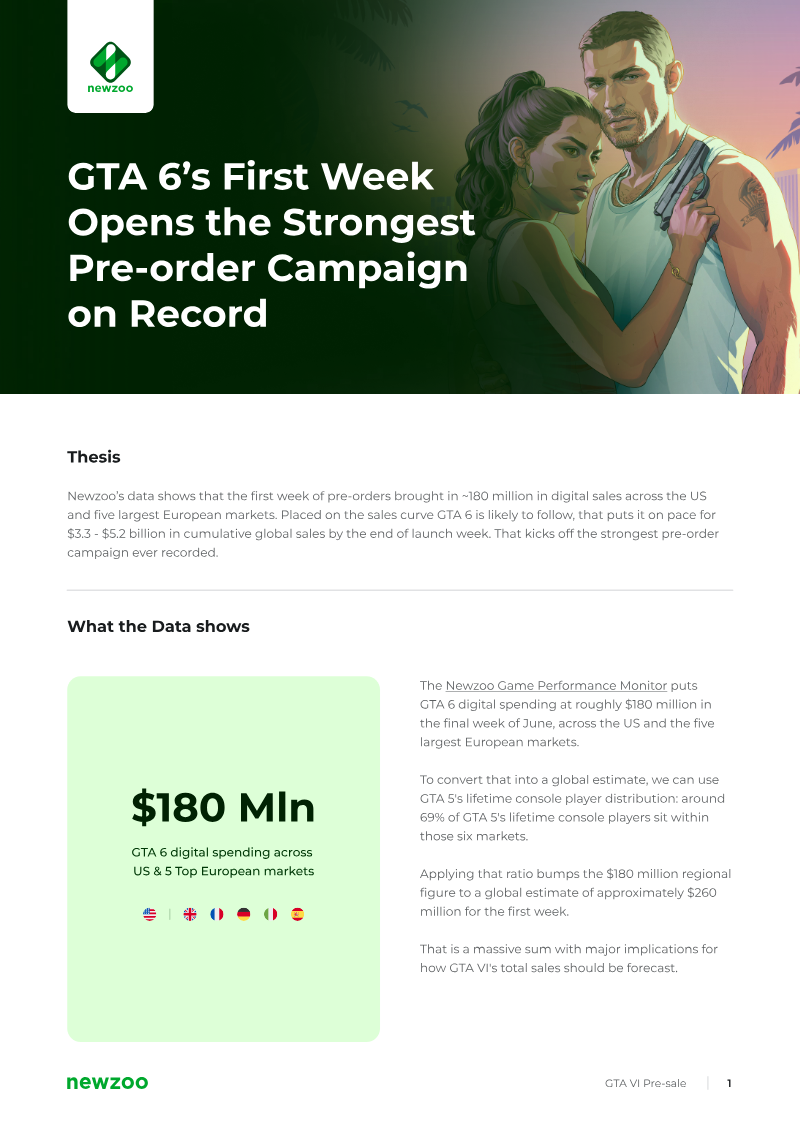
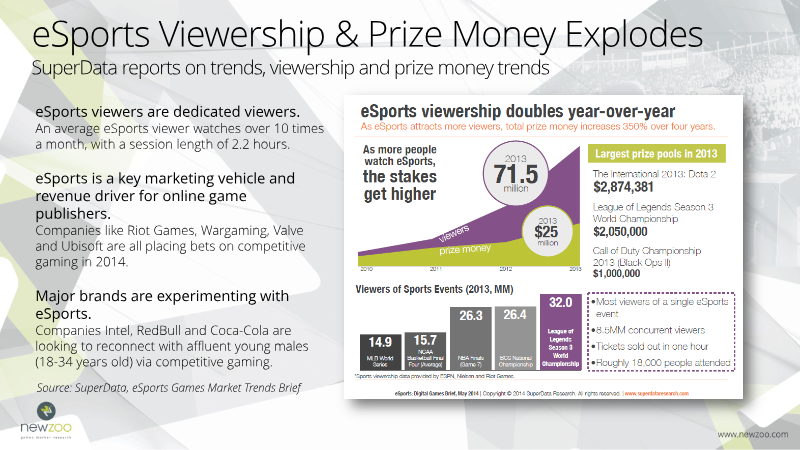
eSports viewership is doubling year-over-year.
The average viewer watches over 10 times per month. Each session lasts approximately 2.2 hours.
Financial Impact
Total eSports prize money increased by 350% over four years.
Top events like The International 2013 awarded significant prize pools.
Page 3 of the report350%
Increase in total eSports prize money over four years.
- The International 2013 prize
- $2,874,381
Audience Value
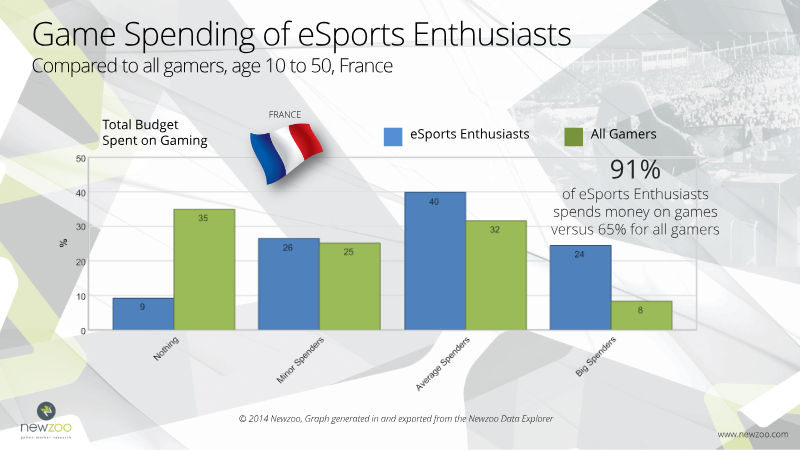
eSports enthusiasts are significantly more valuable to publishers than average gamers.
22% of enthusiasts are 'big spenders' on games. This compares to only 8% of the general gaming population.
Demographic Profile
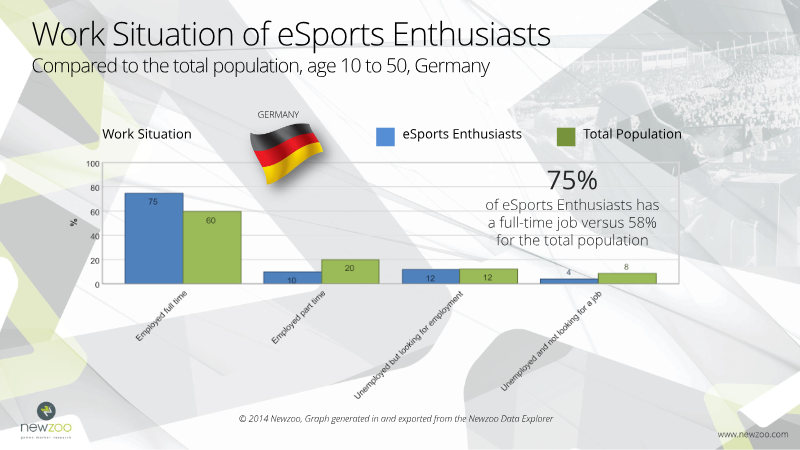
The core eSports demographic is young and affluent.
59% of enthusiasts are aged 21–35. 75% of German enthusiasts hold full-time employment.
Brand Investment
Major non-endemic brands are actively investing in eSports.
Brands like Intel, Red Bull, and Coca-Cola aim to reach the 18–34 male demographic.
Page 5 of the reportIntel, Red Bull, Coca-Cola
Examples of major non-endemic brands investing in eSports.
Massive Reach
eSports events are achieving massive scale.
The League of Legends Season 3 World Championship drew 8.5 million concurrent viewers. Its 18,000-seat venue sold out in one hour.
Like a blockbuster movie premiere, eSports events can attract millions of simultaneous viewers and sell out large venues quickly.
1 / 6
Ask AI about this report