Monetization reports and market data
Documents

From Casual to Complex: Trends that Shaped Gaming in 2024
The gaming industry is undergoing a fundamental transformation, moving away from traditional user acquisition strategies toward a product-centric model defined by hybrid monetization and lean, data-driven execution.
- Competitive advantage has shifted from manual marketing optimization to product-centric design, where engagement loops and monetization mechanics are integrated at the project's inception.
- Studios must transition to a hybrid gaming model that combines the accessibility of hyper-casual titles with the complex retention loops characteristic of high-production RPGs.
- Sustainable growth now requires deep organizational integration between marketing, product, and data teams to replace siloed workflows and combat rising acquisition costs.

Archero 2 Review: The Evolution of gaming & Habby template perfection
Archero 2 represents the latest iteration of Habby’s highly successful game design framework, effectively refining the mechanics that defined its predecessor and other hits like Survivor.io.
- Archero 2 features a more complex and fleshed-out core gameplay loop compared to its predecessor, incorporating expanded progression layers like a 10-slot rune system that allows players to modify skill abilities.
- The game is currently following an Asian-centric soft launch strategy, with significant traction in markets like South Korea, China, and Taiwan, generating approximately 100,000 downloads per day.
- Unlike the original Archero, which relied heavily on ad revenue, Archero 2 has significantly reduced ad placements, limiting users to roughly four rewarded ad opportunities per 24-hour cycle.

Digital Market Index: Q4 2024
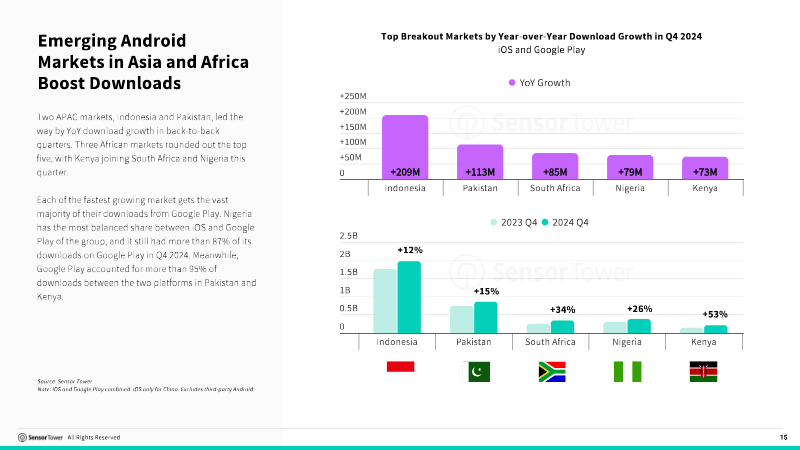
Global digital markets reached a significant milestone in the final quarter of 2024, with in-app purchase revenue hitting a record $39.4 billion.
- Global in-app purchase revenue reached a record $39.4 billion in Q4 2024, bolstered by a 28.2% year-over-year surge in non-game application spending.
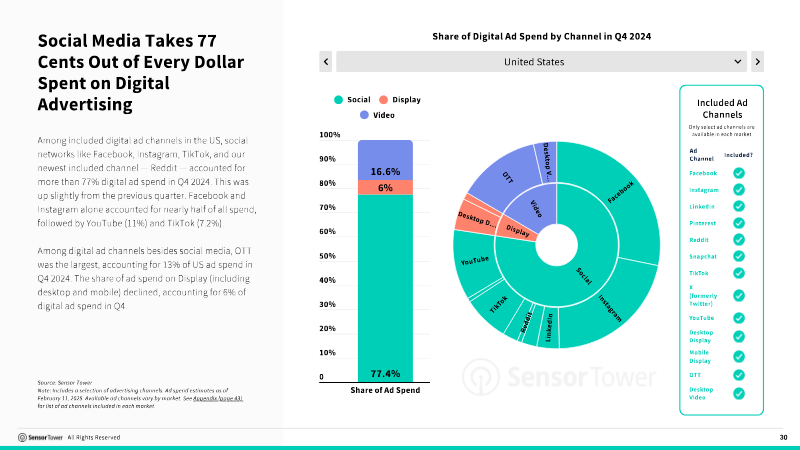
- TikTok became the first application to surpass $6 billion in annual revenue, highlighting the massive monetization potential of non-game platforms.
- The iOS ecosystem captured 70% of total revenue, while Google Play maintained its dominance in scale by facilitating nearly 75% of the 34.1 billion global downloads.

Can Alternative App Stores Thrive Post-DMA?
The mobile application ecosystem is undergoing a fundamental transformation as regulatory interventions, most notably the European Union’s Digital Markets Act, dismantle the long-standing duopoly held by Apple and Google.
- The EU’s Digital Markets Act is dismantling the Apple and Google mobile duopoly to foster a fragmented, competitive ecosystem modeled after the diverse multi-store landscape of the Chinese market.
- Aptoide has scaled to 430 million annual users and 10 billion cumulative downloads, currently processing approximately $87 million in annual transactions.
- Alternative app stores are incentivizing developers with more favorable revenue splits, such as Aptoide’s 90/10 model for direct-to-consumer distribution.
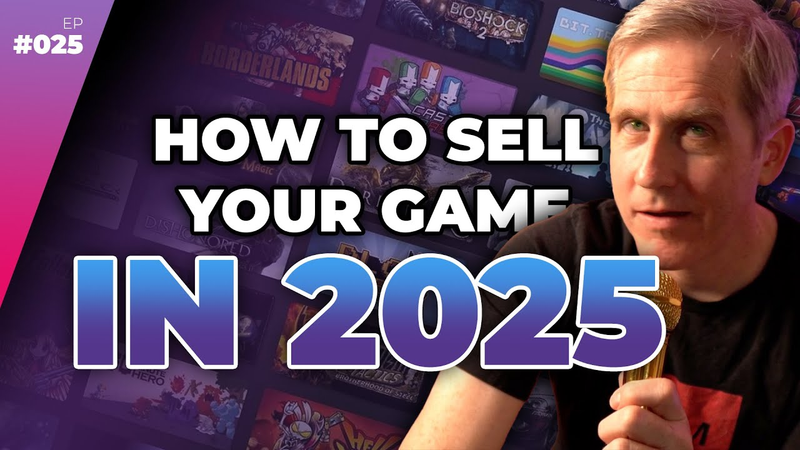
How To Make Money From Your Game In 2025 w/ Chris Zukowski — Full Time Game Dev Podcast Ep. 025
The indie game development landscape in 2025 is characterized by high saturation and increased risk, necessitating a shift toward disciplined, iterative production models.
- To gain traction on Steam, developers should aim for a baseline of 7,000 wishlists before launch to trigger the platform's algorithm effectively.
- Marketing success is not achieved through social media posts or tweets, but by securing access to established audiences through influencers and industry gatekeepers.
- Developers should prioritize building their own owned audience (like an email list) rather than relying solely on Steam wishlists, as the latter is a platform-dependent asset that could be subject to change.

Triple Match City: New Evolution of casual (Match 3D) games
Triple Match City represents a significant evolution in the casual gaming sector by successfully merging traditional match-3D mechanics with hidden-object gameplay.
- Triple Match City is scaling rapidly in revenue, reaching approximately $40,000 per day despite having a relatively small user base of roughly 21,000 daily active users (DAU).
- The game exhibits a significant disparity in monetization strategy between platforms, with iOS users experiencing no intrusive ads up to level 200, while Android versions utilize a more aggressive ad-heavy approach.
- Core gameplay mechanics focus on a 'hidden object' style 3D match experience that requires zooming and scrolling, designed to induce player error through cluttered inventory benches and stacked assets.
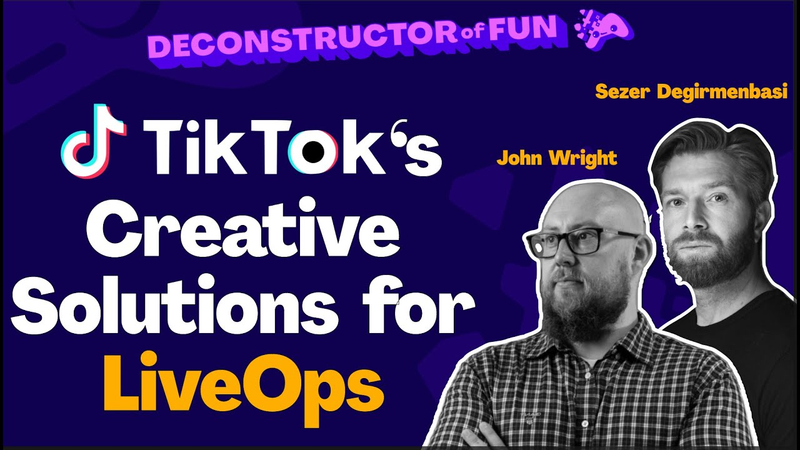
TikTok's LiveOps Enchantment
The mobile gaming industry is undergoing a fundamental shift, moving away from a reliance on new title launches toward the sustained monetization of established portfolios.
- Games older than five years now account for over 64% of total in-app purchase revenue, signaling a shift from new title launches to the monetization of established portfolios.
- LiveOps has become the primary mechanism for extending game lifecycles and maximizing long-term profitability in an increasingly saturated mobile market.
- The period between late December and mid-January, known as Q5, is a critical growth window characterized by heightened user engagement and reduced advertising costs.
Why You Should Make Tiny Indie Games In 2025
The debate between developing small-scale versus large-scale indie games in 2025 centers on financial viability, return on investment, and audience retention.
- The 'bunch of balloons' business model minimizes financial risk by releasing multiple high-quality, small-scale titles rather than committing years to a single large-scale project.
- Small-scale games offer a more efficient return on labor and align with current market demand for bite-sized content compared to large projects that suffer from diminishing returns.
- Developers should launch minimalistic titles and only 'inflate' those that gain market traction through subsequent updates, Early Access content, or expansions.

The 84% Problem: What Bad Ads Are Costing Game Publishers
The gaming industry faces a critical retention crisis driven by the prevalence of disruptive, deceptive, and poorly placed advertisements.
- Approximately 84% of players uninstall games due to disruptive, poorly placed, or inappropriate advertisements, directly impacting publisher retention and revenue.
- Publishers must actively police ad partners and implement manual monitoring or automated ad-quality tools to prevent offensive, deceptive, or category-specific content (such as political or religious ads) from appearing in their games.
- The transition from waterfall mediation to header bidding has increased revenue competition but significantly reduced publisher control over the specific ads displayed to users.

Cheating Payments: The Hidden World of Game Fraud
Payment fraud represents a critical financial threat to the modern gaming industry, particularly as developers transition toward direct-to-consumer models that prioritize high-velocity digital transactions.
- Payment fraud poses a critical financial threat to gaming companies, as chargeback abuse and stolen credit card usage often result in losses significantly higher than the original transaction value due to penalty fees.
- Traditional, static rules-based security systems are no longer sufficient to combat sophisticated, automated fraud rings targeting high-velocity digital transactions.
- The industry is shifting toward machine learning and behavioral analysis, which evaluate user interactions like typing speed and navigation patterns to distinguish between legitimate players and malicious actors.

Value Optimization, Hybridcasual, and the Impact of AI
The mobile gaming industry is undergoing a fundamental transition from a volume-based user acquisition model to a sophisticated, data-driven framework centered on long-term value optimization.
- The mobile gaming industry is shifting from volume-based user acquisition to long-term value optimization due to rising acquisition costs and increased market competition.
- Developers are transitioning from hyper-casual titles to hybrid models that combine in-app purchases and advertising to capture revenue from diverse player segments.
- Success in modern mobile ecosystems requires using custom events as proxies for long-term retention to navigate auction-based environments and extend optimization windows.

What is Royal Match missing that both Gardenscapes and Candy Crush have?
The mobile gaming landscape is currently defined by major Match-3 franchises, such as the Scapes series and the Candy Crush portfolio, which have historically leveraged secondary accessory games to drive growth and user acquisition.
- Royal Match has generated $2.7 billion in cumulative revenue within 51 months of release, currently maintaining a consistent performance of approximately $350 million per quarter.
- Unlike competitors like Candy Crush and the Scapes series, Royal Match has achieved its market dominance without the support of a secondary companion game.
- The developer is launching Royal Kingdom, a puzzle-RPG with PVP elements, to address the lack of a companion title and expand its portfolio.