Monetization reports and market data
Documents

How to conquer the farming games market? Minigames FTW. Implement or die by Matej Lancaric!
The farming games market remains a highly lucrative and stable sector within the global gaming industry, characterized by long-term growth and dominance by established titles.
- Implementing mini-games that mirror successful UA creative assets is now mandatory for survival and engagement in the farming game genre.
- The farming game market is dominated by established titles like Township and Hay Day, with Township recently hitting a record $40 million in monthly revenue compared to Hay Day's $12 million.
- Revenue in the farming sub-genre is heavily concentrated in the US, which accounts for $150 million of the $300 million total revenue generated by top performers in recent quarters.
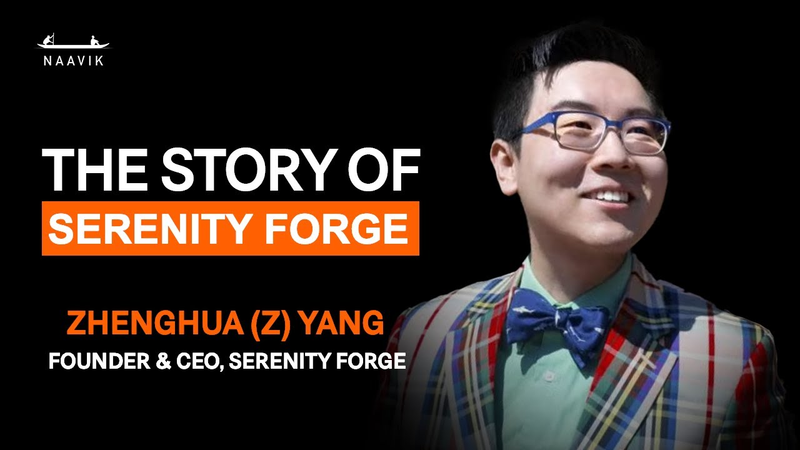
The State of Video Game Publishing (with Serenity Forge)
Serenity Forge operates as a multifaceted publisher and developer based in Colorado, dedicated to producing emotionally resonant, meaningful gaming experiences.
- Serenity Forge has scaled from a small development team to a global publisher managing multi-million dollar productions, including the 30-million-player hit Doki Doki Literature Club.
- The firm’s core business model relies on deep diversification, blending internal development with physical distribution, merchandising, and bespoke co-development partnerships to mitigate market volatility.
- The publisher rejects industry fads like NFTs, instead utilizing a tool-agnostic approach that prioritizes product quality and direct, unfiltered community engagement.

2.5 gamers x Live AM(F)A #7 - Ask Me Anything @ December 19 5:30pm CET
The mobile gaming industry is currently undergoing a structural shift, moving away from traditional store-dependent growth toward web-based platforms and Telegram mini-apps.
- The casual merge game market is currently dominated by Microfun and Moon Active, who have successfully scaled by maintaining high production quality and utilizing intrusive ad strategies that prioritize long-term retention over short-term revenue.
- For soft launches, the United States remains the primary testing ground; if a game fails to perform in the U.S. market, it is unlikely to succeed elsewhere.
- Consent Management Platform (CMP) implementation is critical for compliance, with paid solutions typically achieving 93–95% opt-in rates compared to 80–87% for free Google-based alternatives.
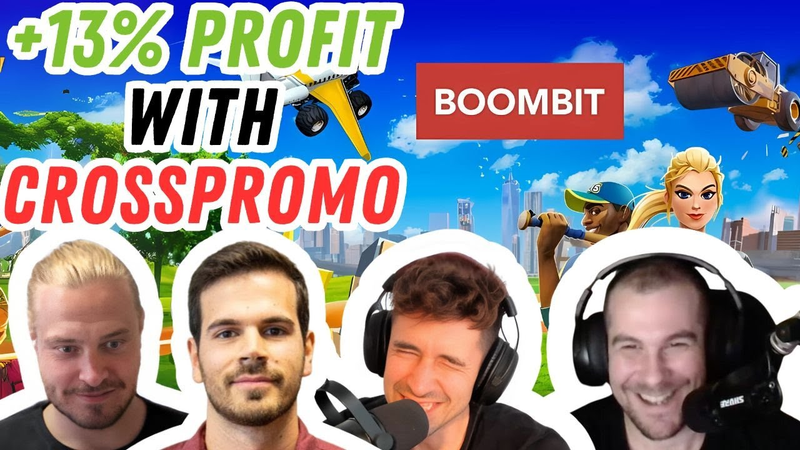
How to increase your profitability with Cross-promotion? A step-by-step guide with Gonçalo @ Boombit
Cross-promotion functions as a critical pillar for mobile game publishers, serving as a primary driver of profitability by mitigating the escalating costs of user acquisition and navigating complex privacy-related market constraints.
- Cross-promotion can account for up to 20 percent of a mobile game publisher's total profitability by recycling existing user bases to mitigate rising user acquisition costs.
- Publishers can capture 13 to 15 percent of total ad revenue by treating internal inventory as a proprietary ad network to fill impressions that third-party networks fail to serve.
- Utilizing internal ad slots allows for high-volume user acquisition at costs as low as one cent per install.

From Segmentation to Personalization: The SciPlay Approach to Success
The social casino market demands a strategic shift from broad player segmentation toward highly personalized experiences to ensure long-term retention and sustainable growth.
- Social casino developers must transition from broad player segmentation to highly personalized experiences to improve long-term retention and combat user rotation between competing applications.
- Operational success relies on separating long-term product vision from daily live operations to refine core game loops while simultaneously managing personalized user journeys.
- Firms should prioritize a unified, modular infrastructure and cross-platform content deployment using existing intellectual property rather than relying on standalone branded titles.

TWIG #312 THE GREATEST WEEK IN F2P. EVER? EVER!
The gaming industry is currently navigating a period of intense volatility defined by a surge in high-profile free-to-play releases alongside a contraction in studio stability.
- Steam reached a record 39.2 million concurrent users, a milestone driven primarily by growth in the Chinese market.
- Developers are increasingly adopting a dual-skew strategy, launching high-fidelity titles like Marvel Rivals, Delta Force, and Infinity Nikki simultaneously across mobile, PC, and console.
- Traditional pre-launch metrics such as wishlists are becoming unreliable indicators of success, as many new releases experience rapid post-launch retention decay.

Royal Kingdom Game Review: The Art of Level Design in Puzzle Games Genre
Dream Games has solidified its dominance in the mobile puzzle market through the strategic launch of Royal Kingdom, a sequel designed to complement the revenue-generating success of Royal Match.
- Royal Match has become the world's largest puzzle game, generating approximately $4.5 million in daily revenue.
- Dream Games maintains a long-term monetization strategy for its titles, often requiring a two-year payback period to justify high user acquisition spending.
- Royal Kingdom integrates its marketing creative directly into the gameplay experience through special, high-reward levels that feature the 'Save the King' mechanics popularized by its predecessor.
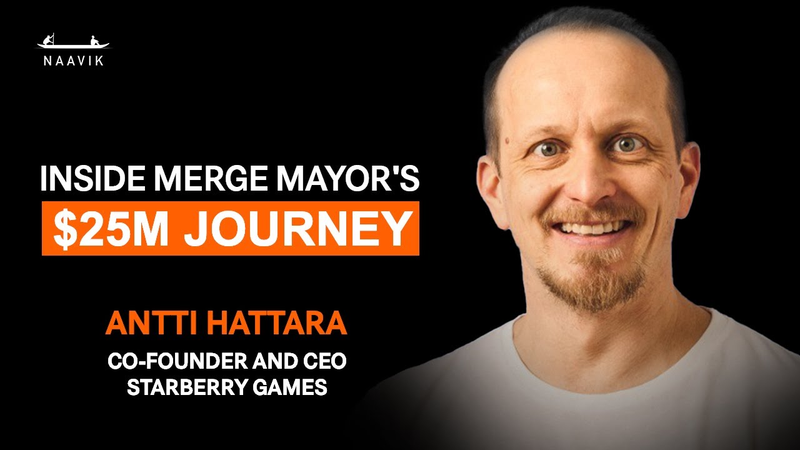
Mastering Merge: How StarBerry Built a Merge-2 Hit
StarBerry Games has successfully navigated the highly competitive Merge-2 mobile gaming market by pivoting from idle titles to a community-centric development model.
- StarBerry Games generated over $25 million in lifetime revenue from Merge Mayor by utilizing a lean team of only 22 employees.
- The studio prioritizes long-term retention by integrating social connectivity directly into the gameplay loop rather than relying on high-budget user acquisition.
- A 50,000-member Discord community serves as a primary source for qualitative insights, which the studio balances against quantitative data to refine live-ops and seasonal content.

Week in Mobile Games E39 - Mobile's hot new releases and the loot box investigation unpacked
The mobile gaming industry is currently undergoing a structural transformation defined by the rise of high-fidelity, cross-platform titles that bridge the gap between mobile and console experiences.
- Nexon’s 'Dungeon and Fighter Mobile' generated over $1 billion in iOS revenue in China within six months, highlighting the massive financial potential of successful mobile titles.
- The mobile industry is shifting toward high-fidelity, cross-platform experiences like 'Infinity Nikki' and 'Delta Force' that emphasize cross-progression to bridge the gap between mobile and console.
- Investors are increasingly prioritizing daily active user counts over traditional retention metrics, seeking shorter return on investment windows of two to three years.

Ad placements & Ad monetization trends in Mobile Games - November 2024
The mobile gaming landscape is undergoing a significant shift toward ultra-casual titles that prioritize high-volume ad monetization over traditional in-app purchases.
- Top-performing ultra-casual mobile games are generating daily ad revenues between $25,000 and $100,000 by prioritizing high-volume ad monetization over in-app purchases.
- Developers are successfully scaling titles to millions of daily active users by utilizing short, low-friction gameplay loops that mimic the consumption patterns of short-form video content.
- Vietnamese studios are currently leading the market by blending viral social media trends with aggressive ad placements, including banners, interstitials, and frequent rewarded ads.
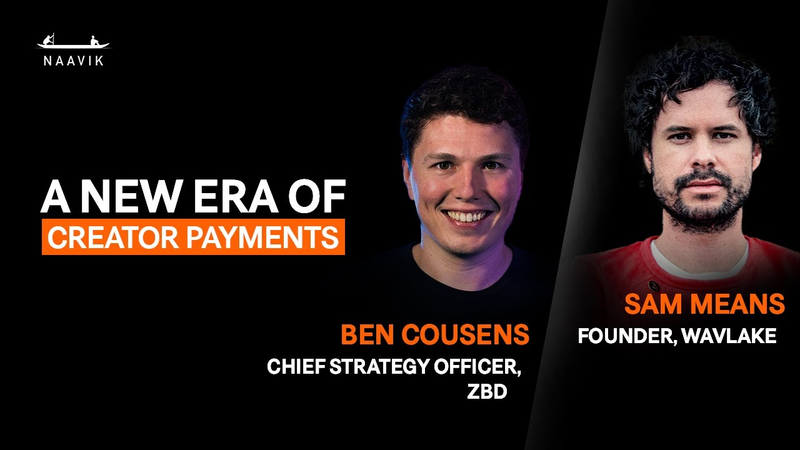
Gaming, Music, & Tipping: A New Era for Creator Payments
The integration of the Bitcoin Lightning Network into the creator economy marks a fundamental shift toward decentralized, direct monetization for artists and developers.
- The Bitcoin Lightning Network enables decentralized, near-instant, and low-fee micro-payments, allowing creators to bypass traditional high-friction royalty systems and intermediaries.
- Platforms such as Wavlake and ZBD are utilizing the Nostr protocol to facilitate global, interoperable value exchange between fans and creators.
- Developers can now embed music and content directly into gaming environments with automated, transparent revenue splits that function with the simplicity of email.

Running a Successful Live Service Game with Sergei Vasiuk
The gaming industry is undergoing a fundamental transition from traditional product-based models to games as platforms, where the developer’s primary role is to foster an ecosystem for social interaction, user-generated content, and community engagement.
- Transition from product-based models to games-as-platforms requires shifting organizational focus from launch-day revenue spikes to long-term player retention.
- Operational success depends on balancing quantitative analytics with qualitative community feedback and expert intuition to avoid analysis paralysis caused by over-reliance on A/B testing.
- Sustainable monetization should prioritize cosmetic items over pay-to-win mechanics to preserve a fair competitive environment and maintain long-term player trust.