VideoDeconstructor of Fun
Value Optimization, Hybridcasual, and the Impact of AI
17 Nov 202467 min video
Transcript
hey folks and welcome to the deconstructor of fun podcast I'm your host mishki katoff and in this episode uh my guests are Manish kria from meta and Ryan Davis from Wali uh together we're going to discuss the current trends in the mobile gaming Market focusing on value optimization hybrid casual games and the impact of AI on user acquisition strategies we're going to explore the challenges of measurement and attribution in a changing landscape and really the importance of creative strategies um with these two guests we're going to share success stories from the industry uh and overall the conversation will highlight the evolving nature of gaming marketing and the tools that meta is developing to support advertisers in achieving better outcomes these two are fantastic guests uh I hope the conversation is not too high level I'm a dummy I don't know that much about marketing uh but yeah fascinating conversations fascinating understanding of how the market is evolving and it
that it's perhaps not as difficult as we may sometime think so without further Ado if you enjoy this episode give it a thumbs up a like five star whatever platform you're using and you if you are watching this on YouTube or Spotify where you can see actually some of the slides that we're showing then um would much appreciate if you join as a subscriber to our YouTube channel because we have some really cool custom interesting hyper production value content coming your way so ladies and gentlemen without further Ado Manish Grio and Ryan [Music] Davis Manish gria director of product management at meta welcome to the podcast hi Mishka thanks for having me uh really looking forward to this conversation likewise and Ryan Davies head of performance performance marketing not just marketing Performance
Marketing at qual uh a hyper casual publisher turned into a real life game publisher welcome back to the podcast thank you thank you yeah it's really good to be here again I think five or six years later or something so yes turn around yeah yeah you know we we had to we had to keep you on the leash like uh so come on potion back always but but anyways so we're not um we're not talking about the past episode we did rewind and in 2019 we're here to talk about overall what's going on with the market and who's better to talk about it than than meta that has all the data uh in privacy in well stored matter but uh but uh Manish uh so so kind of like look like you're seeing everything that is happening in the market and we're seeing only what happens and we can see through third party data platforms and some of it is positive some of it some of it is a little bit negative um what are you seeing in in
the gaming Market especially in the mobile gaming Market at the moment great um there's a few things right and yes on on the one hand you know meta does have a view of the entire Market including non-gaming so we obviously look at apps as a whole we look at the various segment of apps um and gaming obviously been one quite important one but there's e-commerce apps there's there's tech apps there's utility apps there's a whole bunch of them out in the market that are competing uh to find the best users to find the highest value they can with the budgets they've got I've learned a few very interesting things you know uh I'm assuming most of the listeners are aware of this already but folks aren't necessarily budget constrainted when it comes to UA their performance constrainted and in a way because I look at the app world and I look at the gaming world I get to see almost the the sharpest extreme end of
that you know the advertisers are super sophisticated they are well wored with data and they use bi very effectively I find them to be some of the most sophisticated frankly when it comes to business intelligence and analytics the one thing that is very obvious in all of the things we're seeing is the very rapid and very deliberate shift towards purchase and value so while apps and different stages of their life cycles would have been super happy to spend money on acquisition and volume that shift that Focus has shifted quite dramatically to value and so I think the role of this sophisticated analytics the role of having good visibility into measurement and attribution and the desire to sort of manage every dollar of their budget
towards that performance is just now visible in every aspect of what we see so what I love about it is it's obviously pushing the industry in the direction of let's get things right end to end from the time the UA budgets are planned the channels are planned the measurement the the actual day-to-day management of these campaigns and the long-term thinking as well right not just D7 but D30 D60 d180 payback periods the whole ecosystem and the whole life cycle I think has become much more fascinating as a result and and we're we're paying a lot of attention to that right now we're trying to make sure that we can build the tools and the products that allow us to walk in complete lock step with this that's kind of my first major observation that I'd like to sort of discuss with you folks and I'd love to get um you know Ryan's perspective on it as well yeah I'd agree with that totally I mean you can look at gaming and I look at what I've seen over the
last five six years and that is an increased sophistication in what we are capable as within qule for sure but like when I look at the industry more generally and I think that pushing for Value as you described it I think that's a good way to put it and I know that definitely fits in well with with how things are named and structured and things on on face on lettera and Facebook but um you know I I think that just does come with also the way the industry has become a little you know for for a marketer and speaking as a performance marketer definitely you know as we as we all know measurement has become more difficult yes yes yes okay same same story that we all heard a million times but that has forced this n natural push towards value optimization and also just being I would say that what comes with that is being willing to push things towards the networks more willingly you know whether it's meta or any other AD Network um like being being willing to give data to
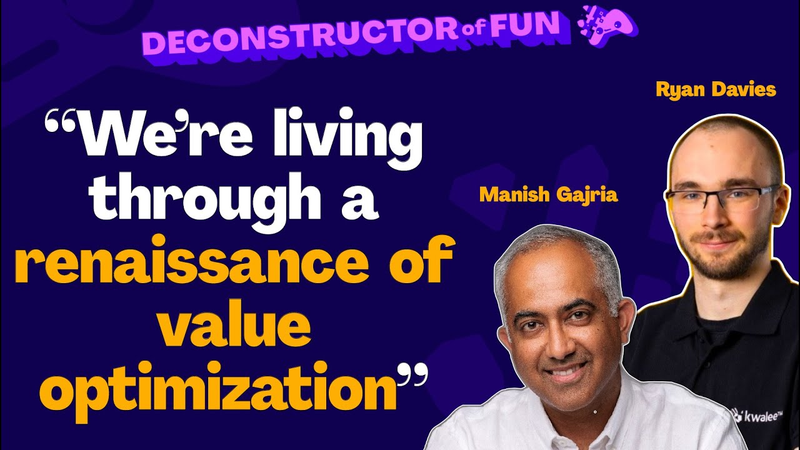
pass data in order to inform how we make decisions and how we how our campaigns optimize and move so you know it goes lock in Step really from both the the sophistication and needs of a publisher and then the what the app networks are responding with and what our platform holders are responding with so agreed um makes sense uh I've had this uh so this was an interesting point made by uh Neo who's uh who's working in user acquisition in Zinga I'm forgetting what his role is but he made an interesting point saying that uh we're living through a Renaissance of value optimization and as in any value optimization if the pie is growing rapidly then everybody is getting you know more wealthier because optimizing against value but if the pie is not growing as fast as they used to like in for example Mobile gaming where we used to you know uh compound annual growth rate of 20% and now it's pretty much
around 2 to 4% if everybody is going towards value optimization then it's a little bit of a doggy dog world where the big ones are taking the most of it and that's what we're seeing in the market with definitely huge games launched record revenues but also a lot of companies that are struggling which didn't happen quite so intensely before is this a sort of a notion that that makes sense Manish what do you think yeah I think I would agree sort of notionally as you say it it is is definitely the situation right now the way I was going to express it is the doggy doc world is really that it's getting expensive right if you want to capture that value and you want to go after those users that will generate that value uh that pie of users is probably still relatively there's a lot of users there's a lot of users you can go after but this age-old method of going after the whales and counting on them to just give you all of the value
all of the revenue that you expect to get that's become trickier and that's become more expensive without a Shadow of Doubt so I think as some of the largest advertisers continue to spend record sums of money on acquisition it has got harder for the medium and small advertisers to compete cuz at the end of the day these are all series of auctions that are happening uh and everyone's competing to get their impression in front of the best users possible so my sense is the direct outcome of that is it's becoming expensive to grow your business to grow your user base um and because of some of the other challenges we talked about like measurement Etc there is a higher risk to it whereas previously it would have been somewhat definitive now there is an element of risk of am I still going to see the same roas growth uh over the longer periods of time or not right how do I make sure that I am getting the users that will Al give you that linear or or exponential
growth over long periods of time that expense is is real no doubt about that this podcast is brought to you by apps flyer in today's Digital World understanding your apps Journey from Discovery to download is more than just insightful it's essential enter apps flyer the leader in Mobile attribution and marketing analytics that allows you to measure the full potential of your marketing efforts making every ad dollar work smarter with apps flyer that's your new reality dive deep into Data driven insights that reveal exactly where your users come from and how they interact with your app app sler where your app's potential meets performance Ryan Ryan can you give a sort of a like a an explanation to a dummy like myself what value optimization really means in practice Yeah so um I guess I guess for me I think within mobile especially Ro ass optim ation is also the uh the that the
core of that which is basically fundamentally about actually tying in the very direct you know whether it be like money like money return monetary return sending that straight back to the provider to the platform whatever it might be and and having that much more onetoone realistic version of I want my roas to be at this certain point and the the ad Network to basically all that information back to you and I think that's in a way it's a it's it simplifies in a in a sense but I I would agree though like Mich what you said about uh how that impacts The Wider market and the ability for new things to kick off is quite interesting and definitely not as like simple and easy as it may seem at first like that you know what I described makes it sound much more simple but in a way like understanding exactly what say like roas you're really aiming for for and wanting to hit and going for is not actually
like a straightforward thing that every publisher can just like instantly uh understand um and I think you know you only have to look at you I think we've all everyone has seen those charts right where it's like here's the the spread of installs based on how old the games are currently in the market right and and and lately of course it's you know games that are Beyond you know 3 four years ago are the ones that are taking up you know 70 80% of the either e either install or or revenue and and I think that does indicate how okay we've all talked about how it's harder to launch new games and I do think that it's like a slight downside of of of value optimization and that it's easier for bigger players um including like including myself in this really to to be able to actually run and optimize and measure that properly uh and and getting new products out under that method techology is a bit tougher and you know
it's one thing I think actually meta is you know I I will happily uh say is very strong on uh is actually like making it much easier to invest a small amount in order to understand you know using these kind of optimization methods in order understand where you where you sit where you stand as a product and be able to like grow that naturally rather than having to just jump into the deep end you know invest all your money uh you know I think meta is in a good position always has been when it comes to making more gradual smaller Investments that you can build up over time and evolve your campaign strategy over time whereas there's definitely some channels that are kind of all on nothing you know if you throw in you run your Ras campaigns and you hope for the best um so I think yeah I I know you didn't ask Mish but I I would uh give give the thumbs up on meta for that part thank you well that's appreciated I think you said something that's quite important as well and
there's a subtlety in which uh in it which is worth dwelling over for a second you know when it came to lower funnel campaigns uh sorry upper funnel campaigns where you know I want an install you could almost argue that it's sort of a commodity an install is an install and yes some apps and some games that are established Etc more recognized they will get they will get the volumes um but even the smaller unrecognized ones can get the volumes when it comes to Value going back to your question on what value optimization the definition of what is value is quite important and I think that's what Ryan was referring to there right it is different for different apps what do you specifically value is it 7day roas is it 28 day roas is it you know is it a specific event which is a proxy for roas which is ultimately captured a value that's captured significantly further out in the timeline and and no I mean okay there will be groups of advertisers that are similar but no two games will behave exactly the same way and so I think this subtlety is important to capture and
this is where I think a an organization with you know the capabilities that we have you know meta basically is spending uh quite a bit of its kind of research efforts right now on making sure that we can capture those subtleties well and we can actually eek out that additional bit of performance that's unique to you and your game or unique to you on your app and I find that data quite fascinating frankly yeah kind of addressing just with a so for those on YouTube or Spotify like whatever you me something I realized that we have a charge for that so so we if if you're not you know using either of those platforms so when Ryan was talking about the concentration of the market you can quite clearly see it so even looking at you know games from 2018 the market in 2023 so despite the pretty significant growth of the market what you can see is that the games that are five years or older are taking extensively larger percentage of the market than in 20 2018 that was about 30% of the market and
currently it's eeking towards 65% of the market that sounds a lot but on colal PC it's 75% so so it's not even as um as concentrated as it is with those but it is uh larger and then I always be like now more positive about things if you can look at one thing in these charts it shows that on the current year uh the games that were launched that are less than a year old are taking uh over twice uh larger percentage of the market than in the years before so so this is kind of showing that there are new games they're taking significant portion of the overall Market all while older games are controlling larger portions of the market so just a a chart supporting Ryan your point nothing more thank you I wish someone always followed me around and provided chart explain my visualizing visualizing your thought SOI
it's a good sign isn't it it's a good sign right there that you know one-year-old apps are also slightly starting to punch above where they were last year or the years before that's a really good sign uh for the industry overall and and you know super happy to see that yeah yeah we've seen record titles not only Monopoly go but I um sh I forgot the uh the wintry theme anyways we've seen uh we've seen a few different white out white out survival exactly so we've seen few games kind of reach record revenues and record of time which kind of speaks of this this uh value optimization Renaissance as as a as a nice way to to put it uh but um but another Trend that I wanted to uh talk about is is hybridization if you will so basically using multiple not multiple but two Revenue models simultaneously so uh both Ina purchases that have been you know the bread and butter of of the free toplay games but also what we've seen as of late is is especially with with
Publishers like qu moving from hyper casual to deeper games with longer retention with clear um updates but also all of these leading to adopting Ina purchases in gamore previously meant for uh for only inap ad um Revenue model or built around inap ad Revenue model so um maybe starting with Manish like like hybrid casuals is we talked about it I remember in 2019 that was kind of on everybody's lips and 2020 was supposed to be the year of hybrid casual but it seems like 2023 2024 is is the actual year when when hybrid casuals are are booming yeah no 100% so if I if I picked one theme up at GDC back in March um that was Universal in everyone's mind it was this they really did feel like 24 and going into 25 actually we would see
this trend even you know even strengthen further so in my view we're going to see more of these transitions I I'm not sure if we will see more of the iaps start to shift a little little towards IA monetization or more of the IAS introducing I AP my intuition here is that it will be more the I APS introducing IAA because because that allows for Revenue to be captured sooner monetization to start sooner and perhaps what I also expect is that gameplay design will slightly change uh to accommodate for the fact that purchases might come later and it's okay to start monetizing through ads early let people get introduced to the game play you know and then commit to you know purchases that might happen on day 14 or after day seven at least so my sens is it's going to be more the IAP folks bringing in ads
monetization also I think ads monetization is quite well established as an ecosystem right it's all there all you have to do is create the moments inside your game that allow for that impression opportunity allow for that add opportunity so I that's my expectation at least but the fact that this trend is there it's it's happening now and it's only going to get faster is 100% true yeah I definitely see it is this almost like paradoxical simultaneous thing happening where you do have both of what you're describing Minish happening you know like I Publishers implementing ads more openly people have got more comfortable with ads and just add in like Network elements within our industry become more prominent and it's just easier for people to accept and bring into their games and I think designers are getting more comfortable with how they should Implement them into their games so that that is very apparent but but then yeah like we we I
guess qual is a very good example of and there's lots of good examples out there of companies that made their name of IAA and having ad driven games but as michiga described having to improve what they can do with IAP and basically have further contribution and and and the truth is it's not just about like there's an obvious element of hey like we can make a bit of extra money it you know there is that but the truth is there's other reasons to be implementing IAP into your game and it comes down to things like you know targeting IAP is a very strong tool in the Arsenal and of course if you're just running with IAA you know there there's there's certain campaign types and things you can do and run but but when you're exposed to IAP and you have these type of users in your game there's a lot more you can do from an optimization standpoint a targeting standpoint and then I think another benefit that honestly people don't talk about enough I think sometimes is essentially the almost like CPM benefit on your ad Revenue to have IP users
within your ecosystem you know I think having that those extra valuable players that people really want to reach and actually like run the advertising towards gives you a bit of a bump I would say from experience gives you a good bump on the IAA side as well so you know there's a lot of good reasons to be implementing I AP and there's lots of good people making it work at the moment where but the the the tough part is that you can't just and I think a lot of us had learned this you can't just take a hyper casual game shove in some gems and some IPS and and you know slap it on the side and say that's great it's all good like it's taking a very different game play and design approach having to like really rethink The Meta around a lot of the games that revolve around IAA so there's quite a lot to it even though it's sort of on the surface sounds like it's like the simpler approach compared to the I AP to IA it's definitely still quite a a long-winded process that requires expertise different people
different ways to look at your game so yeah both of these are really interesting to me and it's it's fascinating how they are sort of you know coming to the same direction from completely different like parts of the industry which is cool step into the future of game monetization with exola exola empowers developers and Publishers to market sell connect and optimize their games globally from payment solution to a full suit of tools designed to grow your games Revenue while fostering a lawyer player base exola is your game's gateway to worldwide success with exola the world is your playground visit exa.com to date and find all the solutions that will help you to power your games into success everywhere that actually super interesting point you made um so when you have a game that has both Ina purchases and Ina ads as Revenue drivers uh that means that you're getting more inap ad Revenue because you are able to
essentially sell uh the players that are doing enap purchases and because you're making more Revenue you can bit higher get better players that will further increase your Revenue because you will bring on more payers but you will bring on also more people who are watching ad so it's like a positive cycle when you have both uh payers and um Watchers of ads would would that be uh the way to to describe it yep I would agree with that and like I you I mean I've seen a lot of evidence to suggest that that is the case and you know it makes sense logically makes sense in the data too for sure yeah the interesting question I think this raises for me is as you think about acquisition for a hybrid game uh are you effectively looking for a unicorn type of user
or are you looking for just unique sets of payers and Watchers as you described in Mishka I think that's a good way to think about it uh and I think there will be an element of looking for this completely new unique type of user and I I come come ated this from a from an ad Network perspective right my job here is to find those unique users that will enjoy um the the pace at which the game is going the they will not be bother by the fact that it is interrupted by ads or or there are ads that are being you know displayed and that there are purchase opportunities to move into the game fast with more commitment Etc um and there is also going to be this element of using existing acquisition products to just give you a basket of payers and a basket of Watchers who we already know about right because we've acquired these users before so that's going to be the interesting thing for us to evolve right I'm thinking about this problem a lot these days and I would love to obviously come back at some
point with more evidence and more data of which is working my sense in in talking to advertisers that I have met they are definitely expecting to find more users like they they have their set a which is the Ia users they have their set B which is the I users they are looking for a set C which is a unique hybrid of these two which from their perspective is about audience expansion it's about growing their user base but from a ads product perspective we've got to think about well what are the characteristics of these users and how do we do the best job of finding them for these advertisers who are looking to acquire them that's going to be a fascinating thing for us to work on over the next few we you know months yeah definitely I mean I do to be fair you know I would say meta has good systems campaign types that do allow you to segment users in a sensible way like You know despite I I would say part of the reason that this change has occurred
that hybrid has become more viable and you had you do have these very different types of users within one core product or game I think part of the reason for that at least in the world of gaming is I think that segmentation has become like a much more prevalent much more powerful tool that means that you can you can pull you know you can run these distinct campaign types that are pulling in very different types of users and give them you know relativ whether it's with custom product pages on the store Page and then how you set up and organize your game you can provide these very different experiences you know this is nothing hugely new in terms of people were innovating on this a good few years ago but I think it's become like the the de facto now is that you need to be providing slightly different experiences to your you know ad Focus players versus your IP focused players and I do think as well that like meta allows for that very very easily to kind of you know provide that different flow for each of these types of users through the different campaign types that we have at the moment um definitely like one that
but I would say that and I'm very biased on this front but having more ad Revenue oriented optimization tools in meta would be big request well it's funny you say that but we are currently working on we're testing it actually at the moment so wait watch the space there will definitely be more announcements about ad optimized um or ad Revenue optimized ads products from meta in the near future cool cool using yeah Ryan so uh actually before we move on Ryan I wanted to ask you since you're working with hybrid casual games like I think one thing that is uh not consistent is how different companies uh Define a hybrid casual game so uh if you may let me try to define a hybrid casual game based on how it's written in the uh the join report by meta and deconstructor fund that that came out and the link is in the description um but but let me see let me see if this
works so there's kind of like the way I see it is there's four pillars that make a hybrid casual game uh pillar number one is the design so as Manish mentioned it's um a lot of the the hybrid casual developers are coming in from the hyper casual side so what we're seeing is a hyper casual core and more of a stats based progression or some sort of a power progression that allows you to do live operation and through that increase the retention of these titles the second pillar is uh monetization so now that you have a retention now that you have a a little bit long term of retention now that you have updates coming in uh you also introduce in and power progression most importantly you start introducing inapp ads for core gameplay and inapp purchases for that power progression and that kind of combines these two modernization models uh the third pillar is of course marketing you're trying to acquire users at a hyper casual price points due to the uh the very attractive
and easy accessible horor gameplay but at the same time your return ad spend roas is at a casual games level at least that's the target maybe not quite as high but but closer to that and the fourth element is the production so um hyper casual games I remember when we did our first podcast back in 2019 we're talking about plank the uh the hit from Kali and uh and some other hyper casual Dev ERS were there telling me how quickly you made those games we're talking about a week to basically test and maybe another week if if the test results are really good for you to to uh to basically launch the game and make millions uh but with the um with the current hybrid casual production there still are uh sort of a low production values the development is still very very fast uh you do a lot of those early testing elements uh but nevertheless there's more of a production phase when you're adding all these live operation
elements um so that you can actually continue running it at live services so doing these four pillars design marketing monetization and production how does that sound to you Ryan sounds good honestly it's uh it's relieving for one thing to actually uh make sure that my what I perceive as hybrid casual actually lines up with you guys as well because it's true that this varies a heck of a lot across the industry at the moment and the view is not not always exactly the same but I'd agree as well that it basically incorporates multiple elements like I think it's too easy to associate it just say like just with that monetization element people sometimes think of it only in that in that vein but you're right that it incorporates all these different elements like one one one thing I would say and like maybe something I would just add to what you described um is that I definitely agree and it's true that hyper casual marketing methodology is kind of like the the rooting of of launching one of these games or pushing
one of these type of games but I think that interestingly maybe something that really makes it different from old hyper casual marketing is that you you kind of very quickly need to expand from where you start you know like hyper casual was a lot of big push initial grunt like running whole basic campaign types as big scale as possible with small margins now I think you know you can you can kind of start in that territory but you really want to be very quickly shifting towards more evolved campaign types um looking at much much much longer payback periods so the actual you know marketing methodology has to has to evolve over time and you know when I look now at the type of campaigns we're using on our hybrid games compared to you know back in the day with the pure hyper casual stuff it's there's a lot more diversity both in terms of ch channels that we use but also the campaign types that we use
within those channels so I think that's like another expectation within the world of hybrid is that the the marketing methodology is evolving a lot quicker than we did in the day when it's just IAA um so I think that's important great great addition yes oh um so perhaps kind of like moving forward it would be really interesting to talk about concete success cases and or case studies of of uh what's happening in the market uh especially on doesn't have to be on hybrid casual but it would be really great to hear like who's doing well and why these sort of a positive stories because uh a lot of the time the news as of late especially have been have not always been so positive so um um Manish perhaps you can share some of some of uh your clients who are who are you know succeeding in the current market yeah so I think go back to the um initial viewpoints around shifting
towards more value Focus we've uh We've published some some great case studies around this and we had one in particular where the advertiser moved from using in non-value based optimization to a value based optimization so they started using the value optimization product and they saw like a 25% Improvement in their roas overall wow and that's not to be scoffed at in a as I said in a mature Market which is competitive and is causing you know the cost to go up and I think to see that you can you can get more OAS by of course fine-tuning your campaigns but also picking the right optimization model or picking the right optimization objective um so we're quite excited about that and gives us going back to your point about the value optimization Renaissance right there are folks that are still discovering um not in in general we tend to see that gaming apps
are already quite aware and they're mature and they're thinking about these things and so there's a high concentration of gaming apps that are already using value optimization but there's still Headroom there and I'd like to sort of encourage others who haven't yet thought about it who are probably operating on the basis of you know just events based optimization or upper funnel optimization to really start thinking hard about how they can get more value out of lower funnel even though initially the costs may seem high and the you know that might be the fear initially that oh this is going to cost a lot um and we would like to see you know we would like to see our campaign generating volume ultimately if you have the right bi and the right analysis set up to look at longterm value as well you can very quickly see that the roas long-term roas from these value optimization campaigns is high as you saw in this first case that I've just shared H is it uh by the way a thought or a question so we we've seen apps uh
really do well as of last few years and and outpace games significantly in terms of growth and taking much more larger share of the traditional 30% of the overall Market to closing in on 50% of overall market in terms of Revenue is the rise of apps as as many of them are subscription based is that driven by value optimization to some extent so subscription is a very interesting use case in my view you um because you have to actually sell the the virtues of your app in multiple ways so Ryan mentioned custom product pages and you know custom store listings but folks have also been taking advantage of just web as a way of selling the virtues of their app and potentially using Pay walls to sell subscriptions and then delivering obviously the content and the actual value of the app once the app has been downloaded so I think we're seeing a lot of that happening in APAC but also
in parts of Europe where subscription apps have successfully found the audiences through meta as well as the ability to sell the virtues of their subscription using different methods outside of the you know outside of the traditional app install path and that's how they've sort of suddenly found the volume and the success and therefore we're seeing this now there could be there could be Tailwinds from you know for example health apps you know or or fitness apps may have had a Tailwind sort of postco Etc but I think this is a real Trend this isn't just some sort of you know this isn't some sort of temporary Trend because people have suddenly paid attention to these apps I think they genuinely have found a technique that works for them to grow their user base and sell these subscriptions in a way that is really meaningful makes sense just conceptually doesn't it like that we're all moving towards this methodology that is less abstract and much more direct to the thing that we are actually looking at on
our dashboards you know like like using Ros as an as an examp like going back to that as the example that is what many mobile marketers have as the final column on their on their dashboards so to be using that as the ultimate point of optimization certainly makes a lot of sense but but it is also conversely putting a lot of faith in the platforms that we're working with and the partners that we're working with which um you know is is another sort of interesting Dynamic to this which is you know the role of UA manager and how that fits how that fits like you know what what work should should they be doing like how many levers do they need how much control do they have and that's again like I keep doing this now I don't mean to but like it is it's a part of meta that I think is good and and important in that there are still lots of levers that can be pulled that things that can be tried and tested um and like I you know I would encourage that to remain the case like I I I see some in really
interesting I think potentially very valuable tools being released by meta that are kind of increasing the level of automation I guess you'd call it right um and I think there's like some aspects of the business where that's really really helpful really important there's some aspects of the gaming industry where people want more control and I think that as long as we kind of have this environment where you have this choice between these two ideas and methodologies which are quite you know different in terms of like what teams can handle them and what they want to do with them I think as long as you have this Choice it's really powerful because I would say generally in the gaming industry at the moment a lot of Publishers are losing that power to have a bit more influence and direct control over their campaign activity so I do appreciate that meta doesn't seem to be going fully in the timated direction soorry I went on with a little tangent on that one we might we might come back to Automation in a bit but um you know it's
a good point we should definitely Riff on that you've heard of heroic Labs by now and we keep talking about them because you need every Edge to be successful in today's market heroic Labs gam stack is built like a break house you got the Nama their backend game server hero their game development framework Satori their live op service and last but not least heroic cloud to provide massive scalability heroic Labs is a battle tested partner and their Tech enables you to be flexible creative and scale for Success focus on your game avoid Tech risks grow your product with scalable live Ops and save a big chunk of cheese all with heroic [Music] Labs yeah uh well before we jump in on Automation and and all the uh the tool sets that the developers and Publishers can use to date maybe Ryan you can share some of the uh the case examples uh or
case studies or success stories that you've kind of experienced as of late um yeah yeah I mean honestly well okay I'll do two things because I think there's like yeah one one is I'll do I blow the quy horn first and definitely say that you know what what's been really fascinating for us is the learning and really pushing and understanding the the type campaigns that work when you're implementing iip you know I mentioned earlier how it requires a bigger more diverse campaign set um and I think you know we we've seen a lot of Success With both value and event optimization um and I guess event optimization often leaning around retention events and things in that realm I'd say in in the world of meta that's been like a strong point and definitely something that we've been able to you we've really been able to ramp up our activity on mattera partially because of those IAP implementations and basically become I would say like more social focused with some of the kind of
games that are implementing iip um but like trying to not make it all quity focused like I'll definitely give a shout out to uh like maybe some friend ofies right like I think say games are are a team that's on a lot of a lot of people's voice at the moment and I think it's totally deserved and fair enough you know this is like a a company that I remember back when we were doing pure hyper casual and our LTB were like 50 cents I was hearing about these guys getting like dollar do 50 ltvs on their hyper casual games and I think at the time I didn't really realize that they were already hybrid casual basically you know I think they've had a head start on a lot of the a lot of the industry and it's a reason that they are kind of head of the curve at the moment they're doing really well on that more IAA focused but like heavily supported by IAP game methodology so um like I think they're a great reference point and I think you know I I can see very that they spend very happily and and healthily on social
channels like meta um so I think they're like a good a good you know looking at what they're running and working with from a creative standpoint and how their games function is a is a good reference point at the moment I hope I don't get uh assassinated in the company in Alpha should beine if we don't if we don't hear of you anymore we know you you're working at say games you know what I'm just reflecting on that I think it's fascinating um the more I engage with the the gaming industry and the advertisers it's just this like this weird family of people that all know each other uh they're all competing with each other but they're also all friends with each other it's just the most fascinating thing to see and I don't think I've seen it in any other industry frankly uh yeah it's not seen as a zero sum game right with a fixed pie and everyone gets a slight share if someone gets a bigger one someone has to take a smaller one it genuinely is one of those things where everyone can grow and everyone can learn
but I understand everyone wants to sort of guard their secrets because you know why not but I just love I love to see that Dynamic within the industry yeah there's too much exposed data to be like super secretive in our industry I think that's part of the problem so you kind of have to be start talking about it but I agreed a great part of what we got and part of it is of course the events because like uh with the with the smaller more targeted events like with with people like like Ryan who spent $200 million in Lifetime on ads you get invited to all all kinds of fun events where are other people who have spent a lot of money on on their advertising networks and and then you tend to meet these same people at multiple different events throughout the years and and that kind of creates that camaraderie because uh you get to know your opposition in a very positive settings around the world in the boond doggles so indeed on on a more serious note um Ryan you you said something that is really fascinating uh and I have seen this happen as well not able to share quite specifics right now
but at some stage hopefully these will become case studies we want to publish but we are seeing folks doing exactly what you suggested combining different types of optimizations uh using value optimization and a and a you know to to optimize the purchase from their acquisition but also using a custom event that is a good proxy for long-term retention or good proxy for long-term value and combining these types of campaigns is giving them better overall outcomes over the long term which I think is a really new and interesting thing that we would continue will continue to explore with other advertisers as well and as I said at some stage we can make the numbers and and the techniques actually much more uh available once we're more confident that we are seeing this as a pattern but I am seeing a lot of that sort of combo events approach as well and that's working for advertisers nice yeah anecdotally that's again like yeah obviously you see the true data databased version of that anecdotally from from my event drinking that's also
what I've what I've heard and see on the market is this this this combination of those two factors is like super important for getting meta to be like as effective as possible yeah it's an area that we're very interested in um naturally like as the industry as I said as the gameplay changes as purchase events move further out as the focus shifts towards long-term value one of the things we want to do is make sure that our value product portfolio is capturing is is serving all types of games right those that are you know are completely satisfied with sort of 7-Day optimization products because they are a perfect way to capture the value that you want to develop over the long term and others that perhaps have lower correlation within 7 days but a higher correlation within say 14 or 28 days so longer optimization windows are just a super fascinating area for us now I think we have the we have the technical capabilities and the capacity uh to to go and build an amazing product here so
again what's the space we certainly will be doing more over here in the near future yeah interesting well don't you think it's that sort of longer optimization cycle is it definitely becoming a more common uh you know product need or product development element at the moment but I do think that that goes back a little bit to what we described earlier about uh struggling or having difficulty launching new games I suppose very long opty cycle campaigns does certainly lean towards products that have been alive for longer have definitely more established data sets so you know I guess that maybe that feeds into that kind of problem as well but if I mean certainly if I was if I was you guys I would follow the money on that front so makes sense um we talking about following the money I wanted to touch a point of creative Trends so uh this is something that is you know that's the most visible part of of user acquisition and I'm very
curious has there been any shifts with uh with the creative Trends especially you know this in this uh AI era it feels like like AI is the um like like the biggest help of AI can be seen on the user acquisition side whether it is uh better uh targeting a better you know understanding of attribution or better creative strategy so uh perhaps you know starting with uh with with Ryan like are you guys actively using AI in user acquisition so I would say very directly and actively we use it within the creative realm so that that's the easier jumping off point and yeah like we use a lot of tools Runway sooner mid Journey things like this to uh play around way of experiment and I'd say we haven't gone as far as I've heard some other people of having you know specific AI artists although I I literally was having that conversation this morning I promise about maybe
bringing that into the company and having a couple people that are devoted full time to being AI artists I guess the adventurous artists who were trying to get ahead of the curve may at the job market um but yeah so that that's that's been the most active place but I I I sort of also very cognizant that from discussions I've had with like people that matter ad networks and things that AI become a more consistent system of the algorithms that are supporting the actual networks themselves um so you know I think that's not something I'm actively working on myself but I can see that that's that's having and had probably has for a while had a positive effect running our campaigns right Minish absolutely well this is why I said we'll come back to automation later that I mean we say automation But ultimately what it is under the surface is uh AI it's a series of models that are making predictions and that are trying to do a few things number one expand the amount of liquidity
available to these systems kind of develop the best or deliver the best outcomes right ultimately uh Ryan hit it hit the nail on the head when he said you want a combination of being able to provide a significant direction to targeting to campaigns to audience selection but also getting all the advantages of the machine's learning and the speed with which it can do things so our philosophy around automating ads products is exactly that how do we give our advertisers all of the power that AI can give on the targeting side on the you know uh on audience sort of Discovery audience expansion uh matching and and targeting the right creative to the Right audience Etc without being constrained in a way that limits performance so our goal here is to use liquidity to drive performance um but also also give the right level of controls to The Advertiser that don't become constraints but become hints into
the system so I feel like the direction of travel for us is combining the power of an advertisers a UA team's deep understanding of their own app of their own game of their audiences but then powering that with what the machines can discover and do very very quickly going back to your point a strength has to be like meta has to continue kind of extracting value out of the strength of small budgets but high value learn very quickly uh you know to to help the smaller apps kind of find their footing to find their the right sort of fit and so I think this is a very fascinating space for us big Investments going on over here but naturally uh creative you know using gen for Creative just to simplify the process for advertisers to personalize more for users that is perhaps the first thing that we would like to unlock uh over time kind of make it more and more advanced as we go there's a few things we're already spotting right in terms of Trends not necessarily from gen just from talking to advertisers around creatives which I think are quite fascinating um just the
the need to bring in more like real live action or real live action into your ad creatives you know commentary from influencers or players drama um you know in real life challenges these are all things that we've done a lot of Discovery and Joint testing work with our advertisers on and these are recommendations that our uh our creative shop team has shared which I think have generated a lot of value of course we've talked about diversifying and personalizing creatives but one thing that we've tried to use automation for is taking a small set of short clips but combining them like Lego pieces to make a wide set of creatives that can be then used through these automated systems and automated tools to Target the right users with the right creative of course the classic sort of powerful hooks you know first 3 seconds first 5 Seconds you know using real gameplay within the early part of an ad creative you know simplifying and and making sure your messages are really really focused so
some really good stuff that is happening because of course creative Still Remains a very important lever to to capture audiences and I think we are heading into this fantastic new time where machine learning and gen is going to make that significantly easier to do and scale so I have to be honest I'm quite excited about this space and there are pretty large teams that are taking advantage of this fundamental research to make this a reality so that the advertisers don't have to go build this from the ground up again and again and again like we are in a great position to provide these tools and capabilities to everybody to use some some some days I find myself like scrolling through different ads thinking um oh you know it doesn't seem like many people are are using the AI tools and then but then I stop and think maybe they are and I just I just don't know like maybe they're actually good like that the the days of really recognizing when something is clearly made of AI I kind of going away right it's becoming a lot like much better much more subtle so probably
maybe they're more prevalent than I realize I don't know oh I'll I'll give an example on that uh there's a company called P day Ai and they do a ugc ad so essentially they have a a a library of real people that of hundreds of people and you as an Advertiser can create your ugc ads using real people and then you know they speak whatever language what whatever um you know they say whatever you want and and you can create quickly ads and and kind of like localize them on different markets simultaneously modify them on the fly so do a lot of reps a lot of rounds um so it's it's crazy and that's what you mean like you're looking at an ad and it's a it's a ugc ad it's a person talking about the product or or you know the service or the game and that's all AI so it's it's Bonkers that's M we're gonna have to change ug are we what something else yeah yeah even even ugc is actually not ugc it's not ugc I heard I heard something really
fascinating about not not necessarily ads or creatives but about gen like gen is the worst it is ever going to be today right it's only going to get more powerful it is only going to get more real so it is a fascinating space and time um although you mentioned you mentioned real people in ads one of the things we've seen recently and I'm sure our competitors have done this for example but partnership ads are great like we're seeing amazing traction where um an Advertiser joins forces with you know a an entity social entity an influencer uh to create interesting content and it has two very fascinating benefits one the ad doesn't feel like it's just another ad because there is some intrinsic value that is incremental value in that ad because of the way it's created but then there's also so the benefit of learning from both sets of
like Advertiser accounts effectively one's an ad account once a non-ad account but using that learning using the sort of Engagement with this unique creative to power these ads to to Target these ads differently I think there's something really fascinating here that we're going to continue to explore but the initial traction we've seen from advertisers on these partnership ads is fantastic and I'm really looking forward to you know growing it further it's some as simple as that as simple as that yeah that's good to hear because we've just we've just wrapped up on a partnership on one of our games called text Express with uh comical Planet play with Joe Jonas and um yeah like we're about to start running those so you made me hope for that that that will pay off good we're talking about other type of not even other type of they're just overall um meta Solutions uh and offering that that can help companies to you know thrive in this value optimization um environment of today of
a more controlled growth like what what is something that is coming out from meta and Ryan please critique what is coming out because I can't critique I'm not a marketer by all means well thanks for the opportunity I would say uh the number one or one of the most important things we need to work on is making sure measurement is as solid as it can can be Ryan mentioned earlier we've been talking about measurement challenges for a year I think maybe since 2021 we've all been in this kind of phase of making sense of the new world and now I feel like we're in a much better place so one of the solution spaces that we're working on is making sure advertisers have Clarity of measurement that is granular that is timely and I'm talking about both IOS and Android the mmps have done a great job here as well right of continuing to push and and expand their offerings So
Meta wants to absolutely be in all of those places where advertisers are seeking Clarity on measurement um and I think iOS particularly has some significant improvements to be made I not talking about something speculative coming out in a year's time I'm talking about things that were about to launch in the next month which I think are going to be extremely powerful and provide a a level of granularity and accuracy which the advertisers will benefit from hugely and that's quite exciting because if you have good visibility into your early performance of campaigns if you're able to identify your cohorts of users look at their D7 performance look at their D30 performance and so on so forth it gives you significantly more confidence in your budget spending and particularly I think where um the the you know the advertisers were used to something quite simple and straightforward there's last touch attribution there's you know an MMP is
going to do that crossb attribution for you and you're good to go now that has become significantly harder particularly on iOS um and it might sort of become complicated on Android as well in the near future so being very solid on the ground with measurement products that are accurate granular and help the advertisers make more informed decisions that is absolutely something that we're going to continue investing in as I said there's something coming out within the next month so that's the space number one and I'd love to hear you know Ryan's reaction to that I mean honestly it's probably the M we we sort of somehow managed to get through almost this whole thing without really talking about scan and iOS and know like actually so much of what we've been talking about is probably me thinking about Android basically um reflection of how much things have shifted over the last couple years naturally um but that that honestly is really important to me like I've seen meta talking quite a bit in the last couple months about uh closer and better integration with analytics platforms and I guess I think a lot of the verbiage that came out at the time
was quite Broad and therefore it was more related to things like like Google analytics and stuff like this is a little bit more web oriented um but I think hearing things about meta moving a little not not away but like not focusing so much on the kind of more self-attributed you know I guess we've been mobile we kind of say like self-attributed Network right um and I think the days of of that are having to to kind of go away as as the attribution and measurements become so much harder and I think you know for us connection with mmps as you alluded to is like and deeper connections of mmps that allows for better pass back of information you know I think that's really important because the truth is as well like so many of your competitors are are taking advantage of some of that more like let's say holistic data across lots of different platforms and what you know the the amount of data that that mobile companies are willing to part with these days is sometimes a little alarming and I think surprises some people in the industry um but there's definitely people that are like really taking
advantage of that and so I think yeah like honestly if it was like met at that point now where you know that's starting to happen and I think yeah the kind of things you're talking about to me sound in the down the right PA yeah I mean as as someone I think we alluded before the Privacy bar is still high and you know we will make no compromises there but we are excited about solutions that allow us to achieve the outcome of better Ro roas level measurement uh roas measurement at a in a way that again gives you more confidence in your gives you more clarity and gives you more confidence in your budget decisions that is ultimately the the vision statement for that particular team like how do we keep making it easier for advertisers so they're not operating in sort of a fog of you know cloudiness or Shadows around certain types of campaigns and and what the real performance might be versus what's visible and that's kind of where we will keep chipping away at this problem but again as I said privacy bar Still Remains very high which is perhaps why it takes us a little bit longer to
get to the right solution because we want to make sure it's defensible and we want to make sure that it is very much uh robust and you know something that we can stand behind yeah I have faith I mean like aggregated event management was like a good a good step in the right direction from my perspective so if we can keep going down there's that kind of puff seems good to me yeah and on the market level I mean that's that's uh correct me if I'm wrong but but when when we hit this privacy changes that created a lot of uncertainty in the market due to uncertainty of the attribution and when you have uncertainty you decrease your budgets your your marketing budgets when you decrease your bug marketing budgets you're looking at a tire paybacks and that means you're getting less downloads and that overall leads to Market declining pretty rapidly and then if we can you know reverse this trend it's surprisingly attribution is probably the most important thing to get mobile back on growth am I correct with this sort of assessment absolutely spoton right um
attribution attribution is key and in a in a weird way digital ads has always been one of those slightly funny beasts right which maybe feels completely normalized to people who've been in it for a long time but to an outsider who's used to say e-commerce right where hey a purchase happened we shipped the product and the customer got it we got the money Happy Times the Dig ads isn't like that right and Dr ads isn't like that there is a lot that happens behind the scenes to make sure measurement is good attribution is good and that your spend is going to the channels that deliver the value that you are looking for right as measured by you which is which goes back to my earlier Point everyone has a slightly different definition you know broadly aligned across say different types of Games Etc but you know everyone is is aiming for something slightly different so the best thing we can do is give the data and give the tools so advertisers feel informed and they can make great decisions but 100% this is attribution is critical yep we're add anything two more
to that thumbs up well well we've we've covered a lot of topics from value optimization to hybrid casual um check out the link below to AI to creative Trends to attribution so this was a a very insightful conversation for for people like myself who don't understand much about marketing and for hopefully for those who do understand a lot about marketing it's even more valuable for them so so uh I want to thank both of you gentlemen for for uh for joining the podcast and and sharing all the Insight iska thanks very much for hosting uh for a very you know Lively conversation and Ryan thanks as well for your case studies your insights and your your critiques as well again we're very excited about the direction of travel that we're on and we'd love to sort of partner with many of the advertisers listening and and anyone else reach out if there are questions and you know comments or critiques as well we welcome that we're just excited to be working on the right things yeah cool no yeah very fun
publish a game mqu and I think you know they not sure I'm not sure all the the things I'm supposed to hit but that's that's the important one um but yeah it's been really fun I guess maybe maybe I'll speak to again in five years michig yeah maybe we can we can shorten it out but uh links L links in the uh in the description for both the hybrid casual report as well as Ryan Davies and Manish your your link is as well so connect with the uh with the folks check out the um check out the report and and thank you everybody for listening on that note bye-bye you did it you made it to the end of the episode as a fan of the show it would help us out if you subscribe and leave us a review on the podcast service of your choice more importantly are you a member of the deconstructor fund slack group if you have 5 years or more of games industry experience go to deconstructor of fund.com slack and apply to join join the games industry's
best professional Community filled with peers always willing to lend a hand or subscribe to our newsletter to get all the latest insights from the deconstructor of fund content creators thanks for listening [Music]
Auto-generated captions from YouTube — names and numbers may be misheard.






















Comments