Monetization reports and market data
Documents
Console Is the New Coin-Op - Monetizing Games in a Future Without Consoles - Extra Credits
The gaming industry is currently undergoing a structural shift analogous to the decline of the arcade era, where dedicated hardware is increasingly being superseded by more convenient, accessible, and cost-effective platforms.
- The home console is projected to become obsolete within two hardware cycles as cloud gaming, mobile devices, and web-based platforms achieve performance parity with dedicated hardware.
- The gaming industry is undergoing a structural shift similar to the decline of the arcade era, where specialized, stationary hardware is being displaced by more accessible and cost-effective digital distribution models.
- Rising AAA development costs and the superior reach of streaming ecosystems necessitate a move away from proprietary hardware to avoid relegating high-budget gaming to a niche market.
The Skinner Box - How Games Condition People to Play More - Extra Credits
The application of B.F. Skinner’s operant conditioning within game design serves as a mechanism to artificially extend player engagement, often at the expense of genuine quality.
- Game developers use variable reward schedules—unpredictable intervals of points, loot, or social validation—to condition players into repetitive, compulsive behavior that mimics gambling.
- These operant conditioning techniques are frequently used as a design crutch to artificially extend engagement and mask uninspired or hollow gameplay.
- Secondary reinforcers like digital points do not trigger biological satiation, allowing developers to sustain player activity long after the novelty of the game has faded.
Project Ten Dollar - EA Campaigns Against Used Games - Extra Credits
The video game industry faces a significant revenue challenge regarding the secondary market, where retailers like GameStop capture the entirety of used game sales while publishers receive nothing.
- Modern console game development costs often exceed $30 million, requiring publishers to sell over one million new units just to break even.
- Publishers introduced 'Project Ten Dollar' to capture revenue from the secondary market by requiring second-hand buyers to pay extra fees for content that original owners receive for free.
- The current secondary market model is problematic for publishers because retailers like GameStop retain 100% of the profit from used game sales, leaving developers with zero revenue from those transactions.
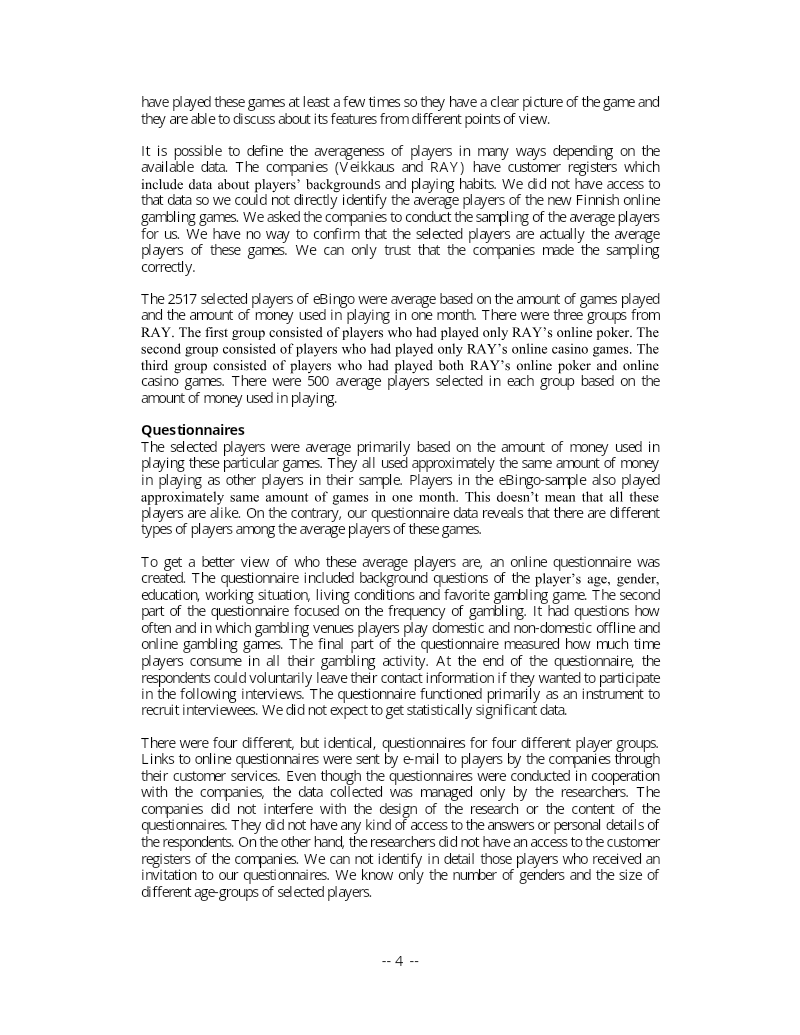
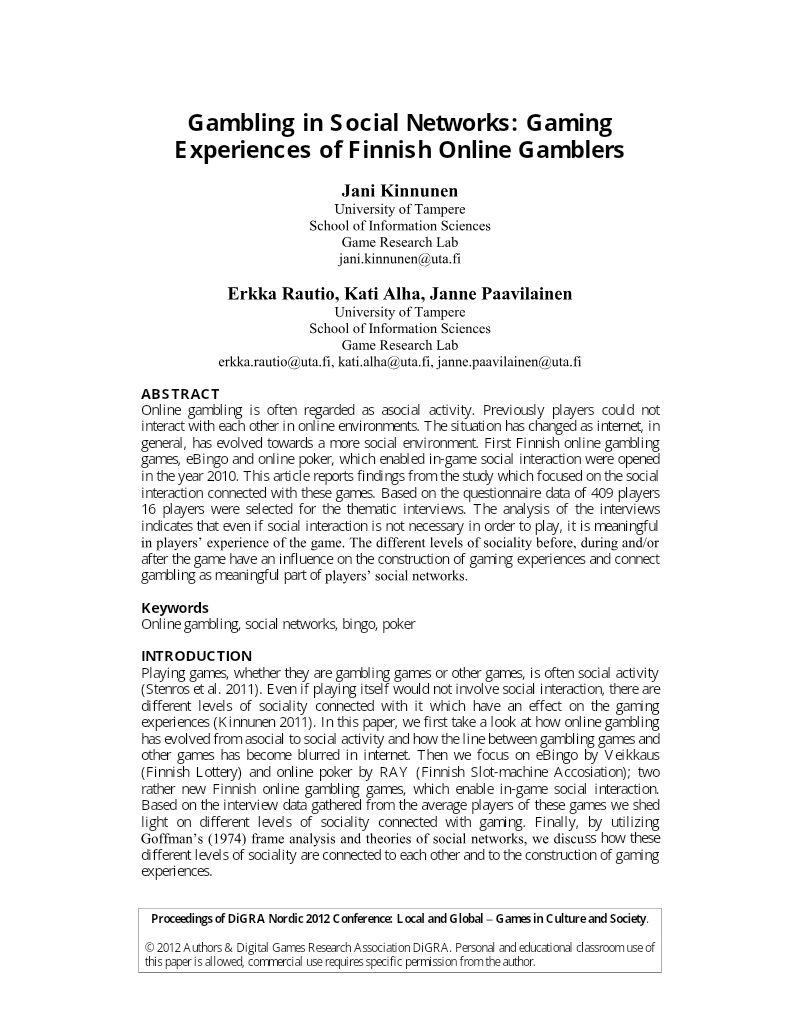
Gambling in Social Networks: Gaming Experiences of Finnish Online Gamblers
Online gambling in Finland has moved from a solitary activity played against an operator toward a socially connected pursuit, and this study argues that the boundary between gambling and other forms of online play is increasingly blurred.
- Finnish online gambling is becoming socially connected: social features introduced in 2010 shape how players experience games like Veikkaus's eBingo and RAY's online poker, and the boundary between gambling and other online play is increasingly blurred.
- The study drew on 409 questionnaire responses from average players (a 10.2% response rate from 4,017 invited participants) plus 16 follow-up interviews, with a sample that was nearly 70% male and had a median age of 41; Lotto was the most commonly played game.
- In-game chat is valued mainly as background companionship rather than as central to play, and skill-based games like poker limit chat because they demand concentration, while physical venues such as grocery-store slot machines and casinos shape how sociable players are.
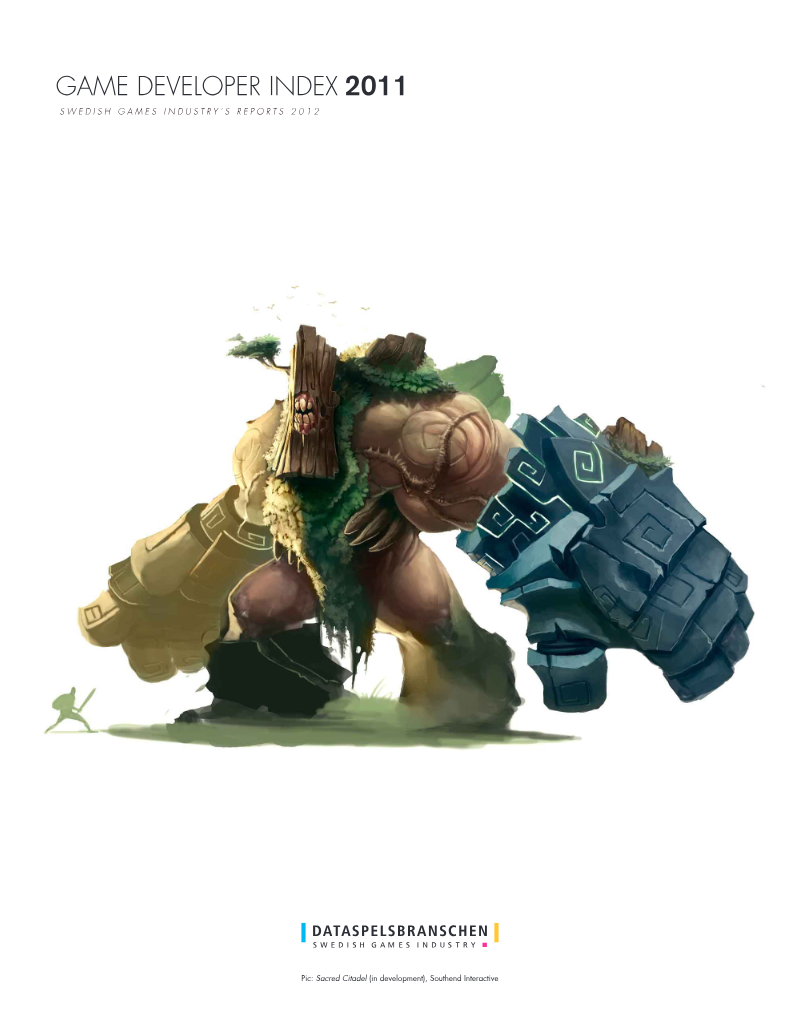
Game Developer Index: Sweden 2011
The Swedish game industry reached a pivotal milestone in 2011, characterized by record-breaking financial performance and a fundamental transition in business models.
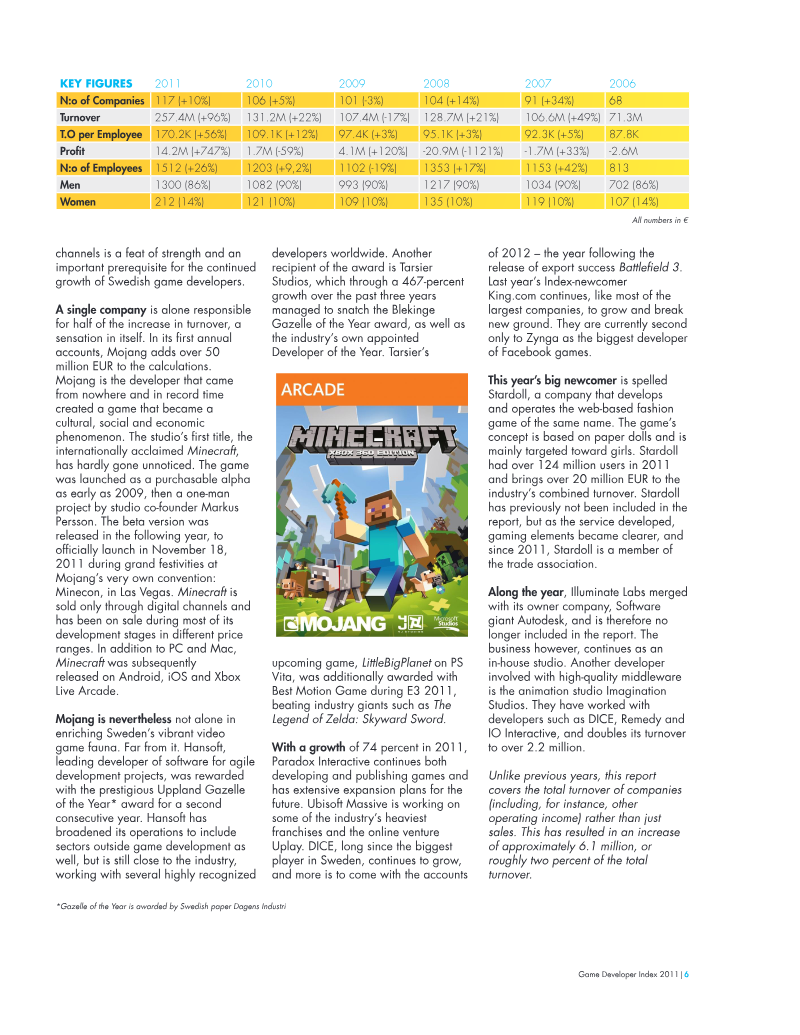
- The Swedish game industry reached a turnover of 257 million EUR in 2011, reflecting a nearly 30 percent compound annual growth rate over the previous five years.
- The workforce grew by 26 percent to 1,512 employees across 257 active companies, anchored by major players like DICE and Mojang.
- Market concentration remains high, with the five largest firms generating 60 percent of the industry's total turnover.
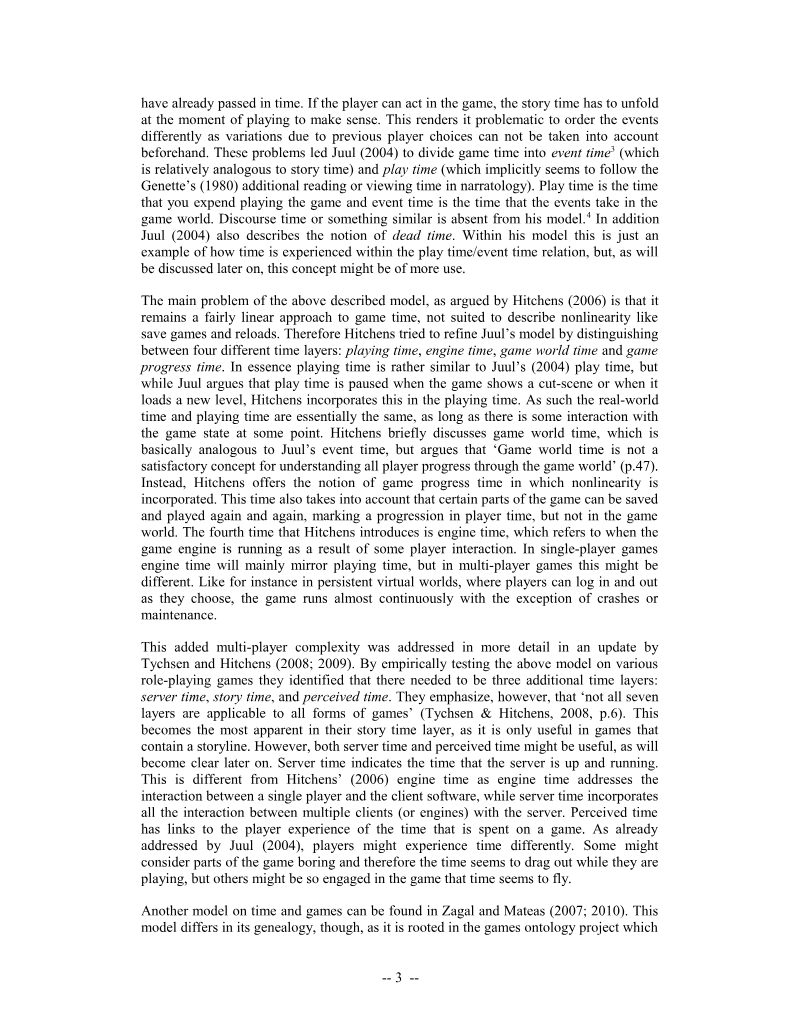
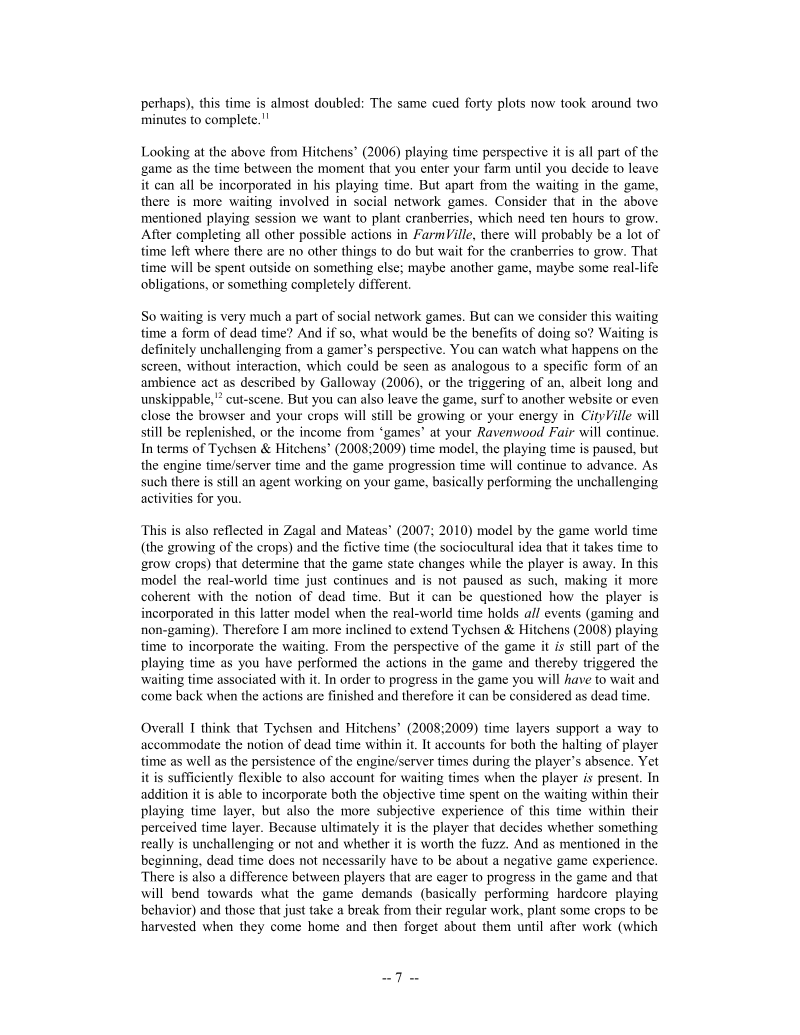
And Then You Wait: The Issue of Dead Time in Social Network Games
"And Then You Wait" examines how waiting functions as a design element in social network games such as FarmVille, CityVille, and Café World, using Juul's concept of "dead time" as its central framework.
- The paper's central thesis is that persistent, asynchronous social network games extend play into the player's absence, making waiting a structural feature rather than an incidental one, with "dead time" as the core framework (drawing on Juul).
- The author attributes the experience of dead time to a mismatch between game engine time, which continues running while the player is away, and playing time, which is paused.
- Play halts once a player exhausts energy or actions, creating forced pauses, while the need to return promptly to avoid losing crops or energy makes these "casual" games feel less flexible than their label implies.
Thrifty Players in a Twisted Game World? A Study on Private Online Game Servers
This study by Holin Lin and Chuen-Tsai Sun, drawing on researchers at National Taiwan University and National Chiao Tung University, examines unauthorized private servers that run massively multiplayer online games using leaked, stolen, or hacked official source code.
- Unauthorized private servers run MMOs using leaked, stolen, or hacked official source code, operating in parallel to official servers with populations ranging from a few individuals to several thousand players.
- The game industry typically frames private servers as major revenue losses and works with law enforcement to shut them down, yet reliable statistics on this informal sector are scarce.
- Interviews with Taiwanese private server players and local forum posts show players use these servers as experimental labs to test character builds before applying them on official servers, and for hobbies like in-game photography that would otherwise require extensive leveling.
Gold Farming in the MMORPG World of Warcraft: An Ethical Perspective on a Controversial Growth Market
This paper examines gold farming in World of Warcraft, the practice of systematically generating in-game currency and items under the game's economic system and selling them for real money to players who prefer not to invest the time themselves.
- The paper frames gold farming in World of Warcraft as a fundamentally normative question requiring ethical rather than purely functional analysis, using it as a test case for broader issues in virtual economies and the commodification of online life.
- The central ethical debate pits critics, who argue gold farming is unfair to other players and fosters exploitation, against proponents, who cite employment created in developing economies, particularly the largely Chinese farming operations supplying the market.
- The author argues game developers have an ethical obligation to design economic systems that either accommodate or prevent real-money trade, treating this as a matter of corporate ethics as well as player conduct.
Take One or Three for the Team: Consumerism as Play
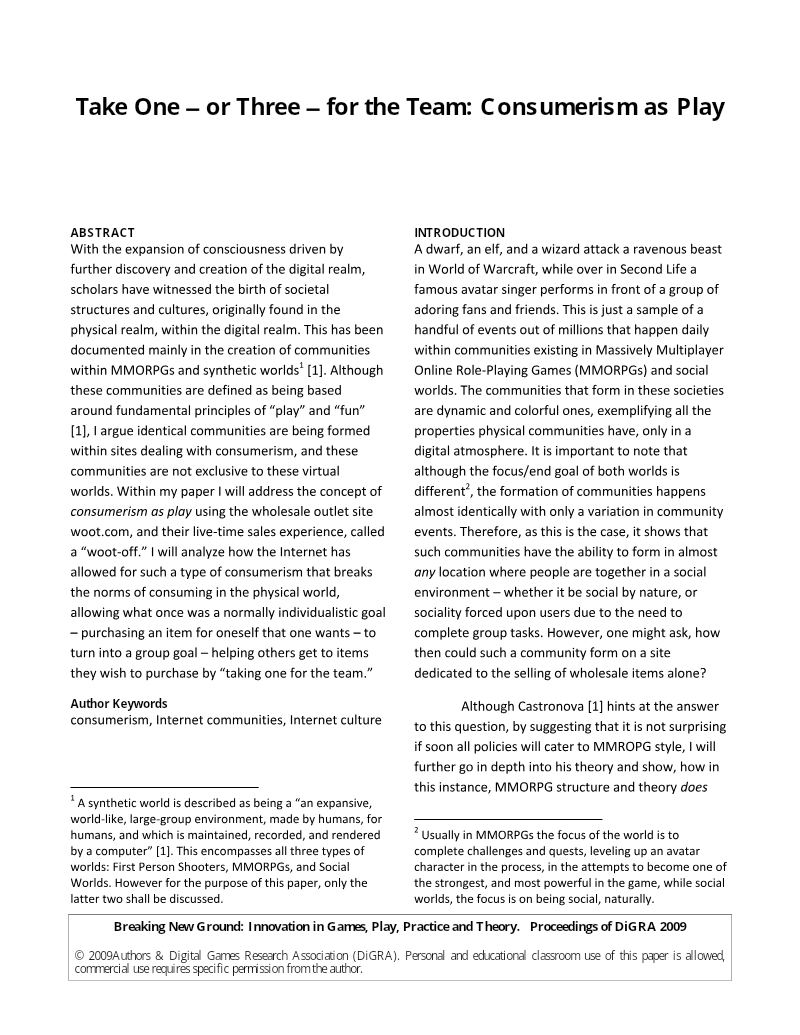
The paper argues that the community surrounding woot.com's live "woot-off" sales events mirrors the social structures of massively multiplayer online role-playing games and virtual worlds, differing mainly in context.
- The paper argues that woot.com's live "woot-off" sales events resemble MMORPG and virtual-world social structures, with the one-product-at-a-time model turning individual purchases into a shared group goal, so that consumerism operates as play.
- Using Holt's four-part framework (experience, integration, classification, and play), the author contends that consumption on woot.com generates social status, shared history, and in-group culture.
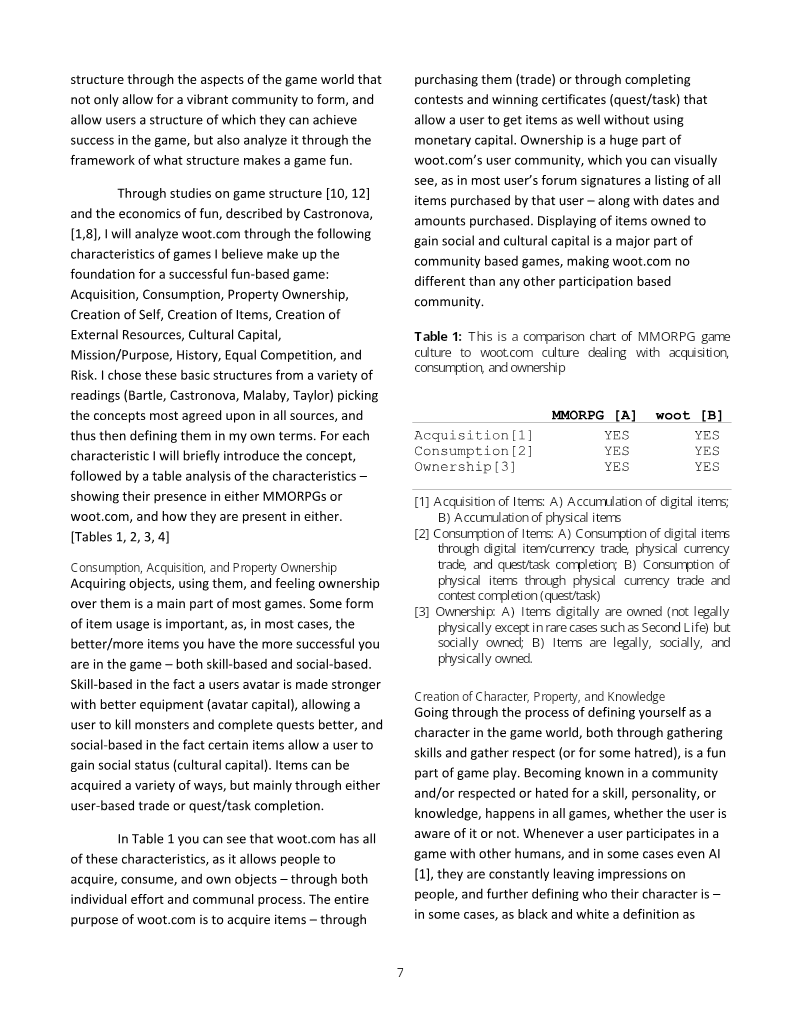
- Comparative tables suggest woot.com matches most MMORPG characteristics, including acquisition, consumption, ownership, cultural capital, mission, history, competition, and risk, but lacks item creation.
Commoditization of Helping Players Play: Rise of the Service Paradigm
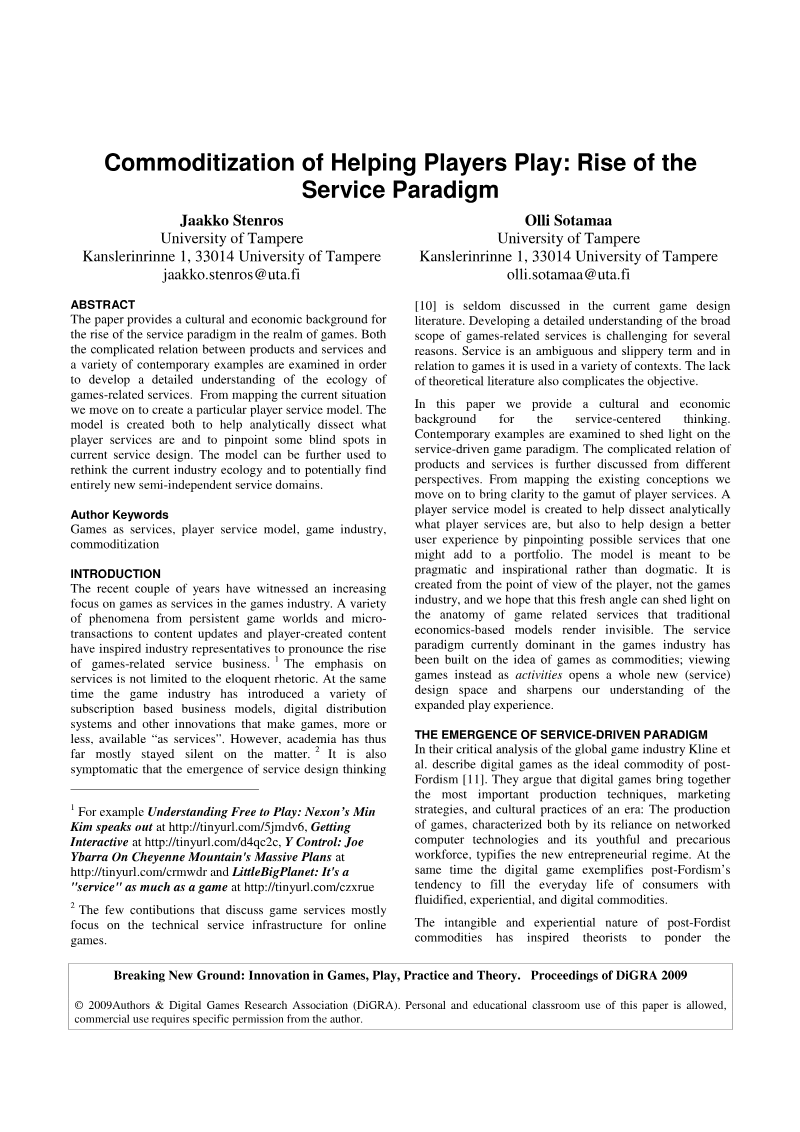
The game industry's shift from selling fixed products to delivering ongoing services is the central subject of this analysis, which situates the transformation within broader post-Fordist patterns of commodification.
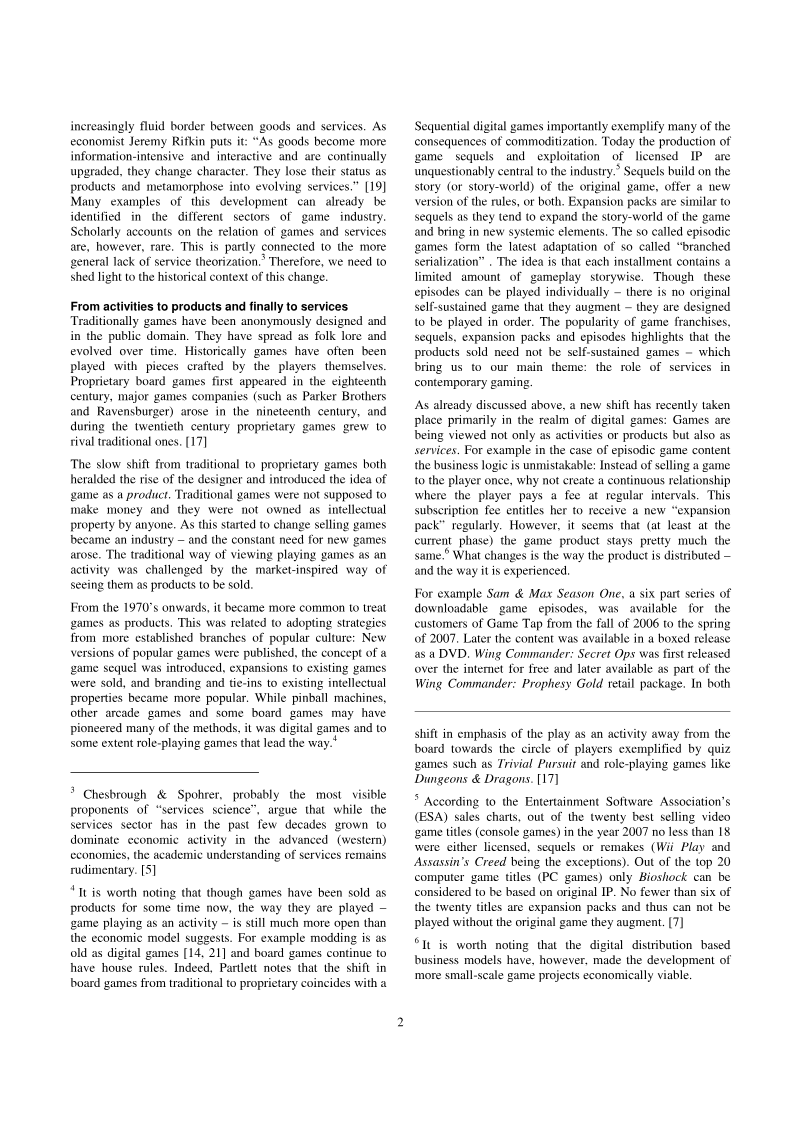
- The central argument is that the game industry's shift from selling fixed products to delivering ongoing services lies less in the game artifact itself than in how games are sold, delivered, and sustained over time.
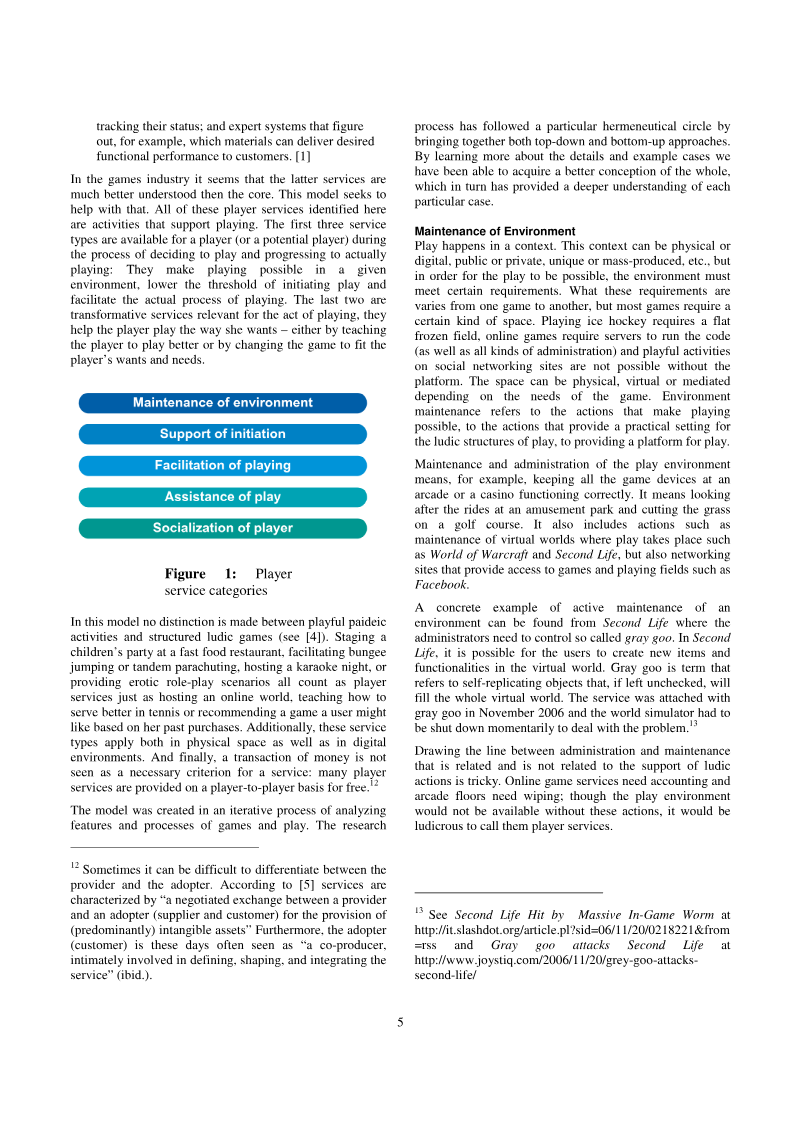
- Subscriptions, expansion packs, episodic content, and persistent worlds are framed as mechanisms for building long-term customer relationships, and the authors contend that prevailing 'games as services' economic models tend to overlook the player's own experience.
- Evidence centers on console and PC markets around 2007, when most top-selling console titles were licensed properties, sequels, or remakes and expansion packs dominated PC sales, showing a service orientation before subscription models became dominant.
Pricing Models and Motivations for MMO Play
This study examines how pricing models relate to player motivations in Japanese massively multiplayer online (MMO) games, with the aim of explaining why the industry shifted from flat monthly fees toward per-item billing.
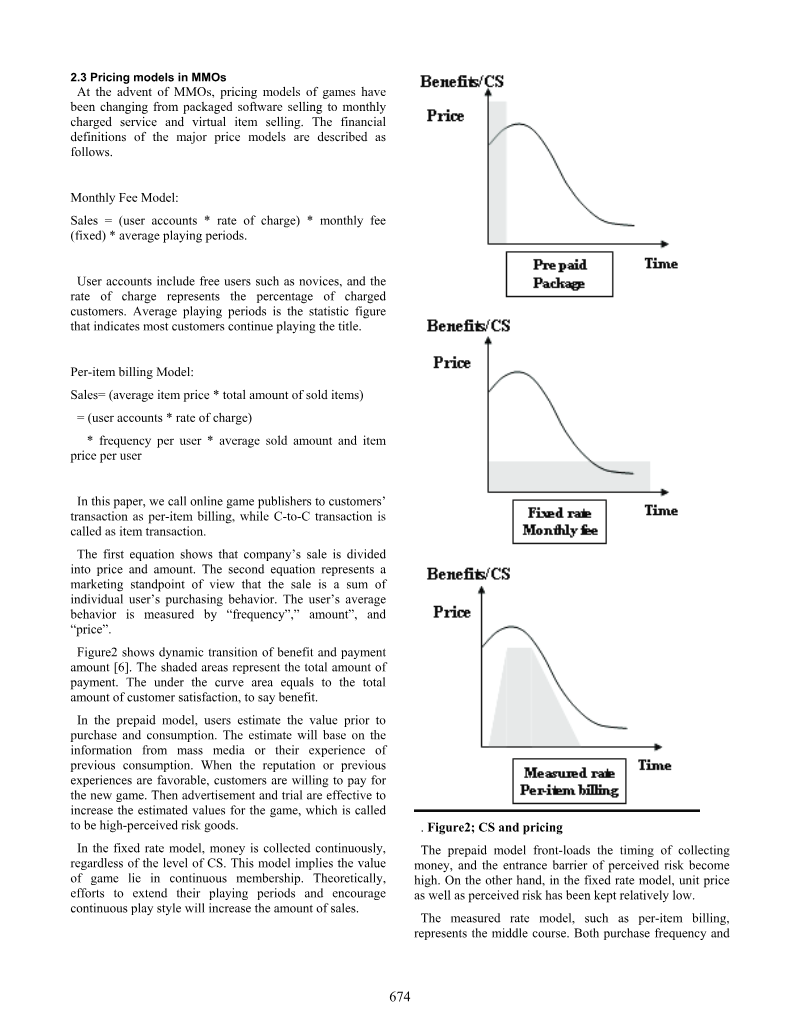
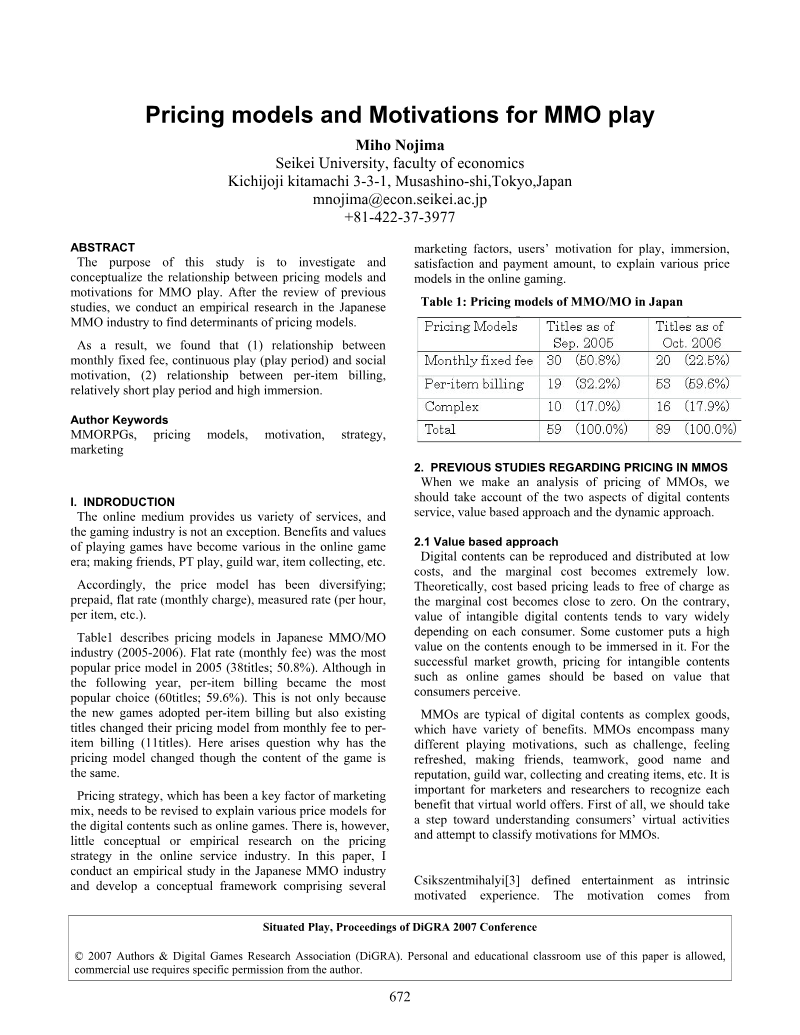
- Japanese MMO titles shifted from flat monthly fees to per-item billing: monthly fixed fees dominated at 50.8% of titles in September 2005, while per-item billing rose to 59.6% by October 2006.
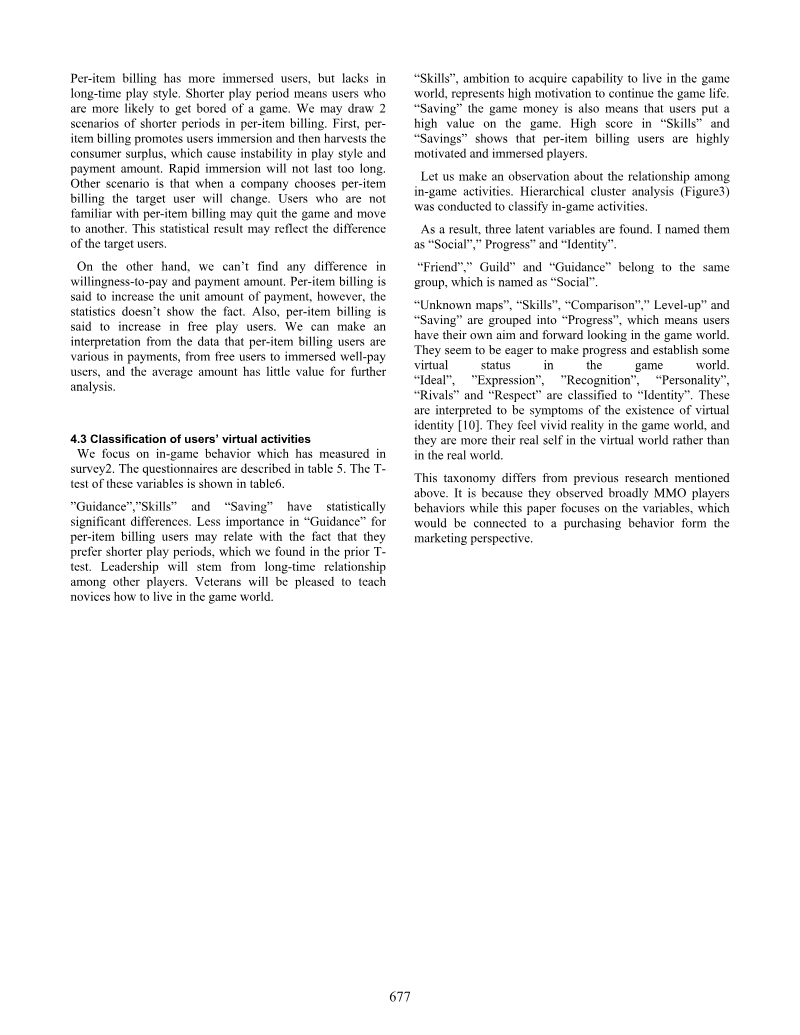
- Per-item billing users had significantly shorter play periods in both surveys, with roughly 9.3 months in the first survey versus 21.9 months for other paid users.
- Per-item billing users in the second survey reported higher immersion scores, while customer satisfaction and willingness to pay showed no meaningful differences between pricing groups.
Because Players Pay: The Business Model Influence on MMOG Design
This paper examines how business models shape the design of Massively Multiplayer Online Games (MMOGs), arguing that the economic structure of a game directly or indirectly constrains its design choices.
- In MMOGs, the business model is not a secondary concern because large upfront investment and continuous operating costs (server infrastructure, game masters, community support) make economic structure a fundamental design constraint.
- Financial risk pushes MMOG producers toward cloning proven successful titles, which limits innovation in the genre.
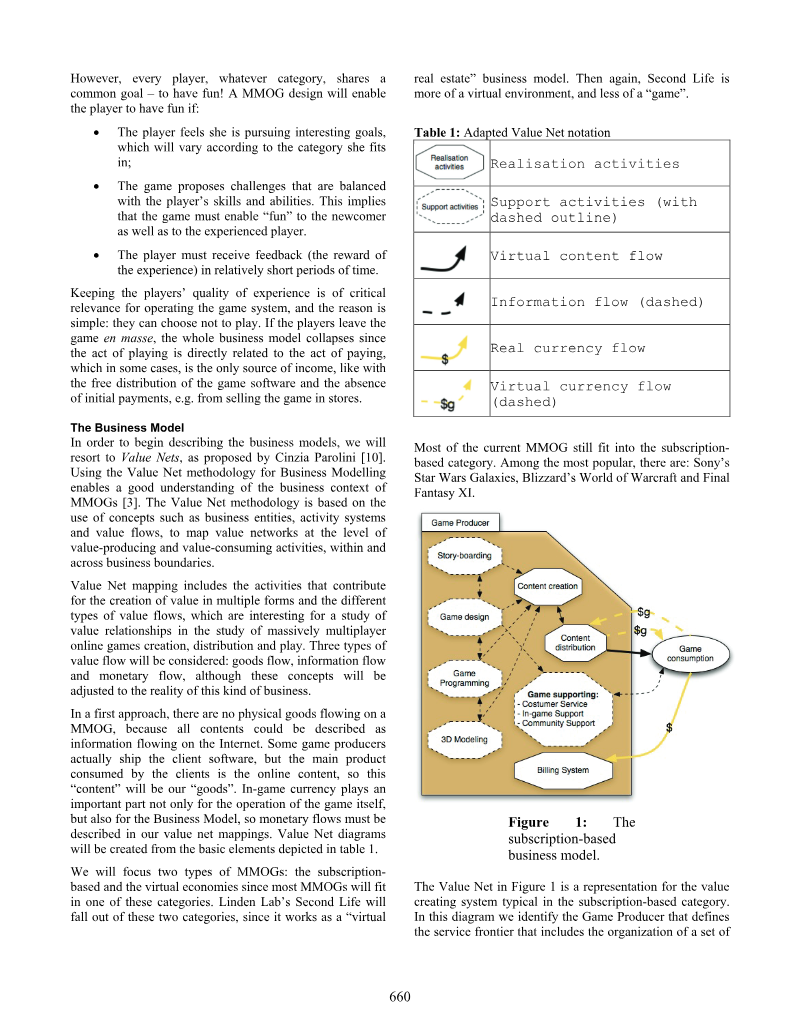
- Subscription-based MMOGs such as World of Warcraft and Star Wars Galaxies typically charge US$10 to US$15 per month, and their revenue depends on sustained player engagement, giving players considerable leverage over producers.