1 free read left. Create a free account for unlimited reading + AI research.
Create free account
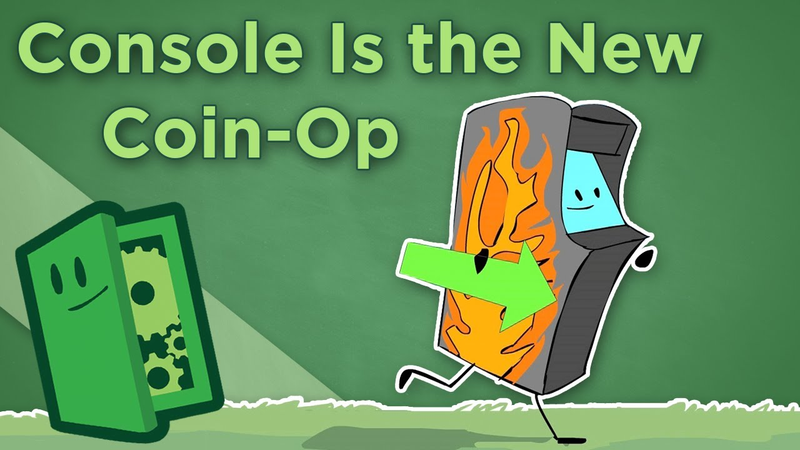
Console Is the New Coin-Op - Monetizing Games in a Future Without Consoles - Extra Credits
Key insights
6 takeaways- 01The gaming industry is undergoing a structural shift similar to the decline of the arcade era, where specialized, stationary hardware is being displaced by more accessible and cost-effective digital distribution models.
- 02The home console is projected to become obsolete within two hardware cycles as cloud gaming, mobile devices, and web-based platforms achieve performance parity with dedicated hardware.
- 03Decoupling premium gaming experiences from specific hardware allows developers to capture a broader audience by enabling casual users to access AAA titles on devices they already own.
- 04Ubiquitous mobile processing power and tablet accessibility are rapidly eroding the necessity for dedicated gaming consoles by lowering the barrier to entry for consumers.
- 05Rising AAA development costs and the superior reach of streaming ecosystems necessitate a move away from proprietary hardware to avoid relegating high-budget gaming to a niche market.
- 06To survive in a post-console landscape, traditional AAA developers must adopt the internet-centric distribution expertise and production methodologies currently utilized by social and web-based gaming companies.
Ask AI about this video
Transcript
[Music] this week's probably going to be a tough one just after reading the title alone a lot of you are probably already getting your outrage primed and ready so before we start let me preface all of this by saying don't panic yes we're going to be talking about ways the console business is changing and where it might be headed you might already have an idea of where we're going to go with this and you might not like it but just hear me out it's not as bad as you think in fact the only way it could end up as bad as you think is if we deny this change is coming or try to fight it you know what I'm getting ahead of myself let me back up first let's take a look at gaming history for a minute the arcade industry was once the dominant force in gaming it's what pushed the boundaries and brought in the real money the arcades were where you went to see the latest graphics and hear the greatest sound arcades were where the big budget games were to be found but by the PlayStation era home consoles started to be able to rival the graphical and processing power delivered by the arcade machines so to stay competitive arcade manufacturers started turning out games that required
gimmicky controllers or provided more ride likee experiences the kind of games that consoles couldn't possibly deliver at the time but even with this new Direction arcades became more and more of a niche compared to the more convenient easier to use and over the long run comparatively cheaper console gaming platforms consoles took over the market and our old arcades are little more than a fond memory if you look at the console gaming world of today it's impossible not to see the parallels right now all of the big budget bleeding edge technology projects are released for the console but as this technology becomes more and more expensive to produce it's becoming harder and harder to turn a profit and at the same time we see a more convenient cheaper solution with a better business model on the horizon even if we just look at the last year think about how far web-based and Facebook games have come we've gone from warbook being the height of interactivity and Technology to nanostar Siege or Backyard Monsters the level of graphical technology has gone from Apple 2 to Playstation in a year and it's only going to keep barreling forward the same is clearly true of the app the idea of the self-contained Auto installing digital download executable is taking hold across the board and even for a device as simple as the iPhone we've
moved from undercroft which James loved to Infinity Blade in a mere 2 years simultaneously services like on live have begun to hint at the possibility of streaming game content for any device that can connect to the internet through true cloud gaming moreover devices which can connect to the internet are becoming more and more commonplace smartphones are becoming ubiquitous Tablet PCs and notebooks are becoming easier to use and plummeting in price devices of this type are becoming more powerful and more accessible with each iteration within a decade we'll be able to play the latest games with the best graphics web resident or streaming on our tablets we'll play them with our Bluetooth controllers or native on touch screens and when we're at home we'll wirelessly sync them to our TV screens or play them on TV screens which are really just giant tablets we'll be able to take our library of games to the coffee shop and always have them on hand when the lunch Bell Rings they'll be on something we already own for all of our day-to-day Computing needs and they'll have newer monetization models that are better for the player the developer and the publisher maybe not the retail distributor so much but I think I can live with that so what does this mean for the console it means that they'll end up seeming as modern and convenient
as the laser disc or the telx machine they're going to be seen like the wristwatch providing an essential function that simply no longer needs a dedicated device if I had to take a guess I'd say that unless our business model changes radically there are maybe two console Cycles left ahead of us before the console as we know it ceases to be now what does this mean for the end user the player good news almost nothing if we're willing to face and acknowledge this change there's no reason why God of War or Call of Duty can't be a streaming or a web-based experience there's no question in my mind that Final Fantasy and Mario alike can live on Long into the postc console world but only if we as an industry start thinking about the future now right now the web-based and the social guys are way ahead of us in terms of tech they understand the intricacies of delivering things over the internet in a way that the AAA industry simply doesn't they're establishing the production methodology and gobbling up the talent that this future is going to be built on but perhaps more importantly or at least more damagingly they're establishing the relationships and connections with all of the peripheral groups that help deliver in this new world the AAA and the webbased social camps are parallel but different Industries at at this point they're not as far apart as the
AAA and the serious games guys are but they're not in the same Circle by any means and right now the web-based social guys are poised to dominate the emerging post console Market simply due to they're already existing in that world now all of that scary stuff said the AAA game will always live on the question is simply how much more of a niche it becomes if the industry doesn't cling to the console model and accepts the reality that AAA experiences can still exist without consoles I expect the AAA Market will actually see serious growth as the barrier to entry is lowered after there are plenty of people who won't buy a console for games but if they already have a device they can play them on more people might buy a AAA game on whim and find it something they love however if we don't accept and prepare for this change if we stick to our guns and ride bravely into the sunset proclaiming that you will always need a lump of plastic attached to your TV to play real games we're going to find ourselves to be the arcades of Tomorrow an anachronism lingering on only due to Nostalgia I don't want that and neither do you because at the end of the day it's the games we love we loved them in the arcades we Lov them on on our PCS and
consoles and we'll continue to love them wherever they wind up next see not so bad after all see you next [Music] week [Music] oh
Summary
The gaming industry is currently undergoing a structural shift analogous to the decline of the arcade era, where dedicated hardware is increasingly being superseded by more convenient, accessible, and cost-effective platforms. The central thesis posits that the traditional home console is becoming an anachronism, likely facing obsolescence within two hardware cycles as cloud gaming, mobile devices, and web-based platforms achieve parity in graphical fidelity and performance. This transition mirrors the historical displacement of arcades by consoles, driven by the rising costs of AAA development and the superior distribution models offered by digital and streaming ecosystems.
Technological advancements in mobile processing power, tablet accessibility, and cloud-based streaming services like OnLive are rapidly eroding the necessity for specialized, stationary gaming hardware. As smartphones and tablets become ubiquitous, they are evolving into primary gaming devices that offer greater portability and lower barriers to entry for consumers. While AAA developers currently rely on the console model, the industry is warned that failing to adapt to these new delivery methods risks relegating high-budget gaming to a niche market.
The future of the industry lies in decoupling premium gaming experiences from proprietary hardware. By embracing streaming and web-based delivery, developers can reach a broader audience, potentially fueling growth by allowing casual users to access AAA titles on devices they already own. Success in this post-console landscape requires the traditional AAA sector to integrate the production methodologies and internet-centric distribution expertise currently held by social and web-based gaming companies. Ultimately, the survival of high-end gaming depends on prioritizing the accessibility of the content over the preservation of legacy hardware distribution models.