1 free read left. Create a free account for unlimited reading + AI research.
Create free accountWhitepaper DiGRA
1 free read left. Create a free account for unlimited reading + AI research.
Create free accountWhitepaperDiGRA
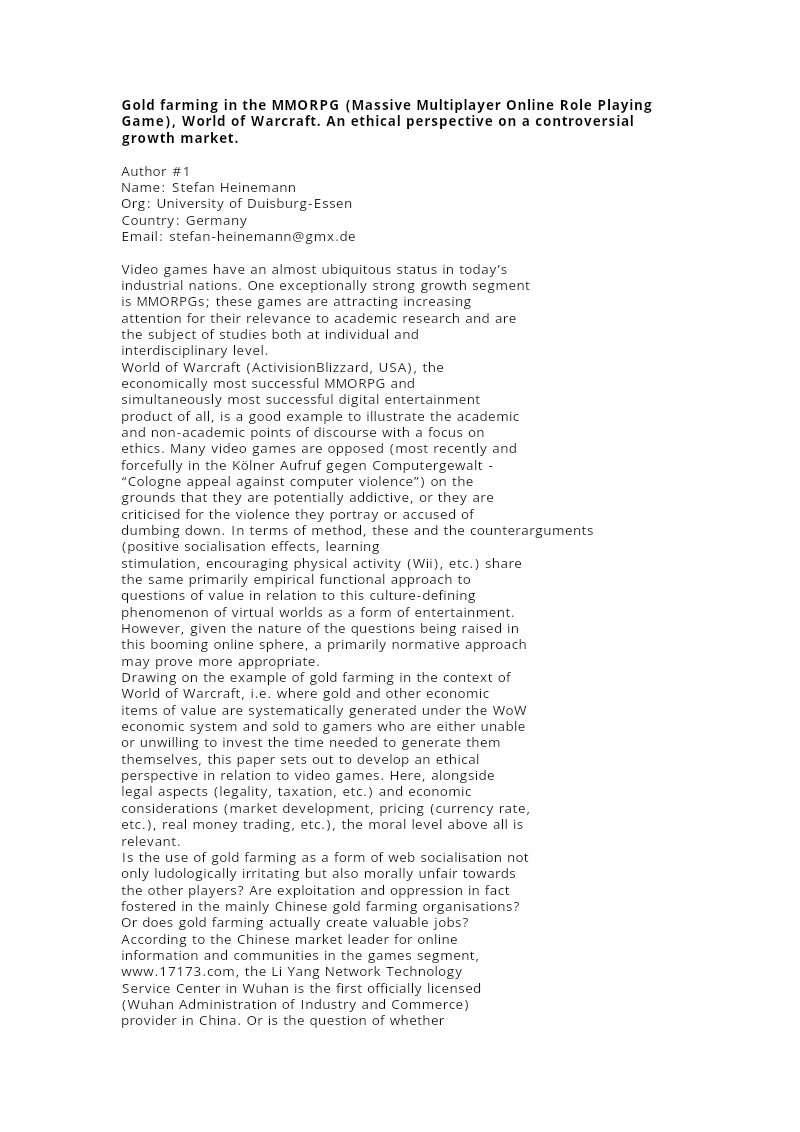
The paper argues that gold farming in World of Warcraft requires ethical rather than purely functional analysis. Video game research has largely focused on addiction, violence and socialisation.
This paper examines gold farming in World of Warcraft, the practice of systematically generating in-game currency and items under the game's economic system and selling them for real money to players who prefer not to invest the time themselves. Its central argument is that, while video game discourse has been dominated by empirical debates about addiction, violence, and socialisation, the questions raised by gold farming are fundamentally normative and call for an ethical rather than purely functional analysis. The author treats the practice as a test case for broader questions about virtual economies, the commodification of online life, and the moral responsibilities of game manufacturers.
The analysis is organised around competing ethical and economic claims. On one side, critics ask whether gold farming is unfair to other players and whether it fosters exploitation and oppression, particularly within the largely Chinese farming operations that supply the market. On the other, proponents point to the employment these operations create in developing economies and to the pioneering role of providers in the emerging market for virtual goods. The paper also considers whether game developers bear an ethical obligation to design their economic systems in ways that either accommodate or prevent such trade, framing this as a question of corporate ethics as well as player conduct.
Beyond these direct questions, the work situates gold farming within larger trajectories of web culture, including the vision of interconnected "Metaverses" and the broader commodification of online activity. Legal considerations such as legality and taxation, and economic factors including market development, currency exchange rates, and real-money trading, are acknowledged as relevant but are treated as secondary to the moral dimension. The scope is conceptual and literature-based, drawing on a small set of academic sources from 2005 to 2008, and it offers a framework for ethical evaluation rather than original empirical measurement of the market.
Each row is a game or company this document names, each column a document, oldest first. A mark means that document names it. Select a row to see those documents.
DiGRA · 2016
DiGRA · 2016
DiGRA · 2016
DiGRA · 2016

DiGRA · 2016

DiGRA · 2016



DiGRA · 2016

DiGRA · 2016

DiGRA · 2016

DiGRA · 2016

DiGRA · 2016

DiGRA · 2016
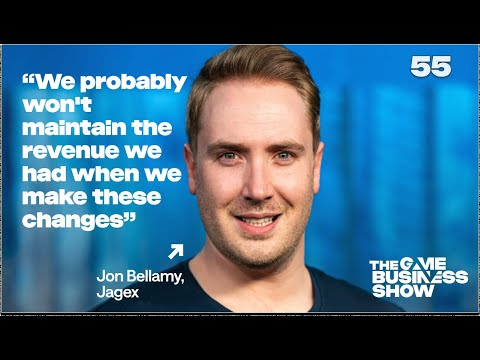
The Game Business · 2025