Monetization reports and market data
Documents
Gambling Is in My Genes: Correlations Between Personality Traits with Biological Basis and Digital Entertainment Choice
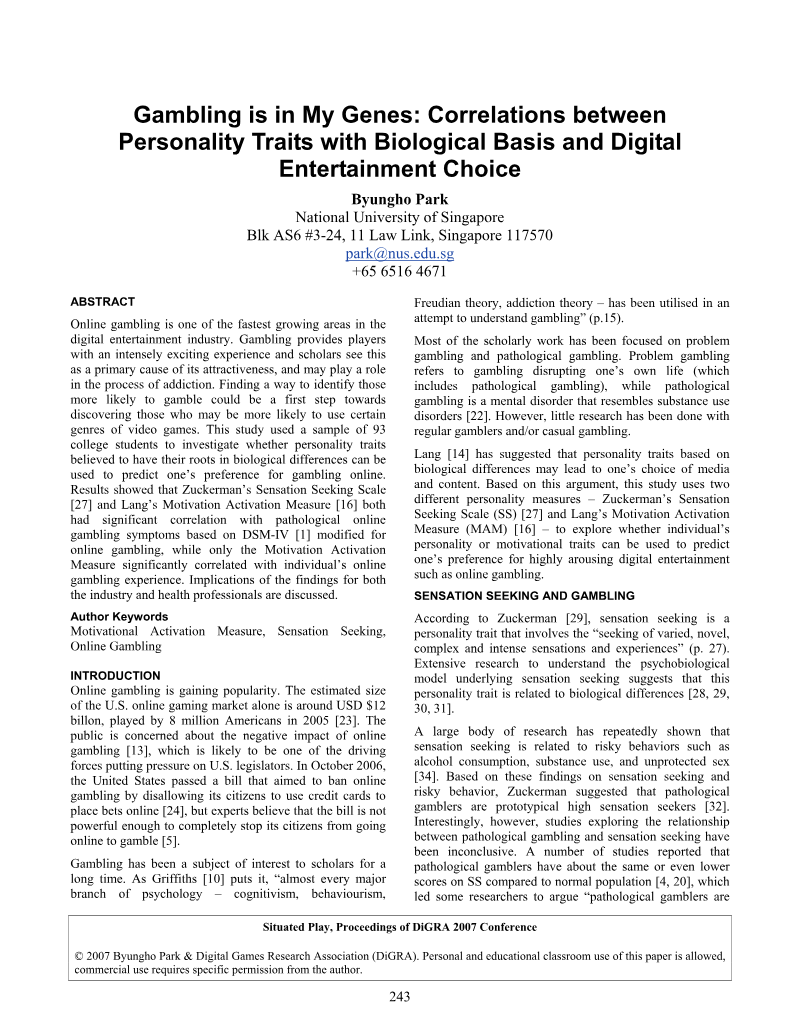
This study examines whether personality traits with roots in biological differences can predict individuals' preference for online gambling, a rapidly growing segment of digital entertainment.
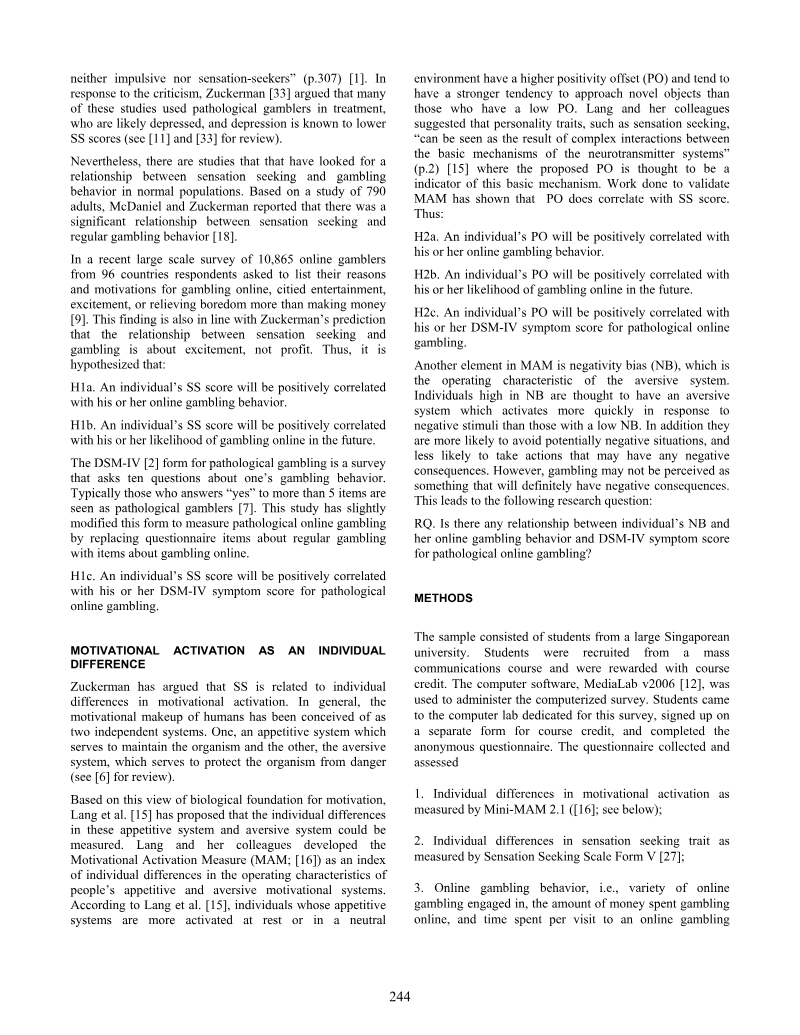
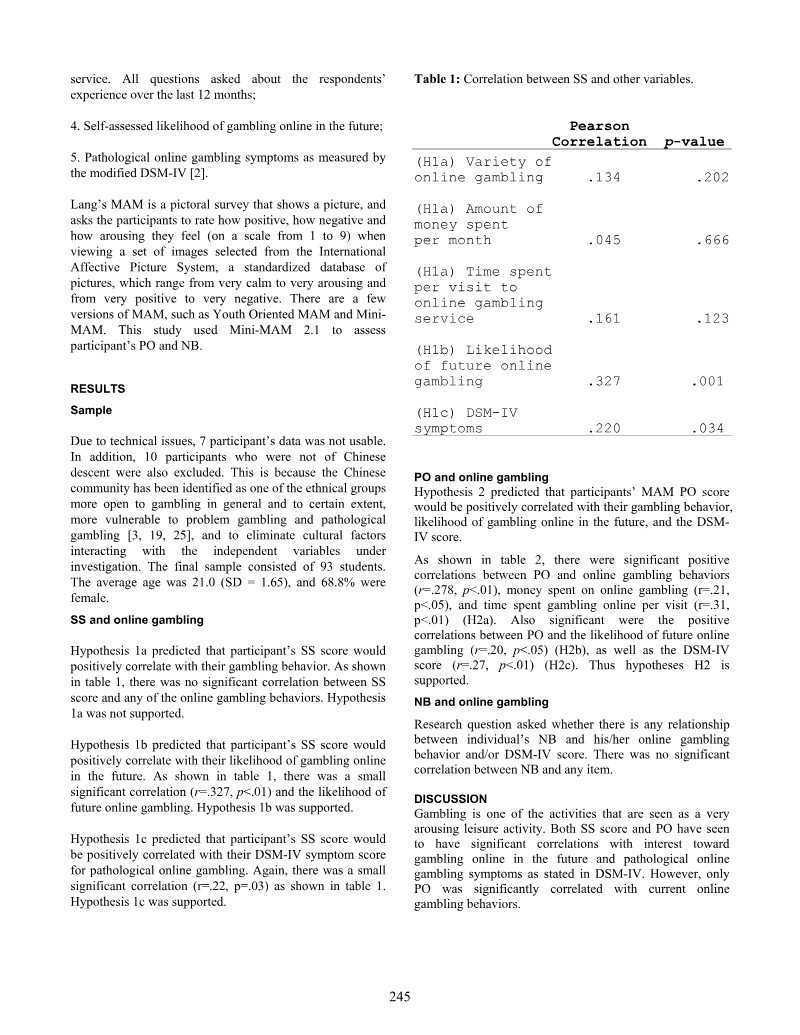
- Positivity offset (the appetitive motivational system) was the most consistent predictor of online gambling: it correlated significantly and positively with variety of gambling, money spent, time per visit, future intention, and pathological gambling symptoms.
- Negativity bias (the aversive motivational system) showed no significant relationship with any online gambling measure, so the author concludes the appetitive system is the more reliable predictor of engagement.
- Sensation seeking was not significantly associated with current online gambling behavior, but it did correlate with likelihood of future online gambling and with pathological gambling symptoms.
What's My Game Character Worth: The Value Components of MMOG Characters
This analysis examines how massively multiplayer online game (MMOG) characters acquire value for their players, arguing that avatars function as the central focus of virtual play and identity.
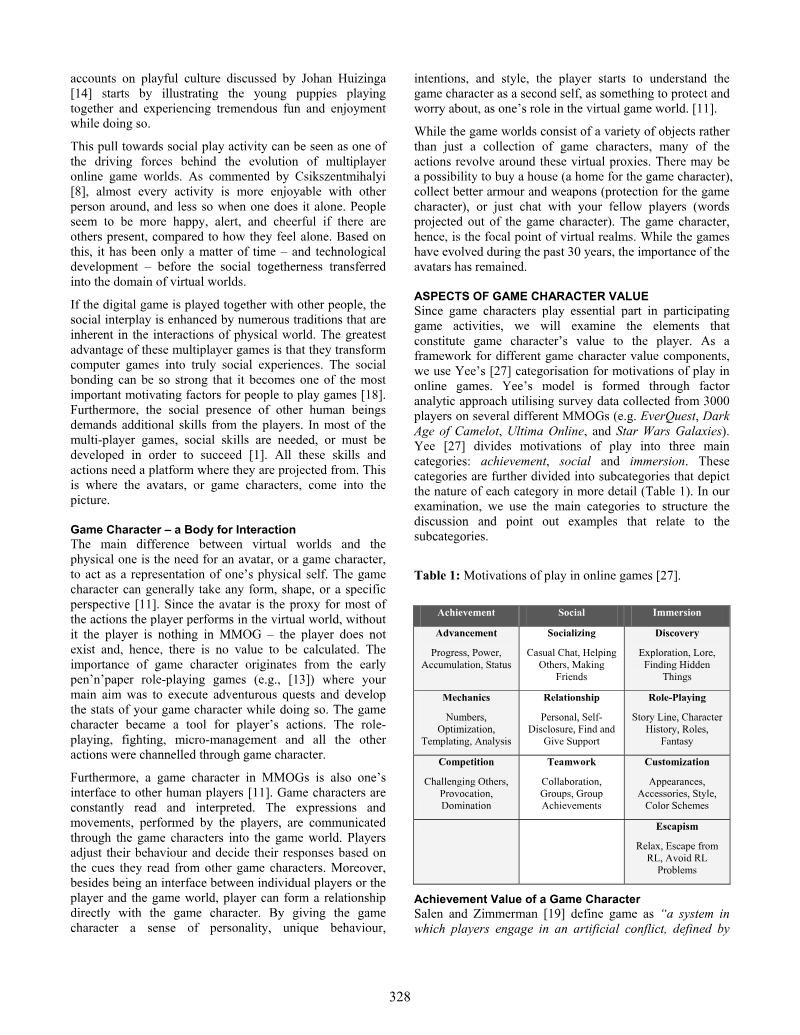
- Character value in MMOGs is multidimensional, arising from the interplay of numerical competence and status, the relationships and reputation built through play, and the personal identity and meaning players invest in their avatar, rather than from any single factor.
- The framework draws on Yee's motivational categories of achievement, social, and immersion components to explain why players value characters differently.
- Some players pay real money to skip progression, valuing a character's social or immersive dimensions over the effort of advancing it, while others deliberately pursue competitive standing as the core of their investment.
The Unbound Network of Product and Service Interaction of the MMOG Industry: With a Case Study of China
The MMOG industry is presented as a rapidly expanding, knowledge-intensive service sector whose competitive dynamics cannot be fully explained by studying individual firms in isolation.
- The MMOG industry is best understood as an 'unbound network' of tightly interdependent relationships spanning technology infrastructure, outsourced development, and continuous customer service, so studying individual firms in isolation cannot fully explain competition.
- The Asian online game market was reportedly worth $3.4 billion in 2005 and projected to reach $13 billion by 2011, with Asia outside Japan accounting for more than half of the market.
- Chinese online game companies built their competitiveness on cost-efficient customer service, extensive distribution such as point-card sales through internet cafés, and early reliance on licensed foreign titles, financed largely through venture capital and stock market listings.
The Pleasures and Practices of Virtualised Consumption in Digital Spaces
This conceptual paper, presented at the DiGRA 2005 conference, argues that virtualised consumption, such as buying virtual goods in games, browsing virtual marketplaces, and displaying digital possessions, should be understood as a legitimate and pleasurable form of consumption rather than a failure of marketing.
- The paper argues that virtualised consumption, such as buying virtual goods and browsing virtual marketplaces, should be treated as a legitimate, pleasurable form of consumption rather than a failure of marketing.
- Its central thesis frames virtual consumption as the latest stage in a historical shift from utility toward emotional, sign-based, and playful experience, with digital spaces acting as liminoid play-spaces where imagination is stimulated and partly actualised.
- The authors contend that cart abandonment is a misreading of consumers who gain satisfaction from imaginative engagement with goods they never intend to buy, rather than a sign of lost sales.
The Sponsored Avatar: Examining the Present Reality and Future Possibilities of Advertising in Digital Games
This paper examines advertising within digital games, both current practice and future possibilities, including full sponsorship, product placement, brand integration, and cross-promotion with other entertainment media.
- Advertising spending is shifting away from traditional television commercials toward placements in entertainment, with one cited beverage company redirecting more than $300 million in annual spending.
- Game-based advertising remained a small share of revenue relative to film and television, with projections of roughly $260 million by 2008, though agencies increasingly seek game placements and some have created dedicated game advertising divisions.
- Players generally accept in-game advertising, mostly because it enhances realism, but they worry that placements may feel incongruous and detract from the experience.
Virtual Worlds in Asia: Business Models and Legal Issues
This paper examines the business models and legal challenges facing virtual world developers as their enterprises mature, using Korea and China as case studies.
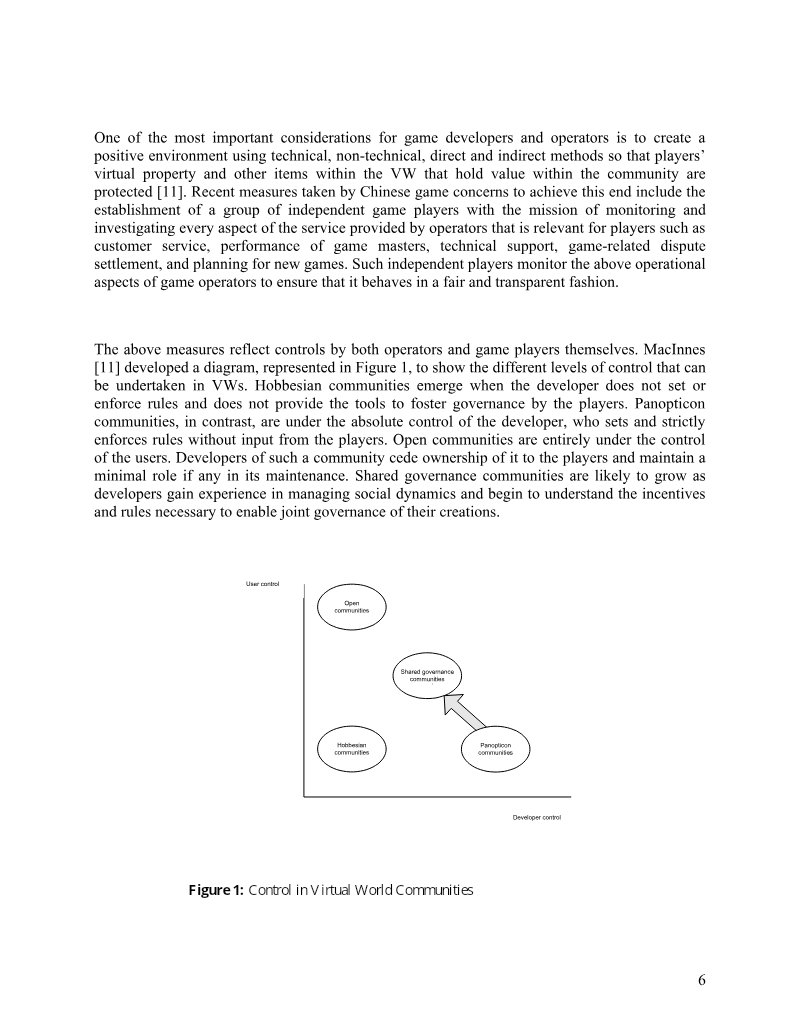
- The central argument is that early technical obstacles for virtual world businesses have largely been overcome, while new environmental, security, and governance challenges now demand a fundamental rethinking of the game industry's guiding assumptions.
- Korea's item trading market, where real-world currency is exchanged for digital items stored on company servers, exceeded $200 million in transactions in 2004 and supported more than 300 item trade companies.
- Korean developers sharply disagree on item trading: NCSoft opposes it, while smaller developers see it as a way to attract players, and a 2003 industry survey ranged from outright prohibition to unrestricted individual trade.

Vietnam Mobile Gaming Industry Report Q3 2026
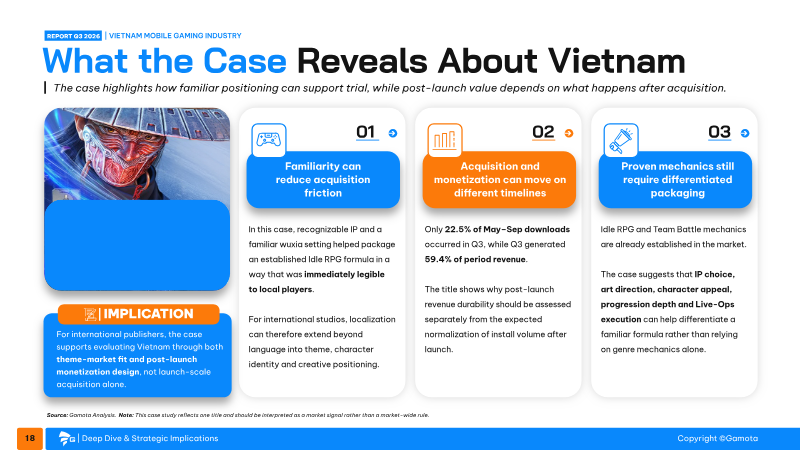
Gamota's Q3 2026 Vietnam mobile gaming report finds that the market moderated in the third quarter, with revenue down 7.9% and downloads down 8.1% quarter over quarter, both falling in parallel.
- Vietnam's mobile gaming market moderated in Q3 2026, with revenue down 7.9% and downloads down 8.1% quarter over quarter, both falling in parallel with the softness concentrated in September.
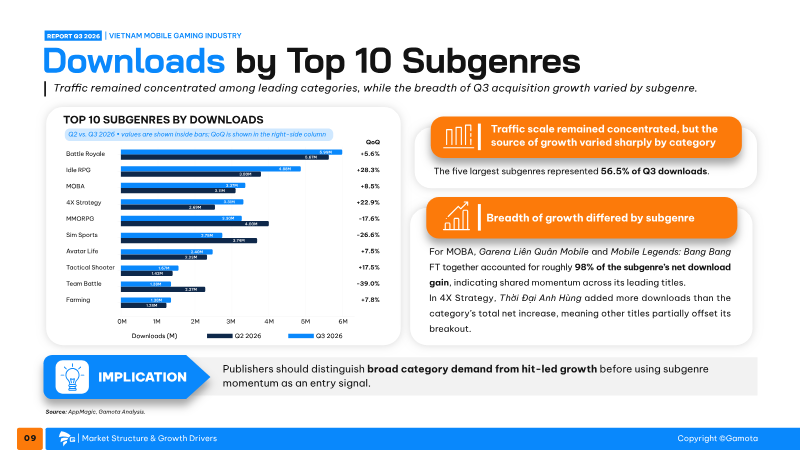
- Performance diverged sharply by subgenre: MMORPG remained the largest revenue category despite declines, while Idle RPG, MOBA, Avatar Life and Farming grew on both revenue and downloads, and several categories gained traffic even as revenue fell.
- The Top 10 games captured 34.8% of Q3 revenue and 42.7% of downloads, leaving the majority of activity spread across titles outside the leaders.



2019 Year in Review: Digital Games and Interactive Media
This report, published by SuperData (a Nielsen company) as a 2019 year-in-review, surveys the global digital games and interactive media market, covering mobile, PC, console, gaming video content (GVC), and extended reality (XR) segments.
- Digital games revenue reached $109.4 billion in 2019, up 3% year over year, while the broader interactive media sector grew about 4%.
- Free-to-play titles drove growth, accounting for roughly 80% of digital games revenue, with mobile contributing $64.4 billion, about three-fifths of total spending.
- Premium game revenue fell 5% to $18.9 billion, reflecting a year with fewer blockbuster releases than 2018.

Essential Facts About Video Games in Italy 2023
Italy's video game market reached over €2.3 billion in 2023, a 5% increase on 2022 and 28% above 2019 levels, positioning the country among Europe's top five markets.
- Italy's video game market reached over €2.3 billion in 2023, up 5% on 2022 and 28% above 2019 levels, placing the country among Europe's top five markets.
- Growth was driven by hardware, where sales rose 63% to €665 million on the back of new-generation consoles, while software (71% of revenue at €1.6 billion) fell 8% year-on-year.
- Italy counted 13 million video game players in 2023, down 8% from the previous year, with the decline concentrated among occasional players while a core of 9.5 million weekly players remained comparatively stable.

Belgian Games Key Facts 2022
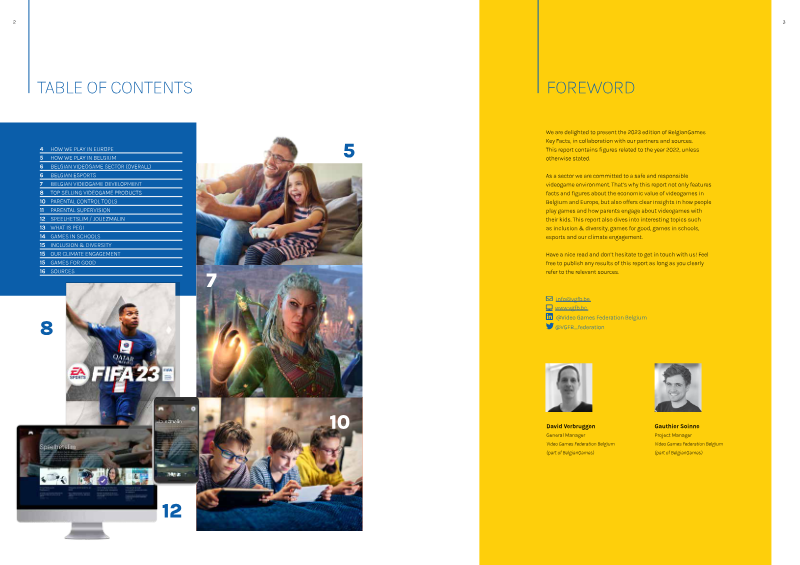
The Video Games Federation Belgium's "Belgian Games Key Facts 2022" (published as the 2023 edition) provides an overview of the videogame sector in Belgium and Europe, covering market value, player demographics, development, esports, parental oversight, and social engagement topics such as education, inclusion, and climate.
- The total value of videogames in Belgium reached €582 million in 2022, down 3 percent from 2021 but up 10 percent from the pre-pandemic year 2019.
- Belgian videogame development employed 1,085 full-time equivalents across 133 companies, and mobile game downloads reached roughly 148 million, about one million more than the previous year.
- 53 percent of Belgians aged 6 to 64 play videogames, averaging 8.8 hours per week, with female players making up 46.7 percent of the player base.

Time to Game 2025: Insights Into Belgium's Video Game Sector
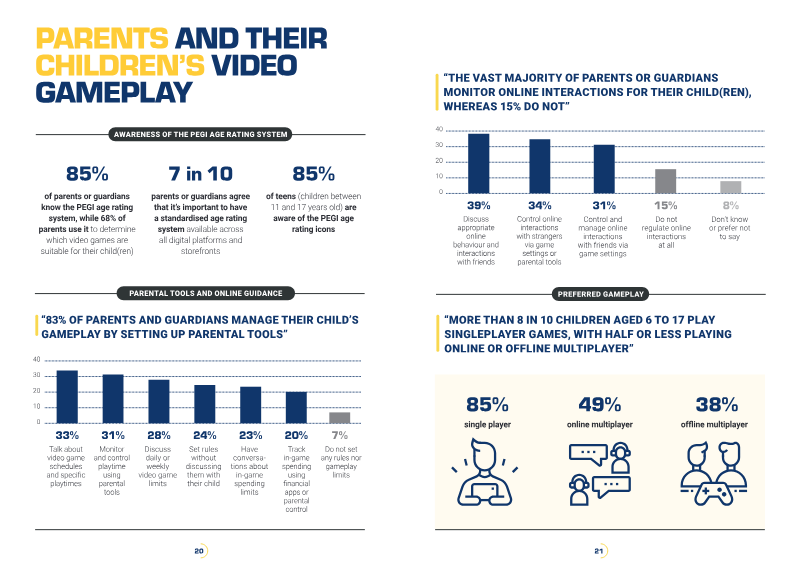
The Video Games Federation Belgium's 2025 Key Facts Report offers a comprehensive look at Belgium's video game sector, covering consumer sales, market size, player demographics, time spent playing, parental oversight, in-game spending, and the regulatory and educational tools available to families.
- Digital downloads accounted for 75 percent of full-game unit sales in Belgium in 2025, up from 58 percent in 2021, as physical full-game sales continued to decline.
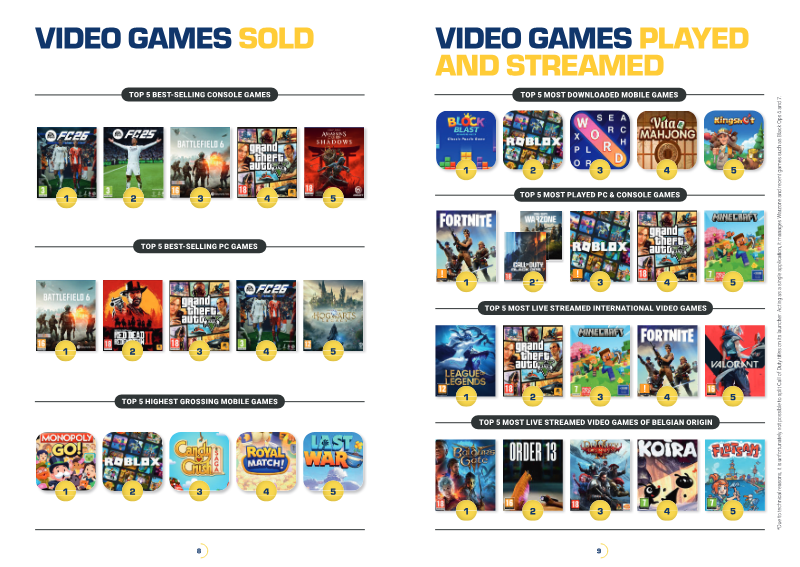
- Total video game sales in Belgium reached roughly €698 million across software and hardware, with the PlayStation 5, Nintendo Switch 2, and Xbox Series X|S among the top-selling consoles.
- More than half of Belgians aged 6 to 75 play video games, equivalent to 6.3 million players, with an average player age of 34.7 years and a near-even male-female split overall.



Q3 2015 Data Digest
The Q3 2015 Data Digest provides a comprehensive analysis of the iOS mobile application market, focusing on global and U.S. trends in downloads, revenue, and advertising strategies.
- Gaming remains the dominant App Store category, generating over 20 times the revenue of the next leading category.
- Clash of Clans maintained its lead in Q3 2015, though Game of War significantly narrowed the revenue gap in the U.S. market.
- Aggressive advertising on the Facebook network, particularly using high-production image and video assets, shows a strong correlation with increased revenue for gaming and lifestyle apps like those from ContextLogic.