Monetization reports and market data
Documents
Why you should be using Google Play Games services
Google Play Games services provides a comprehensive suite of tools designed to assist developers throughout the entire game lifecycle, from prototyping and soft launching to full release and post-launch optimization.
- Google Play Games services provides access to a global audience of over one billion active Android devices, with significant growth currently projected in emerging markets.
- Machine learning-based predictive analysis allows developers to identify specific user behavior patterns, such as churn risk or spending propensity, to trigger targeted retention interventions.
- Integrated player analytics tools provide data on in-game economies, enabling developers to balance currency flow and optimize average revenue per daily active user (ARPDAU).
Who were the secret App Store winners of 2015?
The analysis of 2015 App Store performance identifies the market’s "hidden winners" by comparing top-grossing rankings against download rankings.
- Publicly traded companies dominate the mobile gaming market, owning 59% of the top 100 grossing titles in the U.S. iPhone market.
- The most profitable games, termed 'hidden winners,' prioritize high monetization efficiency and player retention over the high download volumes seen in mainstream hits like Clash of Clans.
- Slots and Asian-style RPGs are the primary genres that achieve high grossing rankings despite lower install rates, driven by superior average revenue per daily active user.
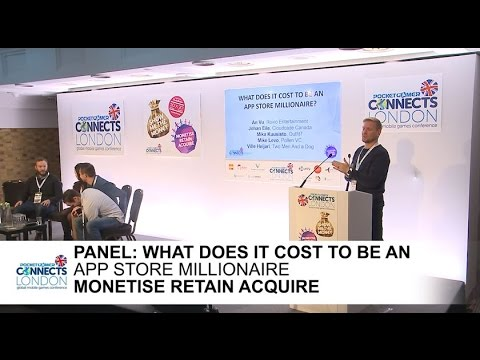
What does it cost to become an App Store millionaire?
Achieving commercial success in the mobile gaming market now requires a sophisticated, capital-intensive approach to user acquisition.
- Reaching the top 25 rankings on major app stores typically requires a capital investment of approximately $200,000 for user acquisition.
- Developers should allocate $5,000 to $10,000 during the soft launch phase to gather statistically significant data on monetization and conversion metrics.
- Data-driven testing on platforms like Facebook is essential for refining demographics and acquisition strategies before committing to high-cost channels like influencer partnerships.
Is your game's on-ramp better than Facebook's?
The fundamental core of free-to-play game success lies in the management of player sessions, specifically the balance between the ease of entering a game and the comfort of leaving it.
- The primary objective for free-to-play success is designing an 'on-ramp' efficient enough to compete with non-gaming distractions like social media.
- Developers should aim to pass the 'Starbucks test,' ensuring players can have a satisfying, meaningful interaction within the time it takes to order a coffee.
- Retention is best driven by 'return hooks' such as appointment mechanics, social obligations to teammates, and daily rewards rather than reliance on push notifications.
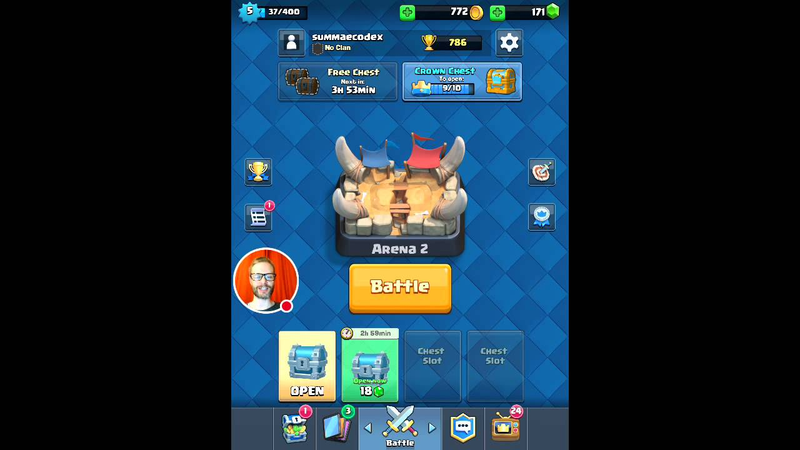
Clash Royale's genius and totally counter-intuitive monetisation loop
Clash Royale utilizes a sophisticated monetization strategy that integrates revenue generation directly into the core gameplay reward loop.
- Clash Royale monetizes by integrating a time-gated chest system directly into the core gameplay reward loop, creating a deliberate friction point after victories.
- Players are incentivized to spend premium currency (gems) to bypass wait times, effectively purchasing immediate access to rewards earned through gameplay.
- The strategy leverages the heightened emotional state following a win, which increases the perceived value of the chest contents and makes the cost of acceleration feel justified.

FTUE: League of War: Mercenaries
League of War: Mercenaries serves as a contemporary military base-battler reboot developed by MunkyFun and published by GREE.
- League of War: Mercenaries is a modern base-battler reboot developed by MunkyFun and published by GREE, serving as a successor to the original 2013 title.
- The core gameplay utilizes a lane-based, rock-paper-scissors tactical system where players manage credit-based energy, unit cooldowns, and specific unit counters.
- The game’s metagame is built on a multi-currency economy involving gold, bolts, and oil, alongside complex squad composition and unit upgrade systems.
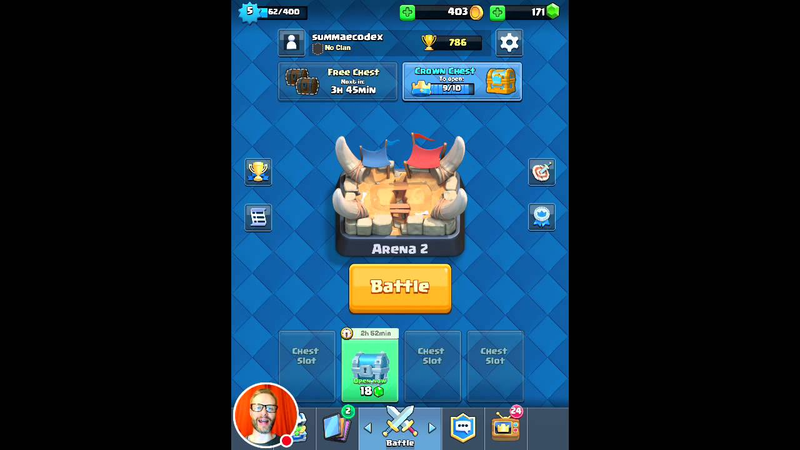
How Supercell built an nonsensical session rhythm into Clash Royale
Clash Royale utilizes a sophisticated retention strategy by integrating a subtle, covert energy system into its chest reward mechanic.
- Clash Royale uses a chest reward system as a covert energy-gating mechanic, providing four slots to create a psychological sense of structure and completion.
- The game design encourages a 12-to-15-minute session rhythm, which is the optimal time required for players to fill their available chest slots.
- By framing limitations as a reward-collection loop rather than a traditional energy bar, the game avoids the negative player sentiment typically associated with restrictive gating.
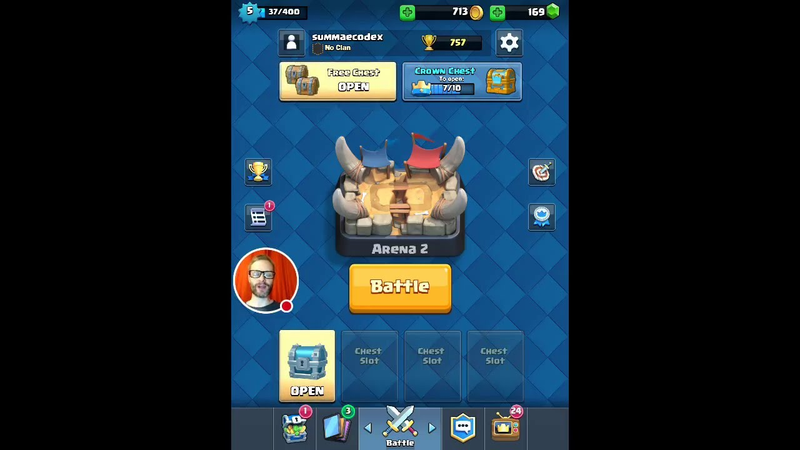
Clash Royale's immediate reciprocity (and accidental Battle launch)
Clash Royale utilizes psychological principles of reciprocity to drive player retention and engagement through its user interface design.
- Clash Royale leverages the psychological principle of reciprocity by positioning free reward chests as the primary visual focal point upon app launch to foster immediate positive player sentiment.
- The reward system utilizes a four-hour replenishment cycle to establish a consistent, habitual return loop for players.
- Interface design prioritizes immediate gratification over menu navigation, effectively masking the complexity of the game's deeper systems and currencies.
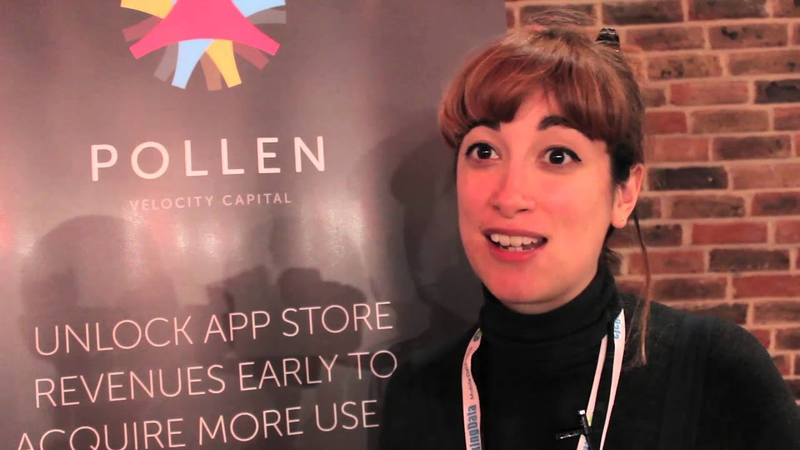
How Pollen VC helps you accelerate your cashflow
Mobile developers frequently face significant cash flow constraints due to the standard 30-to-60-day payment cycles imposed by major app stores.
- Mobile developers face significant cash flow constraints due to standard 30-to-60-day payment cycles from major app stores, which trap earned revenue and hinder reinvestment.
- Pollen VC provides a mechanism to access locked app store revenue on a weekly basis, allowing developers to maintain consistent growth momentum.
- The operational model integrates directly with app store accounts to verify daily revenue accrual, enabling disbursements to bank accounts or ad networks every seven days.
Monetizer: Clash Royale
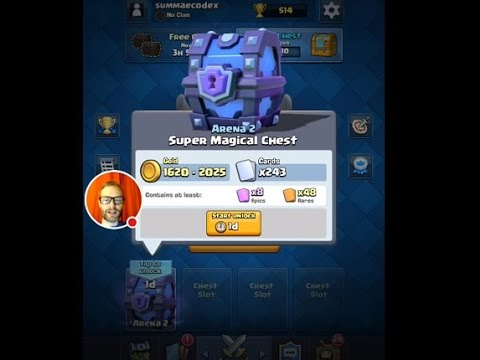
Clash Royale serves as a prime example of Supercell’s ability to implement aggressive, time-gated monetization strategies that would likely cause significant player backlash if attempted by less established developers.
- Supercell leverages its high-tier brand status and massive marketing budgets to normalize aggressive, time-gated monetization mechanics that would likely trigger player backlash for smaller developers.
- The core progression loop forces players to manage a four-slot chest limit, creating psychological pressure to keep slots full and training users to engage with time-gating systems.
- Clash Royale maintains player engagement through a sophisticated matchmaking algorithm designed to keep win rates near 50%, regardless of individual skill level.

Monetizer: Guardian Stone
Guardian Stone serves as a case study in the complexities of mobile game design, specifically highlighting the friction between intricate Asian-market RPG mechanics and Western user expectations.
- Guardian Stone demonstrates that high-density, PC-inspired RPG interfaces create significant friction when ported to mobile, hindering accessibility for Western audiences.
- The game’s core gameplay loops are obscured by an overwhelming volume of icons, flashing notifications, and overlapping systems that lack intuitive context.
- Complex metagame systems, including character evolution and rune management, suffer from a lack of clear guidance, leaving players to navigate opaque upgrade paths without sufficient onboarding.
FTUE: Disney Magic Kingdoms
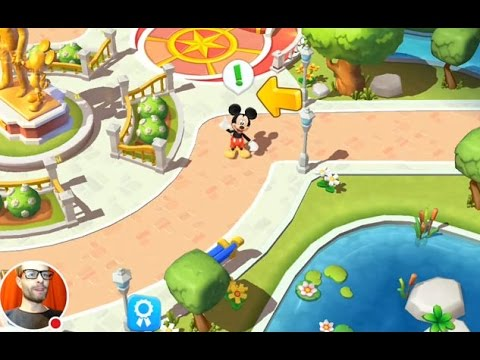
Disney Magic Kingdoms, a free-to-play mobile theme park simulation developed by Gameloft, utilizes a highly guided first-time user experience (FTUE) designed to accommodate a younger audience while maintaining strict brand standards.
- Disney Magic Kingdoms utilizes a highly guided, low-complexity FTUE to ensure accessibility for a younger demographic while maintaining strict Disney brand standards.
- The game’s core loop centers on narrative-driven progression, using character-specific tasks like welcoming Goofy to teach players about token collection and resource management.
- Gameloft prioritizes brand integrity over aggressive monetization, intentionally avoiding intrusive sales tactics during the initial user experience to comply with child-focused regulatory requirements.