1 free read left. Create a free account for unlimited reading + AI research.
Create free account
Clash Royale's genius and totally counter-intuitive monetisation loop
Key insights
6 takeaways- 01Clash Royale monetizes by integrating a time-gated chest system directly into the core gameplay reward loop, creating a deliberate friction point after victories.
- 02The strategy leverages the heightened emotional state following a win, which increases the perceived value of the chest contents and makes the cost of acceleration feel justified.
- 03Players are incentivized to spend premium currency (gems) to bypass wait times, effectively purchasing immediate access to rewards earned through gameplay.
- 04By aligning player incentives with revenue generation, the design transforms a potential frustration—the wait time—into a desirable, purchasable convenience.
- 05Unlike models that use monetization to remove obstacles or punish players, this system frames spending as a service that enhances the positive experience of winning.
- 06This approach demonstrates that monetization can amplify gameplay excitement rather than detract from it, marking a departure from traditional industry practices regarding reward fulfillment.
Ask AI about this video
Transcript
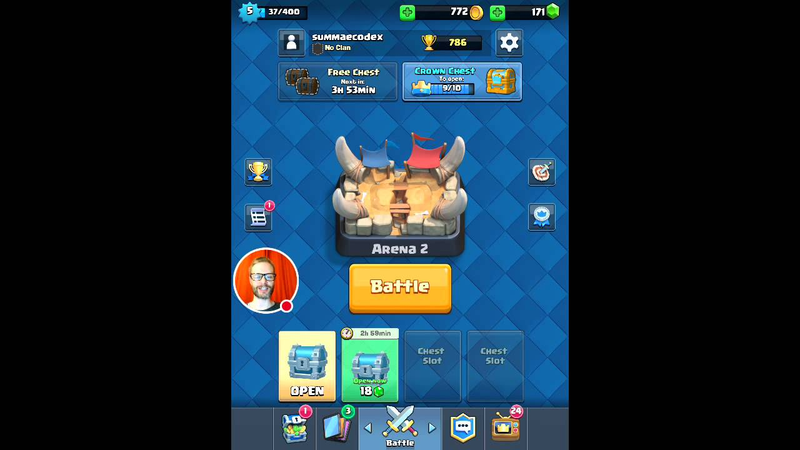
okay so this brings us to another aspect of um supercell's kind of deep thinking about how people play clash royale so i've just if not um i've won a game not by playing very well but i've won again you can see i've got two lure of crazy friends um clan got only got one um crown please he's he or she is happy i suppose not happy that he lost but they still got one crown that's another clever thing that superstar have done even if you lose you can still you potentially could lose and still get two crowns so um anyway i won ha ha what do i mean and i've got a silver chest excellent silver chest so there we go gonna load into the screen there's my silver chest tap to unlock three hours now this is a really um counter-intuitive thing that supercell's done i've just won a battle so i'm feeling good about myself wow aren't i clever in my tactics all that kind of stuff where's my reward oh i've got to wait three hours for my reward
so in most situations that would be quite annoying that you know if someone says oh i'm gonna give you an ice cream if you do well i do well on the go you have to wait three hours for your ice cream i didn't suddenly feel good about that but kind of what what the whole loop of the game is even though i'm gonna go oh start unlock three hours so obviously we know the whole kind of way that um free to play games normally have some sort of time gate in them and i could use 18 of my gems and in some ways i kind of think one aspect of the game is you're so because you're so desperate for your reward not desperate perhaps but so anticipatory of your reward that the value of opening that is much stronger than the value of the gems the gems instead of how obviously you can buy them uh you can't earn them i mean i've not spent any money to earn these but i've not spent any so that's why i've got quite a few um so the value of getting the reward is stronger than the value you attach to the gems even if you
buy the gems and i think sometimes or a lot of free play games have gone wrong is they put you in a situation where there's an obstacle you can use gems to overcome that obstacle um but then the value you attach to overcoming that obstacle isn't as much is worth as much as the value of the money you have to spend to get the gems in this case i'm going to spend gems and i'm going to feel better because i'm going to open my my chest quicker and that's the kind of the clever way in which supercell has put it's not it's only monetization look but i would suggest it's main monetization loop it's put within the gameplay reward loop and it's done in such a way in a counter-intuitive way that that doesn't detract from the reward that actually enhances the monetization and that is the more you think about that the more genius that that aspect of the game becomes um because it kind of goes against what all free to play game design up to this point has suggested you should do in terms of fulfilling the rewards and how and more generally how monetization fits into a reward structure
Summary
Clash Royale utilizes a sophisticated monetization strategy that integrates revenue generation directly into the core gameplay reward loop. By implementing a time-gated chest system, the game creates a period of anticipation following a victory. Although standard game design principles suggest that rewards should be immediate to maximize player satisfaction, this model intentionally delays gratification. This friction point serves as the primary monetization mechanism, where players are offered the choice to spend premium currency, known as gems, to bypass the waiting period and access their rewards instantly.
The effectiveness of this approach lies in the psychological valuation of the reward versus the cost of the currency. Because the player has just achieved a victory, the emotional value of the chest contents is significantly heightened. This creates a scenario where the perceived benefit of immediate access outweighs the monetary cost of the gems required to accelerate the process. Unlike many free-to-play titles that use monetization to remove obstacles or punish players, this system frames spending as a way to enhance the positive experience of winning.
By embedding the monetization loop within the reward structure, the game successfully aligns player incentives with revenue generation. This counter-intuitive design transforms a potential frustration—the wait time—into a desirable service that players are willing to purchase. Ultimately, this strategy demonstrates that monetization can be used to amplify the excitement of gameplay rather than detracting from it, marking a significant departure from traditional industry practices regarding reward fulfillment and in-game spending.















Comments