Monetization reports and market data
Documents

Casual Games Sector Report: 2017
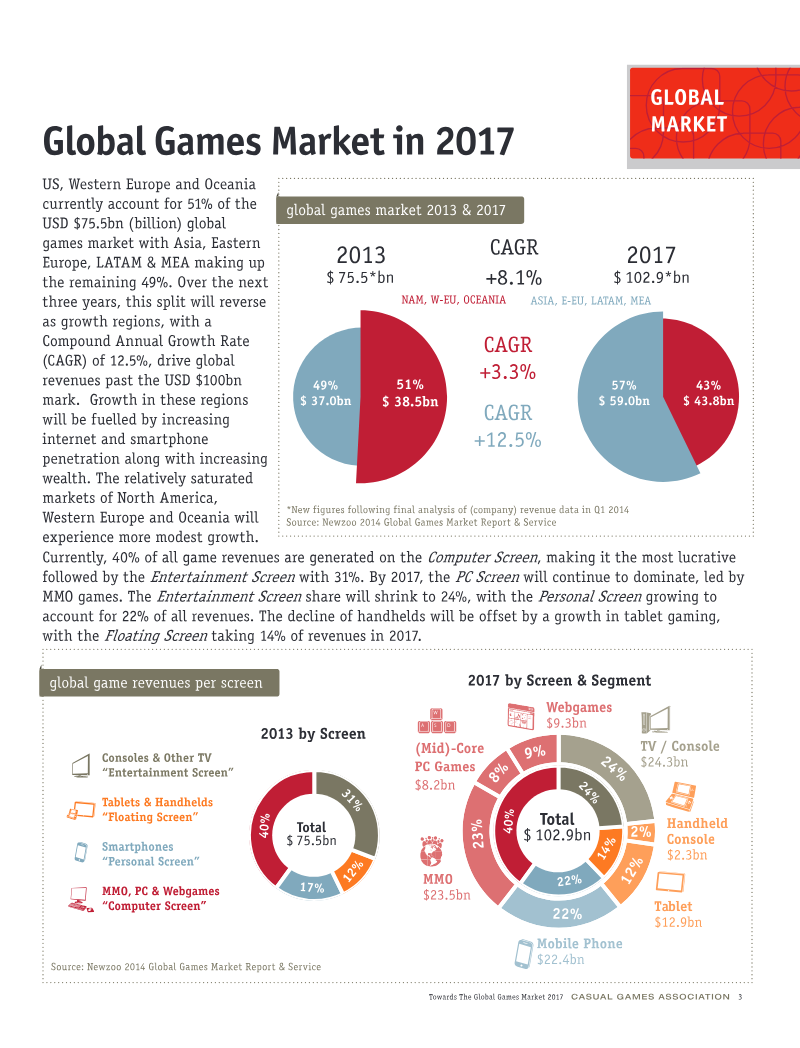
The global games market is undergoing a period of rapid expansion and structural transformation, with total revenues projected to exceed $100 billion by 2017.
- The global games market is projected to grow at a 12.5% CAGR, exceeding $100 billion in revenue by 2017, with growth driven by emerging regions including Asia, Eastern Europe, Latin America, and the Middle East/Africa.
- Mobile gaming is the fastest-growing segment, with revenues expected to rise from over $17 billion in 2013 (23% of the market) to over $35 billion by 2017 (34% of the market).
- The number of mobile gamers is forecast to increase from 1.33 billion in 2013 to 1.82 billion by 2017, with significant growth occurring in both mature and emerging markets.



Global Esports Market Report: 2017
The 2017 Global Esports Market Report provides a comprehensive analysis of the esports industry’s transition into a mainstream global business.
- The global esports economy reached $696 million in 2017, marking a 41.3% year-on-year growth with a projected revenue of $1.488 billion by 2020.
- Sponsorship is currently the largest revenue stream at $266.3 million, while media rights are the fastest-growing segment and are projected to reach $340 million by 2020.
- The global esports audience totaled 385.5 million viewers in 2017, split almost evenly between 191 million dedicated enthusiasts and 194 million occasional viewers.

A look at Asian game mechanics like gachas and how you could use them
The integration of Asian game mechanics, particularly gacha systems, offers Western developers a robust framework for enhancing player retention and long-term monetization.
- RPGs utilizing gacha mechanics consistently outperform other genres in per-user revenue on the North American App Store, helping to offset rising user acquisition costs.
- Live events are the primary driver for revenue spikes in the gacha model, frequently generating tenfold increases in daily earnings.
- Successful mobile titles require a dual-layer structure: a simple, engaging core loop paired with a complex, rewarding metagame that facilitates long-term progression.
How Pixonic grew revenues for Walking War Robots from $0 to $1M a month
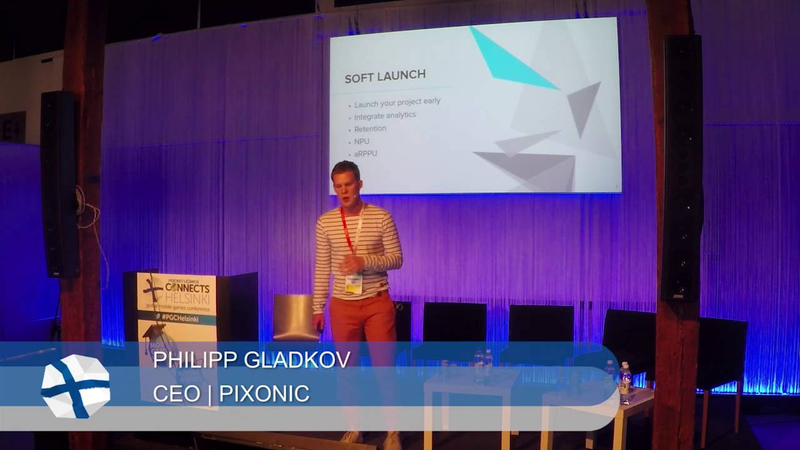
Pixonic’s strategy for scaling the mobile MMO shooter War Robots from zero to one million dollars in monthly revenue centers on a rigorous, data-driven approach to game development and financial management.
- Pixonic scaled War Robots to $1M in monthly revenue by utilizing factoring to bridge the gap between app store payment cycles and the need for rapid reinvestment in marketing and development.
- The company prioritized early-stage engagement metrics, specifically first-hour and first-day retention rates, over high-level content updates to validate product quality.
- A low-resource, small-scale experiment in the Japanese market successfully scaled to represent 20 percent of the game's total revenue.
Making a good living from games without superstar success
The mobile game industry is often characterized by a binary narrative of either massive, viral success or total failure.
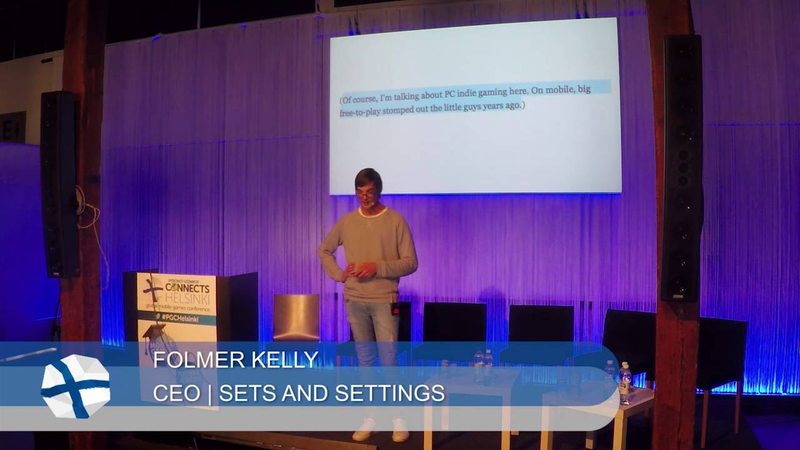
- Independent developers can achieve long-term financial stability by targeting specific niches and avoiding the high-risk pursuit of viral, superstar success.
- Sustainable growth is driven by iterative development, where early releases serve as data-gathering tools to refine store mechanics and audience targeting.
- Cross-promotion between a portfolio of titles is a primary tactic for driving recurring revenue and leveraging existing player bases without massive marketing spend.
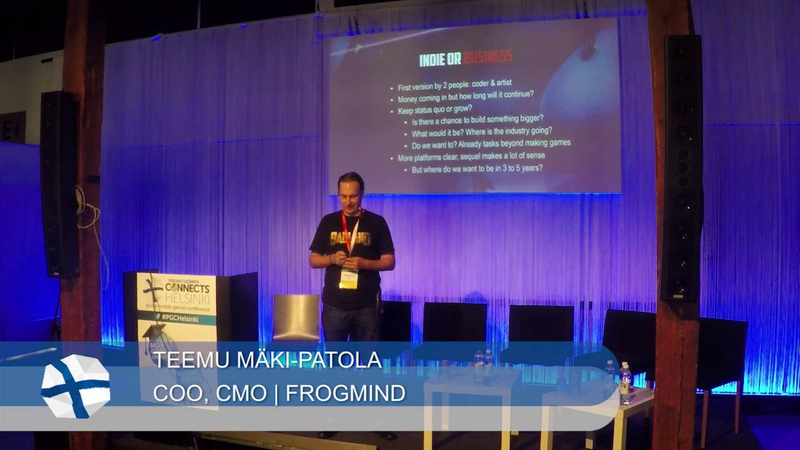
Planning for the next four years after releasing a mobile indie success
The mobile game studio behind the hit title Badland provides a case study on scaling an independent development company following a major commercial success.
- Mobile game sales tails have compressed significantly, dropping from an 18-month lifespan for the original Badland title to approximately three months for newer releases.
- Diversification is essential for sustainability, as Badland achieved 40 million total installs with 95% of revenue generated from iOS and Android platforms.
- Android can outperform iOS in daily revenue when utilizing a hybrid monetization model that combines advertisements with in-app purchases.
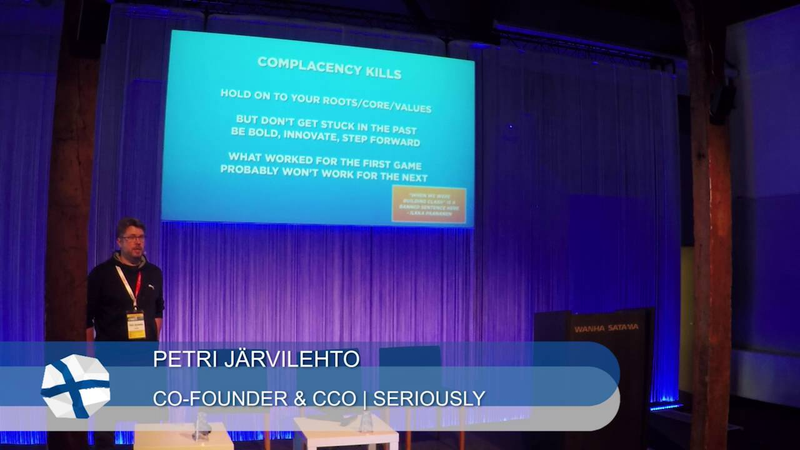
Best Fiends developer Seriously on what comes after shipping a hit game
The transition from shipping a successful mobile game to sustaining long-term growth presents a unique set of operational and creative challenges.
- Treat an initial hit game as a foundation for long-term intellectual property development rather than a standalone product to ensure multi-year franchise sustainability.
- Avoid the temptation to over-diversify or chase every business opportunity post-launch, as excessive sidetracking dilutes focus on the core product.
- Balance data analysis with creative intuition, as viral hits often generate inflated vanity metrics that can lead to poor decision-making.

How indies can thrive in the modern mobile business
Independent game developers operating in the modern mobile ecosystem face significant pressure to adopt free-to-play models, which often prioritize user acquisition and monetization over creative diversity.
- Independent studios should prioritize premium-priced products over free-to-play models to avoid the high capital requirements and ethical compromises associated with aggressive user acquisition.
- Launching on PC platforms first allows developers to build a dedicated community and validate gameplay concepts before committing to mobile or multi-platform expansions.
- Long-term sustainability for indie teams is best achieved by focusing on organic visibility and consistent post-launch updates rather than rapid scaling or exit strategies.
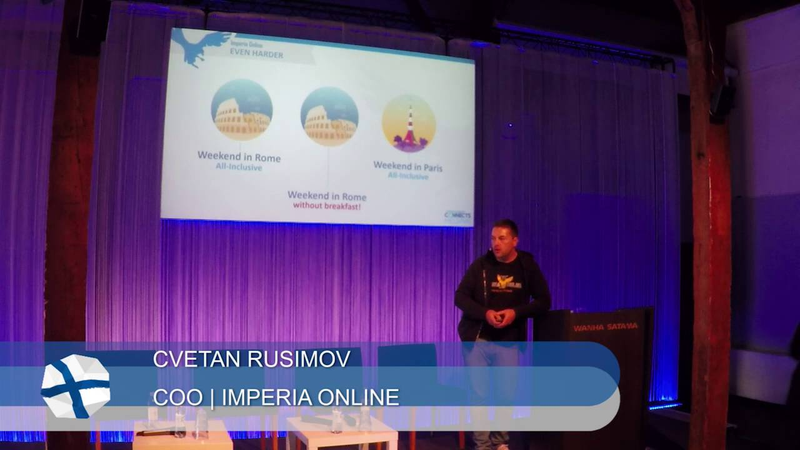
Hacking the human brain – Irrational thinking will triple your game's revenue
The primary objective of this analysis is to demonstrate how applying principles of behavioral economics and cognitive psychology can significantly increase revenue in mobile gaming.
- Strategic application of behavioral economics and cognitive biases, such as decoys and price anchoring, can increase mobile game revenue by over 300% without requiring an expanded player base.
- Implementing a 'decoy' option—an unattractive or illogical price tier—effectively shifts consumer preference toward more expensive, high-value packages by altering the perceived value of the options.
- Developers can use a middle-tier price point as a reference anchor to make premium offers appear more advantageous to the player.

How Flaregames and Kopla Games Doubled the monetisation performance of Nonstop Knight
The development of the mobile action RPG Nonstop Knight, a collaboration between Flaregames and Kopla Games, serves as a case study in utilizing iterative design and rapid experimentation to optimize monetization and player retention.
- Flaregames and Kopla Games doubled both day-30 player retention and total revenue for Nonstop Knight following its 2016 launch by shifting from front-loaded monetization to a long-term engagement model.
- The development team utilized a 'brute-forcing luck' methodology, which prioritizes rapid, low-cost experimentation and the quick discarding of unsuccessful features over extensive upfront design.
- To scale the game effectively, the team integrated specialized roles like economy designers to balance progression systems while relying on internal playtesting for immediate design validation.

MMO Economies - Hyperinflation, Reserve Currencies & You! - Extra Credits
Massively Multiplayer Online (MMO) games frequently struggle with hyperinflation because their core gameplay loops involve the constant, infinite generation of in-game currency through monster drops and loot sales.
- MMO economies suffer from hyperinflation because core gameplay loops generate infinite currency through monster drops and loot sales without a central regulatory authority.
- Unchecked currency devaluation forces players to abandon official game gold in favor of more stable, player-determined commodities like rare items or shards.
- Traditional money sinks—such as auction house taxes, fees, and vendor-only consumables—frequently fail because they cannot keep pace with the volume of currency generated by player grinding.

How to optimise your revenue and user acquisition funding
Securing user acquisition funding in the competitive mobile gaming landscape requires a rigorous focus on revenue optimization and the demonstration of robust performance metrics.
- Prioritize Average Revenue Per Daily Active User (ARPDAU) as the primary metric before global launch to ensure campaign profitability and secure better financing terms.
- Shift user acquisition strategies from focusing on install volume to prioritizing the long-term retention of paying users to combat market saturation.
- Implement automated, global price localization and continuous A/B testing to identify optimal price points across diverse international markets.