The 2017 Global Esports Market Report provides a comprehensive analysis of the esports industry’s transition into a mainstream global business. The primary thesis posits that esports is accelerating the convergence of gaming, media, and traditional sports, driven by significant investments from non-endemic brands and major media conglomerates. The report identifies this convergence as a strategic necessity for media companies seeking to engage digital natives and Millennials, as well as for traditional sports leagues looking to revitalize an aging fan base.
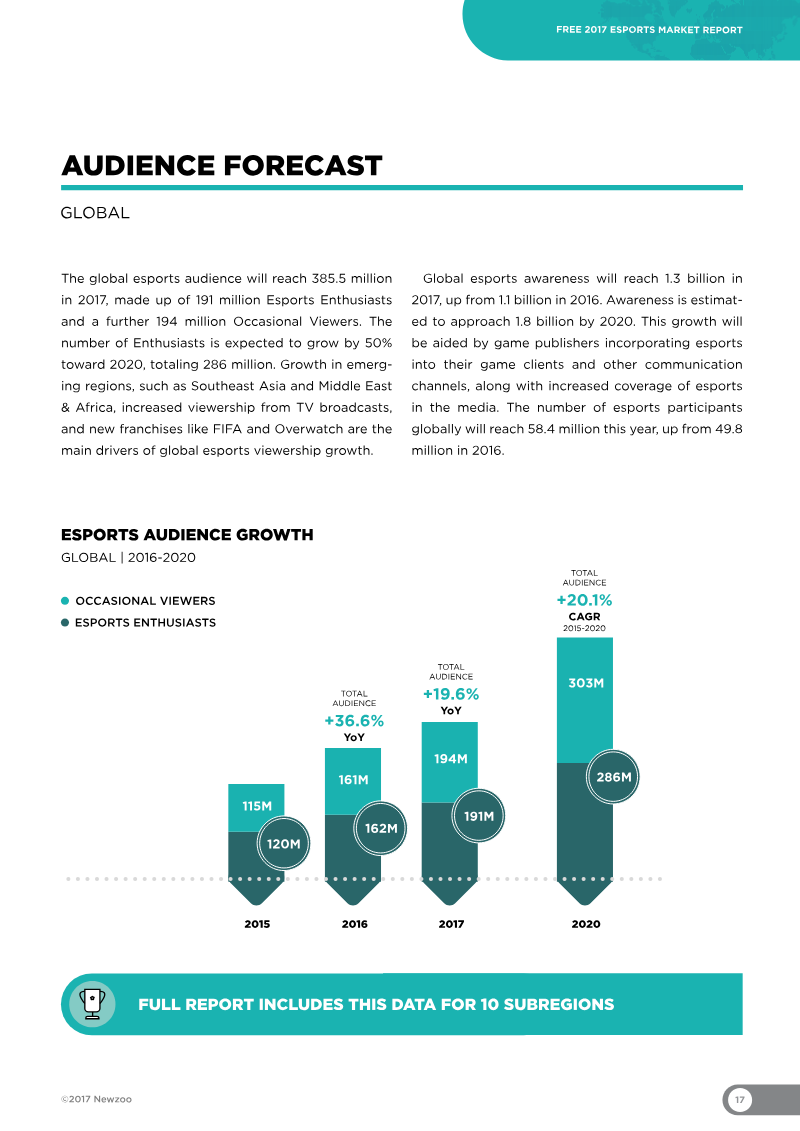
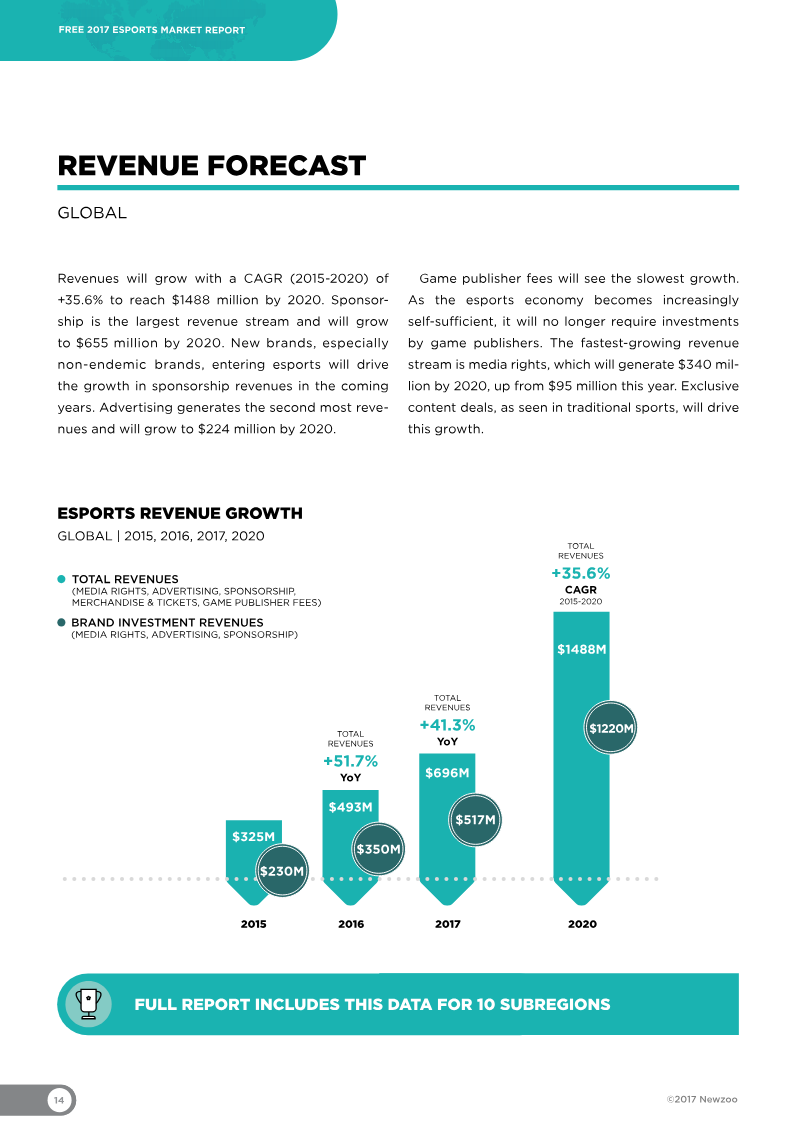
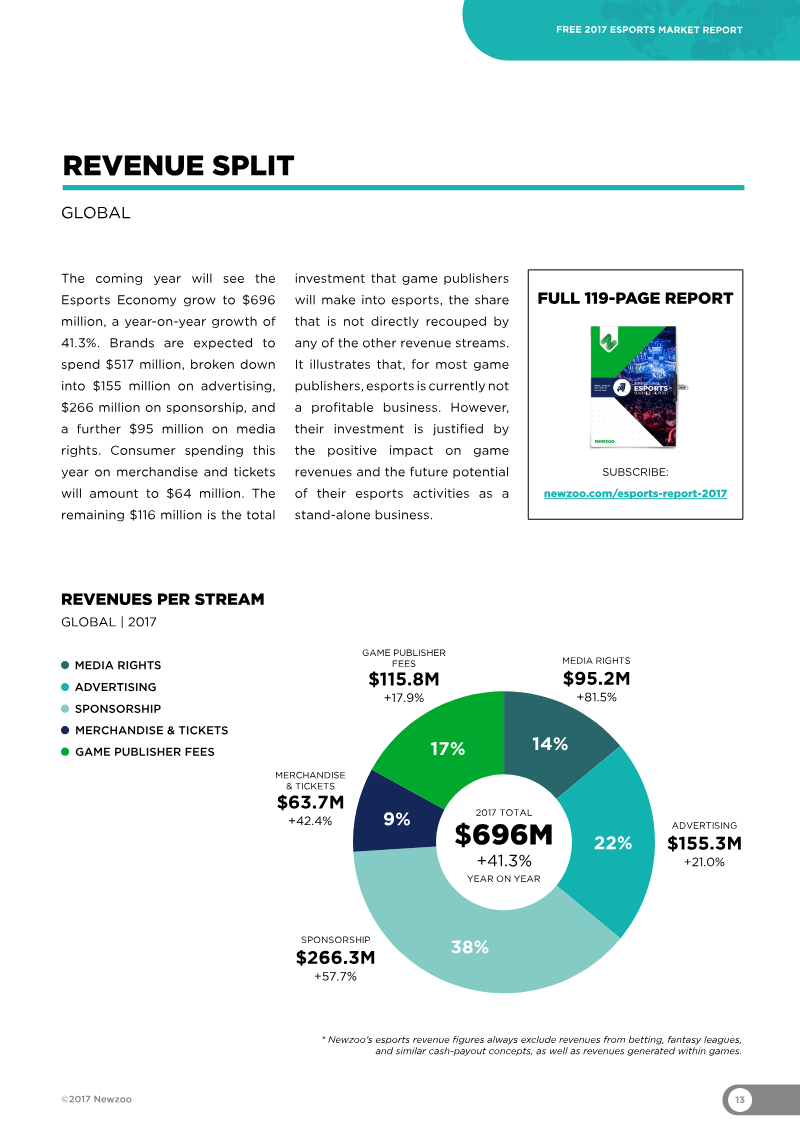
Key financial findings indicate that the global esports economy reached $696 million in 2017, representing a 41.3% year-on-year growth. Sponsorship remains the largest revenue stream at $266.3 million, while media rights are identified as the fastest-growing segment, projected to reach $340 million by 2020. The report forecasts total market revenues to hit $1.488 billion by 2020, with a compound annual growth rate of 35.6%. Audience metrics show a global reach of 385.5 million viewers in 2017, consisting of 191 million dedicated enthusiasts and 194 million occasional viewers.
The scope of the analysis covers global markets across 10 subregions, utilizing a proprietary forecasting model that integrates primary consumer research from 27 countries, census data, and engagement metrics from streaming platforms and event organizers. The methodology distinguishes between "Esports Enthusiasts"—defined as frequent viewers and active participants—and occasional viewers, while excluding revenues from betting, fantasy leagues, and in-game transactions to maintain a focus on the professionalized esports economy.
The report concludes that while esports is currently not a profitable venture for most game publishers, their continued investment is justified by the positive impact on game engagement and the long-term potential of esports as a standalone business. The integration of traditional sports clubs into the ecosystem, particularly through FIFA-branded leagues, further validates the industry's shift toward mainstream acceptance and professionalized competition.