Monetization reports and market data
Documents

How much money will your FIRST INDIE GAME make?
The primary objective for aspiring independent game developers is to shift their focus from immediate financial gain to the acquisition of essential production skills.
- The primary objective for a first indie game should be skill acquisition and project completion rather than immediate financial profit.
- Initial projects rarely generate significant revenue, often yielding little to no direct sales or only negligible amounts from ad revenue.
- Successful developers, such as Edmund McMillen, typically release a high volume of smaller, lesser-known titles before achieving commercial success.

Netflix Model Bad for Games? | Games ReCAP Episode 023
The gaming industry is undergoing a fundamental shift toward subscription-based distribution models, mirroring the streaming strategies popularized by platforms like Netflix.
- Subscription models provide developers with upfront capital and guaranteed licensing revenue, effectively mitigating the financial risks associated with market oversaturation.
- Distributing games via subscription platforms allows studios to bypass consumer purchase delays, which are often caused by waiting for future retail discounts.
- Usage-based compensation models, such as pay-per-minute royalties, create a valuation bias that favors high-engagement, long-form titles over shorter, narrative-driven experiences.

Pirates Killed G2A | Games ReCAP Episode 019
The digital distribution of video games faces a significant challenge regarding the proliferation of fraudulent keys on gray market platforms like G2A.
- Gray market platforms like G2A facilitate the sale of keys purchased with stolen credit cards, forcing independent developers to bear the financial burden of chargeback fees.
- The concentration of unauthorized key sales is highly skewed, with data from the game Descenders showing that a vast majority of illicit transactions originate from a very small number of high-volume sellers.
- Industry experts suggest that fraud can be mitigated by implementing stricter verification processes for bulk sellers and applying behavioral pattern detection at the point of purchase on major storefronts like Steam.

Mobile Ad Monetization with Fyber ft. Nishant Ghaiy | Mobile Advertising and Ad Mediation
Fyber operates as a comprehensive publisher platform designed to assist mobile app developers and game studios in managing ad monetization and user acquisition.
- Fyber’s FairBid technology replaces traditional sequential waterfall mediation with programmatic, real-time auctions that allow all demand sources to compete simultaneously for ad inventory.
- The platform functions as an outsourced sales team and marketplace, connecting mobile app publishers with advertisers to maximize revenue through real-time bidding.
- Industry performance is currently driven by high-engagement ad formats, specifically rewarded video, interstitial ads, and playable ads, which outperform traditional banner advertising.

Understanding Loot Boxes with Zac Rich | Game Dev Unchained Episode 195
Loot boxes represent a contentious intersection of game design, corporate revenue strategy, and consumer protection.
- Loot boxes face intense regulatory scrutiny because their psychological mechanics mirror addictive gambling behaviors, despite industry claims that digital rewards lack inherent monetary value.
- Mandatory disclosure of winning odds is often insufficient to curb compulsive spending, as it fails to address the underlying design loops that drive player behavior.
- The industry is caught in a tension between rising development costs and the need for sustainable revenue, leading to controversial practices like pay-to-win mechanics and content gating.
Ethics in the Game Industry
The game industry faces a critical juncture regarding the ethical implications of design choices that prioritize engagement and monetization over player well-being.
- Gaming disorder is a recognized concern affecting between 0.3% and 1% of the global population across major markets, including the U.S., U.K., Germany, and Canada.
- Developers are urged to abandon engagement-focused metrics in favor of ethical game architecture that avoids exploiting cognitive biases through variable ratio reinforcement schedules.
- Predatory monetization strategies, specifically loot boxes and frictionless payment systems, pose significant ethical risks, particularly when targeting minors who lack the cognitive maturity to resist impulsive behaviors.
Diversify your game income with blockchain and ViRSE
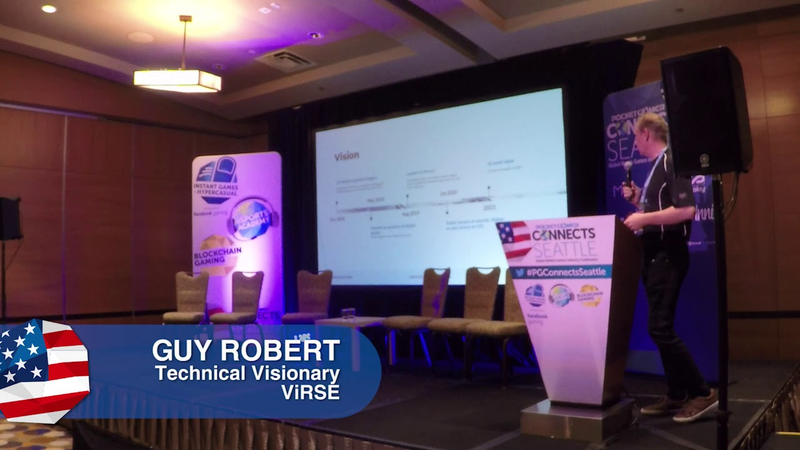
The ViRSE ecosystem aims to bridge the gap between virtual reality, blockchain technology, and real-world commerce by creating a decentralized, cloud-based virtual universe.
- ViRSE is a decentralized, cloud-based virtual ecosystem designed to bridge virtual reality, blockchain, and real-world commerce by offering tangible utility, such as physical goods discounts, for digital assets.
- The platform aims for significant financial scaling, targeting $4 million in digital inventory value by late 2019 and $2.1 billion in real-life discount value by 2021.
- ShopVerse serves as a specialized distribution platform for blockchain-based games, functioning as an alternative to mainstream app stores to bypass restrictions on crypto-integrated applications.

AskGM #5: How to Make Mobile Apps Safe for Kids | With Super Awesome
The digital landscape for children is undergoing a significant transformation as developers shift from traditional, data-heavy monetization models toward privacy-first infrastructure.
- Developers are shifting from data-heavy monetization to privacy-first infrastructure to comply with global regulations like COPPA and GDPR.
- The industry is replacing unreliable age gates and behavioral tracking with zero-data tools and AI-driven identification to maintain compliance.
- Specialized B2B technology platforms are being used to abstract the technical and legal complexities of developing for child-directed audiences.

Indie Sustainability with Jake Birkett | GduX.me
Achieving long-term sustainability in the independent game industry requires a disciplined transition from creative passion to rigorous business management.
- Treat game development as a long-term business by maintaining a cash runway, living frugally, and taking on supplemental contract work to mitigate market volatility.
- Limit development cycles to under two years and strictly manage project scope to avoid feature creep, as longer cycles rarely yield a viable return on investment.
- Use Steam wishlists as a predictive metric by multiplying the total count by 0.5 to estimate potential first-week sales and inform production budgets.

Bernie Sanders Calls for Unionization and EA's Surprise Mechanics | Games ReCAP Episode 007
The video game industry is currently undergoing a critical transformation characterized by a fundamental tension between aggressive, short-term profit maximization and the long-term sustainability of its workforce and product quality.
- The gaming industry is experiencing a fundamental conflict between short-term profit maximization and the long-term sustainability of its workforce and product quality.
- Frequent layoffs and at-will employment models are driving a surge in unionization efforts as employees seek collective bargaining for equitable profit sharing and standardized severance.
- Electronic Arts and other industry players face mounting regulatory scrutiny for using 'surprise mechanics'—a rebranding of loot boxes—which critics equate to predatory, unregulated gambling.

The Future of UA+PM | N3TWORK's Nebo Radovic talks Product Management and User Acquisition Strategy
The integration of user acquisition (UA) and product management (PM) teams is a critical driver of competitive advantage in the mobile gaming industry.
- Integrating User Acquisition (UA) and Product Management (PM) teams is a primary driver of competitive advantage, shifting from siloed operations to shared accountability and unified goal-setting.
- High-frequency communication, including daily or near-daily meetings, is required to synchronize live game events with UA strategies and monitor metrics like early retention and payer conversion.
- Genre specialization is mandatory for success, as distinct game genres require tailored creative assets and targeting strategies that align with their specific Lifetime Value (LTV) curves.
South American market overview
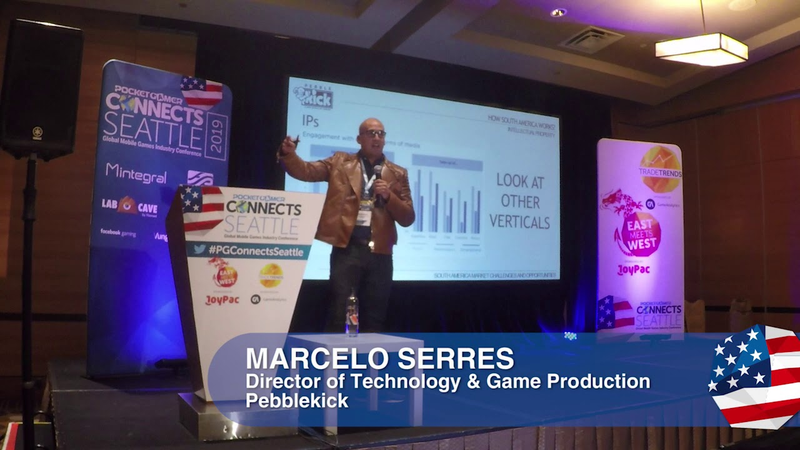
The South American gaming market presents a high-potential but complex landscape characterized by significant cultural nuances and a lack of mature local business design expertise.
- Success in the South American market requires 're-culturalization' rather than simple translation, which involves aligning products with local entertainment preferences and forming strategic partnerships.
- Developers must avoid treating the region as a monolithic entity and instead implement a three-dimensional strategy that analyzes the specific, overlapping dynamics of individual countries.
- Soccer and telenovelas are the primary cultural pillars of entertainment; licensing these IPs or integrating their themes is a highly effective strategy for user acquisition and brand relevance.