Monetization reports and market data
Documents
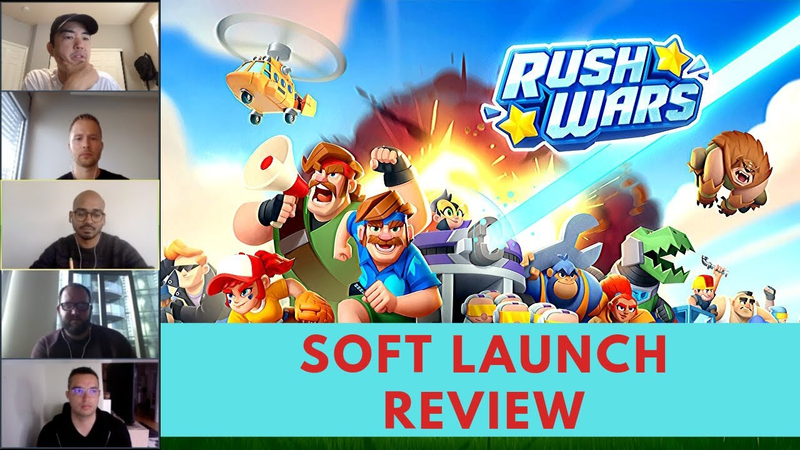
Supercell's Rush Wars | Soft Launch Review
Supercell’s Rush Wars represents a strategic attempt to bridge the gap between mid-core mobile titles and hyper-casual accessibility.
- Rush Wars struggles with long-term retention due to a lack of strategic depth, leading industry analysts to assign the title a modest score of 5 to 7 out of 10.
- The game’s monetization model is underperforming, characterized by an ineffective pre-roll gacha system and a notable lack of robust gold sinks.
- Soft launch performance metrics show lower install volumes and weaker revenue per download for Rush Wars compared to previous Supercell titles like Brawl Stars.
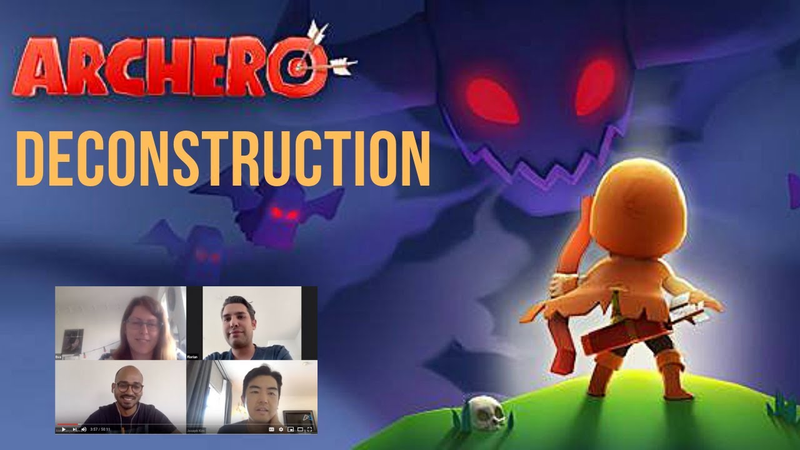
How Archero Became a Hit Game and What They Could've Done Better!
Archero represents a pivotal shift in mobile gaming, demonstrating the efficacy of hybridizing hyper-casual accessibility with mid-core RPG depth.
- Archero achieved 19.8 million downloads and $25 million in net in-app purchase revenue within its first three months following its 2019 launch.
- The game’s success is attributed to a hybrid design model that combines hyper-casual accessibility with the strategic depth of mid-core action-RPGs.
- Developers successfully scaled the title globally by applying hyper-casual user acquisition tactics to a more robust, long-term product.

Day in the Life at a Games Conference | GameDaily Connect 2019
The GameDaily Connect 2019 conference, held in Anaheim, California, serves as a professional gathering for industry leaders to discuss the evolving landscape of mobile gaming, live operations, and user acquisition.
- The mobile gaming industry is shifting away from static, one-size-fits-all experiences toward highly specialized, data-driven user acquisition strategies.
- Developers are increasingly adopting 'agency-in-a-box' platforms and SaaS solutions to automate technical acquisition processes, allowing them to prioritize player retention and monetization.
- Market intelligence firms emphasize that data analytics are now essential for accurate revenue forecasting and informed product development within the global gaming ecosystem.
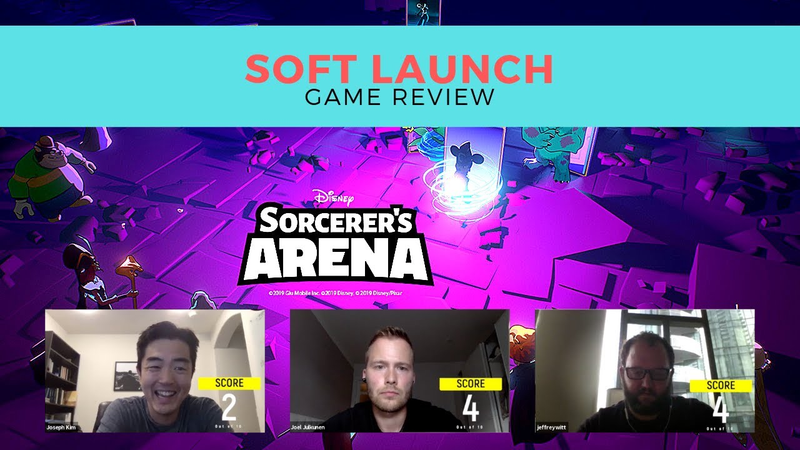
Disney Sorcerers Arena Mobile Game by Glu Mobile | Soft Launch Review
Disney Sorcerer’s Arena faces significant viability challenges as it navigates its soft launch phase, primarily due to a fundamental misalignment between its intellectual property and core gameplay mechanics.
- Disney Sorcerer’s Arena faces a critical demographic mismatch, as its complex, mid-core RPG mechanics fail to align with the casual, female-skewing audience typically associated with the Disney brand.
- The game is currently underperforming during its soft launch phase, characterized by low install volumes and poor revenue per download.
- Ineffective price anchoring and confusing monetization strategies serve as significant barriers to the game's commercial viability.

GameMakers Preview | What's Coming Up by Paul Leydon
The primary objective of this project is to demonstrate the practical application of free-to-play mobile game design through a rigorous, iterative development process.
- The project utilizes a rapid, one-week production cycle to demonstrate the end-to-end development process of a free-to-play mobile idle game.
- Successful mobile game design requires the creation of mechanics that function in strict harmony with a cohesive, overarching project vision.
- The initiative serves as a transparent case study for navigating the competitive mobile landscape by documenting specific creative and technical workflows.

FIFA Loot Boxes | Games ReCAP Episode 032
Electronic Arts faces persistent legal and ethical scrutiny regarding the implementation of loot boxes within the FIFA franchise.
- Electronic Arts relies on randomized loot boxes in the FIFA franchise as a primary revenue driver, despite ongoing legal and ethical criticism regarding their similarity to gambling.
- The business model incentivizes repeated spending by framing loot boxes as benign surprise elements, which has led to instances of minors spending hundreds of euros on digital content in short timeframes.
- The lack of robust corporate safeguards for younger users creates a significant tension between profit-driven microtransaction models and the financial risks posed to vulnerable players.

Selling Out: What a Year of F2P Taught an Art-House Indie
The transition from experimental, art-house independent development to the commercial free-to-play sector represents a shift from high-friction, survival-based financial models to a data-driven, iterative environment.
- Transitioning from indie development to commercial free-to-play (F2P) does not fundamentally change the core design process, as solving complex logic puzzles and iterating with engineers remains the primary daily activity.
- Commercial F2P environments require designers to reconcile creative decisions with daily financial metrics and analytics, where every design choice is evaluated for its specific impact on revenue and player retention.
- Working in a commercial studio allows for the incubation of cultural projects, such as the 'Contemporary Magic' tarot card collaboration, which leveraged the studio's scale to drive half a million visitors to the ACLU donation page.
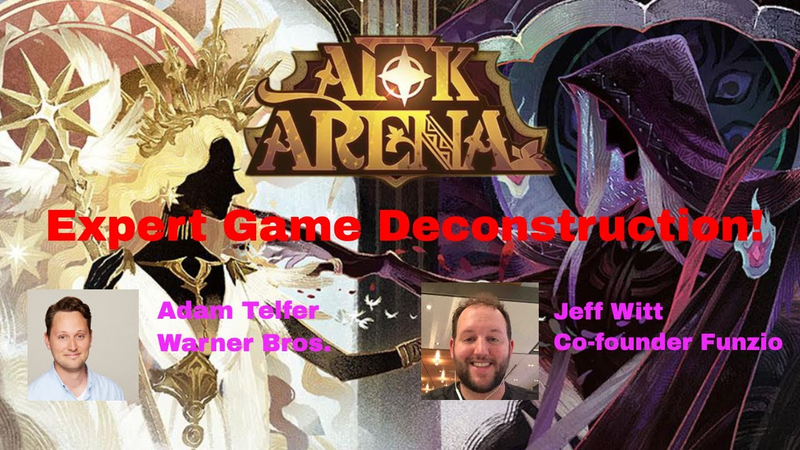
AFK Arena Game Deconstruction | Game Design Analysis with Jeff Witt & Adam Telfer
AFK Arena represents a significant evolution in the mobile RPG landscape, successfully merging traditional collectible character mechanics with the low-friction accessibility of the idle genre.
- AFK Arena achieved 8.7 million downloads and $40 million in net revenue following its late 2018 launch by merging collectible RPG mechanics with idle game accessibility.
- The game utilizes a non-punitive progression system where every hero draw contributes to long-term growth, effectively eliminating the need for repetitive grinding.
- Designers implemented a stat-check approach across modes like the Arcane Labyrinth and Peaks of Time to incentivize the cultivation of deep, specialized rosters across six distinct factions.

GTA V Casino Update | Games ReCAP Episode 027
The introduction of the Diamond Casino update in Grand Theft Auto Online marks a pivotal evolution in the games-as-a-service model, signaling a transition toward persistent, lifestyle-oriented virtual worlds.
- The Diamond Casino update in GTA Online shifts the games-as-a-service model toward persistent, lifestyle-oriented virtual worlds that prioritize digital identity and social status.
- Rockstar utilizes a closed-loop currency system where players purchase non-redeemable chips, allowing the platform to simulate gambling while bypassing traditional regulatory frameworks.
- The developer strategy favors incremental, drip-fed content updates over resource-heavy story expansions, significantly lowering financial risk while maintaining long-term player engagement.

How much money will your FIRST INDIE GAME make?
The primary objective for aspiring independent game developers is to shift their focus from immediate financial gain to the acquisition of essential production skills.
- The primary objective for a first indie game should be skill acquisition and project completion rather than immediate financial profit.
- Initial projects rarely generate significant revenue, often yielding little to no direct sales or only negligible amounts from ad revenue.
- Successful developers, such as Edmund McMillen, typically release a high volume of smaller, lesser-known titles before achieving commercial success.

Netflix Model Bad for Games? | Games ReCAP Episode 023
The gaming industry is undergoing a fundamental shift toward subscription-based distribution models, mirroring the streaming strategies popularized by platforms like Netflix.
- Subscription models provide developers with upfront capital and guaranteed licensing revenue, effectively mitigating the financial risks associated with market oversaturation.
- Distributing games via subscription platforms allows studios to bypass consumer purchase delays, which are often caused by waiting for future retail discounts.
- Usage-based compensation models, such as pay-per-minute royalties, create a valuation bias that favors high-engagement, long-form titles over shorter, narrative-driven experiences.

Pirates Killed G2A | Games ReCAP Episode 019
The digital distribution of video games faces a significant challenge regarding the proliferation of fraudulent keys on gray market platforms like G2A.
- Gray market platforms like G2A facilitate the sale of keys purchased with stolen credit cards, forcing independent developers to bear the financial burden of chargeback fees.
- The concentration of unauthorized key sales is highly skewed, with data from the game Descenders showing that a vast majority of illicit transactions originate from a very small number of high-volume sellers.
- Industry experts suggest that fraud can be mitigated by implementing stricter verification processes for bulk sellers and applying behavioral pattern detection at the point of purchase on major storefronts like Steam.