1 free read left. Create a free account for unlimited reading + AI research.
Create free account
Mobile Ad Monetization with Fyber ft. Nishant Ghaiy | Mobile Advertising and Ad Mediation
Key insights
6 takeaways- 01The platform functions as an outsourced sales team and marketplace, connecting mobile app publishers with advertisers to maximize revenue through real-time bidding.
- 02Fyber’s FairBid technology replaces traditional sequential waterfall mediation with programmatic, real-time auctions that allow all demand sources to compete simultaneously for ad inventory.
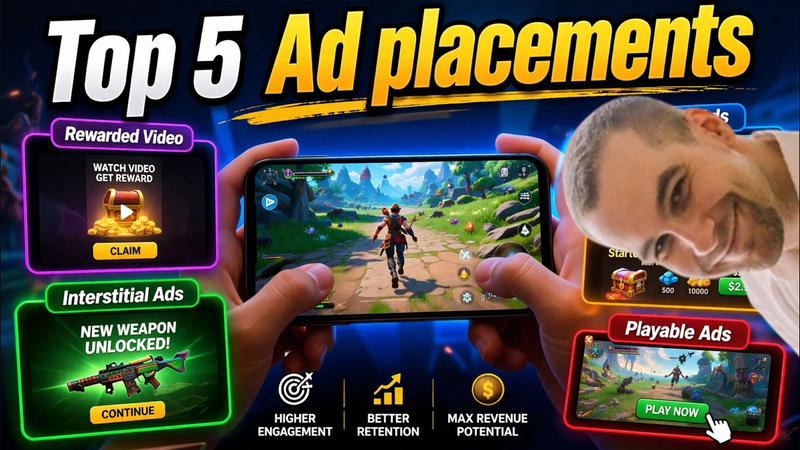
- 03Industry performance is currently driven by high-engagement ad formats, specifically rewarded video, interstitial ads, and playable ads, which outperform traditional banner advertising.
- 04Fyber maintains a global infrastructure with over 300 employees operating out of seven offices, including primary hubs in Berlin and Tel Aviv.
- 05Developers are increasingly integrating ad monetization data with in-app purchase (IAP) insights to segment audiences and deliver personalized user experiences based on spending habits.
- 06Future industry growth is expected to focus on the consolidation of programmatic bidding technologies and the development of sophisticated tools for optimizing revenue across diverse monetization models.
Ask AI about this video
Transcript
[Music] everybody I'm here today with Nishant from fiber and fiber actually provides a publisher platform that will find more information about soda Sean could you talk to us about what does that mean in terms of being a publisher platform what kinds of services and products do you guys have yeah for sure thanks Joe so basically our publisher platform is designed for app developers to give a holistic access to tools that help them with their business so whether that is monetization for ads whether that's insight into the revenue they're getting for their users or whether it's
connecting with more advertisers to grow that ad business as a whole and we kind of split it up a little bit to sellers and buyers just to give you an example so the publishers we classify as sellers because they're essentially selling us their ad space through our platform and then the buyers will classify as these demand-side platforms or ad networks were essentially reselling them to the space with the ads to their advertisers directly so this publisher platform allows the developer to manage this transaction got it so like as a publisher or developer you have a mobile game you have ad inventory in your game you guys are helping manage that site but also on the buyer side the advertiser side and so I assume you guys have products on both sides exactly yep we service both sides of the spectrum and so could you talk a little bit more about that so as the game developer publisher what kind of tools or what kind of products do you guys have that that I'd be able to use so as a publisher or a game developer you get access to our fiber marketplace okay
which is essentially this big ad exchange or you know almost like a stock market ecosystem where as the developer you'll integrate our software development kit or SDK yeah and then the ad spots in your app will get resold on our marketplace to buyers which are these advertisers and this happens in real time in an auction environment almost like an eBay or any stock market and it's almost like having an internal sales team for your company that's going out there and finding advertisers to want at this position these ads onto your app right and so I have a game on the publisher a game developer I've got this ad inventory all sell it so in order for me to make money with ads in my game I would use your platform and conversely I get I guess if I'm trying to buy users for my game or if I'm an advertiser just trying to acquire users I could use your platform to buy users is that right that's correct yeah so the same inventory we
call it which is the ad space available that publishers give to us the same developers or publishers could access on our platform and run these campaigns to acquire users right and then from a developer publisher perspective that the product that I'm most familiar with and in terms of like the type of products you guys have is your ad mediation product okay so could you explain to our audience what does that mean in terms of what what does an ad mediation product do yeah sure thing so an ad mediation product what essentially does is simplify the complexity of advertisement advertisement and also create a more fair environment for what we call demand sources to compete on your inventory which is basically the ad space so in this environment we have guys like Google and Facebook in fiber and fungal we're all trying to buy the ad space and what the mediation platform does is it gives a developer or give this platform will automatically allocate the
inventory the ad space whoever is paying the highest amount so that's kind of a traditional technology that was developed in the market to simplify this complexity now fiber has a new technology called fiber fair bid which which is labeled programmatic mediation in the difference with that in the earlier mediation which we call waterfall mediation is in the past each price was checked in a sequential method so we would see if Facebook at the highest priced and AdMob and then vongole and then fiber in this new programmatic mediation environment we checked with all the vendors in real-time so the idea is that it creates a more transparent and flat ecosystem for everyone to compete right this is that stock market that you were talking about and could you talk about so in terms of add mediation who are who are some of the biggest to pet in terms of like having an ad mediation product and then who are some of fibers biggest customers who would use this yes
so the biggest players in the space are gonna be fiber you're gonna have a platform from OPA by Twitter Google AdMob is also a really strong platform in the space an errand source has also been a common platform especially for game developers just going to be the big ones I think in terms of differentiators with fiber amongst the rest of those is we really invest heavily on our technology over 50% of our revenues go into R&D investment and so really we're trying to be at the forefront of this programmatic piece that's this bidding exchange environment I talked about earlier that's supposed to create the highest price essentially for the publishers pride unit right and then I I know fibers been around for for a long time I remember even from the early days when I first got into mobile gaming fibers been around but did you talk about two things first in terms of like you know that it seems like the mobile at ecosystem has grown quite a bit since you guys first started and could you talk about like
the growth of that market and what elements or what part of that adds mobile ads ecosystem has been growing them growing the most not to that maybe you could talk about how Fiber has changed from the early days as well yeah it's definitely so in terms of what's growing the most and the mobile ad ecosystem so mobile mobile ad ecosystem at first was everything Mobile yeah and that's really weeded out now mobile web is no longer really a focus for ad ecosystem it's it's really pure mobile app play and that's because that's where most of users spend their time and that's also where the most amount of data can be gathered from the user to be used in targeting ecosystem is really split between I would say gaming and non gaming apps the main focus with game actually representing a huge huge portion and probably the majority because users from all demographics play games and and it's usually the most time spent so from our advertisers perspective if they want to reach a large audience gaming is going to be
really an important segment for them that ties back into fiber quite a bit as well because ever started as a gaming specific platform we had a product called off roll that's a value exchange ad unit where the user can go into the game you know complete an offer or see an ad like a video and then in return receive a certain amount of currency and that's that value exchange component so it really works well for games but not so much for non gaming now we have a strong support for non-gaming publishers as well with banner ads and interstitials and these don't require any value exchanges simply you know like a pop-up ad or something that's displayed as the user engages within the app and the nice thing about it is it doesn't really matter what the app does whether it's a flashlight whether it's a game whether it's a music app these ads integrate really well so they're they're easy to use and these are just standardized across OS android and advertisers too so
the scale is really there which big guys like Nike or Wells Fargo are going to be looking for it so in talking about Nike and some of the bigger guys when they want to buy adamant way maybe we could talk more about that demand side right in terms of like what are the the biggest types of ads so you mentioned there's there's there's offer wall there's banners it's just like could you talk about the other types of ad inventory on the market so if I'm coming as a buyer trying to get you know mobile players and trying to acquire them for my game were the different types of ad inventory out there for me to buy and which ones are the biggest okay so I'll start with 20 the hottest ones right now in the market and those are gonna be rewarded video ads and interstitial ads and those are the hottest because they really take over the screen entirely to engage the user fully and it's going to give the advertiser the most opportunity
to present their product rewarded video and their stills have evolved lately they now support playable ads as well and this after let's say the video is shown the player has a chance to engage with the ad let's say for 15 seconds and do like a quick trial of the game so it's pretty useful because since now user maybe has a lot of apps or somewhere fire you know Wi-Fi to download being able to test it out a little bit gives a sense if they like it or not and then they can go ahead and download in that case afterwards even in the case if they weren't gonna download it display blasts this is a little piece of the game the developer can actually learn from it so if do you if there's a say for example three levels in this playable app but users only go to level two and then stop they can probably find some trend there or find maybe what buttons users are having trouble finding to go to the next level so you can also generate insights which are valuable for the business and then so you're talking about in terms of like the types of that it would be been or interstitial which are just like static ads rewarded video
ads which is like a video and if you watch the video you can get some reward for watching the video and then you took play balls which is like and that that you can actually kind of play a little bit yeah and the advantage of that is you can also get some information back potentially that's right and then in terms of like so those are the main types of ads in mobile what about the different channels so it's so like so there are ads that exist in mobile games or or different mobile apps there may be mobile websites there's like Facebook for example is there who's there what are one of the you know other areas where I can consume or are like where these where where the inventory sits for these mobile ads okay so I'll make one quick distinction for ads in and we can classify them in two senses brand and performance ads okay so brand is gonna be any ad that wants to show you something about the brand maybe give you an offer and just give you insights into that itself performance is
gonna try to drive some engagement so you've actually clicking and downloading the ad in terms of channels you mentioned mobile web guys like Facebook and then other apps so Google and Facebook represent a huge amount of ad spend because they're kind of safe channels you could say for advertisers to to buy on there's a lot of tools available etc mobile web has been a challenge because the tracking is a bit limited and also the experience is limited within a browser you can only do so much so it really limits the advertiser if they want to do have something more engaging they're really gonna want to move to an app ecosystem and when we talk about app ecosystem again you know Facebook is an app but there's millions of apps out there and so a huge amount of these eyeballs on a daily basis are spending their time on these third-party apps and third-party apps we can classify as anything outside of Google Facebook and Twitter and those will be
your Angry Birds your publishers likes copeley a big guys like Lou do or catch at Alliance Studios which are making hyper casual games like really quick one-minute or two-minute big games and we work with a lot of these publishers and then other words and so those are really great to kind of get access to high volume inventory and I have a lot of frequency events and then you're gonna have other things like audio macro musi which are more music related channels that advertisers will want to target as well for a different demographic audience so I think the benefit is with Facebook you get this wide audience that's on one platform and you can target based on certain demographics but on this third-party apps you get people doing things more integrated to their daily lives like playing a game while they're on BART or listen to a song where they're after work or maybe checking out a video real quick so you can kind of engage them on different moments and then also different interest types so maybe they have a really specific interest in
certain music genre and so they're using a certain music genre app and you can target them based on that okay let's go back and hit fiber right I'm so so as I mentioned fibers been around for a pretty long time could you talk about you know how a little bit a bit the words in a fiber how did the company start and how has it changed over over all the years that it's been around because you know it's yeah fires been around for for a little bit at least for a you know for our startup companies but it's definitely survived for a while yeah for sure and I would say we're really proud of that for being a startup company that's evolved yeah into this major global company it's even public right docking station in Germany so it's fiber originally started as a company called sponsor pay and we actually did this offer all product that I mentioned earlier but it was designed for desktop games it's really interesting and did that for a couple years and then we decided to shift over to aqua or mobile and things started to kind of pick up in revenue because mobile gaming started to really develop and shortly after that rewarded
video as an ad unit became very popular as this value exchange format I mentioned and that's when Firebird decided to go into mediation a mediation had been around a while but it was around more on banner and interstitial ads use traditional display ads but not in rewarded video and when fiber decided to support rewarded video mediation it really opened up the floodgates to this game developer community that was already using bungle an app 11 and chartboost but didn't have a good way to mediate these rewarded video networks so it became immediately this huge platform super tailored to game developers and that was kind of cool because it oriented the founders into building tools for that audience so things like tracking our bow or how much revenue you have users and region or things to improve the user experience like only loading a certain amount of video ads if the user was on cell reception versus all Wi-Fi to kind of you know right balance on the data usage so after
they're rewarded video me Asian play came in fiber actually decide just to acquire a few different companies so it's required a company called haze app and we call interactive and a company called Faulk real-time in the last few years and basically over the last year and a half or so we just finalized the consolidation of all those different companies and the products that we have today fair bit are a result of the best components from all those different companies coming together and I think that the unique advantage of fiber to sum it up is we originally started as really focused towards the gaming community yeah but as we've evolved we have ad monetization tools both gaming and non-gaming publishers whether they want to use display video or value exchange ad units and that's a huge proposition rather relative to other players in the space that maybe only focus on gaming publishers or only focus on non-gaming publishing in those tools and then just talking a little bit more
about the company could you talk about you know so how big is the company you mentioned Germany is there an office in Germany and then what are the kind of people that you guys hire there's someone in the audience is looking to work at a company like fiber yeah sure so company has seven offices globally so North America we have offices in Europe when I'm London Berlin Israel as well China a big part of our development now happens in in Tel Aviv Israel and also in Berlin we have over 300 people at the company globally in terms of the type of people here I'd say it's a very diverse group everyone's pretty engaged on the product really tech savvy we have over like 22 different nationalities at this company because just people from everywhere right and what you know when I when I went to grad school did my BA we studied a lot of companies like Google and others had really been successful and one thing they found a lot is these companies
integrate diverse backgrounds really well because it brings some different perspectives and so I like that a lot you know when you come here will position an idea and a lot of people from different countries or backgrounds or professional backgrounds will get to chime in and that creates like a pretty dynamic environment to brainstorm or come up with a solution and I think that's like a really cool thing about fiber as a whole and then speaking to like let's just talking about the future when emerging trends that are coming up in kind of how your your product could potentially sort of you know evolve in the future you know I know I know we had talked a little bit about your partnership with gave Wales and the ability now to to be more predictive with respect to how much money you make from from ads and things of that nature but could you talk about that how do you see whether it's ad mediation or any of your other products how does that evolve in the future yeah this is awesome question so yeah we recently announced this partnership with a game of Wales that's that's a
publisher tool to track IEP revenue and for publishers they've had this big two pieces of revenue for a long time I AP and AD monetization and those have been very fragmented because different platforms providers offer solutions to each and in the and for a long time the developers only had a good understanding of how much revenue they generate as a whole for ad month for an revenue and they could usually understand pretty well how much they generate on IP level for users but not with ads and so the idea is that if you have this small subset of users that engages a lot with your in-app purchases and your your currency you don't want to show them that much ads instead try to segment off the users that don't watch or don't engage with eiope much and show them ads you can generate more revenue so the idea is that we'll be able to give gaming wells our data or ad revenue data on a user level so that the developer can go in and say for this specific user they're not buying anything within the app but they're
generating X amount of ads for me let me try to implement this strategy and then they can go ahead and set that up and test those things out and that's where we really see ourselves evolving um the past I mentioned we just did our monetization but now we want to really be a publisher platform where you can go in you can understand how your business is doing in a certain region how certain users are doing with different revenue models that you have and then empower you guys or these developers with the tools to then implement strategies to say alright I want to show these types of ads these users or maybe even not something ad related maybe I want to give them an offer or an opportunity to jump to the next level because I see this subset getting stuck over here so it's just really being more specific and tailored about your audience and and giving them solutions alright and one of the other things you mentioned you mentioned fair bid which is a you know depending on who's term you use parallel
bidding or you know header bidding sort of like this open auction stock market tie you know system how long like what do you see is the main challenges of that system getting adopted into the market because it seems like everyone agrees that's right a better system yeah what kind of changes do you see in terms of our challenges and changes you see with that kind of a system okay so yeah in terms of the the challenges for adoption I think the one of the biggest ones that there is is this hetero baiting technology it depends on the demand side to be able to bid we have some had networks which I mentioned earlier that uses traditional technology and I also mentioned programmatic mediated networks so Facebook Tapjoy a net colony our programmatic mediated networks on our platform and what that means is they can bid in real time for the ad so competing with all these other demand-side platforms they could say the moment Joe opens up his phone I want to pay 10 bucks for that ad and they have the technology to back that up
now there's other networks which are these traditional ones who don't yet have this technology to bid in real time and so they can still connect into fair bid but since they can't give a real-time bid they're not really given the publisher the opportunity to sell the inventory at that most fair price and since a lot of publishers depend on these guys still for the portion of their revenue those publishers are going to be hesitant to adopt fair bid until those key partners they have become programmatic meeting in networks so that's really the push that we need we need these these demands partners that don't support bidding to push and make sure that they support the technology so that the publishers can receive a fair price for all the inventory that they're selling and then a question about you and your role so your head of sort of West Coast publishers sales and so in terms of like the sales function or your your function in sales to publishers developers you know what what do you
think it takes to be successful how do you see your role kind of changing over time if at all yeah for sure so I think it's definitely unique in our role specific especially being a sales person in this in this publisher environment to be successful you really need to know your products and know your industry and the reason is a lot of the people that we speak with or sometimes founders of their companies we can work with you know large organizations like a Sega or something or we can work with a smaller company that's like a catch app initially which is a maybe five person team and and it's usually run by their founders in many cases and so once their founders are involved they're gonna be really tech savvy they're gonna have a lot of questions relating to the product they're really gonna want to know how your business works and they're gonna ask all those tough questions so instead of being so this to refer that so you
really have to be the sales type that's going to provide a lot of insights and knowledge into what's going on rather than just be able to pitch a product and and that goes with giving examples that goes with being able to explain how the technical integration is gonna work and so forth so last question what would you like most about working here at fiber yeah I'd say the the people there's my favorite thing at fiber for sure I mean we have really great technology or really great products with a cool office it's a lot of great perks to be happy about but the people is definitely the best thing I come to work and they challenge me they're wanting to find new opportunities or find new clients that we can tap into they're wanting to give me a different perspective so that we can approach something a little bit differently and they're always teaching me new things too so I'd say that people is definitely a cool thing people have a lot of curiosity here so when we launch a new product there's going to be tons of questions about how it works and even people and we work closely with our publishers we really care about them so
when we watch something new our employees are gonna want to go push that directly to the publisher and so they could benefit them somehow so yeah we're all it's like exciting people that are excited about the products and the company and want to be advocates for our fives great do it thank you very much everyone here with the shots and with with fibre the publisher platform better thanks thanks guys [Music] [Music]
Summary
Fyber operates as a comprehensive publisher platform designed to assist mobile app developers and game studios in managing ad monetization and user acquisition. The company functions as a bridge between publishers, who provide ad inventory, and advertisers, who seek to reach specific audiences. By providing a marketplace that functions similarly to a stock exchange, the platform enables real-time auctions for ad space, effectively acting as an outsourced sales team for developers.
A core component of the company’s service is ad mediation, which simplifies the complex process of managing multiple demand sources. While traditional "waterfall" mediation relies on sequential price checking, the company’s "FairBid" technology utilizes programmatic mediation to allow all demand sources to compete simultaneously in real-time. This approach aims to create a more transparent, efficient ecosystem that maximizes revenue for publishers by ensuring inventory is sold to the highest bidder.
The mobile advertising landscape has shifted heavily toward in-app environments, with gaming apps representing a significant portion of the market due to high user engagement and data availability. Key ad formats currently driving the industry include rewarded video, interstitial ads, and playable ads, which offer higher engagement and performance metrics compared to traditional banners. Emerging trends focus on integrating ad monetization data with in-app purchase (IAP) insights, allowing developers to create more personalized user experiences by segmenting audiences based on their spending and engagement habits.
The company maintains a global presence with over 300 employees across seven offices, including major hubs in Berlin and Tel Aviv. Success in the sector requires a deep technical understanding of the ad ecosystem, as sales professionals often engage directly with tech-savvy founders who demand granular insights into product performance and integration strategies. Future growth is expected to center on further consolidating programmatic bidding technologies and providing developers with more sophisticated tools to optimize revenue across diverse monetization models.