Monetization reports and market data
Documents
The Ongoing Product Lifecycle of a Games as Service Model: A League of Legends Case Study
This paper examines the games-as-a-service (GaaS) model through a case study of League of Legends, a free-to-play multiplayer online battle arena with a sustained esports and live-streaming ecosystem.
- GaaS is framed as a new production and play paradigm in which a single title like League of Legends persists for years as an ongoing economic and affective relationship, replacing the traditional boxed-release-then-sequel cycle.
- Participants in the study describe their in-game purchases as subscription-like entertainment payments, justified by the low cost per hour of play and the longevity free-to-play titles provide compared with one-off games.
- The paper argues that GaaS products keep their foundation and identity intact while patches, skins, streams, and esports continually reshape them, departing from the 'perpetual innovation' model of cover-price games.
Cryptomarkets Gamified: What Can We Learn by Playing CryptoKitties?
Serada's 2020 DiGRA paper examines whether CryptoKitties, a blockchain-based collectible game, can serve as an effective educational tool for blockchain adoption.
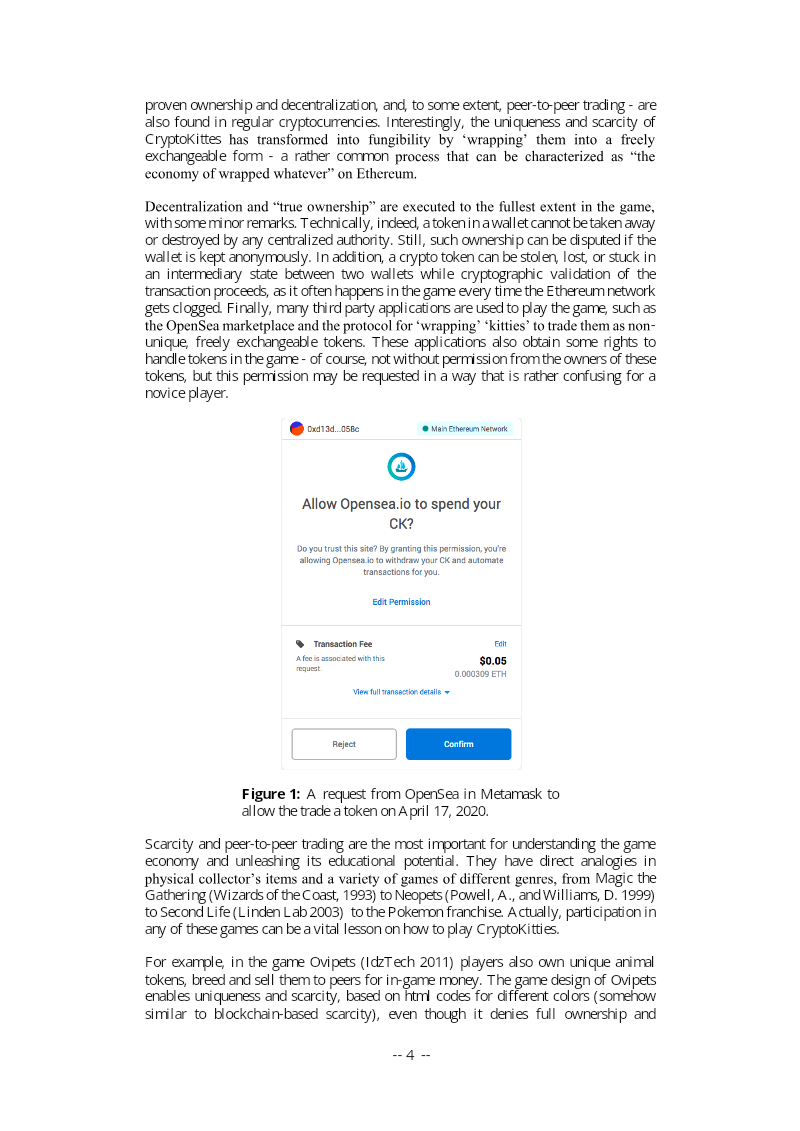
- CryptoKitties has the core blockchain features (decentralization, uniqueness, scarcity, peer-to-peer trading) in its design, but it does little to make crypto services accessible to newcomers, skipping essential onboarding steps like wallet setup and acquiring Ether.
- The author concludes that the game's educational value comes mainly from players' independent exploration of crypto markets outside the game rather than from the game itself, judging it a limited educational tool but a successful example of market gamification.
- Structural barriers complicate participation: Dapper's phone-number wallet requirement, gas-fee subsidies and a shift toward centralization, and uneven geographic access to Ether purchases.
Patreon and Porn Games: Crowdfunding Games, Reward Categories and Backstage Passes
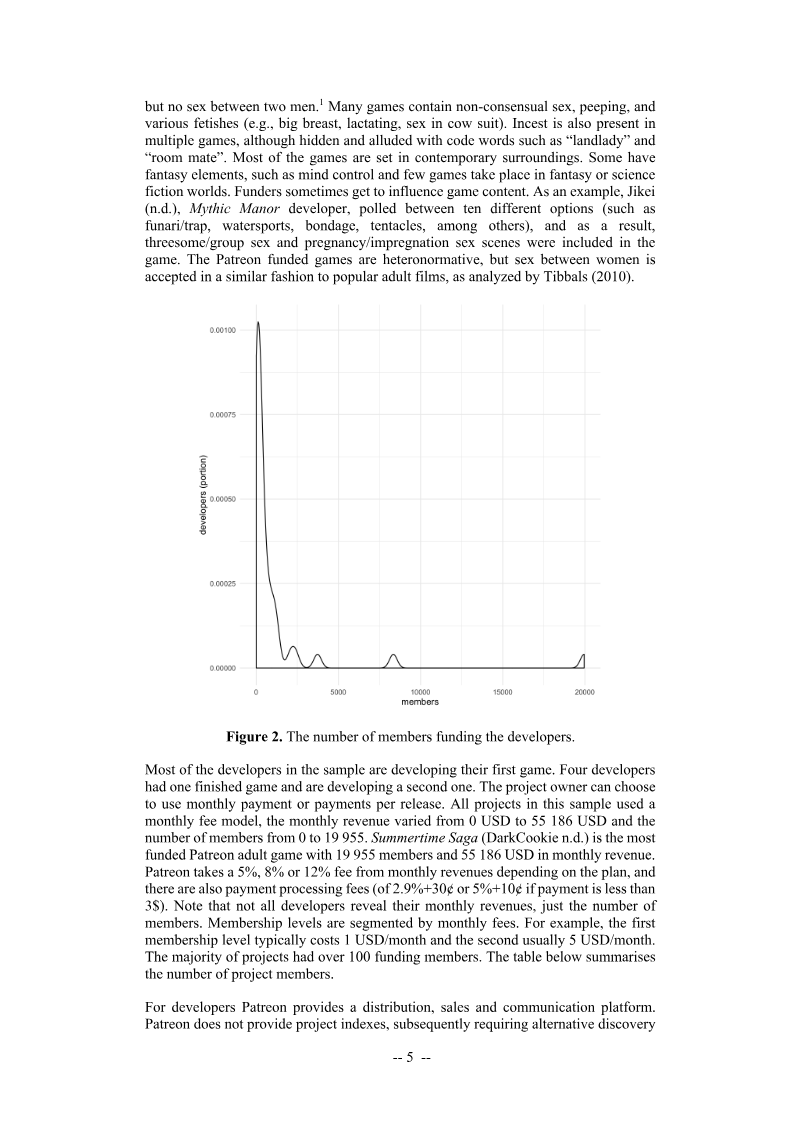
Patreon-funded pornographic game development offers a case study in how crowdfunding and subscription platforms are reshaping indie game financing.
- Patreon-funded adult game developers operate on a "backstage pass" logic, where community access, recognition, and influence over development matter as much as the finished product, rather than as simple commodity exchanges.
- The authors argue that risk-averse mainstream publishing structurally excludes controversial content, creating demand that subscription platforms like Patreon fill by "servicifying" game funding through monthly memberships.
- Content access rewards, such as early builds and alpha/beta entry, appear in 95.2% of reward tiers, community rewards in 81.0%, and no-reward tiers are the least common at 28.6% in a sample of 42 developers.

Between Pleasure and Power: Game Design Patterns in Clickbait Ludoporn
"Between Pleasure and Power" examines "clickbait ludoporn," a genre of free, browser-based, sexually explicit mini-games distributed through porn-style websites.
- The study examines 18 free, browser-based sexually explicit mini-games drawn from three porn-style websites, selected from top-ranked entries in July 2019 based on ratings and view counts, and argues the genre has been largely overlooked by HCI, games studies, and porn studies.
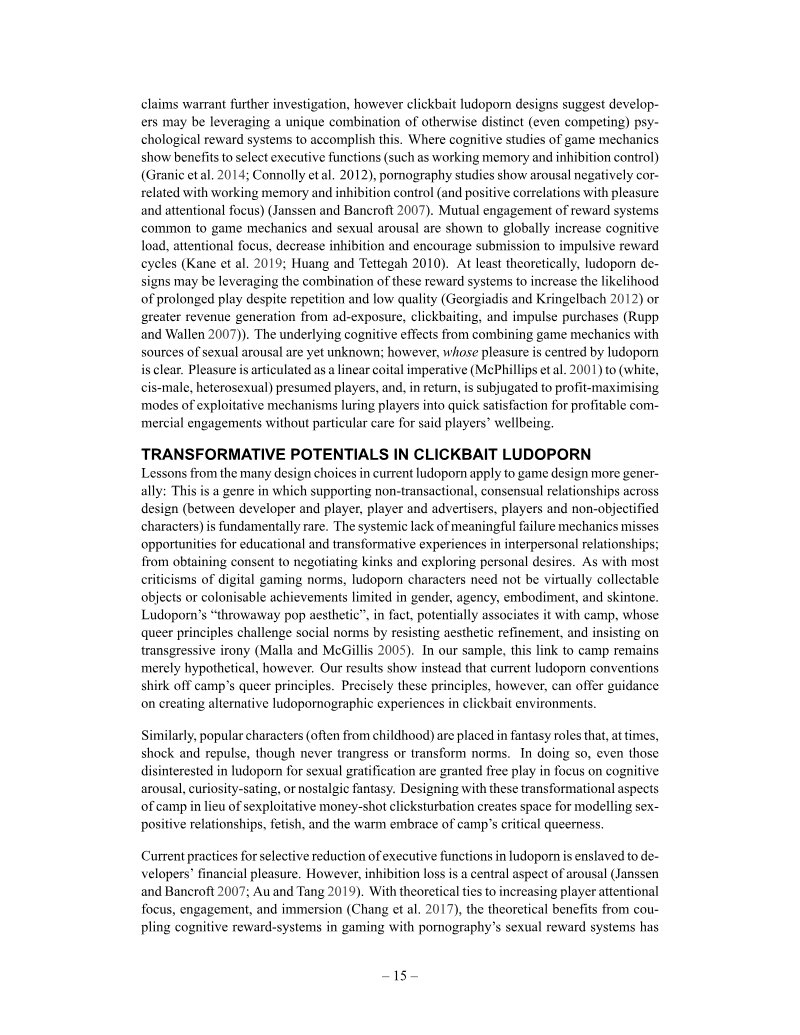
- The central finding is that these games encode a closed teleology of pleasure in which the player knows the endpoint in advance, framing arousal as a linear progression toward phallic climax.
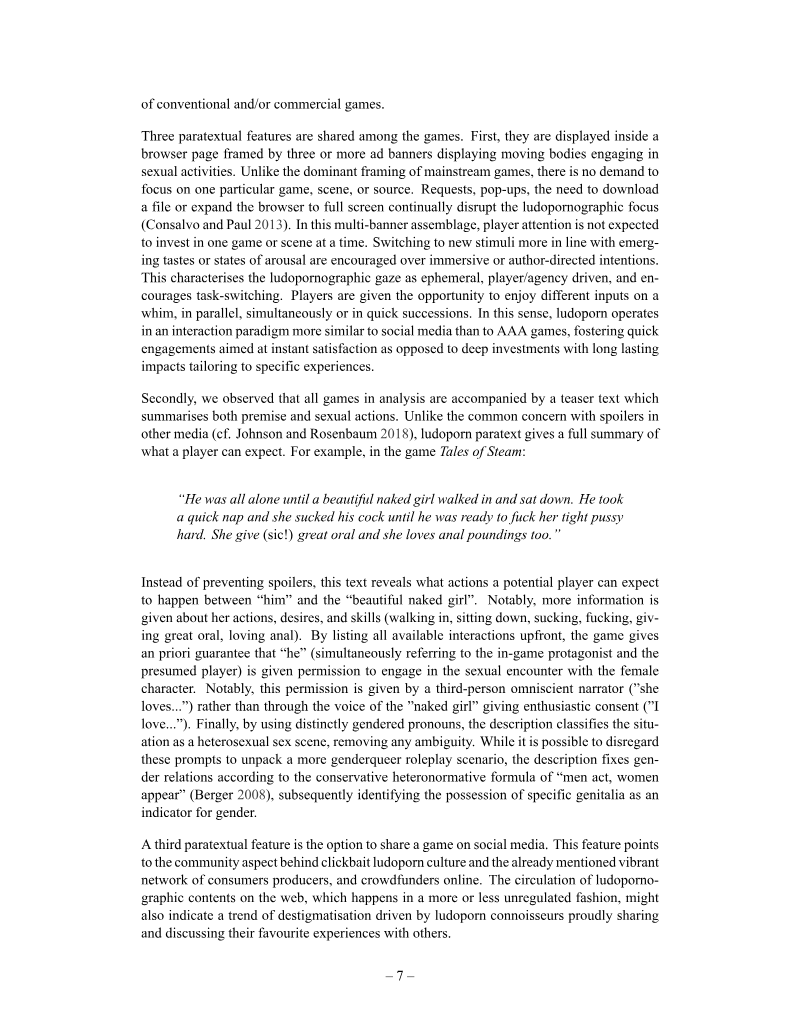
- Paratextual features (multi-banner layouts, teaser texts, social sharing tools) and mechanics such as text choices, dress-up options, orgasm progress bars, cum buttons, and mechanical sex combine to fix gendered roles in a "men act, women appear" formula.
An Empirical Taxonomy of Monetized Random Reward Mechanisms in Games
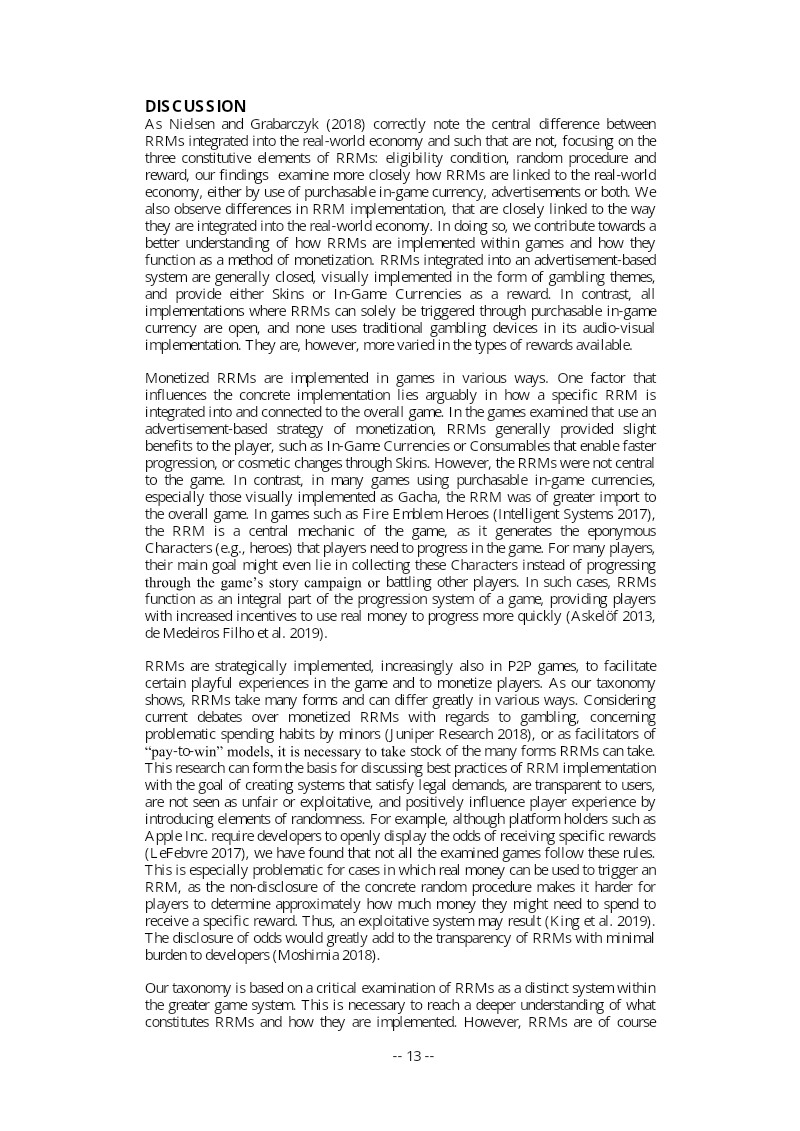
This study presents an empirical taxonomy of monetized random reward mechanisms (RRMs), such as loot boxes and gacha, aimed at replacing unclear terminology and a debate overly centered on gambling with a structured analytical framework.
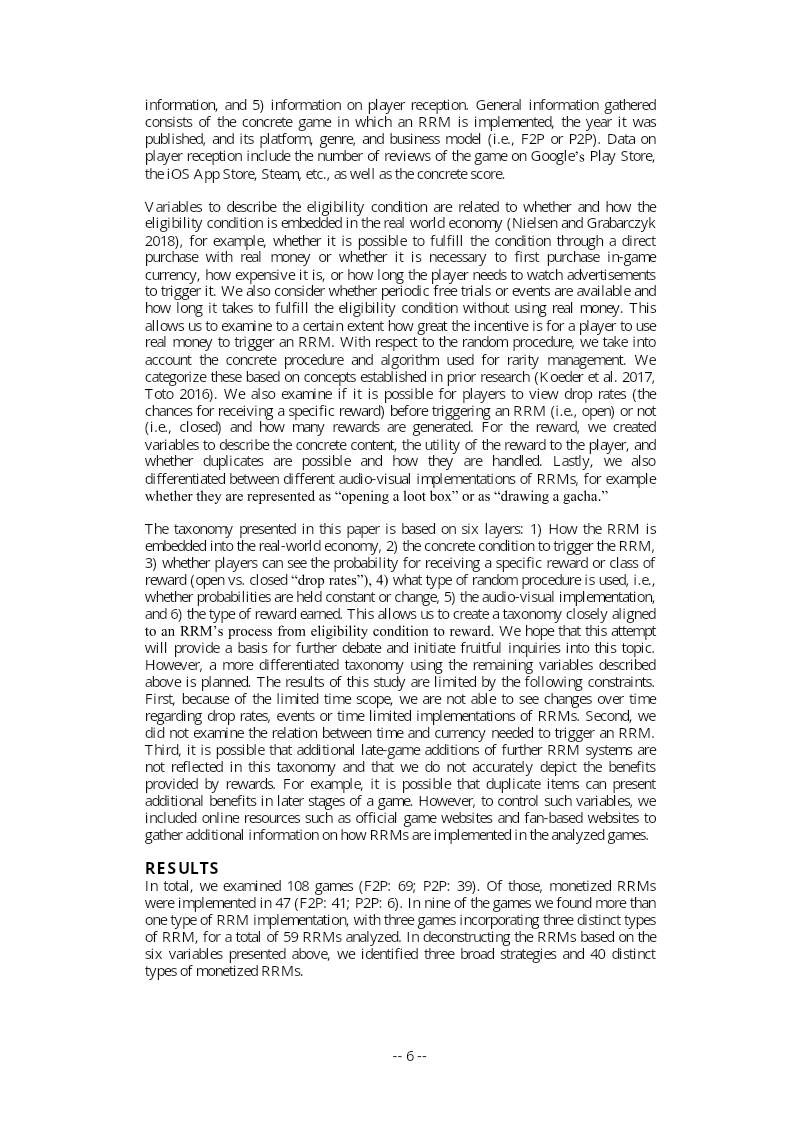
- Across 108 free-to-play and paid-to-play games from the US, Germany, and Japan, the study identified 59 monetized random reward mechanisms (RRMs) in 47 titles, grouped into three implementation strategies and 40 implementation types.
- About 63% of RRMs are triggered by real money, usually via purchased in-game currency, while 31% are triggered by watching advertisements and 7% by both methods.
- Ad-triggered RRMs are consistently closed (drop rates disclosed) and typically offer skins, in-game currency, or consumables, often with gambling-style presentation, whereas currency-triggered RRMs are open, more varied in rewards, and often serve as central progression systems, such as the gacha structure in Fire Emblem Heroes.
Game Creation, Monetisation Models, and Ethical Concerns
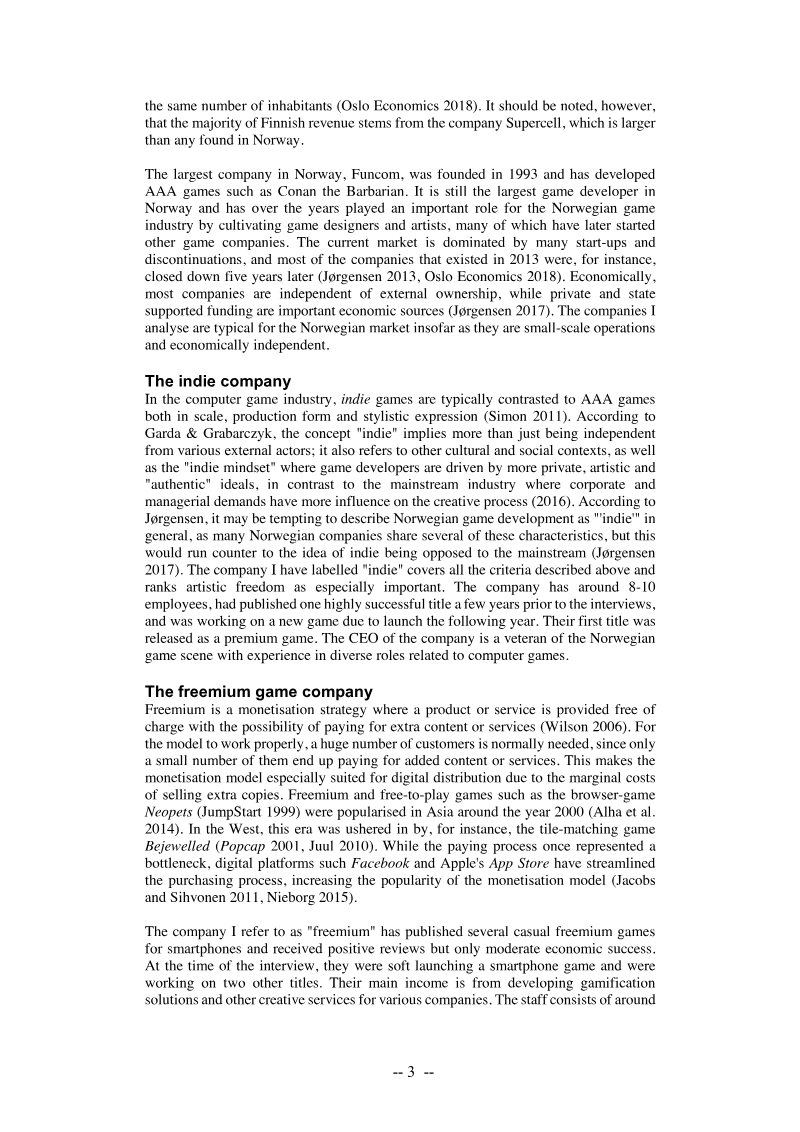
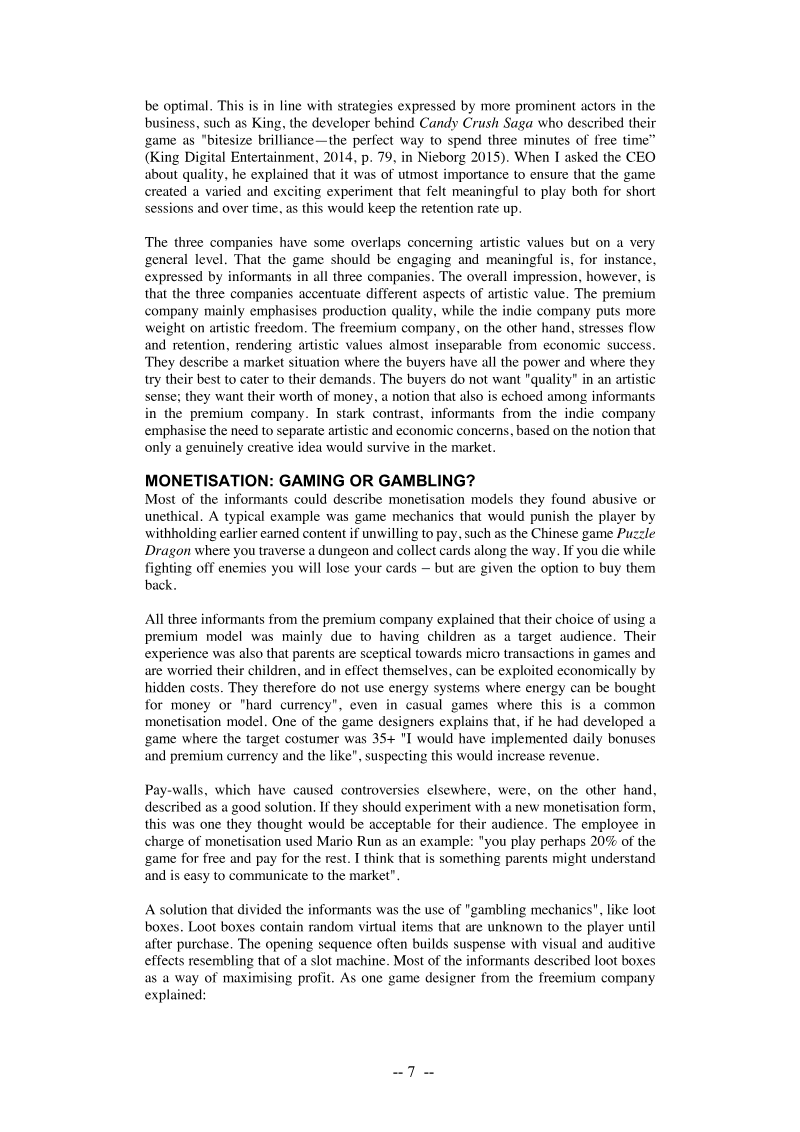
Norwegian game studios have faced mounting difficulty monetising their products since around 2012, when premium pricing declined on mobile and free-to-play became the expected norm.
- Norwegian game studios have struggled to monetise since about 2012, when premium pricing declined on mobile and free-to-play became the expected norm, with informants blaming piracy, cheap online distribution, and oversupply of titles.
- The market is dominated by a few large firms, so smaller studios find success elusive regardless of quality, according to interviewees across three small to mid-sized companies.
- Monetisation is steeply skewed: only about 3 percent of players paid in a leading freemium title, and fewer than 0.1 percent did in the Philippines, while friend recommendations converted far better than store visibility.
A Data-Driven Model for Mobile Game New Version Update Evaluation
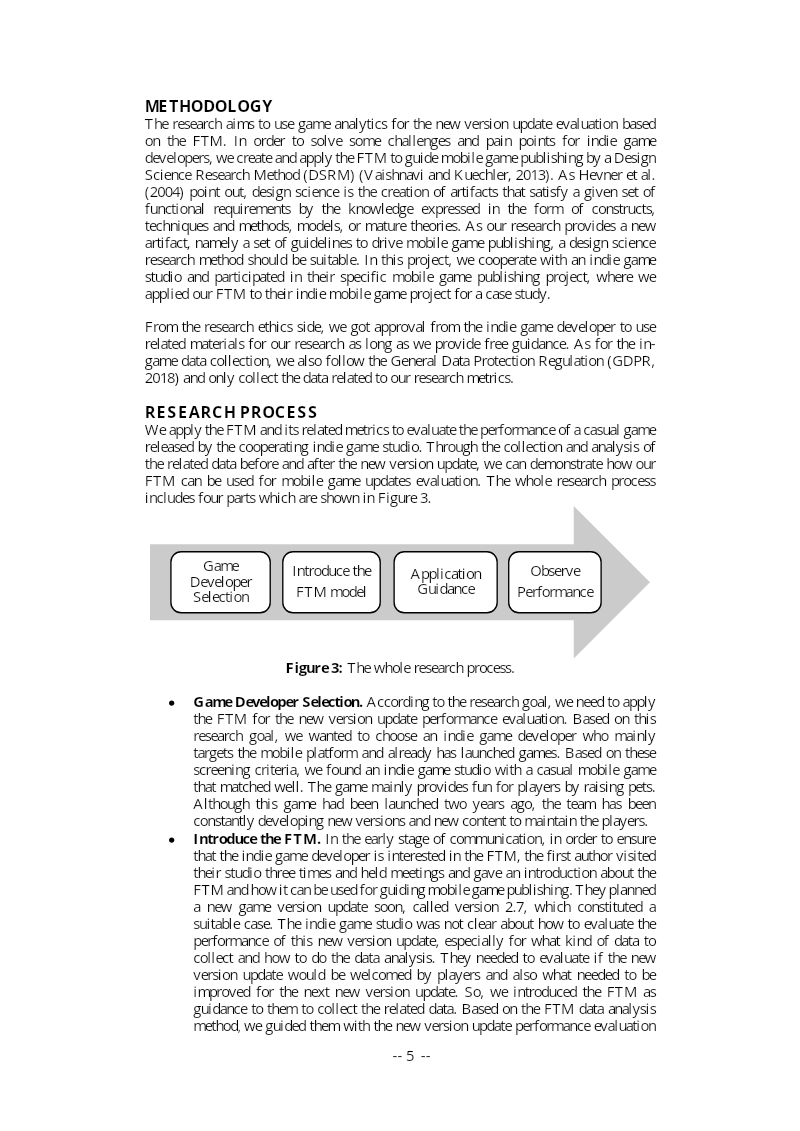
The paper proposes the Fish Tank Model (FTM), a data-driven framework for evaluating mobile game version updates, motivated by a gap in publishing-focused game analytics and the difficulty indie developers face in judging whether a new release is well received.
- The paper proposes the Fish Tank Model (FTM), a framework combining New Version Rating (NVR) and New Version Change Rate (NVCR) to evaluate whether players favor a mobile game version update by blending player reviews with changes in installs, paying users, revenue, and daily active users (DAU).
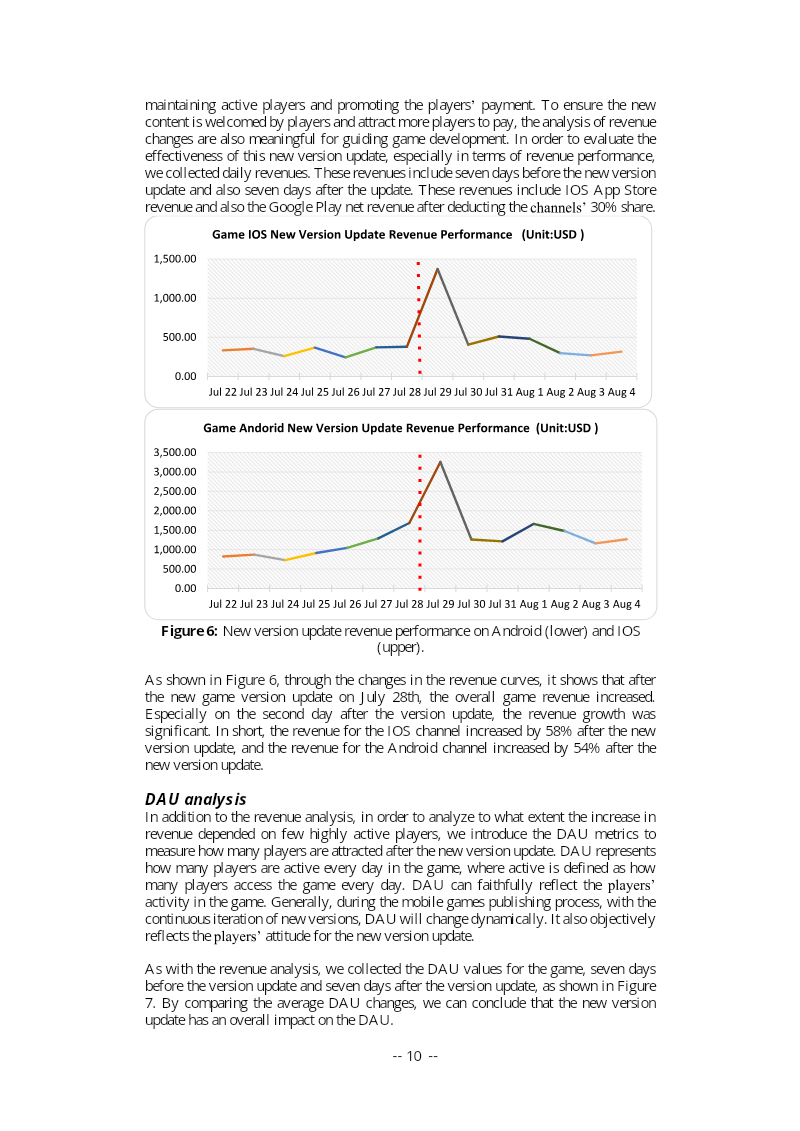
- In a case study of casual mobile game studio's version 2.7 update, net revenue rose roughly 58% on iOS and 54% on Android, while paying users grew 25% on iOS and 63% on Android.
- Reception was mixed across storefronts: the iOS App Store rating rose from 4.4 to 4.7 while Google Play held steady at 4.7, so the authors relied on in-game data to supplement ratings.
Monetization and Gamification in Twitch Game Live Streaming
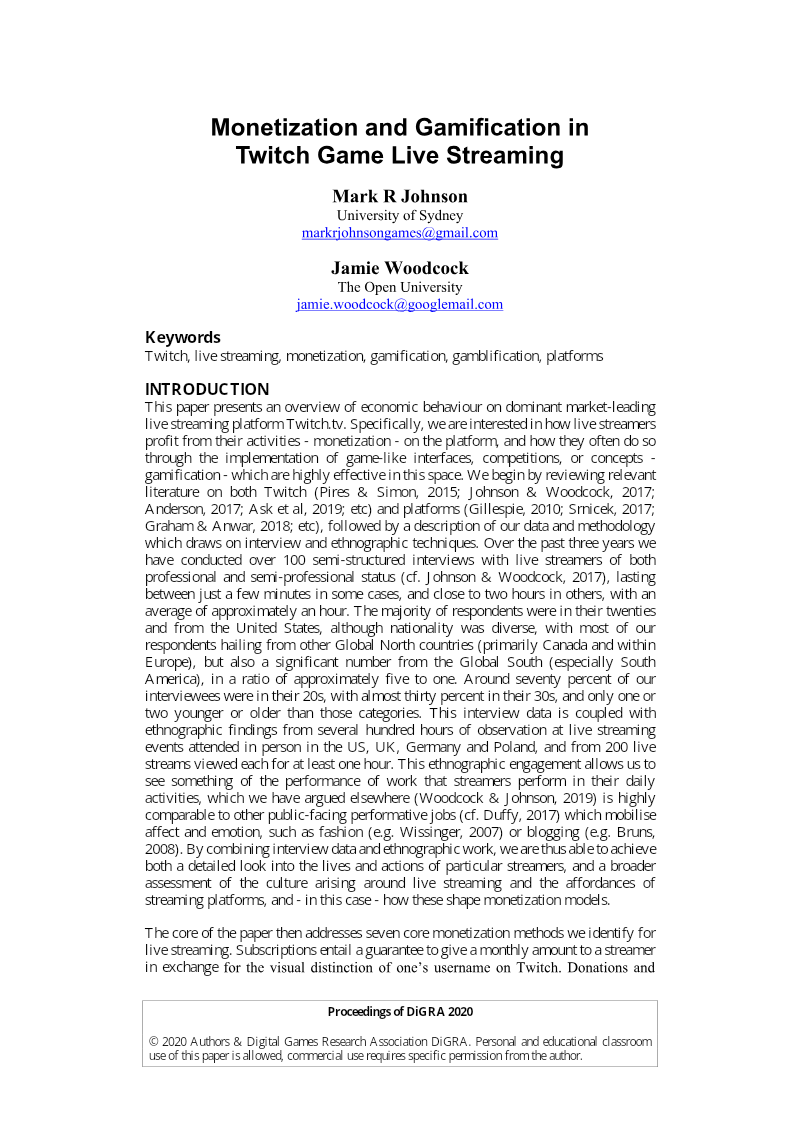
This paper examines how live streamers on Twitch.tv generate income, and how they increasingly draw on game-like interfaces, competitions, and concepts, a practice it terms gamification, to do so.
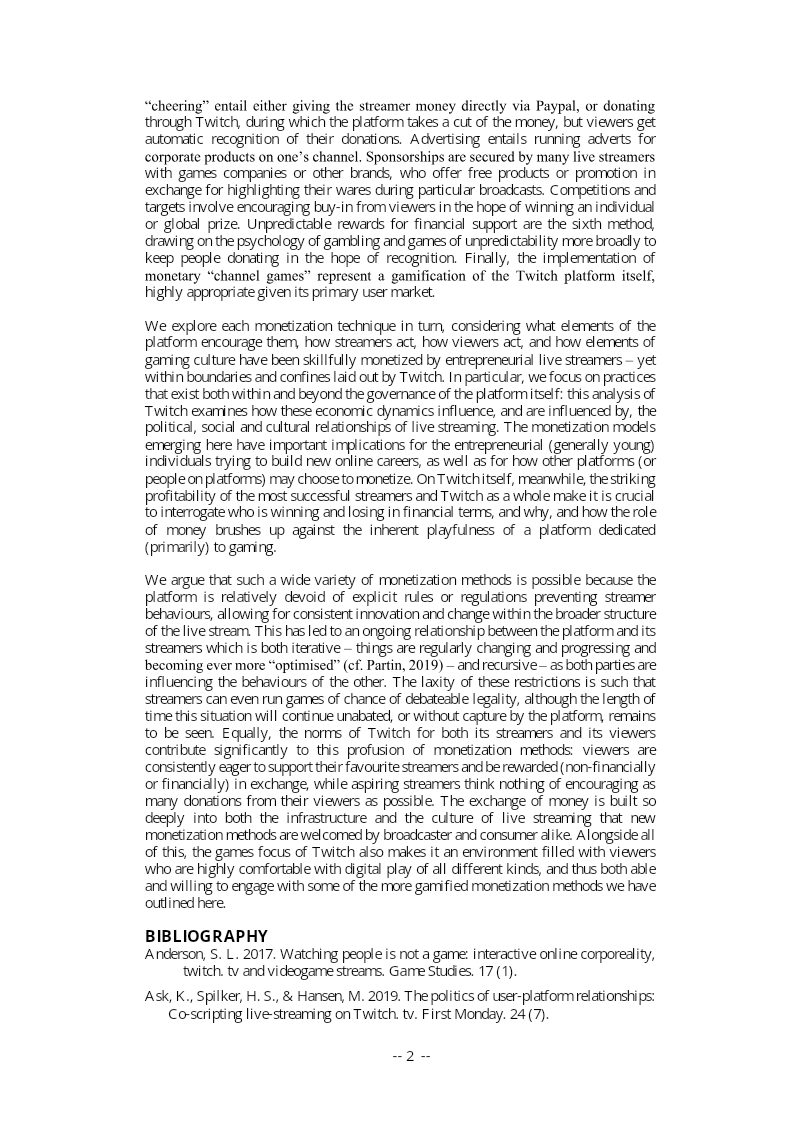
- Twitch's relative lack of explicit rules on streamer behaviour has fostered a wide range of monetization methods, and the platform and its streamers shape each other's conduct over time in an iterative, recursive relationship.
- The paper identifies seven core monetization methods: subscriptions, donations and "cheering," advertising, sponsorships, competitions and targets, unpredictable rewards drawing on gambling psychology, and monetary "channel games" that gamify the platform itself.
- Some streamers run games of chance of debatable legality, and how far Twitch will tolerate such practices remains unresolved.
MeWare for Sale: Developer's Approaches to Serious Mobile Music Games
This study examines the design and business orientation of serious mobile music games on the iOS App Store, using Sink's MeWare, ThemWare, and UsWare typology to assess how developers conceptualized their users.
- The study analysed 175 serious mobile music games rated 4+ on the iOS App Store, selected from 313 candidates and drawn from 74 unique developers.
- Market supply is concentrated: publisher AtPlayMusic alone accounts for 23 titles, indicating a few sources dominate the catalogue.
- Over half of the games (about 54 percent) are inactive, with no updates in six months, and music games generally receive fewer updates than comparable non-music games.
How Is the Gacha System Reported on in Japan?
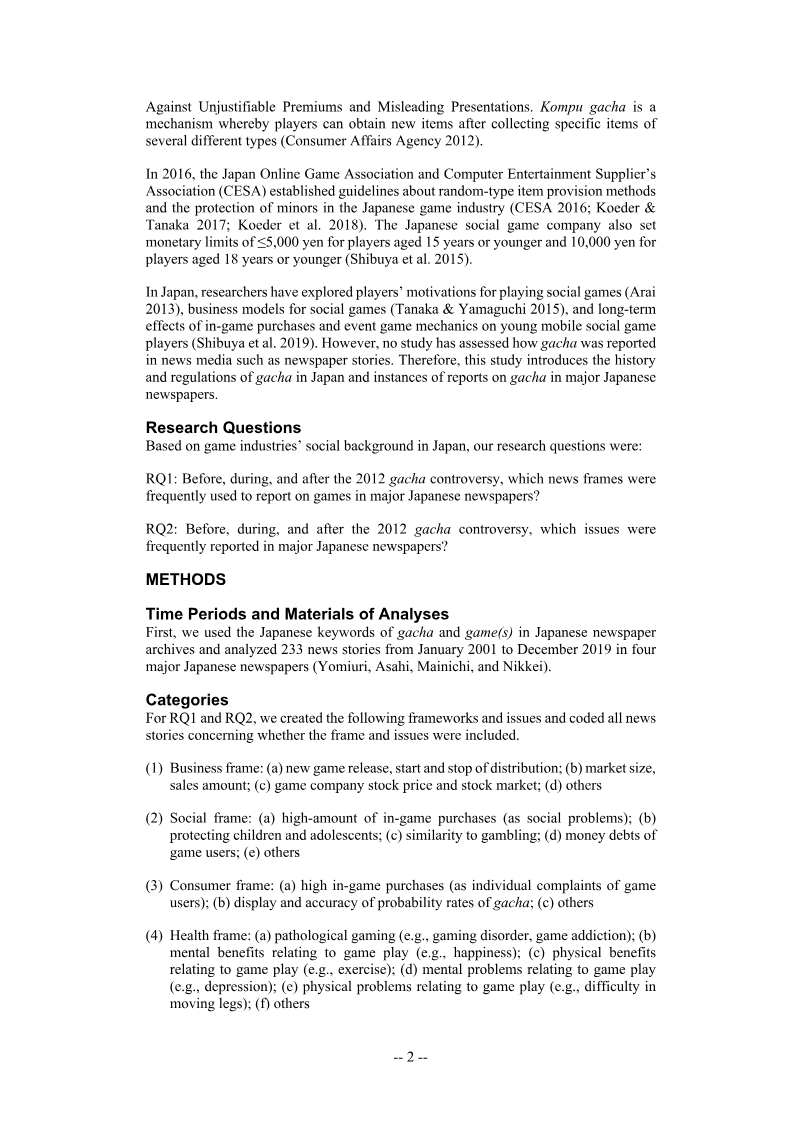
This study examines how Japanese newspapers reported on gacha, the random-type item provider system used in mobile and online games, by analyzing 233 news stories published between January 2001 and December 2019 across four major outlets: Yomiuri, Asahi, Mainichi, and Nikkei.
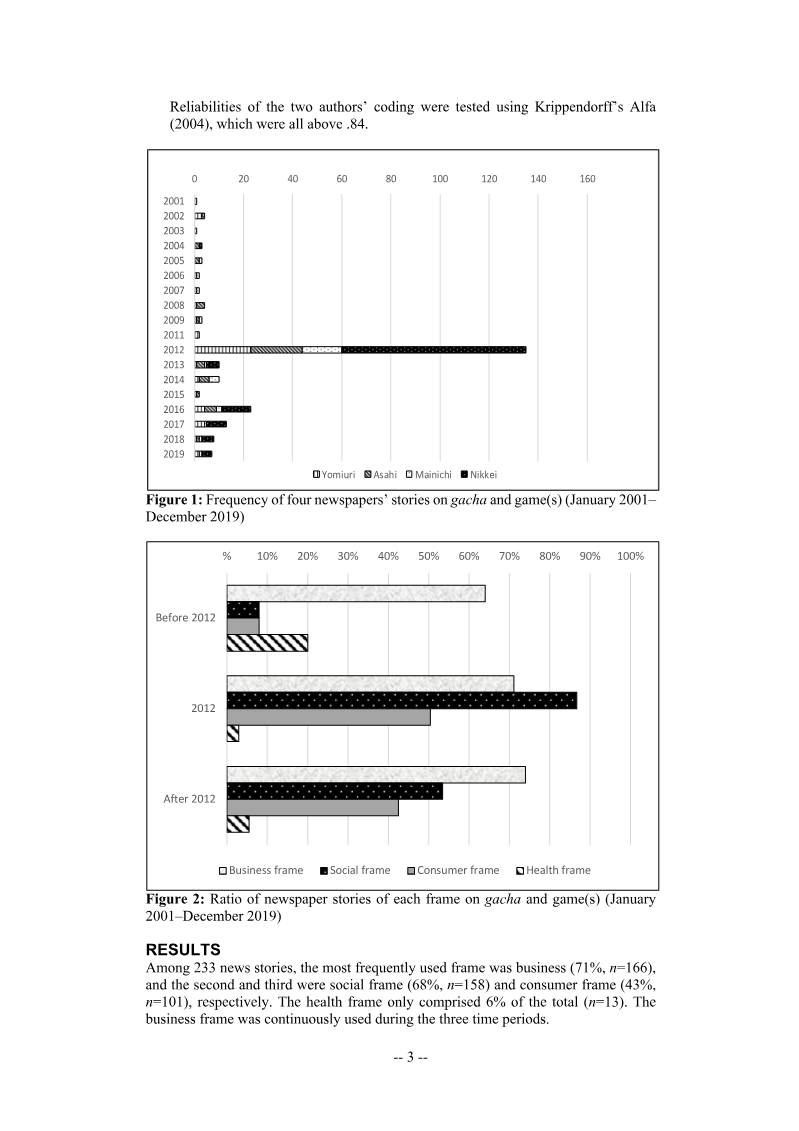
- Japanese newspapers covered gacha through business (71% of stories), social (68%), consumer (43%), and health (6%) frames across 233 stories from 2001 to 2019 in Yomiuri, Asahi, Mainichi, and Nikkei.
- The 2012 gacha controversy drove a surge in coverage: the social frame reached 87% of stories, with 76% linking gacha to gambling and 50% framing high in-game spending as a social problem.
- Before 2012, coverage of gacha in digital games was sparse, with only 25 stories, and reporting centred on physical capsule toys.

Gambling for Fashion: How Videogame Designers Capitalise on 'Status Ambivalence' within Videogame Play
This paper argues that major videogame producers profit from loot boxes and other microtransactions by exploiting what the authors call "status ambivalence," the tension between individual self-expression and social belonging that cosmetic in-game items help players negotiate.
- The paper argues that loot boxes and cosmetic microtransactions profit from 'status ambivalence,' the tension between individual self-expression and social belonging, with chance-based skin purchases working as displays of skill, taste, wealth, and fluency in a game's monetisation system.
- The authors frame gambling-style monetisation as a contemporary case of commercial power over player labour and identity, drawing on fashion theory, consumption studies, and Marxist critiques of the games industry.
- The empirical basis is nearly thirty in-depth interviews with professional developers on triple-A and independent titles across the US, UK, Canada, Germany, Poland, Taiwan, and Singapore.


Europe and Esports: High Engagement and Even Higher Potential
The study demonstrates that European esports audiences are expanding rapidly, with a projected 92 million viewers by the end of 2020 and a year-over-year growth of 7.4%.
- The European esports market is projected to reach 92 million viewers by the end of 2020, with a 7.4% year-over-year growth rate.
- Global esports revenue is forecasted to climb from €974 million in 2020 to €1.6 billion by 2023, with Europe following a similar growth trajectory.
- Esports engagement is not limited to the youngest demographic, as the 21–25 age group currently leads in enthusiast participation compared to the 18–20 cohort.