ReportPayPal
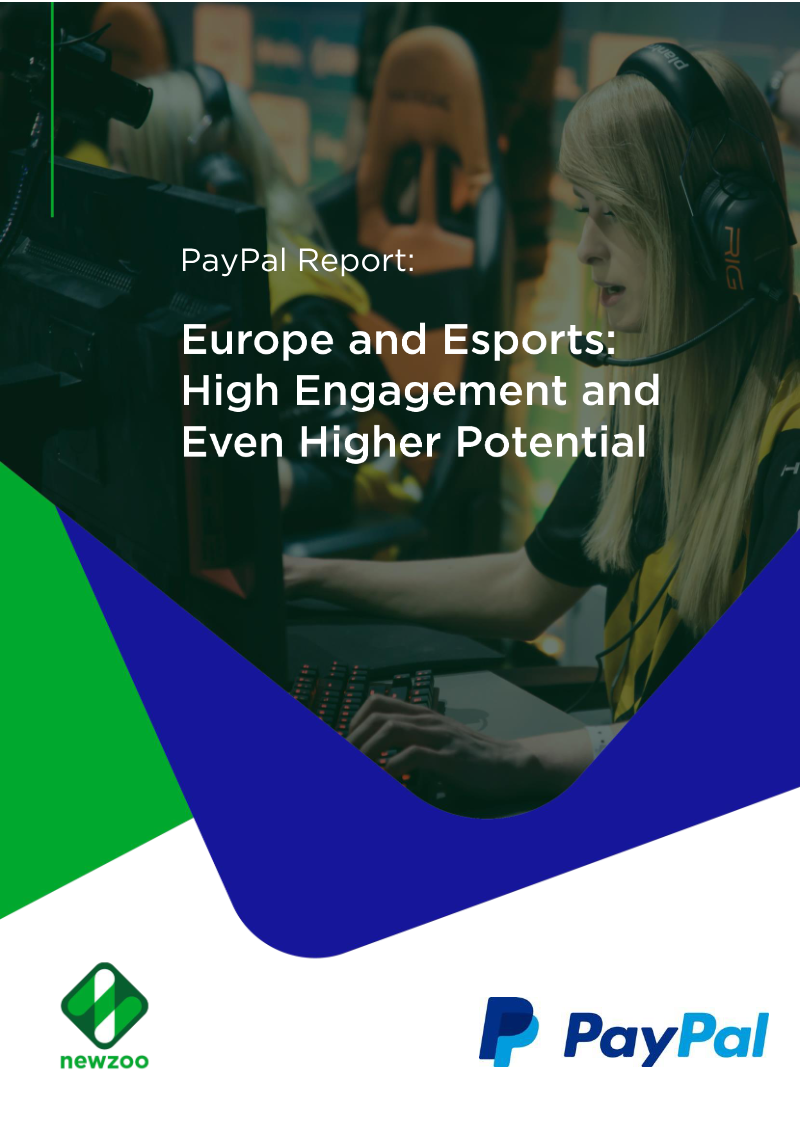
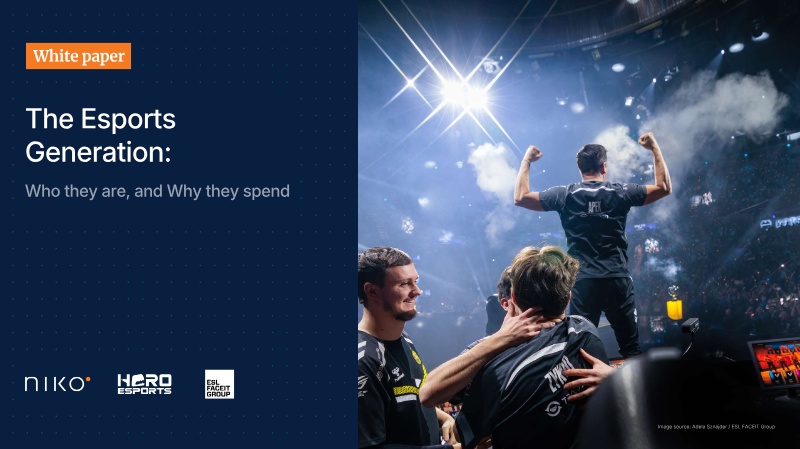
Europe and Esports: High Engagement and Even Higher Potential
202014 pages~9 min full read
Key insights
6 slides
Key number
European esports viewership is projected to reach 92 million by 2020.
The audience is expanding rapidly across Europe. Enthusiasts total 33 million, while occasional viewers comprise the remaining 59 million.

Who watches
The 21–25 age group leads in enthusiast participation.
Engagement is not confined to the youngest cohort. Only 33% of 18–20 year olds are regular enthusiasts, while the 21–25 group leads.
Page 5 of the report18 - 2033
21 - 2536
26 - 3035
31 - 3535
36 - 4034
41 - 4531
Geographic variation
Finland shows a 52% enthusiast rate among 18–20 year olds.
Geographic variation in engagement is pronounced. The UK reports a 21% enthusiast rate for the same age group.
Women's role
Women comprise 32% of the esports audience.
Women are primarily occasional viewers. Female participation in competitive play is rising, with 60% of respondents acknowledging growth.
Audience mix. Women comprise 32% of the esports audience and demonstrate high purchasing power.

Spending habits
Women spend on esports products at a 46% rate.
This is comparable to the 38% rate for men. Women favor physical merchandise, while men lean toward digital items.
Overlap
64% of esports viewers also support a traditional sports team.
There is strong cross-sport interest among the audience.

1 / 6
Ask AI about this report