Monetization reports and market data
Documents

1Q FY2020 Presentation Material: October to December 2019
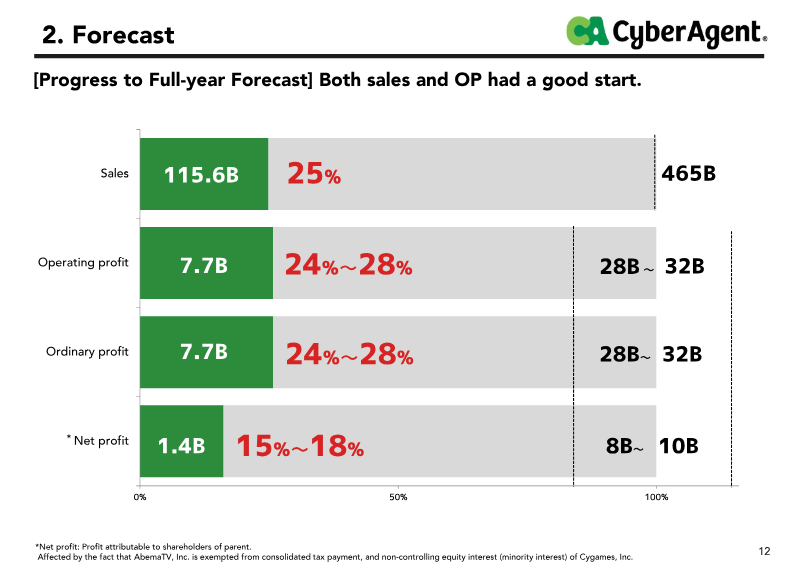
CyberAgent achieved a robust financial start to the 2020 fiscal year, recording consolidated sales of 115.6 billion yen, a 4.4 percent year-over-year increase, alongside a significant 44.6 percent surge in operating profit to 7.7 billion yen.
- The company generated 115.6 billion yen in net sales for 1Q FY2020, meeting approximately 25% of its 465 billion yen full-year revenue target.
- Operating and ordinary income both reached 7.7 billion yen, tracking toward the annual target range of 28 billion to 32 billion yen.
- Profit attributable to owners of the parent was 1.4 billion yen, representing 15% to 18% of the projected 8 billion to 10 billion yen annual goal.

I attempt to design a game as good or better than Adventure Communist. PART 1
Success in the modern game industry requires a shift away from the pursuit of corporate wealth toward a deeply personal and authentic motivation.
- Reverse-engineering successful titles like Adventure Communist is a critical strategy for minimizing financial waste during the iterative discovery phase of game development.
- Developers should prioritize the identification of core engagement loops over abstract financial targets to ensure commercial viability within the free-to-play market.
- Professional longevity and high-level performance in the game industry are best sustained by a sincere, internal purpose rather than external financial incentives, which are often limited by lack of equity or profit-sharing.

UA Coffee: All About LTV (Life Time Value) and pROAS with Algolift
Predictive Lifetime Value and predictive Return on Ad Spend have emerged as critical metrics for mobile marketers navigating an increasingly competitive landscape defined by rising user acquisition costs.
- Mobile marketers are shifting from short-term metrics like Day 7 ROAS to long-term, user-level predictive modeling to improve bidding precision in auction-based environments.
- Machine learning-based projections for LTV and pROAS outperform traditional retention-curve models by ingesting historical data to account for temporal trends and anomalies.
- Predictive models should be utilized as directional tools for acquisition strategy rather than absolute predictors due to inherent market volatility and fluctuating costs.
Growth in Hypercasual and Ad Monetisation
The hypercasual gaming sector has undergone a significant evolution, transitioning from premium pricing models (2007–2010) and freemium in-app purchase strategies (2012–2017) to an ad-driven monetization model.
- Manual waterfall setups for ad mediation consistently outperform automated or header-bidding configurations by fostering greater competition among ad networks.
- Maximizing ARPDAU requires setting specific price floors for ad impressions, as header bidding often results in lower CPMs when left to automated algorithms.
- Hypercasual growth is driven by balancing CPI and LTV, where CPI is optimized by improving CTR through creative testing and CVR through storefront asset refinement.
Panel: When does Your Development End (Product vs Service)
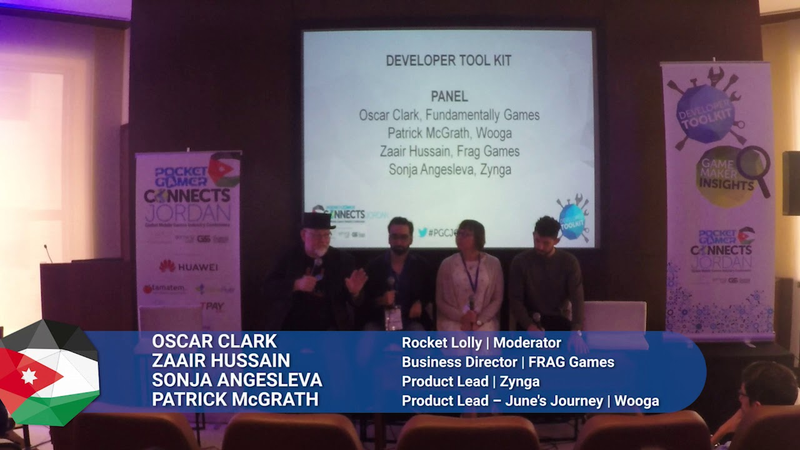
The panel discussion at Pocket Gamer Connects Jordan 2019 explores the evolving definition of "done" in game development, specifically contrasting traditional product-based models with the modern Games as a Service (GaaS) paradigm.
- In the Games as a Service (GaaS) model, the traditional concept of a 'finished' game is obsolete, requiring developers to treat development as a series of testable hypotheses rather than a singular product release.
- Studios must establish objective 'done' criteria—such as specific retention rates or revenue targets—before development begins to mitigate emotional bias and avoid the sunk cost fallacy.
- Live-ops considerations, including repeatable content systems and community management, must be integrated into the earliest design stages to ensure infrastructure can scale effectively.
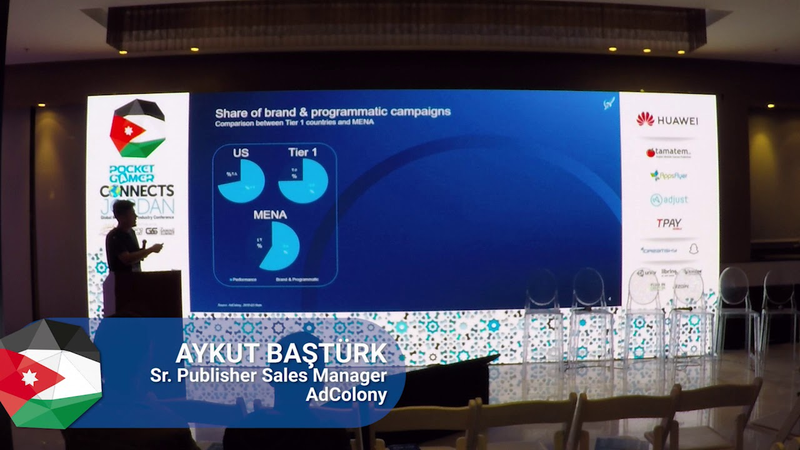
Uplifting Ad Monetisation via Brand and Programmatic Campaigns in MENA
The Middle East and North Africa (MENA) region represents a significant growth opportunity for mobile game developers looking to optimize ad monetization.
- Brand-focused programmatic advertising in the MENA region yields eCPM rates of $10 to $15, significantly outperforming the $5 to $10 range typical of performance-based campaigns.
- Brand campaigns prioritize user engagement and video completion rates over immediate install metrics, making them a more lucrative revenue source despite lower total impression volumes.
- Developers should implement advanced monetization tools such as header bidding and dynamic floor pricing to facilitate real-time, automated competition for ad inventory.
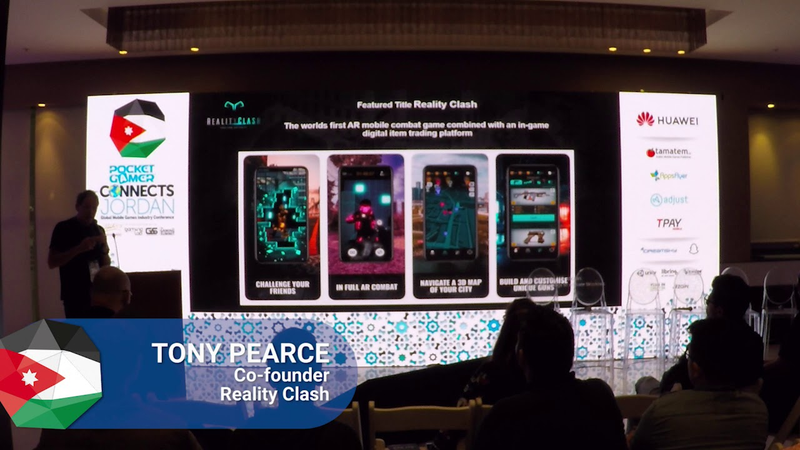
Tokenised In-game Collectibles (NFT’s) are a Fundamentally New Type of Digital Goods
Non-fungible tokens (NFTs) represent a transformative shift in the digital goods economy, moving the gaming industry toward a model of true asset ownership.
- NFTs enable true digital ownership by allowing players to legally trade, sell, or transfer in-game assets outside of the original game environment.
- The integration of NFTs is projected to expand the gaming industry's total addressable market by 15% to 20%.
- Reality Gaming Group’s Reality Clash demonstrated strong market demand by clearing 75% of its 7,000 limited-edition weapon inventory within 24 hours of release.
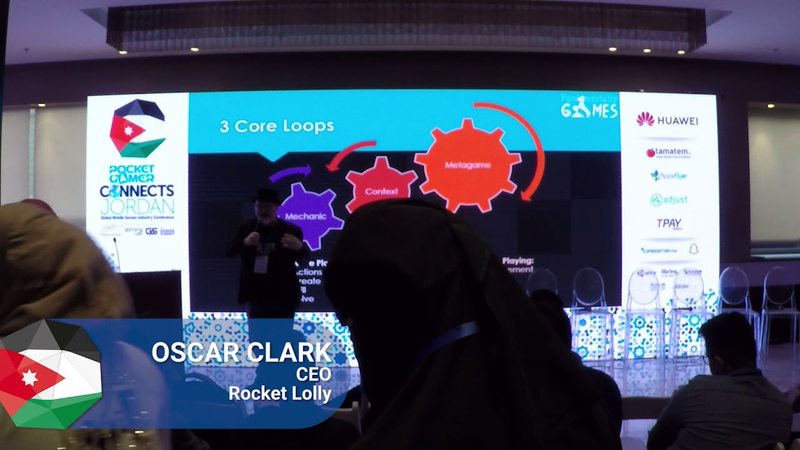
Monetisation Design - A Story of Love and Retention
Monetization design functions most effectively when it prioritizes long-term player relationships over short-term transactional gains.
- Monetization design should prioritize long-term player retention by aligning mechanics with the psychological drivers of competence, autonomy, and social capital.
- Developers should categorize offerings into distinct tiers—such as subsistence items, shortcuts, and social or strategic goods—to tailor strategies to specific stages of the player lifecycle.
- Monetization must be treated as a testable hypothesis driven by data and community building, rather than a series of transactional hurdles.
Monetisation Beyond Ads - Tips and Tricks on How to use Unity Monetisation Products
Mobile user acquisition serves as a critical engine for growth, functioning best when treated as a strategic complement to organic discovery rather than a standalone tactic.
- Utilizing machine learning for dynamic bidding and audience targeting has demonstrated a 40 percent increase in both gross revenue and user quality.
- Mobile user acquisition should be treated as a strategic complement to organic discovery, shifting focus from cost-per-install metrics to lifetime value and return on ad spend.
- Monetization strategies must prioritize the integrity of the core gameplay loop by integrating advertising as a seamless, non-intrusive element rather than relying on aggressive placements.
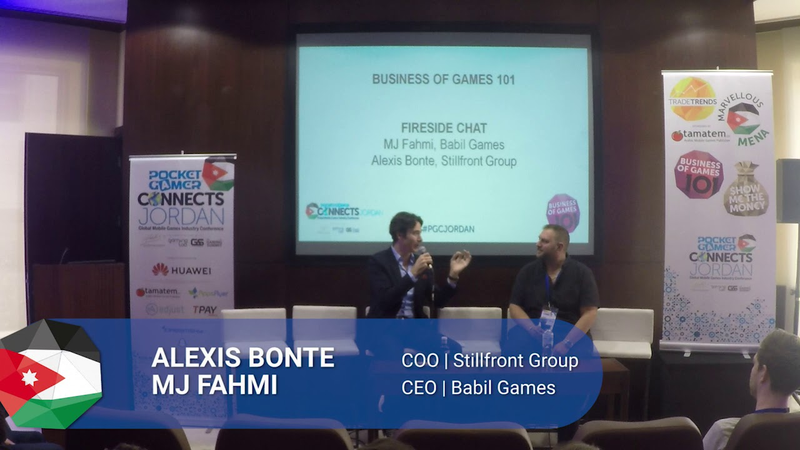
How Babil Scaled Nida Harb 3 to the Top Slots of the Grossing Charts in MENA
Babil Games, a Jordan-based publisher specializing in the Middle East and North Africa (MENA) region, achieved significant growth and international success for its title Nida Harb 3 by leveraging the resources and collaborative structure of the Stillfront Group.
- Babil Games scaled its operations from a 12–15 person team to 40 employees following its 2016 acquisition by the Stillfront Group.
- The partnership with Good Game Studios provided Babil Games with the advanced marketing intelligence and analytical tools necessary to scale user acquisition for Nida Harb 3.
- Access to Stillfront’s financial backing and data-informed advertising infrastructure enabled Nida Harb 3 to reach top-grossing status and expand into North American and European markets.
Paidic Money and Ludic Gambling Currencies in Novel Slot Machine Games
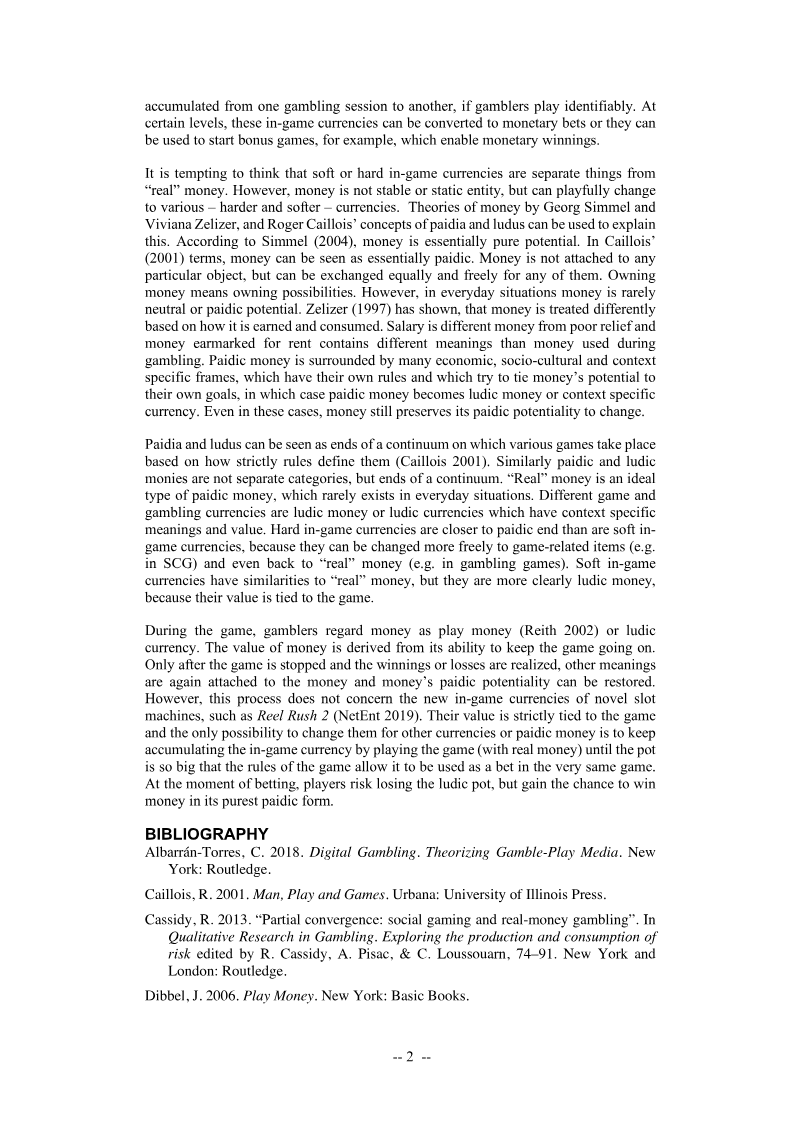
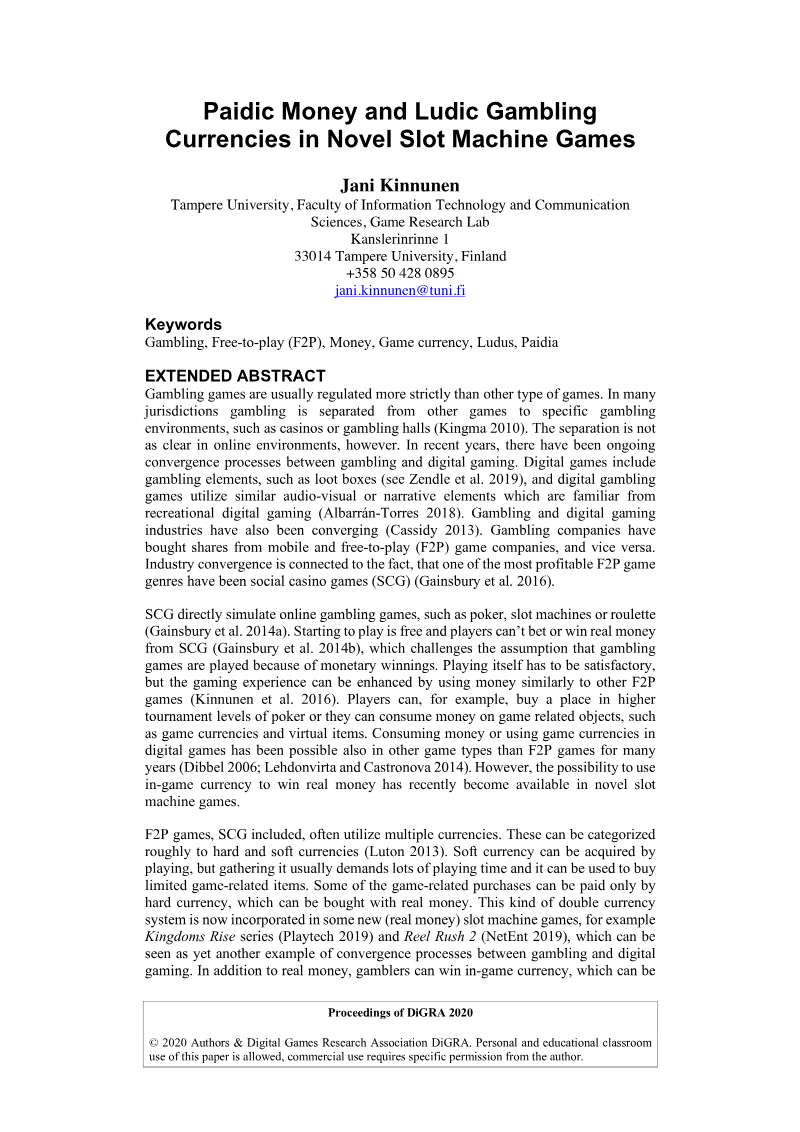
This theoretical paper by Jani Kinnunen examines how money functions within novel slot machine games that incorporate in-game currencies capable of being converted into real-money bets.
- The paper argues that money in hybrid gambling-gaming products sits on a continuum from paidic potential to ludic, context-specific currency, drawing on Simmel, Zelizer, and Caillois' paidia/ludus distinction.
- Convergence of gambling and digital gaming, especially via social casino games and free-to-play mechanics, has produced a double currency system in which soft and hard in-game currencies blur the boundary between real money and game-specific value.
- Hard in-game currencies are positioned closer to the paidic end because they can be exchanged for game items or back into real money, while soft currencies are more clearly tied to a game's internal value.
Taxonomies for Transactions and User Engagement in Mobile Games
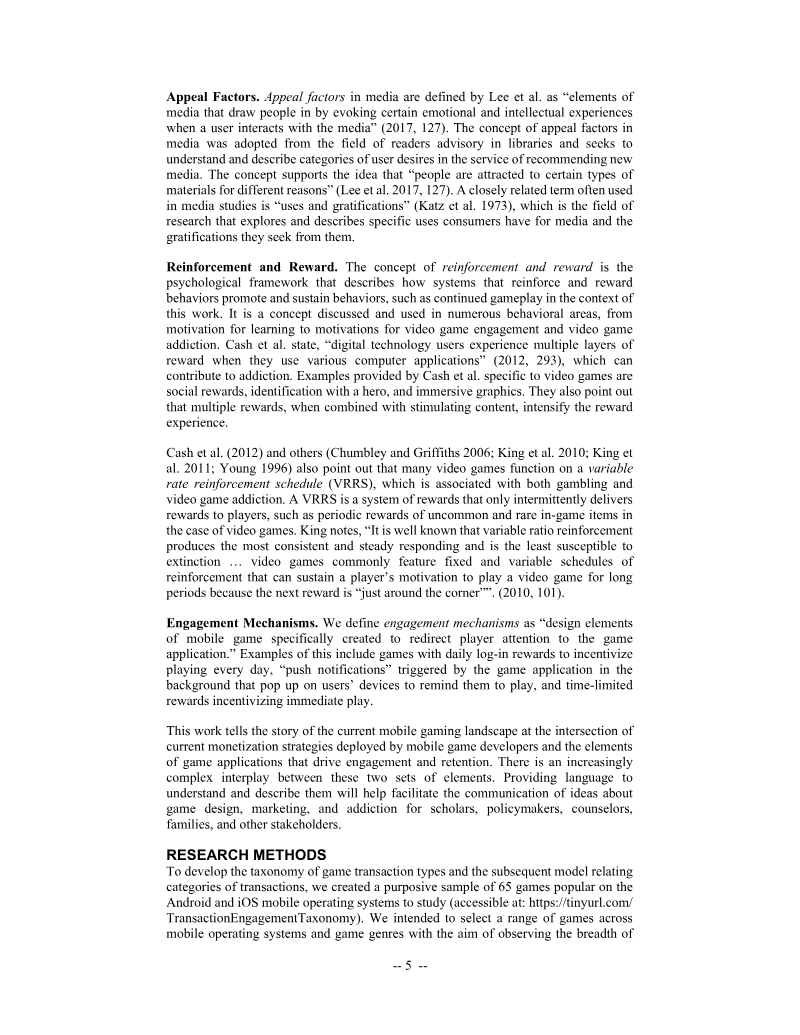
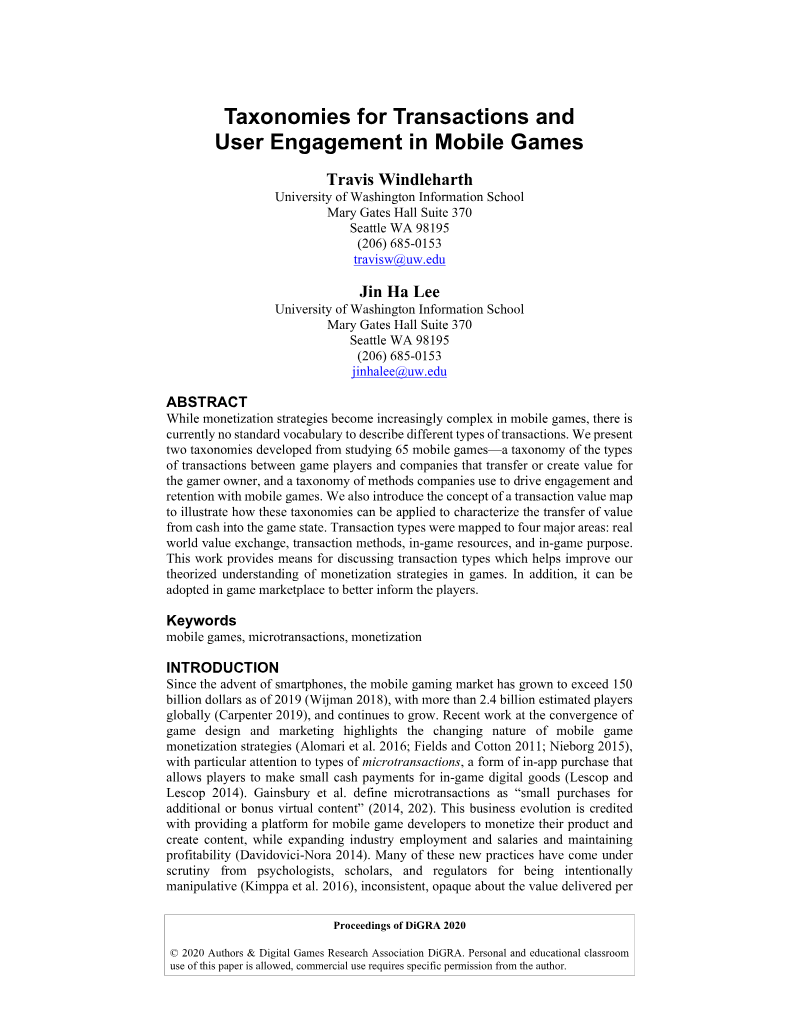
Mobile game monetization has grown into a market exceeding $150 billion as of 2019, yet the field lacks standardized vocabulary for describing how players and companies exchange value.
- The mobile game market exceeded $150 billion as of 2019, yet the field lacked standardized vocabulary for describing how players and companies exchange value.
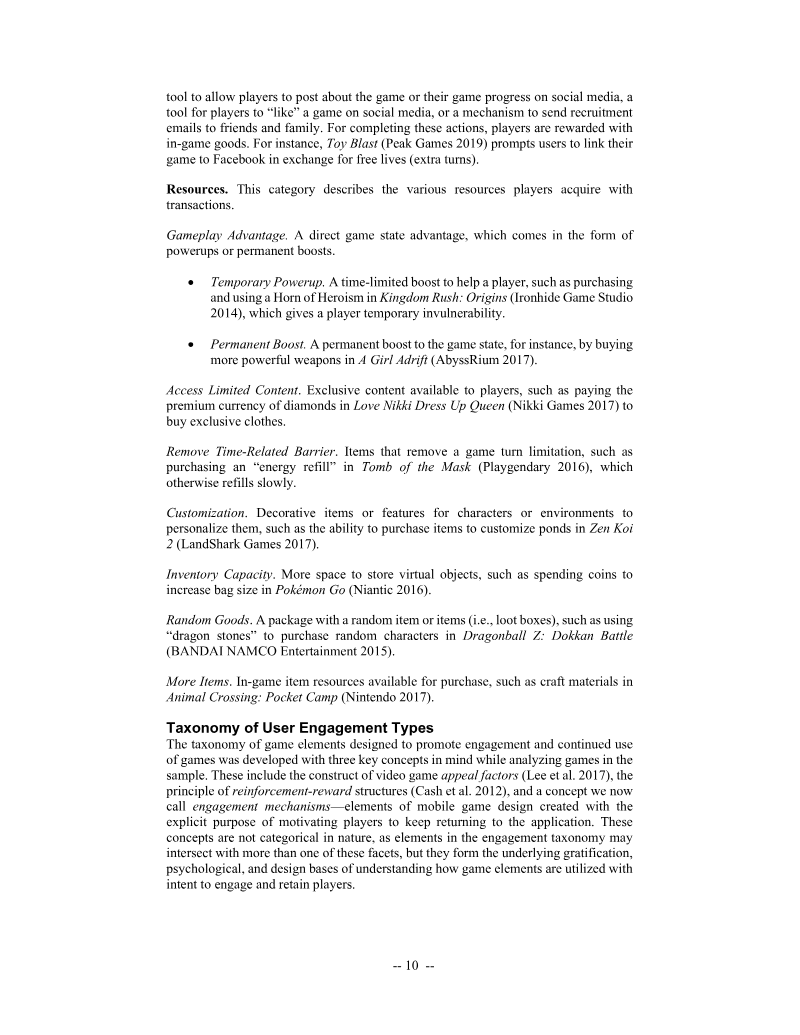
- The authors developed two inductive taxonomies: one classifying transaction types (direct monetization such as purchases, subscriptions, and gambling-like mechanisms versus indirect monetization such as advertising and player acquisition), and one classifying engagement and retention elements such as log-in rewards, notifications, special events, and leaderboards.
- The taxonomies were built from data gathered by 22 students who played 65 popular Android and iOS games over roughly a month, then refined against 20 additional titles.