Monetization reports and market data
Documents

TWIG #388: Xbox's Spinout Plan, Metacore's Mass Layoffs and Netflix's FIFA Flop
The gaming industry is currently navigating a period of intense structural realignment, characterized by aggressive cost-cutting, leadership turnover, and a pivot toward profitability over creative expansion.
- Xbox is pivoting toward a distribution-heavy model focused on daily active users, signaling a potential strategic spin-off from Microsoft following significant studio closures and leadership turnover.
- Mobile gaming studio Metacore has implemented workforce reductions of up to 70% after failing to successfully diversify its portfolio beyond a single declining asset.
- The gaming industry is increasingly prioritizing short-term profitability and cost-cutting over creative expansion, driven by rising customer acquisition costs and the limitations of web shops as revenue stopgaps.

Rewarded UA Handbook: 2026
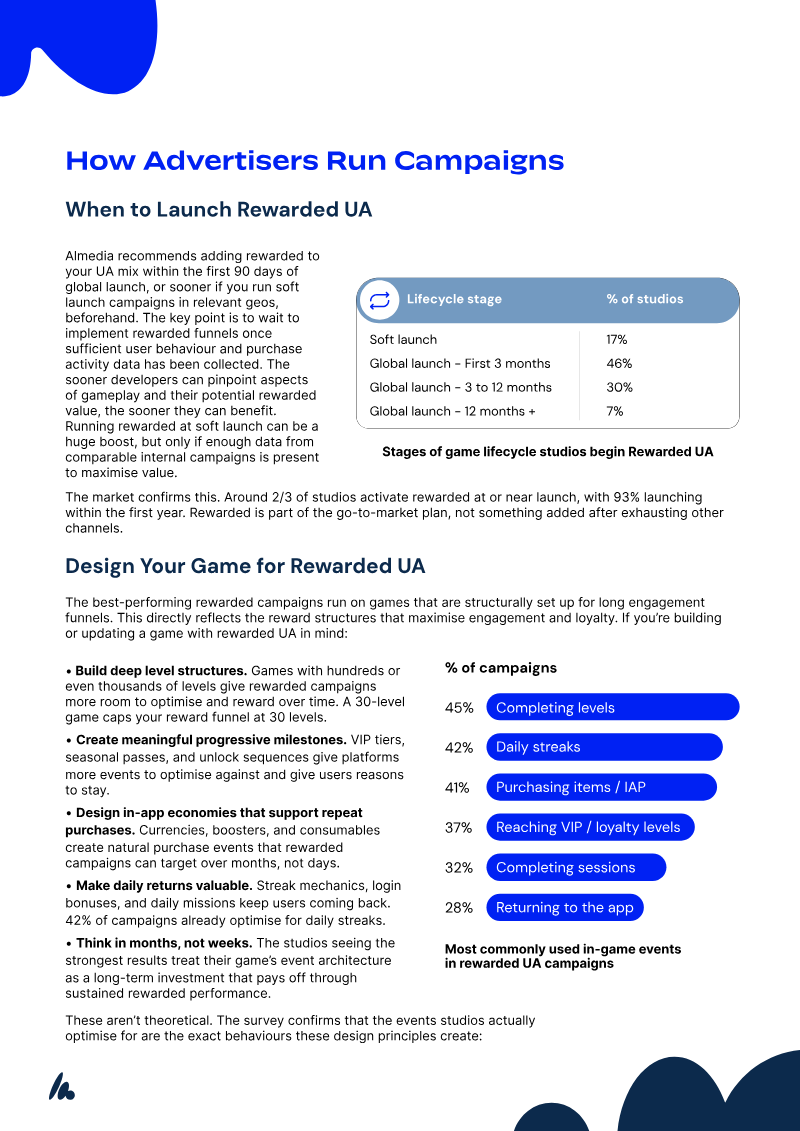
Rewarded user acquisition (UA) has evolved into a foundational component of the mobile marketing mix, serving as a critical solution to the industry’s ongoing challenges of rising acquisition costs and high user churn.
- Rewarded UA is now a core marketing channel, with 61% of surveyed studios planning to increase their budget in 2026 and 65% of studios allocating between 11% and 50% of their total UA spend to the channel.
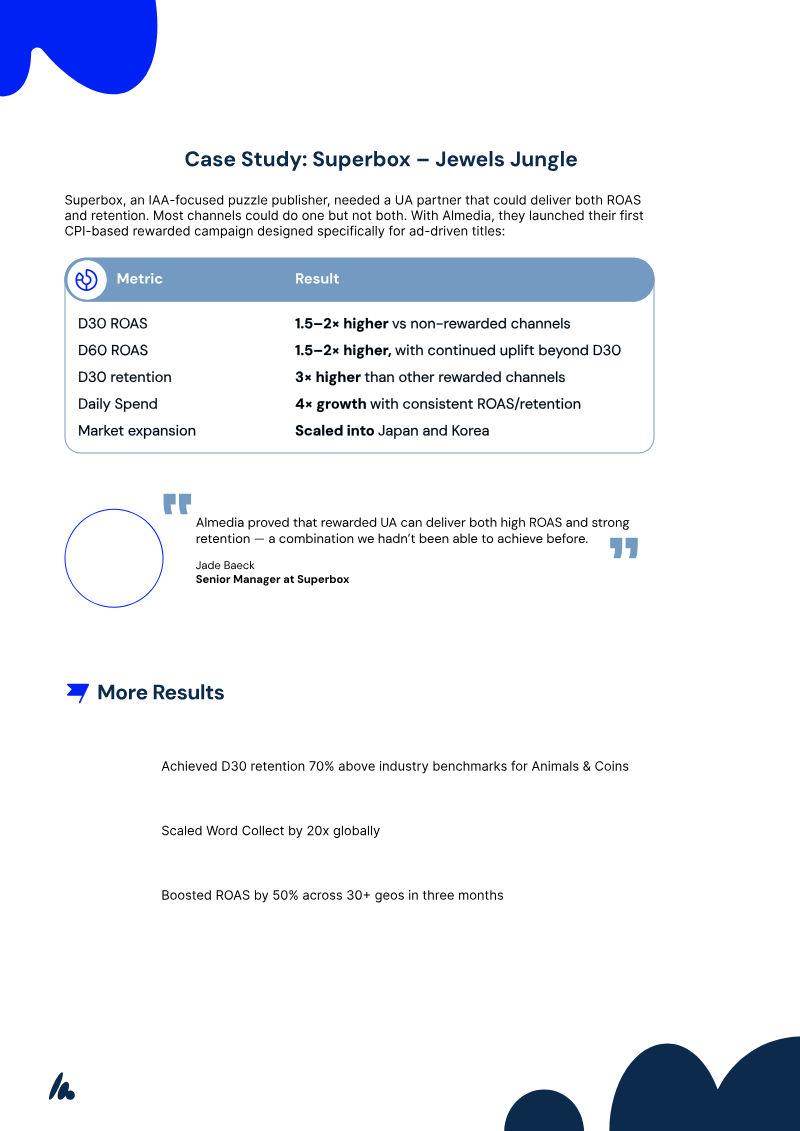
- Extending reward structures beyond traditional short-term windows is critical for retention; for example, Candivore increased their Match Masters reward structure from 50 to 90 days, resulting in a 50% increase in D60 retention and a 70% uplift in D90 ROAS.
- Campaigns that layer multiple event types outperform single-event campaigns, with IAP/hybrid games utilizing an average of 3.25 distinct event types per campaign to drive long-term engagement.
Market Model Reports: Asia & MENA
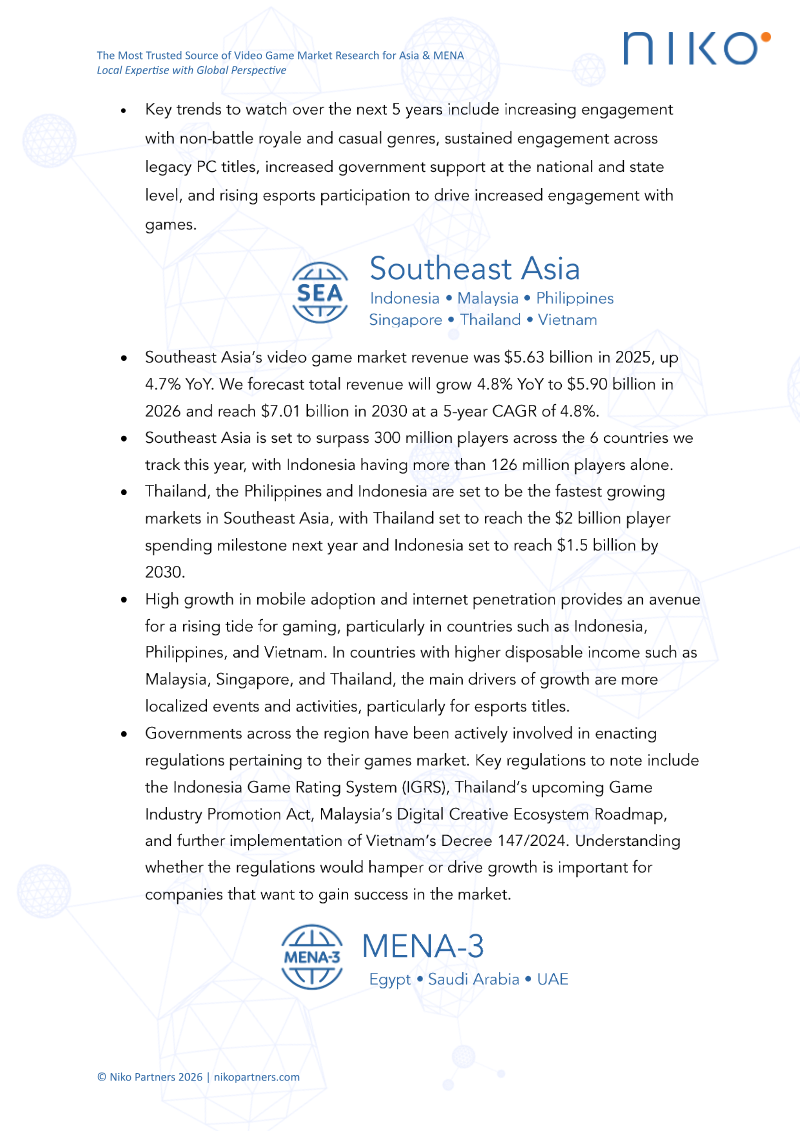
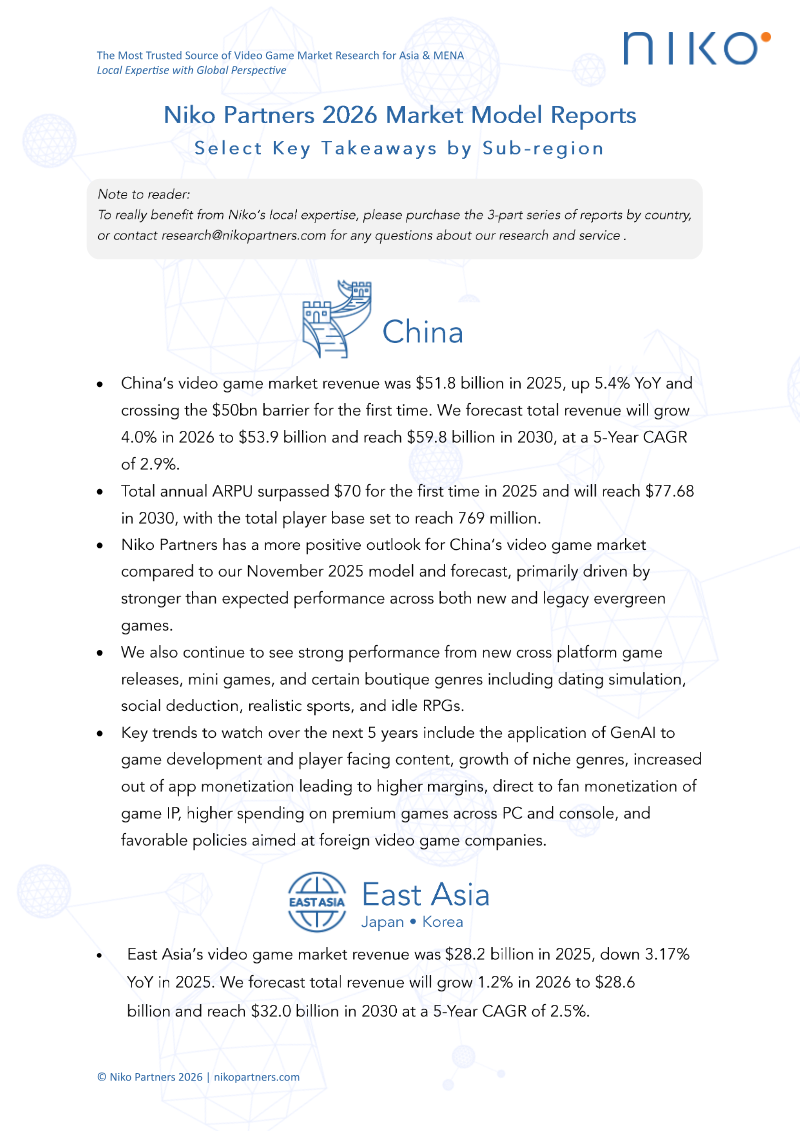
The 2026 Market Model Reports provide a comprehensive analysis of video game industry performance and growth projections across Asia and the Middle East and North Africa (MENA).
- China’s video game market reached $51.8 billion in 2025 and is projected to grow at a 2.9% CAGR to reach $59.8 billion by 2030.
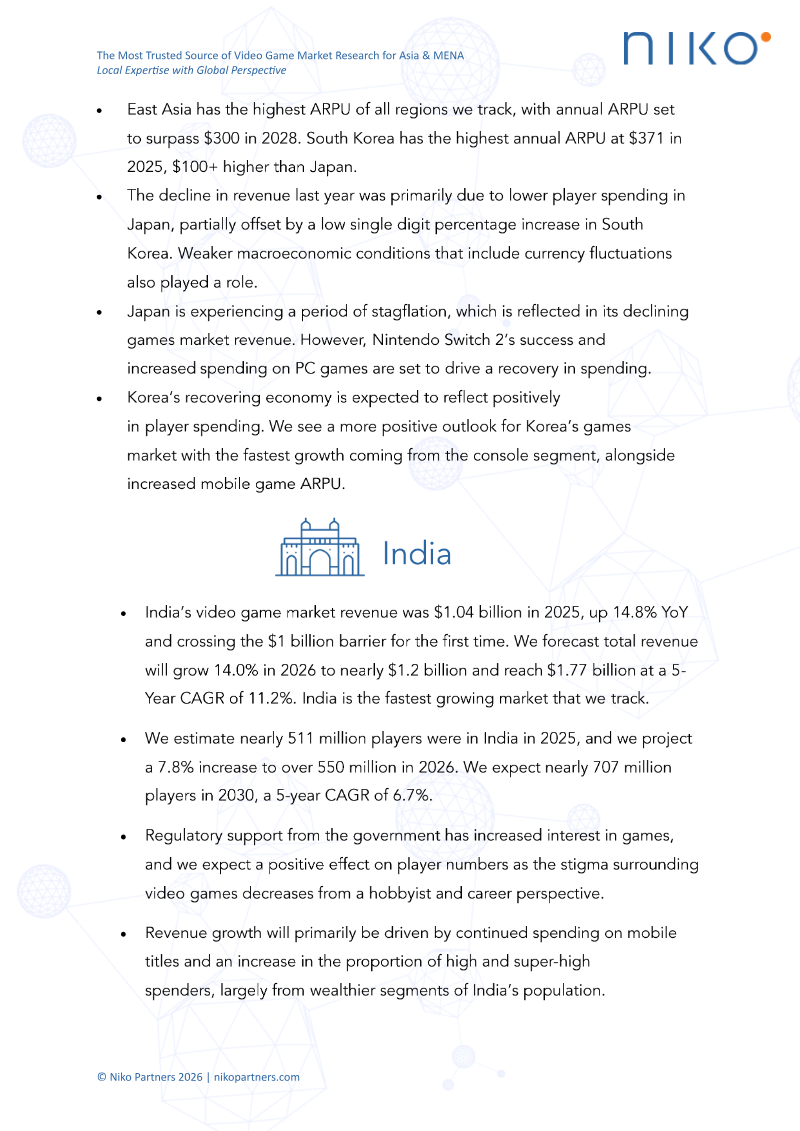
- India is the fastest-growing market tracked, with 2025 revenue of $1.04 billion and a projected 11.2% CAGR through 2030, supported by a player base expected to reach 707 million.
- East Asia remains the region with the highest ARPU, though 2025 revenue declined 3.17% to $28.2 billion due to Japanese market stagnation and macroeconomic conditions.
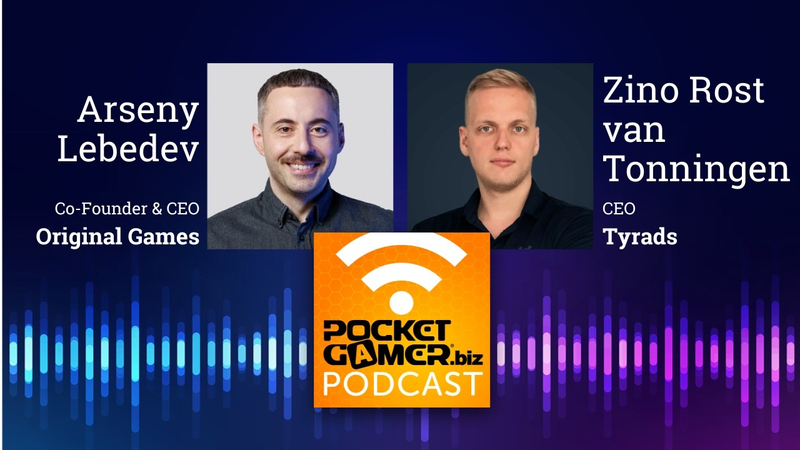
The Rewarded Ads Strategy: Why Original Games Dedicates 30% of UA Budgets to This Channel
The rewarded advertising landscape in mobile gaming has evolved from a simple tool for driving short-term installs into a sophisticated, data-driven ecosystem essential for user acquisition and game discovery.
- Rewarded ads have evolved from simple install-driven models into a sophisticated, data-led channel that can deliver 4 to 5 times higher ARPDAU compared to traditional UA channels like Apple and Unity.
- Original Games allocates 30% of its monthly user acquisition budget to rewarded ads, leveraging cohort-based modeling to predict long-term player value and profitability.
- The rewarded ecosystem has shifted from a 'one-size-fits-all' approach to a strategy requiring granular user segmentation, balancing 'rewards hunters' who seek quick payouts with 'casual players' who provide long-term retention.

Epic Won the Fee War. So Why Is Everyone Losing? (Liam Wiltshire, Tebex)
The gaming industry is currently navigating a period of severe margin compression, driven by an infinite supply of content—increasingly accelerated by artificial intelligence—and a finite pool of player attention.
- The player relationship is the most critical asset in gaming, as evidenced by the shadow economy of UGC servers like FiveM and Hypixel, where community owners retain direct control and monetization power without publisher intervention.
- Creator codes significantly boost monetization, increasing average spend by 227% in titles like Rust by leveraging the trust and affinity players feel toward content creators.
- Alternative payment methods like Buy Now, Pay Later (BNPL) and cryptocurrency drive significantly higher spending, with transaction values 50–70% higher than traditional credit or debit card payments.
Global Games Revenue Cracked $200 Billion in 2025
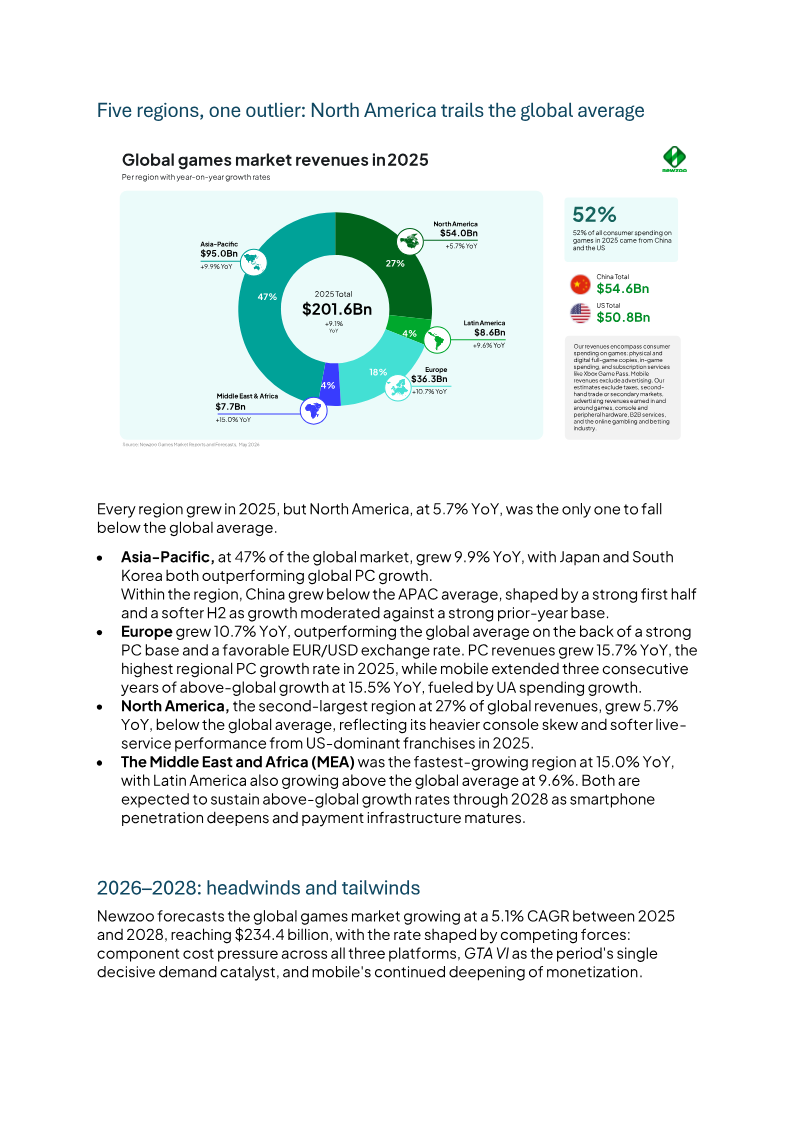
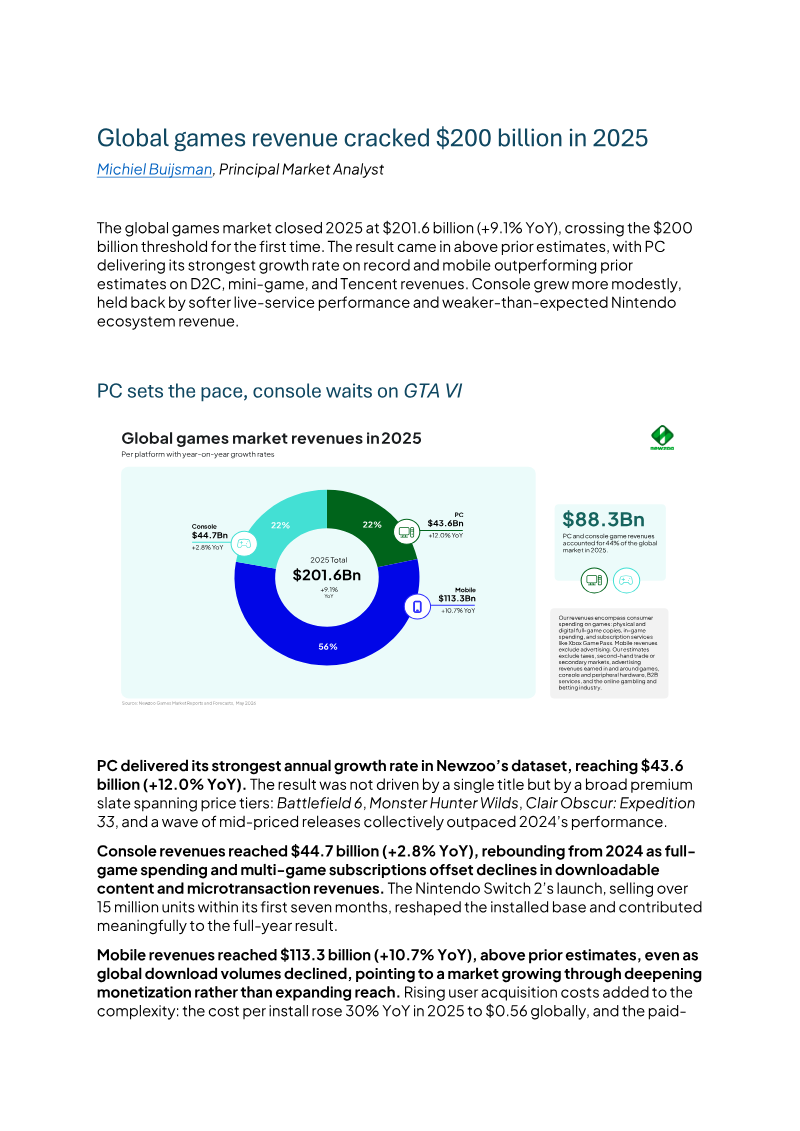
The global games market reached a significant milestone in 2025, generating $201.6 billion in revenue and marking a 9.1% year-over-year increase.
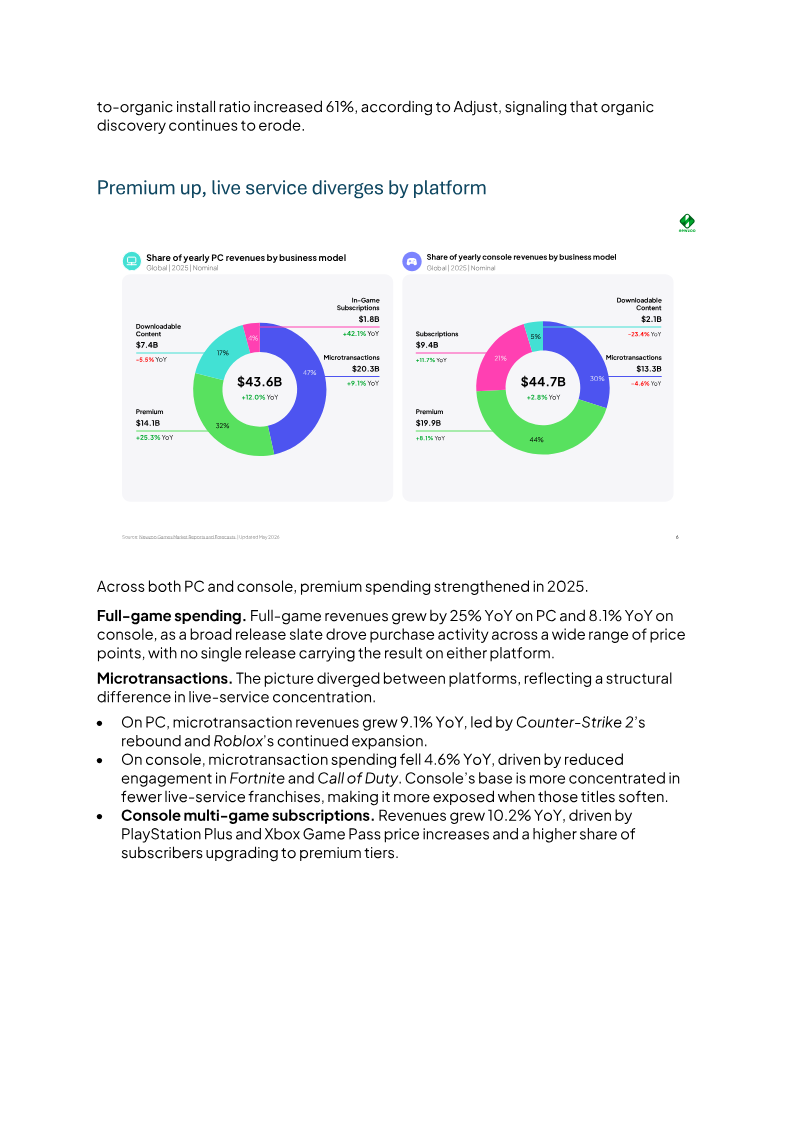
- The global games market generated $201.6 billion in revenue in 2025, a 9.1% year-over-year increase, driven by strong PC and mobile monetization.
- Mobile gaming remained the largest segment at $113.3 billion, growing 10.7% despite fewer downloads, indicating increased spending per user.
- PC gaming led growth with a 12% year-over-year increase, reaching $43.6 billion, fueled by diverse premium titles.

Puzzle Monthly #3: the Merge 2 Secret Tell-All Episode
The merge genre has reached a critical inflection point, transitioning from simple board-based mechanics to complex, live-ops-driven ecosystems.
- The merge genre is shifting from simple board mechanics to complex, live-ops-driven ecosystems, with titles like Gossip Harbor successfully challenging legacy giants like Candy Crush.
- Commercial success in the genre is now driven by aggressive, event-based monetization strategies rather than the foundational merge gameplay itself.
- To combat the friction of board clutter and tedious inventory management, developers are increasingly adopting temporary event boards, generator constraints, and multi-board systems.

🎯 The DEFINITIVE Guide to D2C in 2026: Real Numbers from 8 Studios
Direct-to-consumer (D2C) strategies have evolved from experimental tactics into a fundamental pillar of financial performance for the global gaming industry.
- Major studios like Playtika, SciPlay, and Ten Square now generate between 27% and 44% of their total revenue through independent D2C channels.
- Transitioning to direct-checkout web stores allows developers to bypass standard platform fees, significantly increasing profit margins by reclaiming revenue shares previously lost to app stores.
- Studios must prioritize habituating players to web store environments immediately to mitigate the impact of evolving platform policies and future regulatory risks.

Record D2C revenue and international studios flock to Spain | Week in Mobile Games podcast
The Spanish video game market has emerged as a significant global hub, currently valued at €2.4 billion with a workforce projected to reach 13,000 by 2027.
- Top games companies are reporting record direct-to-consumer (D2C) revenue, though these gains are increasingly offset by rising user acquisition costs.
- Spain and Portugal are emerging as major European gaming hubs, attracting significant investment from international publishers including Ubisoft, King, Take-Two, Scopely, FunPlus, and Gameloft.
- ARM’s new 'Neural Dawn' technology aims to enable triple-A graphics on mobile devices, though industry analysts question whether players prioritize this level of graphical fidelity over gameplay and social features.

🚨📢 BREAKING NEWS: The Surprise World Cup Winner, Block Blast's $120K/Day Bleed, Supercell's US news
The mobile gaming industry currently faces significant volatility regarding distribution and development, as evidenced by recent performance shifts among major titles and studios.
- Block Blast lost approximately $120,000 in daily advertising revenue and saw a 17% decline in Android daily active users following a 24-hour removal from the Google Play Store.
- Supercell is contracting its U.S. development operations after canceling a project in development for three and a half years and losing key staff from another team.
- The FIFA Panini Collection achieved 500,000 daily downloads and 1.7 million daily active users by utilizing a hybrid model that links physical Coca-Cola QR codes to digital sticker collecting.

TWIG #387: LiftOff IPO, Xbox pulls out the bangers, and The Simpsons take over Monopoly GO!
The mobile and console gaming sectors are currently defined by aggressive strategies to secure market share through high-budget intellectual property partnerships, platform-level pivots, and sophisticated data-driven advertising.
- Mobile publishers are increasingly leveraging high-profile IP integrations, such as the two-month Simpsons crossover in Monopoly GO!, to combat user churn and drive retention in a saturated market.
- The IPO of Liftoff highlights the growing reliance on AI-driven optimization tools like the Cortex engine to scale user acquisition, despite significant competitive pressure from established firms like AppLovin and concerns over high debt levels.
- Xbox is recalibrating its console strategy by prioritizing platform exclusivity and ecosystem reinvestment to challenge Sony and Nintendo, shifting focus away from traditional margin requirements.

The Big Xbox Matthew Ball Interview: “The console market is not dying”
The console gaming market remains a robust and durable sector, currently valued between $40 billion and $45 billion.
- The console gaming market remains a robust sector valued between $40 billion and $45 billion, showing continued growth in global player counts and engagement hours.
- A supply chain crisis has caused a 30% to 40% undersupply of critical memory components, forcing the industry to navigate significant hardware production headwinds.
- Xbox is adopting a dual strategy that balances exclusive titles to build brand identity with multi-platform support for major live-service franchises like Call of Duty.