VideoPocketGamer.biz
The Rewarded Ads Strategy: Why Original Games Dedicates 30% of UA Budgets to This Channel
17 Jun 202627 min video
Transcript
[music]
Now we're looking at monetization, progression, smarter campaign decision-making, you know, a whole live ops structure and strategy for rewarded. If the channel's evolved, if the playbooks evolved, how do teams need to operate?
to be a brutal year for rewarded for the partners that don't do this. Um they're going to have a very very difficult time. Hello world, welcome back to the Pocket Gamer podcast. I'm your host Brian Baglow. I'm joined as ever by the regent of rewarded, Miss Peggy Anne Salts. Hello. How are you?
Good Brian. Have been missing you, but I know you've been a busy man. I've been seeing you of course on social and you've been out there, I would say pioneering and and and flying the flag for gaming in your native Scotland. I'll
leave it at that.
Absolutely.
Indeed. Well, it's kind of interesting. I'll call it a segue cuz if you're looking at you know, what games are becoming and games are becoming much much more as we look at the structure of rewarded and thinking about ways to turn these games into yes, they are a pastime, they are a passion, but they are very much a business. And I think that brings us back to rewarded because it's monetization, you know? But it's also growing up. At the beginning it was yes, it was a discussion about okay, quick installs, quick payouts, get them into the funnel. Now we're looking at monetization, progression, smarter campaign decision-making. I've even heard people talking, I'm very excited about this, you know, a whole live ops structure and strategy for rewarded. So, yes, it is growing up. And then we get to the question, well, if the channel's evolved, if the playbooks evolved, how
do teams need to operate? So, that's where we come to our guest today because we have Arseny, CEO of Original Games, so he has the publisher perspective, and we have Zeno, the founder of who will bring us the platform perspective, and more importantly, the market perspective. So, we have, as you will, the ecosystem and the future of rewarded in one.
Fantastic. I always love a deep dive, and this sounds like something that our audience are really going to be able to get their teeth into. So, let's let's dive straight in. Um so, Zeno, let's let's come to you first. Let's start with the market. Um we know that rewarded has been around for quite some time now, but a lot of the conversation still feels stuck a little bit in the past and the old models. Um drive the install, hit the event, measure early, move on. You know, is that still the reality, or, you know, where does this break down? What's the Where are we at now with the discussions around rewarded?
I still remember the days when rewarded
was just all installs just to boost your campaigns, and that was the only thing that you were doing back in the day was there just to boost your app up to the stores. It then went up to more of an event-driven structure, and and it keeps evolving as a as a medium as it goes on, right? So, what we really see at the moment is that rewarded is really evolving with data as the main factor that creates the funnel, involves in the funnel, and actually activates the user to actually get things done, right? Now, it's a lot more how do you engage users at particular moments, how do you segment those users, how do you activate those users, and everything is more driven by the data part, but also the automation part that can activate those segments as well automatically for you. And the partners that are able to do that, right? Those are the really the partners that are going above and beyond.
So what does that break down you know you know is it a downside for teams that are still kind of stuck in that that older
mindset or aren't using their data as effectively?
It's going to be a brutal year for rewarded for the partners that don't do this. They're going to have a very very difficult time. They're going to have a very very difficult time to survive. That's why you're also starting to see consolidation in the market right what's happening with for example with Misplay what's happening there that they're buying up other partners and these kind of acquisitions and these kind of things are like the yeah the ramification of that trend changing right it becoming increasingly more and more difficult to actually keep up with the industry and [snorts] the new players are slowly being squeezed out for what we can see and it becomes more and more difficult to actually compete on on that level with either an SDK partner or with their own partner or their own app because you know you need to have a lot more features to actually compete against other products that are already pre-existing there right because it's no longer just the offer walls or so all the things that come around the offer wall that actually engage those users and activate those users at the same time.
So to summarize we're in consolidation because around two years ago I think it was just I would go to events at PGC events just a sea of rewarded opportunities and vendors newcomers offering it as well. So what we have is we just have a straight correction it's like it is a market correction and companies with the most data with the most understanding with the best new playbook they're going to be the ones we're looking at.
I would say if you don't shape up and build your technology correctly or you're using third party systems or other things that are not your own tech stack it's going to become increasingly more and more difficult right especially in the the age that we're in right now with how things are with AI, right? If you don't structure your data, you don't structure it in a good way that can be learned easily, it's going to be increasingly more and more difficult for other partners to actually keep up with this industry. So, data's everything. The structure of the data is is also just as important and
right really making sure that that's all structured in a way to um yeah, use it effectively, that's that's everything.
Which is great coming to you, Arsene, because you saw this early on. I'm astounded actually by that because you were an early believer and rewarded I don't know, maybe even one of the first. So, you know, and credit to you because it's paid off and we'll get to that in a moment. But but what made you take it so seriously, see that potential from the beginning because I remember when we were all dismissing it as oh, it's incentivized traffic and that's not what we want. But hey, everything has evolved and here you are.
That kind of traffic was used to to gain you know, gain the charts or maybe maybe the reward used to be download the game and leave a five-star review. So, if your reviews weren't so good, you could pay somebody to push that up. When we started, uh it was just around the time. So, so Original Games does merge games, merge puzzle games. A great category to be in right now. Um so, when we started with um Merge
Inn, um we were getting pressure from guys like Zynga. I wanted to give it I wanted to give these new channels a chance um because we had worked with these other partners and they were all saying, "Hey, like we're not you know, we're not a scam anymore." Um but we had a we had a model that would look at cohorts. The idea, the bet was if the model can kind of predict that are these players going to going to work, um then we should try it. And then I remember I was uh speaking at my investors, one of my investors' events early on and the other the other companies hadn't really heard of these these networks. But we were we were spending around 30% of our um monthly um UA budgets uh even back back then. And it it was working. I mean, the the the the cohorts always backed out. More or less.
I I still remember, actually, when I reached out to Arseny, he first asked me, "Are you a scammer or not?" So
[laughter]
Yeah, don't don't add me on LinkedIn, please.
We still talk to each other, so apparently not, right?
Yes. Yes. [laughter]
Yes.
Yeah.
Yeah, and Dan Daniel still owes me a lobster dinner. That was the other thing. I said, "You got to get me a lobster dinner."
I yeah, we still owe you that one.
Let's do it. Let's do it sometime. Yeah.
Can I kind of look at the flip side of of that, Arseny? It's What do you see a lot of studios doing wrong when it comes to this? You know, are they still dismissing rewarded as just that incentivized that bribe to get traffic?
I've seen companies completely change, you know, level up by figuring out how to use it. This isn't like this isn't the relationship that your UAM will have with a with a partner where, you know, they just set it up where it works. It has to be a two-way conversation. They they from from the producers from the publisher side, um, the UAMs need to understand the game and its its features because that's what's going to be kind of monetized into these offers. Um, I you know, one of the things I'm still still struggling with after years is our game has a a core gameplay and it has kind of live ops. And we're I'm sure
we're not taking advantage of rewarding players for doing the live ops events, which are much more profitable. You know, these players are okay watching ads, maybe more maybe two times more than than your other players. So, that's something to think about.
And we hear this so often, Peggy. You know, there's no one-size-fits-all anymore. There's no, you know, cookie-cutter approach to all of this. Depends on the game, depends on the credibility, and it's that conversation.
I want to stay with this, Arseny, cuz you know, you noticed this early on. And we're talking about where it's going, what teams need to do, how we can embrace this opportunity. and there you are, you know, it was a huge percentage of your spend from the start, and you've seen that evolve as well. You've seen that players What is the difference that matters here? What do they do differently because you have to find them, and you're seeing them. What are the signs of a of a rewarded user, a highly valuable user? What do they do differently in the first few
days?
So, this this is like a good thing and a bad thing. So, the user behavior is so different that if you're spending a a major part of your UA budget on players that are motivated to do a certain sequence of events or play for a certain amount of time, they're not really playing the the core game that the design team kind of developed for. But, if those are the players coming in, then you maybe have to redesign the game. You know, if our average US IAP conversion, you know, in the first, you know, up to 7 days is 5%, it would be 10%. It's kind of like double to four times engagement because, hey, you know, you can spend $5 on the welcome offer, and you'll you'll speed up ahead to to doing, you know, whatever the offer is. Um and I think that's very powerful because they're spending.
But, we hear that, you know, Brian, there are some players, particularly I remember hearing from the from the APAC shows that we had, you know, I mean, some people just get in there, and it's like just just the concept of if you can
do this within this many sessions or this many days, you know, they're just all in. It's like, yeah, I accept the challenge. I'm all in, and those are the players you want. You just have to see that behavior in the data.
Exactly. It's It's the ones who pile in, who buy into the whole thing, and it's like, you've you've got to be there to meet them. You know, if it's you're you're handing out rations, um experiences, you can absolutely limit the amount of impact that those players can have in your game.
I think Keep in mind though that ultimately the publisher, I want someone to play more than 30 to 60 days. I want a user for 2 years, and that's the challenge. And luckily, I mean, maybe it's our category and our monetization, but we have enough people to just stick around. Um that the math works out. Not every time, um but there is something to the game probably should be good. It's not a requirement. Um but the the game should be good. Um because the these people pay money in
the game. Like getting getting a a person who's comfortable paying, that's a that's a big step, you know, that that could be 10 10% of your player base that are comfortable paying. Everyone's comfortable watching a video. Uh these folks are fine. They're spending crazy in the first, you know, hour. Um so I would those are very valuable players. I want to keep them. I want to show them ads. I want to, you know, cross-promote them into my games. I want to expose them to other uh rewarded offers from the same network that they came in on, stuff like that.
Makes perfect sense.
What would
It makes perfect sense.
like this, you know, I'm thinking about the platform side, you know, he's talking about people who who play. He wants them to play longer, you know, he wants his LTV. So, what is it for a team? They look at the data and they say, you know, this is real engagement versus say rented attention for a short period of time. What does that look like in the data?
So, if you look at the data, right, you're looking at the different types of uh user segments, right? You would see that there's a very different behavior
with each one of these segments in terms of how aggressive they are in terms of achieving certain results, right? So, you're going to have different types of users, and that mix is what really results into good results for uh advertisers, right? If you have too much of one particular type of segment and too little of the other segment, you know, you're going to have very good results in the beginning, but the long-term results are not going to be good. So, uh if you're looking at data in terms of like actually achieving that short-term performance but also that long-term performance is a mix of different audience segments that make that really work well, right? How do you activate the user very early on to start purchasing and then how do you actually get those users to keep purchasing? That's a mix of different users. Some users will never stay very long, right? But there are certain segments of users that will stay for very long and those can be very loyal users, right? And that small percentage that does stay, right? That's usually where the long-term curve comes in. And that's where the the profitability comes in and that's really where it starts scaling for a lot of
partners, right? So if you only have one type of user that is like only going for the rewards, only going for getting those rewards as quickly as possible and nothing else of substance, right? It's not really going to result into good performance over over the long term. Yeah, it's a mix of the audience segments and making sure that those segments are not too dominant whenever you're running any campaign for any title that you don't have too much of a thicker segment that is downloading those particular games and if that does become too big, you know, that's going to have either performance issues in the early side or on the long side of of the tail. And that's usually where the balance comes in from a platform perspective, right?
That makes an awful lot of sense. Um so actually you you mentioned some of the results that you've been you've been seeing earlier showing that rewarded users can deliver four or five times higher ARPDAU than, you know, your traditional channels Apple and Unity, etc. That's incredible. Do you have any idea kind of what's what's driving that?
Yeah, for sure I do. You spend $50 to
win $100. That's that's the thing these guys are telling you. But I mean look, ARPDAU only matters if retention is good and it's a different retention profile. Um so, you know, we'll talk about personas, but there's folks that are just want to get in quick and and see if they can get something. They they want to check out the game. They want to see, "Hey, is this going to be one of these, you know, slow games, whatever?" Um but I mean it it's exciting to have those numbers because it shows that your game is capable or, you know, it is reasonable that's working. I think though it would be easy to jump into this to make a mistake thinking that hey, can we can we use incentivized channels to change our ROAS goals. So we would buy from a 6-month to a 1-year ROAS return. I don't I think it would be a bad idea to say hey, well, if the players are basically all out by day 60, let's let's try to do it on a 60-day ROAS basis. I think that scale would drop and and it
won't work. It's not the type of game. There are other types of games and genres where I think if you pump enough ads, maybe you'll get you'll get the return back in 30 days. And then that like if you know those game types, please email me.
[laughter]
What's the deal? What games or just make those games?
Well, that there definitely are games similar towards that that are out there, right? That are that are trying to do that, but the problem is that they're their bid competitiveness is just too low to actually get any substantial scale, right? So they're definitely games that as an indie game if you try rewarded, right? You might get 5 or 10k spend in the month and it won't be very profitable for you, but you won't be able to scale it just because you're not competitive enough compared to the other giants out there that are spending what 20, 30 dollars per install, right? So it's it's it's a you can they're definitely there but usually I think our CEO also wants to look at something that also scales then.
[laughter]
So that's the combination. That's really the golden combination, right? That scales and that also gets
the great results at the same time.
Again, that makes sense, but so a dumb question for you guys. If the monetization is there, the user is monetizing so well, why isn't everyone, you know, using rewarded and scaling rewarded harder?
You know, with my bids, can I just spend a million, please?
[laughter]
Yeah, so yeah, there is only a certain set amount of users that actually want to do rewarded, right? It's like the coupon the coupon person, right? Like does everybody want to do coupons, right? I would never do coupons, that's not my thing, right? So, like there's going to be a certain audience that like to do rewards and like to play games and get rewards for that, right? And that audience is limited to similar towards like an audience that likes coupons, right? So, there's going to be a limit in terms of what kind of [snorts] scalability there is, right? And in terms of making it profitable at the same time, right? So, the when we're looking at something that okay, how big can something scale? It can scale substantially, right? But
there's going to always going to be a limit because not everybody is a coupon hunter or not everybody is a rewards hunter or like that actually wants to go for rewards, right? So, that's basically the limitation that we have, right? And and it is becoming a lot more competitive, right? In the past it was a lot less competitive, there were a lot less game companies doing it. And that made it a lot more easy to be competitive with your bids. And that has substantially changed, right? The big guns have actually joined and they are bidding crazy crazy CPIs just to be able to get the maximum amount of users and get that small sliver of of users that are paying that much more than in those games. This space has become a lot more competitive, not only competitive in terms of the networks that are out there and technology that's available to make that possible, but also just in terms of how many demand partners are there right now that actually are bidding on that same inventory right now. And that's um that's what's happening in currently in the industry, right? And that's what has been benefiting the partners with the best technology the most, right? So,
that's a bit what I can see from my side.
Cuz now it's not just about the algorithm to figure out the math itself, but we have a new factor there. We want the high value user and we have to find You know, these these these coupon hunters, these these bargain hunters, these people that are going to respond to rewards. And that brings me back to you, Zeena, because you're seeing this, you know. We think about the rewarded as an audience, but you've just sort of pointed out, you know, it's like the coupon hunters. It's a certain persona. It's a certain tribe. So, what are you seeing in your platform?
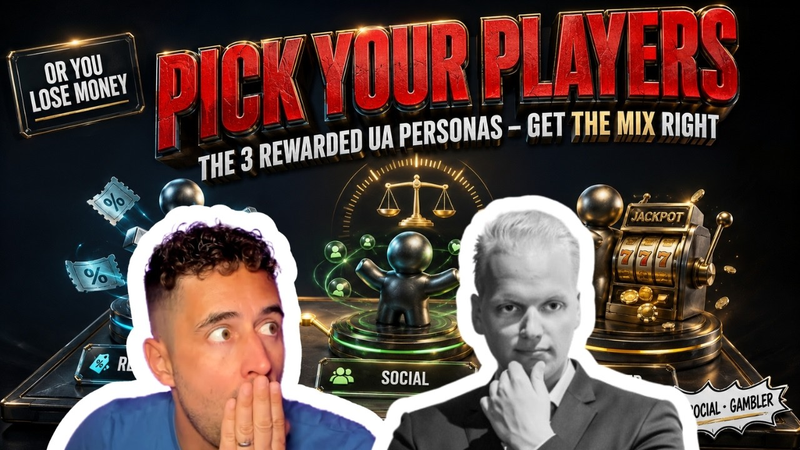
Yeah, on the high level, we have a lot more granular personas, but on the high level, what we can see on our side is really three different types of uh personas that really work and and and that really engage with the offers. The first one is really the rewards hunter, right? So, that rewards hunter is going to be someone that's just going to look for the best rewards wherever they can get it. And this is in a very aggressive user, right? So, this one
will try to find the best deals, try to shop for it, right? Just similar as where you're shopping uh for deals in the in the in the store that this user will shop for the best deals out there, right? And uh he will find the one that makes him the most amount of money in the shortest amount of time, and will go to the next offer, right? That's basically the the where it all started off out in our industry, actually. That persona was the main persona, and that was the only persona, really. And what evolved with that is that we got this additional personas that started coming in. And the second persona is really more of the casual user, right? So, that is more of the user that is you know, seeing an ad and just like, "Okay, let me just play some games and earn some money on the side, right?" And that's really where the long-term results come in, because this user will actually play your game and actually enjoy it. And they'll start playing it and and actually enjoys it, and you know, they might not get the big reward that is coming there at the end, but they'll still play it and keep playing it for years to come. Because they just enjoy the game or they had some kind of positive experience with
it, or like the community around the game. And that's their home that they found, right? And that social uh player that you see in that more casual player is very important for that long-term performance, right? And then the final persona, and and that's really the persona that really has been becoming bigger and bigger, and that's really the the gambler, right? It's those three types of personas that we could really see on our side that really make or break the difference, right? And you know, you also have new users that are not really familiar with the concept, right? They're trying out some games, they might drop off early, right? And so those are like the four main personas that we can see if I put it on a high level, right? And and where the perfect mix really comes in is is that you have a little bit of everything there, right? You want to have you want to make sure that you have a little bit of all of those types of users within the game. You don't have too many reward hunters because they you're not going to have long-term retention, you're not going to have long-term engagement from that. If you're having
too many of too many gamblers, right? It's not going to be profitable for the the partner that's actually giving the rewards, right? And if you have too many social users, right? They might not be aggressive enough in the early cohort, so you might pause something like that early, right? So all these ones are super important to get a very good equilibrium, right? To make sure that you actually get the right performance out of users and everything that comes from it, right? So that that's really the personas that we can see from our side on the high level. Of course, you have segments of those users and you can break it down into how many more segments you want to do it, right? But that's really the high level segmentation that I can see from our side and what we see in the data on our side.
I think the point kind of what what what Zeno was saying is like this this basically started as folks that are just like, oh, I can I can make some money on this. I can make $5, whatever. I need I need that to get some candy. But over time, the App Store discoverability is is so bad that literally it's easier to go to
iron ads and find games there because it's a nightmare on on the App Stores if you use iOS you're you're advertised the same three four games. Mine isn't in there so I'm I'm complaining. On Google Android I feel like it's they're much better in my opinion but it's it's still very difficult to find cool stuff. But the but the other piece is mislead ads are becoming so popular especially from merge games. Um that I think the overall discoverability through ads is just hurt like it's always the same pregnant lady thing like that's you know we do it but I hate doing it. So you can go to these platforms as as discovery platforms. And I think that's just like I don't know it's just the state of the state of games. In physical casinos there's definitely this kind of VIP system. If you're a high roller you're going to get special treatment. This is the same thing. If you're if you're spending a lot in Dice Dreams or I mean in Merge Inn you know you're going to get some bonuses. And this this system I think it's it's universal system where you
feel great about playing the games that that are in the system because you're you're just getting some rewards. Um I think that those things especially this this casual user as Zena mentioned like this is the key. And these are the folks that you're they're just normal players that are you know looking for a little bit more. Um make makes me excited that this is not going to go away.
And you're pointing out how you could turn a casual user into someone who's more motivated just by you know giving them a better experience which is which is what we're seeing elsewhere in the games you mentioned already. I mean I think there's a lot to unpack there Brian. I wasn't thinking about it as also a way to discover games because as he pointed out you know App Stores aren't so it's it's it's really a very very rich model. It's not just a monetization model. We're talking about discovery. We're talking about bringing your persona based design in here as well.
Yeah, it's building engagement. It's
It's keeping people effectively within the game, allowing them discoverability. You know, serving different purposes outside the come have fun play the game, which you know, it is why people presumably join the first place. Um but I think we're what we're seeing now is the fact that um because we have that discoverability issue, because we have the SEO uh issues around the various storefronts. Um keeping people engaged, keeping people within your ecosystem just it has so many rewards. And you can bring your casual players through, you know, maybe convert them into the the the higher spending long-term high rollers that you were talking about.
You see mainly with the social social or the casual uh players, right? That they're really just looking for a home, right? So, that discoverability that they get and they play a little bit with wars and they're looking for that home that they can play, right? We I talk a lot with individual users from our own products and sometimes it's just that lady that just wants to have a chat and
talk and just be there and, you know, have a little bit of things to to break the day and um you know, that's really what I see. If you that community part that is really also around rewarded as well, is that you have a lot of users that then start to talking about the rewards, right? And then that becomes the community part of it, right? So, um that community part and the discoverability as Marcel already said, right? That's key, but that community part is also what really keeps them engaged, right? It's like, "Oh yeah, I'm playing this game today. Oh, you're doing that game today, right?" And And that's really where you see a lot of that engagement also coming in for a longer period of time. It's no longer just it's just only the rewards hunter, right? It's that that user that actually will stay as part of a community, right? And that's really where that long-term comes in as well.
Auto-generated captions from YouTube — names and numbers may be misheard.
Key insights
6 takeaways · ~2 min read- 01Rewarded ads have evolved from simple install-driven models into a sophisticated, data-led channel that can deliver 4 to 5 times higher ARPDAU compared to traditional UA channels like Apple and Unity.
- 02Original Games allocates 30% of its monthly user acquisition budget to rewarded ads, leveraging cohort-based modeling to predict long-term player value and profitability.
- 03The rewarded ecosystem has shifted from a 'one-size-fits-all' approach to a strategy requiring granular user segmentation, balancing 'rewards hunters' who seek quick payouts with 'casual players' who provide long-term retention.
- 04Market competition for rewarded inventory has intensified significantly over the last two years, forcing studios to build proprietary tech stacks and robust data structures to remain competitive against high-bidding industry giants.
- 05Rewarded ads now serve as a critical game discovery tool, effectively bypassing modern app store SEO challenges by incentivizing users to engage with new titles through structured live ops events.
- 06Long-term profitability in rewarded campaigns depends on achieving an equilibrium between user personas, as an over-reliance on a single segment—such as aggressive reward hunters—can negatively impact performance metrics.
Ask AI about this video
Cite this video
Citation
Generating citation…














Comments