VideoThe Game Business
The Big Xbox Matthew Ball Interview: “The console market is not dying”
11 Jun 202641 min video
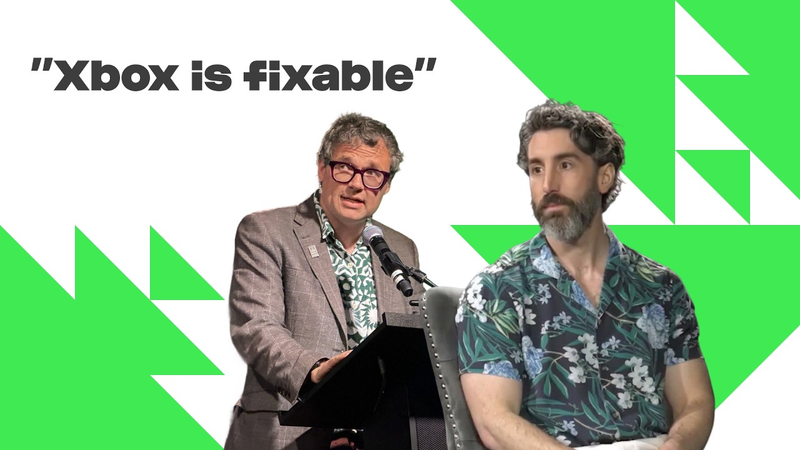
This is the start of a program [music] and players can expect a reliable pipeline that validates their historical investment in the Xbox platform, keeps them as Xbox players going forward, and everyone in the industry understands that exclusives are important to the growth and branding of that platform.
Isn't the console sector dying? Isn't it you know, isn't it all about PC and multi-platform and meeting gamers where they are?
So, the answer to your latter question is yes. The first [music] one is no. Crisis is the right term. The crisis is not yet getting better. The window in which we and others are going to have to work through is getting longer and that is going to constrain the category. When I sat down with Asha for the first time, she asked me [music] not from a point of skepticism, but I think it was an important way to do it. She said, is it fixable?
[music]
This week's edition of the Game Business Show is sponsored by Level Up. Level Up is an analytics company that we use all the time for tracking trailer performance, press coverage, and community engagement. That means they know who won the Summer Game Fest 2026
and they brought together all the data to create a top 10 of the best performing games. And here is that top 10. At number 10 is Until Dawn 2, which is the horror sequel announced during Sony's State of Play. At number nine, we have Spyro Reignited Trilogy, which was revealed during the Xbox event. At eight is the closing game from Summer Game Fest, Final Fantasy Revelation. Seven, we've got the Persona 6 teaser. At six, we've got Kingdom Hearts 4 shown at the Nintendo event on Tuesday. And now we're into the top five. Gears of War E-Day, one of the most talked about game of the show because of that exclusivity is at number five. PlayStation exclusive Marvel's Wolverine comes in at number four. Resident Evil Veronica, one of my favorites, is at number three. Another one of my favorites, The Legend of Zelda: Ocarina of Time remake, is at number two. And at number one, it is God of War Ragnarök, the big closer from the PlayStation State of Play. Of course, there are still some previews to take place, but for now, that's the best performing games from Summer Game Fest 2026. It all comes via Level Up, which keeps track of all the trailers, streams, creator reactions, and community debates happening across over 30 platforms in all languages. If you
want to track coverage, benchmark competitors, discover creators in a simple platform, I use it all the time. You can get a full demo via a link in the newsletter and article associated with this episode. Speaking of which, let's get back to it. It is Monday, June 8th. We are at Summer Game Fest in Los Angeles, and welcome to the Game Business Show. Now, when I started in business media and started doing events, I was given one very important piece of advice, one irrefutable rule that you should follow no matter what. And that was, whatever you do, don't put on a business event first thing on a Monday morning. So, thank you for coming and proving that in 2026, there really are no rules. Um I was last standing here a year ago. We'd only just launched The Game Business. It was a bit crazy we did an event so quickly, actually. And it's been quite the year. It's been the year of the upstart, of the underdog. It was a year where Expedition 33 and Dispatch and Eugenics and Slay the Spire 2, I can go on, delivered bigger numbers than some AAA games. A year where Roblox experiences like Grow a Garden and Steal
a Brain Rot saw more players than the biggest live service titles. It was a year of the titanic battle between Call of Duty and Battlefield, only for Art Raiders to have the audacity to face off but against both of them and to exceptionally well. It was a year of the Nintendo Switch, too, the fastest-selling console ever, a huge success that found itself competing with the next playground, a camera-based console no more powerful than an Xbox 360. You couldn't get one come December 25th. It was a year where EA agreed to be acquired, where the Phil Spencer era of Xbox came to a close, ushering in Asher mania, and a year of seemingly endless court battles between Epic and Apple. It's also been a year of turmoil, of more studio closures and job cuts, of high-profile flops like Minds Eye, High Guard. Ubisoft canceled six projects. Amazon ripped up its game strategy. We've had tragedy, too. It doesn't feel right being here in LA without running into Vince Zampella. And we've been covering all of this on the Game Business Show every week, and we've had some amazing guests, some incredible interview subjects: Tim
Sweeney, Shuji Utsumi, Reggie Fils-Aimé, Todd Howard, Peter Moore, Strauss Zelnick, Naoki Yoshida, Don Mahoney, Patrick Söderlund, Jin Jong Jin. And I actually can see some previous guests in the room. Well, I could see them they turned the lights down, but uh we've got Matt Webster, the CEO of Fuse over there. Fuse is making that Star Wars racing game, Star Wars Galactic Racer. I actually played it on Saturday, but I signed a piece of paper that means I can't tell you if I thought it was any good. No. Can I tell them? No. Okay. Am I even allowed to say I played it? Uh all right, good.
[laughter]
Uh I also see right next to me we have uh Remedy's new CEO, JC, here. JC joined Remedy a few months ago, and because he spent time working on live service games at EA, uh some people became convinced he was going to force Sam Lake to turn Alan Wake into a free-to-play soccer game. But JC was on the show a few weeks ago made it very, very, very clear that that was not going to happen. You're here to promote Control Resident, I think. I've not played it yet, but I've heard really good things. Um both of those games featured in trailers over the last few days. We've had a really busy week and a
bit of trailers and game reveals. Uh this is the biggest Summer Game Fest since those heady E3 days. Loads of horror games: Resident Evil Veronica, Until Dawn 2, Alien Isolation 2, Sword Genesis, and Silent Hill Downfall. Big shooters like Call of Duty: Modern Warfare 4, Gears of War: E-Day, Crossfire, and Halo. Epic cinematic story games like Marvel's Wolverine, God of War: Ragnarök, Stranger of Paradise: Final Fantasy, and Control Resident. We've had Gen Alta, Rayman, Crazy Taxi, Persona, 1666 Amsterdam, Spyro, Tomb Raider, Virtual Fighter, Monster Hunter, Final Fantasy VII, Ace Combat, Stunt Man Clutch, two Star Wars games, Onimusha, Metro, Teenage Mutant Ninja Turtles, State of Decay, Stellar Blade, The Wolf Among Us, Cuphead, Blood of the Dawn Walker, Fable, Minecraft Dungeons, Star Trek, Shadow Frontier, Hot Wheels, Assassin's Creed, Sonic. I really could go on and on and on, and we haven't even had Nintendo yet. Um there was just an amount of games and announcements and not a single one of them is coming out in November. Um Shall we get our guest on? Joining me today is someone who is familiar to regular readers, listeners, and viewers
of the Game Business. When we booked him, he was an investor, best-selling author, and one of the world's leading video game analyst. But since then, he's become the chief strategy officer of Xbox and I think there might have been some Xbox news this week. Please welcome Matthew Ball.
[applause]
Hello, Matthew. Welcome to the show.
Good morning.
Welcome back. Um when we booked you, uh you said to me, uh oh there might be something going on. Um I definitely wouldn't have guessed you were becoming the chief strategy officer of Xbox.
So, two things on that. I wouldn't have guessed it either and that's not what the conflict was. That's in one week.
Oh, wow.
I get the great joy of going on a family vacation with the in-laws for 10 days, which will be, I think, day 18 to 28 of being an Xbox employee.
Wow. Uh how did Tell us how did this come about then? How how are you a part of Xbox?
Well, so and and we riffed about this and this is the true story. I did not
know Asha before she became Xbox CEO. I did not know that she was about to become Xbox CEO, but as you know and hopefully many in the audience know, I love games. I'm obsessed with them. I've played them for decades and I'm fascinated with where the industry can go. It has had a tougher run, Xbox is included in that. And so, when she became CEO, she had asked if I would spend some time with her reviewing the business, thinking about where growth can come from, thinking about the mistakes that have been made, the bets that were made that didn't or did pan out. And as part of that, I came to really like Asha, really believe in her as a leader overall and as a leader for Xbox, really believe in the strategy. And then as that relationship progressed, I came to see the areas in which I could contribute. And so, when she asked if I would join, it was an irresistible opportunity.
I think the big question everyone really wants to know is what does this mean for your annual state of video gaming reports?
So, there are promises I can make and promises I can't make. I would tend to
think that if it comes out again, it would be shorter, but knowing me, it probably still won't be. Hopefully, I can throw some additional bodies at it to get it there. But, the truth of the answer is I hope to publish more. She wants me to publish more. It's important for us as a company, especially during this hardship, especially as we turn the company around, that we are communicate what we're doing, why. In some instances, that's just about being honest about it. In other instances, it's about revealing some of the details that you usually don't disclose. We're going to start doing that more and more. But, separate from that fact, 1 year ago today, if you had asked me was I going to publish a report in January, I would have said no. I did not plan to do the first one. I didn't plan to do the second. I didn't plan to do the third. Last year, it was basically the end of August in which I started to have an idea as to what I would publish. As I pursued that, I concluded there was something to say. There was something interesting to say. And then, I just dragged that thread farther and farther, and that's how we got to the report. Right now, I can't tell you what I would
write even if I wanted to, but we'll see.
Anyone hasn't read it, it's a it's a fascinating report.
Thank you.
You were on the show earlier in the year talking about it. Okay, let's talk exclusives. Um Xbox announced yesterday that Gears of War on Clockwork Revolution will be console exclusive. Explain to me what games are going to be console exclusive going forward, and which ones might we still see on PlayStation and Nintendo?
So, I can tell you how we're thinking about it. We have an internal framework and a strategy that we're using to approach exclusives on and off platform. I'll start with the quick recap. We announced yesterday that there were two titles, one coming this year, one coming next year. Doing two titles was important. We could have announced Clockwork was going to be exclusive later at the end of the year when we got closer and closer to the 25th anniversary. We could have kicked off 2027 by talking about that as an exclusive. It was important for us to include two titles so that people understood this was not a one-off. It was not a commemorative. We were not saying it's our 25th anniversary, it's Gears 20th anniversary, we're returning
to Xbox, here's an exclusive. This is the start of a program and players can expect a reliable pipeline that validates their historical investment in the Xbox platform, keeps them as Xbox players going forward, and everyone in the industry understands that exclusives are important to the growth and branding of that platform. We've also said publicly that there's a series of titles, predominantly those that are designed for large live service multiplayer platforms, COD being the best example, are going to remain non-exclusive. We have a third bucket of titles, those titles that we have previously announced or previously committed with our partners, with players, with teams, that we've decided to maintain those commitments. That is important to us as we migrate through this fourth area. And that is Asha has been clear that our business today is not healthy. She's been clear that we are turning around the business. Every day we are going to come more and more outwards about what we're doing, why we're doing it. And the reason why I say that is
today I can't give you a more comprehensive answer. Here are all of the titles that players can expect this year, next year, and thereafter that is are going to be exclusive. We know what those are going to be. We know how we're going to make those decisions. We know how we're going to be evaluated against those decisions. But what's important there is that framework has to be external eventually. Everyone in this audience is an expert, an aficionado of the field, and I understand why they are saying we still don't quite get it. We have to communicate that internally. We have to communicate that to our partners, but then most of all at the end of the day, the average player, the average current Xbox player, and the player that we want but don't have today have to understand it very simply. That's where we're going. We're just not ready to do it yet.
I was going to ask what makes Cloud what Revelation an Xbox console exclusive but not Senua. But I guess is that because of that the commitments you talked about to teams and the before you
uh made that decision?
No further comment.
No. Well, I will move on then. Well, isn't the console sector dying? Isn't it you know, isn't it all about PC and multi-platform and meeting gamers where they are?
So, the answer to your latter question is yes. The first one is no. So, I'm very on the record as most people kind of agree. The reality is most players and most revenue is on mobile. Second to that, we have the most hours and the most players on PC, but less revenue than on console. Console is a 40 to 45 billion-dollar business. Is it growing as fast as PC or mobile? No. Are there as many hours? No. Is my bet that that platform is substantially larger tomorrow or in '28 or in '29 than it is today? No. I think we have some great catalysts along the way. But we are still talking about hundreds of millions of players who spend 40 plus billion per year in a category that they love, that I love, that has iconic franchises attached. And
more important to that, it is durable and valuable and important to us. We have no desire to move away from the console business. And dying? No, it's not declining. It is growing. It's going to have a great year this year. What is important is that we restore that business for us. Before we look beyond to those other platforms. Do we need to get better at PC? Yes. Do we need to get better at mobile? Yes. At the same time, we can't ask publishers, partners, and especially players to bet on us on other platforms where we are behind, where our technology is inadequate, before we shore up the platform we have, the platform that many believe we have mistreated them on.
Do you think you can grow your market share with this strategy?
Absolutely.
I'm from the UK. Xbox is pretty big in the UK. It does reasonably well as it does in the US. But the rest of Europe, um not so much. Japan, not so much. So isn't this going to hold some of your games back from that from their global reach?
First and foremost, in every single one of those markets, PC tends to be the most popular gaming platform. At least for the titles that we're talking about right now, Windows is already where the world plays, and that's a very important slogan to the company. It's very important to Asha, and it is very much a rallying point for the company. We strongly encourage all players who want to play those titles to do so in those markets. At the same time, we are making an investment in our platform, the console platform, that is going to be strengthened by these exclusives. And so part of this is of course we are thinking about the full ecosystem. We love to invest in our publishers and our studios and our developers. We are trying to build a healthier business overall that in the short term, yes, there are going to be a few copies of titles A and B in this narrow window that are probably going to sell fewer. That's an investment we are making. That's a decision that our studios are behind because they all believe this puts us on a path to your question, which is can we take market share, can we grow, can we be stronger? I believe the answer to all three of those questions is yes, and that will hold
none of our franchises back over time.
We've spoken before about this cuz I know we're both we're both console fans, and um I do think some competition in the console space is important. I think it's I think back to those the sort of heady 360 PS3 Wii days, and everyone was innovating and pushing each other, and the overall sector grew, and I I'm so I'm generally very pleased to see it happen, but you said to me back in February that you were you were pretty frightened. Right? You were pretty frightened by the the cost of RAM and what that would mean for consoles. And since we spoke, the PS5 price has gone up, the Steam Deck price has gone up, the Switch 2 price has gone up. Are you still pretty frightened?
More so. The the simple answer here, and I think this is an area where we as a company are going to try and do a better job of articulating what that means. When you and I spoke, I think it was February, early February.
Had not even discussed joining here. I mean, I actually wasn't CEO yet. But that's an important time point or comparison. When I said I was pretty frightened about the DRAM crisis, I think that was the quote,
I was a overlooking the shortage of memory, or sorry, the the shortage of storage. But the other thing is, at the time I had a lot of response. You ran it with the second headline, I think, right? We did a we did a two-parter. So, I had a lot of feedback. There was a lot of ball is being histrionic on Twitter. Usually not those terms, by the way, as you can imagine. The answer is, however many months, 6 months later, I was underestimating how bad it is. And I was underestimating how bad it was in February, and it has become significantly worse since. And I certainly understand the ways in which every single person in the industry is frustrated by that. It is bad for players, it is bad for the platforms. Our obligation in the industry to our publishers, who are partners, is to grow that base so that they can help grow their business at a time in which everyone is struggling for growth. The crisis is the right term. The crisis is not yet getting better. The window in which we and others are going to have to work through is getting
longer, and that is going to constrain the category.
How how much longer?
Well, the current estimates are at least So, let's talk about memory. The biggest challenge with memory right now is most of the consensus estimates say that the overall undersupply will be about 30 to 40% last next year. So, when you're looking across the big tech ecosystem and the tens or hundreds of billions cumulatively that is being spent on capex, that is despite the fact that there is 30 to 40% fewer pieces available to build what they want to build. Now, the entire system is marshaling to get around that. The Chinese ecosystem is rapidly onboarding production capacity, but we are still at a point in time in which a lot of work needs to be done to meet that. We are in a situation now, and I get this, I see this on Twitter, a lot of people are complaining about a lack of supply of Xbox consoles. I can tell you definitively demand for our console exceeds the supply. We are putting them
in as many stores as possible. We are producing them as quickly as possible. There is a severe limitation to how quickly we can do that, but it's not a question of appetite. We need to do more, but there are constraints here. And so, there are unfortunately a number of different markets in which we do not have supply. There are other markets in which we have inadequate supply. That is a privilege as a company, it is a challenge for us to figure out.
So, this is definitely going to impact the next generation then.
Is it going to impact the next generation? Yes. Uh but I'll tell you a few different things. Number one is we are working very hard to rethink everything that we can about Helix, which is a console we are committed to shipping, and we are very cognizant of the ways in which we need to change as a company to make sure it is affordable, to make sure that it is flexible. We are working hard to rethink what that console model can look like, not in an exclusionary way, but in an additive way. So, that as we take a look at this crisis, which may have acute effects for
2 years, 2 and 1/2 years, beyond that it's hard to speculate, but the cascade and ripple will endure. We are working very hard to figure out the best way to navigate it for a way that works for everyone, that does not ask too much from players, but also does detract from the other investments that we need to make as a company.
Thanks, Satya Nadella revealed that there's a couple of months ago now revealed that over half of console buyers in the US are $100,000 plus households. And it's becoming prohibitive for a lot of people. Um it's not a question, it's just a It's a challenge.
But I'll use this to come back to the exclusives bit a little bit, which is for the last while it has become difficult to articulate why you should pick an Xbox console. Players have told us that. I think everyone in the audience understood that. Exclusives are an important way to do that. We as a company, and this is why you'll see you have seen such a quick shift to exclusives, and again why it was important for us to do two titles, not just one, is we need to ask
people to spend a lot of money today to become an Xbox player. That is a real ask. It's expensive. It comes at the exclusion of other things, and that includes not just our competitors' platforms, but other things in their life. We have an obligation to work harder and more clearly, that's the marketing and the clarity that we're going to come, to explain why you should be an Xbox player. Separate from that fact, and this is really important to me, is yes, a $650 device is a lot. We also have tens of millions of people who we asked to spend $500, which is still an incredible sum of money. Those people that we asked to buy a console years ago, we still have an obligation to them to meet their expectations and to have them feel rewarded for which platform they chose. Many of them play across multiple platforms, and that's awesome. But whether or not they do or don't, we have to do well by them. That's where we're starting, and the more and more success we have in that offering, clarity, rewarding customers, allows us
to then invest across the rest of the ecosystem. But for us to get elsewhere, grow on mobile, grow on PC, convince customers in the markets where we don't have sufficient supply on shelf, you should play on Xbox on PC as opposed to alternatives, we have to prove what we can on the on the base.
In the context of all of this, the the pricing, the shortages, what do you expect GTA 6 to do?
Who's laughing? I don't know who's laughing. But nice to meet you.
[laughter]
And so there's there's an interesting question. I don't know what the internal forecasts are. Uh I get to plead the fifth a bunch today. This is probably the only window. It's like day nine or day 10 for me. I don't think in maybe even a week people are going to give me a little bit of leeway, but I'm barely in the systems right now. I don't know what the internal forecasts are. What I can say that is diplomatic true is I'm really excited for the title. I think it is going to be pretty groundbreaking. I
think it's going to invigorate a lot of players. It's going to move some additional devices. All of that health is good for the ecosystem.
I hope so. I hope you're right. Um you did speculate in our last chat that the pricing situation and the shortages situation might be an opportunity for game streaming platforms. Obviously Xbox has one. I had a chat with chat with Jeff from Amazon Hello, by the way, Amazon Luna yesterday, but you've been skeptical about streaming in the past. How much do you think it's much of an opportunity?
So it's a good question. The Yes, this is a great window for it. It's a great window for it because there's a bunch of outstanding games and we have a shortage of supply and that is definitely evident in the data. We are seeing a lot more people using the platform. They are trying it. There are of course a number of different challenges in the market that people are navigating through. We feel very strongly about a return to Xbox. We are very clear that Xbox is the core of the business. I want no mistake around that. At the same time, we feel very fortunate and privileged to have
multiple different avenues for players to play. We mentioned earlier that if you want to use on PC, you can do that. It's not exclusionary and there are hundreds of millions, billions of people who have access that way. We have tens of millions of people on console and we have the Xbox platform. More people are using that every day. We've said that repeatedly over time. There are definitely more people trying it every day. The best part about that is all of the underlying technology, most of which is a network constraint, those are improving. So, all of that converges really well.
Okay. Last one more console question. I I didn't ask you this last time. Do you expect younger generations to graduate to consoles or are they forever lost in Roblox?
This is a good question. You've set up a false dichotomy. Yeah, look, we see it all the time. There are lots of young people adopting consoles. I think the question you're asking more broadly is do we see the same rate of young people adopting consoles that they did historically? I haven't seen in mature markets evidence that that has dramatically changed. I certainly understand the thesis. The reality is,
and this is evidence, so you know, we'll I'll give a little bit more context. And this is this has been topical lately. I think Ampere was talking about it is when I take a look at the engagement data, I published in my report that there were a number of markets globally in which we see a decline in the overall player participation rate. What share of the population regularly plays games? The sad thing about that data is that the older you get, the more likely you are to have churned. 65 plus plays less, 55 plus plays less, 45 plus plays less, but there's a very good story there, which is the younger you go, the intuition of everyone in the audience is true. When you get to five to nine, you start to see explosive growth. By the time you get to 12, essentially everyone is playing and separate from that fact, each of those people is playing more than anyone in that cohort ever did before. That is an unusual effect because typically when you broaden the base, the average comes down. That's not what's happening. More young people are playing games and they're playing more than ever before.
That is all positive because even if we end up in a scenario where the share of young people who adopt consoles goes down, the gross amount is still likely to go up. That's what I believe. There is without question a great great future when you say a record number of people are playing games, they are using it as a more critical form of communication, socializing, and they're usually doing that together as opposed to individually. That's all positive. Where are they going to go as a platform? I'm not sure. What I can say is those titles like Roblox incredibly popular on our console, incredibly popular on our store, and most of the creation and many of the players are happening on PC.
I'll move on from console. Let's Let's go for a fun question. I I As I noted at the start, there's been a fun question. Yeah, it's There's been lots of big games revealed over the last few days. What's been your highlight?
Has everyone seen the showcase event that we did yesterday? Raise your hand. So, for So, that's great. If The reason
why I'm asking is if you haven't, of course I want everyone to watch the show. It's an hour and a half show. The most important thing for me to highlight is the last 25 minutes and that was a coalition spotlight. It talks about Gears. Who was it Was that you again? Awesome. So, later I'm going to come up and figure out what the GTA laugh was. But But I love I love the support on Coalition. The Coalition video was beautiful. It was great. It was to me the greatest possible harmony between the creative vision of the teams, the product that you see, and also the expression of the creation behind that and the people. That was the easy highlight. The game looks terrific. The city looks terrific. I love the franchise. Seeing that all come together in a 25-minute piece is great.
So, a message.
That was No, not a scripture one. It was great. So, the funny thing is I had seen that again, I'm new, and so I saw the trailer reel, but I actually did not know what that spotlight video was. So,
that's part of it. But, yeah, it was beautiful.
What if Nintendo announce a Zelda game tomorrow?
If If they do what?
If they announce a Zelda game tomorrow.
I will pre-order it tomorrow.
[laughter]
Um I noticed a lot of horror games, a fair few racing games. I you know, we're Resident Evil fans, so I Resident Evil Resident Evil Code: Veronica is my favorite. I bought a Dreamcast just for that. I was excited for that.
to show your watch?
No, I've got I've got the uh the Resident Evil Requiem watch, yeah. Um massive nerd. Um Uh there's a lot of games from Japan, China, South Korea. I know you've talked about the rise of games made in China and their increasing success in the West. That is a challenge for Western companies, isn't it?
It's definitely a challenge. What's the question?
Can we rise to it?
Absolutely. So, well, actually I can I can start with the talking points that I know, but based on the data that I believe that sounds counterintuitive, but the reality here is there are 700 million people who play
games in China. There's [clears throat] about, I think, if I remember from my data correctly, about 180 million who play on PC. And of course, we know that they are very, very popular on the PC platforms that we use. One of the biggest titles in the country is Wow. Another is Minecraft. We have a very successful partnership with NetEase that is still growing in a large player base. Do we need to find ways to grow? Of course. Do we need to find some opportunities to tap into the creative talent in that region? Yes. But, we're focused on that as we are with the rest of East Asia.
All right. I'll I'm You know, I'll ask another question based on our conversation last time cuz you sent me an email after this. When we last spoke, you brought up the prospect of in-game advertising and and being a big opportunity for game companies. And I'm just trying to remember this, you talked about ads and in pause menus and loading screens within sports games and you specifically suggested NBA 2K for that. And obviously a couple of weeks later I had a chat with Strauss Zelnick and I I said to him, "What do you think of that idea?" And he went, "Nope." Um um the fans just wouldn't accept it, not in a premium
game. Do you still see that as a
Well, he didn't say no, but but I definitely shouldn't get into the examination of uh a specific partner's business.
Yeah.
Uh what I will say is ev- everyone in the audience knows this, right? There is a two-sided problem. The costs have gone up way too high on development for most development, and at the same point everyone feels terrible with prices going up on hardware or software or microtransactions. That is a challenge. It's not good if that is the only option.
Mhm.
I think the best evidence comes from the streaming space in excess of 100% of net ads in the United States for years and years have been on the ad-supported tier. That has not excluded anyone from ad-free experiences. Those products are still there, they're still popular. I subscribe to many of them, and some people dip in and out. The question is not can we cram ads in everything? The question is are there opportunities for us to find cheaper products, different products, different delivery models that
allow the people who can't afford or wouldn't try or wouldn't test to have an onboard to our properties and franchises. I don't have anything to report on Microsoft's plans. I don't I'm frankly not read into them despite my interest in the category, but it is coming from that perspective of how do we reach more people? How do we keep our products affordable? How do we make sure that we can continue to fund outstanding work from our development teams? That's the goal. It's not about placing an ad in front of someone so that we can sell, you know, a pizza. All right. We You talked about this a minute ago. We were talking about this before we came on stage, you know, as slightly older people with children. And we're sort of complaining about the fact that we don't have time for games as much as we used to, and you talked about that contingent play.
start, it was how many great games there are to play that we want to play, that we are going to play, that we haven't had time for yet.
Yeah. Wow, yes, that's true. I'm hoping in your your new role though, you can help um start advocating for us time-poor adults. We talked about last time about whether or not there was a way of helping us re- get remind ourselves what's going on when we want
to go back to a game cuz it's been out for two weeks. I'm hoping that you can solve that problem for us all.
I don't know if I can Well, I certainly can't solve the parents lack time problem. Uh what I can say is No, I mean, when it comes to the creative development, no, not my mandate and not my intention to tell the teams what they should do. Uh I think everyone in the industry would be better off if I didn't do that, including me as a player. So, that's not the plan. But Asobi is a product person. Uh that's actually outstanding, amazing. It's a new learning opportunity for me. It's been great having exposure. Are there more things that we can do as a platform to help people play, to help people re-engage, whether that's first-party party or third-party content? I think we can. When you take a look at her language generally, we are talking about the ways in which we need to turn around the business, yes, but there are a bunch of different acute areas in which we're focused. Some of that is on our content exclusive strategy. We've done some of that. Some of that is on our packaging for Game Pass. We've done that. We shed millions of subscribers over the span of a few months. We corrected that offering,
pulling a title out, bringing the price down. The price is still higher than it was in the fall, but the value has changed, and it's now resonating with customers. But a lot of where she is focused, where I'm focused, and where the team is hard at work, is improving proving the products and services that aren't just the console physical device, isn't just Game Pass, but is about all the other tools and services, some of which players elect to use, some of which platforms and partners and developers can use, don't use today, will hopefully use tomorrow. If that helps in this area, different question, but we're very focused on that full stack.
Now, if I know you at all for long, you've been a pragmatic um analyst looking at the data, making logical conclusions and suggestions for game companies to follow. But, you're going to run into this wild card, I guess you're already running into this wild card component, which are fans, right? Uh gamers who can just go, "Nope, don't like that. Make something else." Um how prepared are you for that?
I'm definitely not prepared. I think there's probably
[laughter]
I don't mean that in the sense that it's been shocking, but I mean like there are several people in the front row, I'm not going to going to call them out individually, who will tell me there's nothing that I could know beforehand to prepare me for it. And I'm sure each of you has been going through this long enough that you are still surprised from time to time. What I can say I am prepared for, or I hope, and I'm going to do my best for, this is now going to sound like a PR bit, uh by the way, is it's not, but it's going to sound that way, and hopefully not too earnest, is that's a privilege. We have to listen to our players. We are not always going to agree with the decisions that they want us to make. Sometimes they will be right even when we disagree and therefore do the wrong thing. But, if we are to turn around the business, we need people to agree with us, to at least understand and appreciate. And when we are going to disagree with them, we have to be able to do a better job of telling them why. As part of that, we have to build trust with that audience. That's why we're talking so much to the player community. But, ultimately that comes down to the privilege. There are a lot of conferences happening around the world.
Very few of them are talking about products where any consumer cares which retailer ships them. No one is saying this household cleaning product should only be in retailer A versus retailer B. Very few people are saying that household cleaning product has defined my identity for the last 20 years. And no one is saying the most important thing to me is how you deliver on the promises that you're giving today, tomorrow. I'm not prepared for that because that's an incredible thing. It's an incredible asset upon which 25 years of this company has been built. The next 25 years of the company will be built on that same thing. I'm excited for it. I'm ready for it. I think Asha has done a phenomenal job. The memes were shared this morning of the response from yesterday, but I'm excited to do it.
I can see the time is up, so I'll ask one
too much of a PR bit?
It was definitely too long to be a PR bit.
Which makes it more of a Matt bit, but that's a separate issue.
Yeah. I'd dread to think what happens when the media training kicks in. The The um
There are definitely a lot of people who are not dreading that.
[laughter]
They will be relieved when it comes in, but
I'll ask one last question cuz we're out of time. Your reports have always made for sobering reading. I've always found them super insightful. I've always left them feeling more worried than when I started reading them. Um now you're on the inside, how are you feeling about the future of video games?
I feel great about Look, the [snorts] simplest way to answer that question is the conversation that we had before we came down here and the conversation we had a moment ago, which is it is easy to feel optimistic when you're saying, "Wow, look at all of the great games that I can play that I want to play." That is part of the challenge, obviously. It's really competitive. It is so competitive that you have to do an outstanding job to earn a player's time. That has always been true. It's harder still. That's a good aspiration. You're talking about the health that comes from multiple different platforms that are thriving, competing against one another, more publishers, more games thriving and competing against one another. That's great. But I'll tell you one of the thing, which is when I sat down with Asha for the first
time, she asked me, not from a point of skepticism, but I think it was an important way to do it. She said, "Is it fixable?" She was not talking about the business. That's part of it. She was talking about this specific business, which I'm now helping her run, which is Xbox. Is it fixable? I'll start there. I am an optimist. I told her, I remember the language, I'm a strategic optimist. I think it is incredibly defeatist to think that there's any scenario that you can't do better, that you can't improve. How hard is it? Different question. What's it going to take? Different question. How long is it going to take? That Those are all different questions, but I am a strategic optimist. I joined because I believed I could contribute to that. I joined because what she told me she wanted to achieve, I believed was right and achievable. And then I had conversations with Satya and others at the company to validate where do you want to go? When do you want to go? How are we going to do this? Do you think we can do this? Do you want us to do that? All of that bolstered my confidence from the original disposition of strategic optimism. If we can turn this company around and grow it, do better by our players, and
we need to do that, and we are we languished for several years, then the rest of the industry can in aggregate, too. And when I look across the industry, a few things are true. Yes, I wrote there are fewer people playing in the United States now than 5 years ago. There are fewer people in the UK playing now than 3 years ago. At the same time, globally, there's never been more players. There's never been more player hours. There's never been more revenue. Last year was a great year. We know that this year is trending really well. And even when you take a look at that overall picture, I can't remember who reported the ESA came out and said, "Yeah, we had a three percentage point increase in the share of the US population that started playing games in '26 that wasn't in '25." And so, the point I say this is at the macro scale, we see a healthier than ever industry. You can find challenges. At the national sale, we see that players will come back
when there's a great slate. And I believe deeply at a company that needs a turnaround that we are capable of turning it around, and we have started. All of that is a reason for optimism. I think every single company in the industry is going through that same thing. It takes a little bit of time, but most of the people that I talked to ask the same questions. It is, "Where do you see the most opportunity?" What I don't see is how do we retreat? And that's a good disposition and again that gives broader optimism.
Matthew, WE CAN TALK.
[applause]
WE CAN TALK FOR AGES. LAST TIME WE SPOKE FOR 2 HOURS, but uh we are overtime. Uh Matthew, thank you for joining us today. I just imagine it's going to be hard for you to come on the show uh in the future, but hopefully it can happen.
We'll see. I mean, look at now I'm going to talk ahead of PR, but I I would say this is going to sound like a very self-centered point. It's not the point that I want to make, which is though the conflict that I thought was going to happen was not this, when I accepted the job, I didn't expect to be
on the stage, right? The normal thing is that you are going to be benched for a year or two. Maybe I'm going to get benched after this interview. We'll see.
[laughter]
But the reason why I say that is that is the normal practice. It is a conservative practice. It is the expected practice. It's the one that I thought was going to happen. Instead, the support I had was kind of was like surprised. It was like, "Why would you pull out?" And instead there was a lot of support. Some of the teams here today saying, "No, let's do this." Of course, we have to figure out the way to not undermine or accidentally hurt some of the teams and colleagues, which is why I'm conservative in some areas, but Asha wants to come out. She wants to tell that story. She's super comfortable in you know, where appropriate, giving a personal view or my industry analyst view that isn't necessarily the company's view or her view. I take that as a really show of faith in me personally, but more importantly, the culture that she wants to set and also the external reality that yes, we're a company. Xbox is a company, but it is
made up of people who love games, who have perspectives, and we're not just going to claim to be a homogeneous entity. And so, I thought that was really meaningful. It was meaningful to me at least.
All good. Well, please give everyone a warm a warm hand. THANK YOU VERY MUCH.
[applause]
THAT'S IT FOR TODAY'S EPISODE OF THE GAME BUSINESS SHOW. Thank you to Matthew for joining us on stage earlier this week. Of course, the very next day after that interview, a big Zelda remake was announced. So, hopefully Matthew has been able to get that pre-order in. We will have more recordings from the Game Business Live going up over the coming weeks. So, make sure you don't miss any of them. Visit the gamebusiness.com, sign up to our newsletter, and you'll know the moment that they go out. But, that's it for me today. Until next time, thank you for tuning in.
Auto-generated captions from YouTube — names and numbers may be misheard.
The console gaming market remains a robust and durable sector, currently valued between $40 billion and $45 billion. Despite concerns regarding market stagnation, the industry continues to experience growth in global player counts, total engagement hours, and overall revenue. While mature markets have faced minor contractions, the long-term outlook remains positive, driven largely by younger demographics who are interacting with gaming content at higher rates than any previous generation. This foundational health suggests that the console ecosystem is not in decline but is instead undergoing a necessary structural evolution.
To navigate current industry headwinds, including a significant supply chain crisis that has resulted in a 30% to 40% undersupply of critical memory components, strategic priorities are shifting toward platform clarity and improved product value. Xbox is actively refining its approach to exclusive titles to better validate player investment and strengthen brand identity, while simultaneously maintaining multi-platform support for major live-service franchises like Call of Duty. This dual strategy aims to balance the necessity of broad accessibility with the need to cultivate a loyal, dedicated console user base.
Addressing the challenges of rising development costs and shifting consumer habits requires a transition toward more flexible delivery models and enhanced tools for player re-engagement. By prioritizing transparent communication and high-quality gaming experiences, the industry is positioning itself to overcome hardware constraints and economic pressures. Through a commitment to both core console hardware and expanded reach across PC and mobile platforms, the focus remains on restoring player trust and securing long-term market share in an increasingly competitive global landscape.

The Game Business · 2026

The Game Business · 2026

The Game Business · 2026

The Game Business · 2026

The Game Business · 2026

The Game Business · 2026

The Game Business · 2026

The Game Business · 2026

The Game Business · 2026

The Game Business · 2026

The Game Business · 2026

The Game Business · 2026
The Game Business · 2026

Deconstructor of Fun · 2026

Deconstructor of Fun · 2025
Deconstructor of Fun · 2025
Deconstructor of Fun · 2022

Two & a Half Gamers · 2026

Deconstructor of Fun · 2026

Two & a Half Gamers · 2026

Deconstructor of Fun · 2026

Deconstructor of Fun · 2026

Two & a Half Gamers · 2026

Deconstructor of Fun · 2026
Comments