1 free read left. Create a free account for unlimited reading + AI research.
Create free accountReport Almedia
1 free read left. Create a free account for unlimited reading + AI research.
Create free accountReportAlmedia
The practice is standard across the industry. Most developers use rewarded channels to drive engagement.
Core channel. 93% of surveyed developers across 10 tier-1 markets currently utilize rewarded channels.
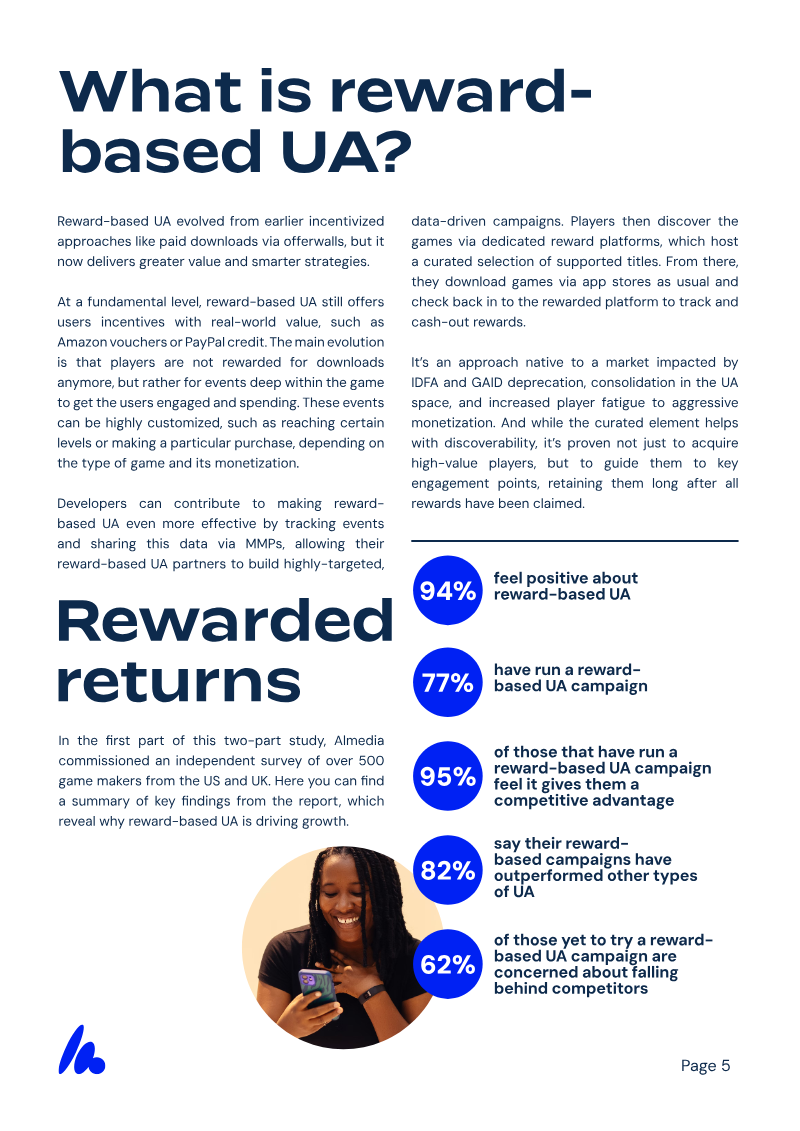
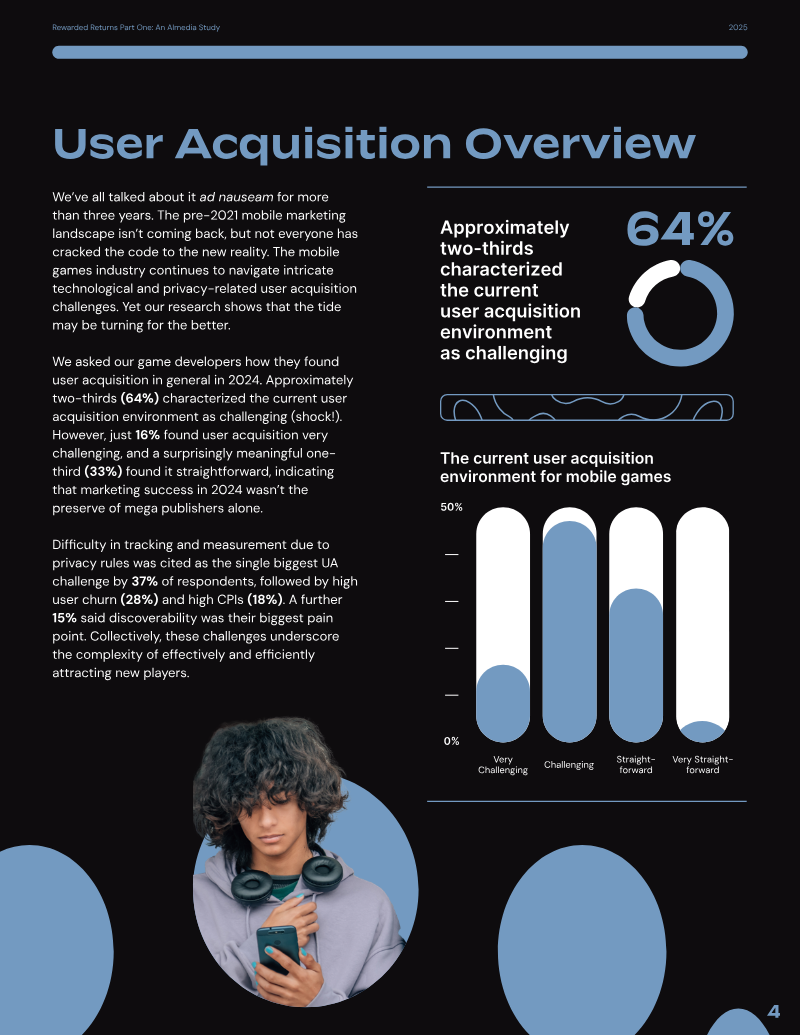
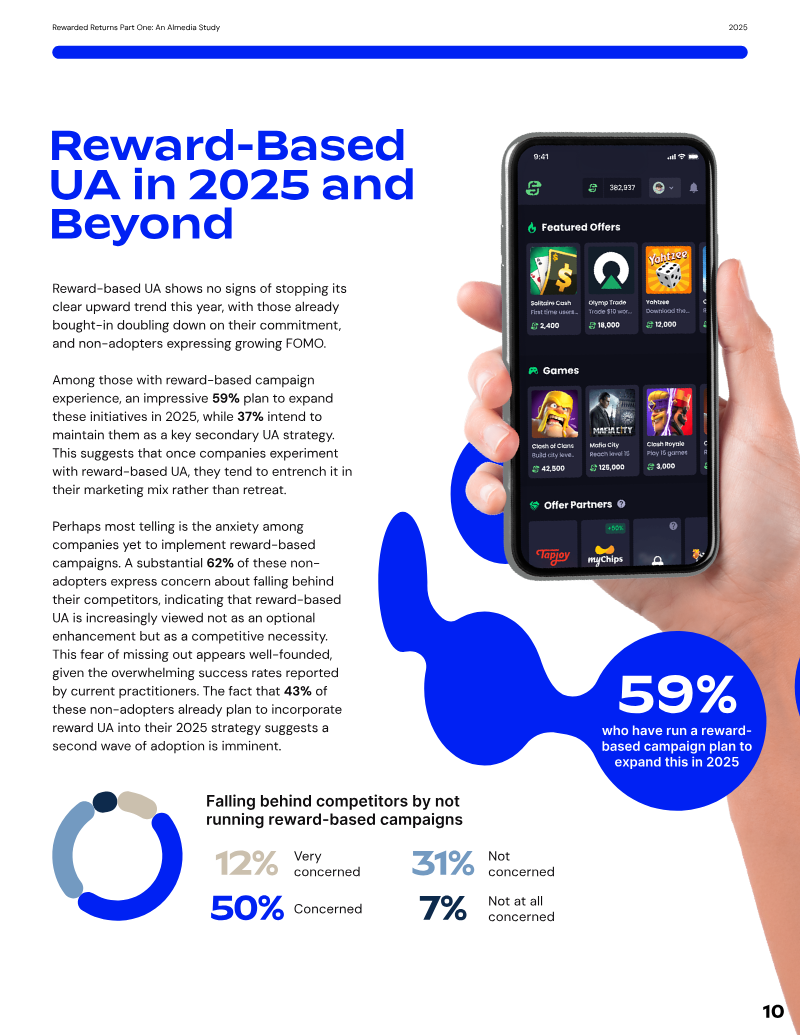
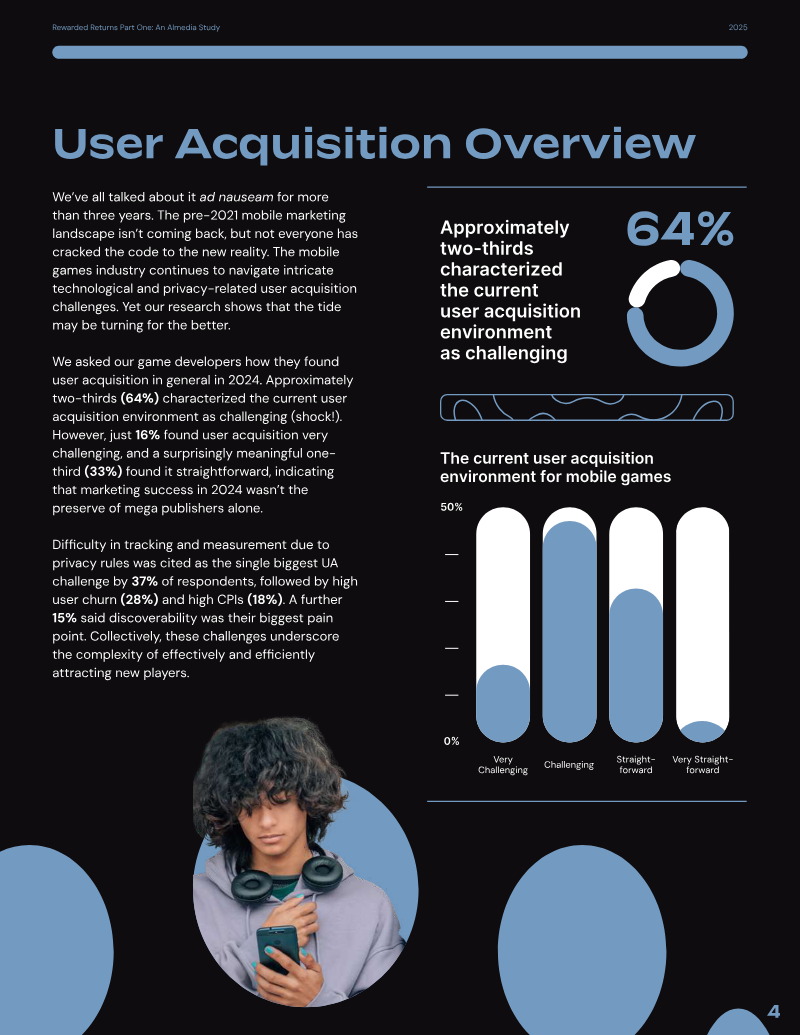
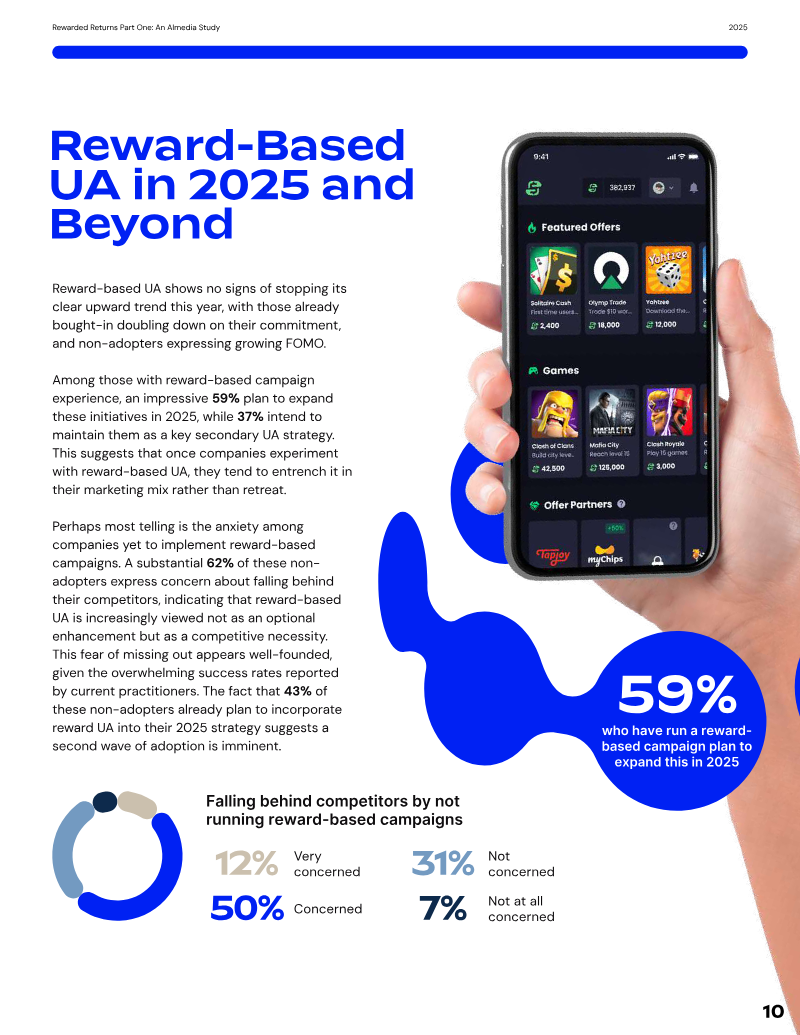
See it on page 3Rewarded user acquisition (UA) has evolved into a foundational component of the mobile marketing mix, serving as a critical solution to the industry’s ongoing challenges of rising acquisition costs and high user churn. As the global mobile gaming market matures and user growth plateaus, rewarded UA provides a mechanism to drive long-term engagement and retention by incentivizing users to reach specific in-game milestones. The practice is now standard, with 93% of surveyed developers across 10 tier-1 markets currently utilizing rewarded channels, and 61% planning to increase their budget allocations in 2026.
The methodology behind this analysis involved an online survey of 912 mobile game developers conducted between December 2025 and January 2026, supplemented by performance data from over 1,200 advertisers on the Freecash platform. Findings indicate that successful campaigns are no longer treated as experimental, with 31% of studios classifying rewarded UA as an always-on, core channel. High-performing studios typically allocate between 11% and 50% of their total UA budget to these efforts, often managing a portfolio of four or more channels to optimize reach and performance.
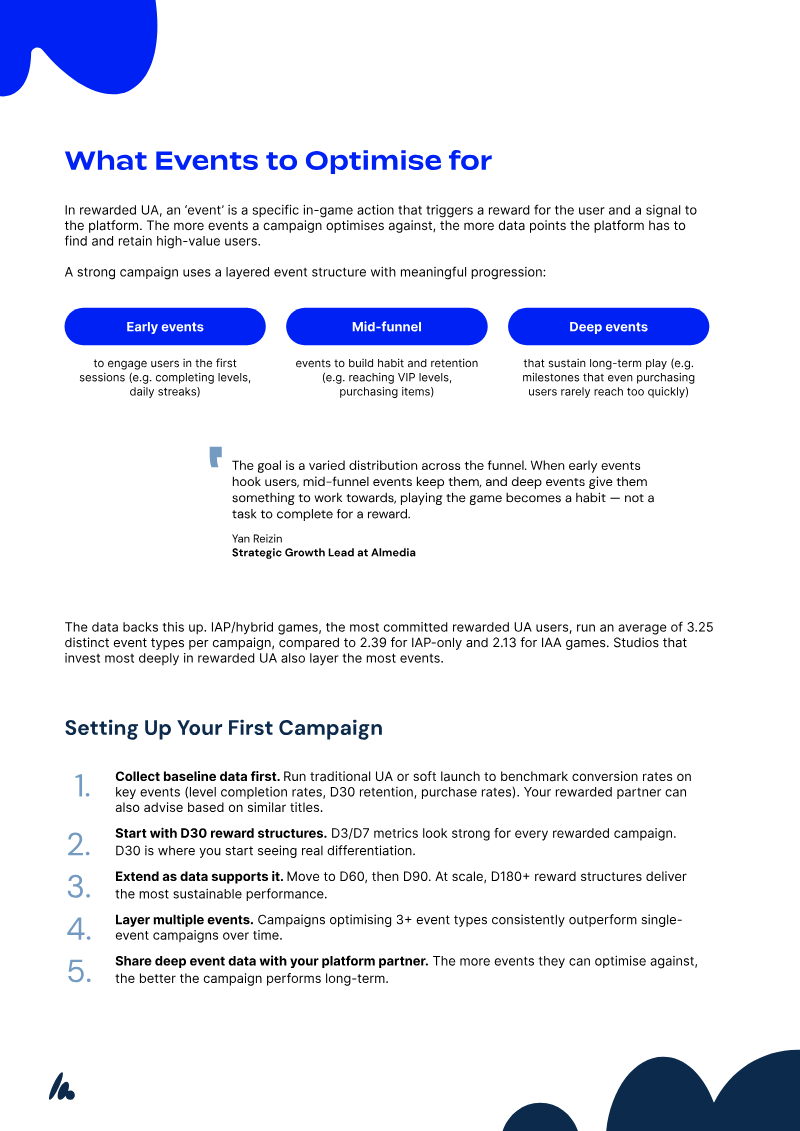
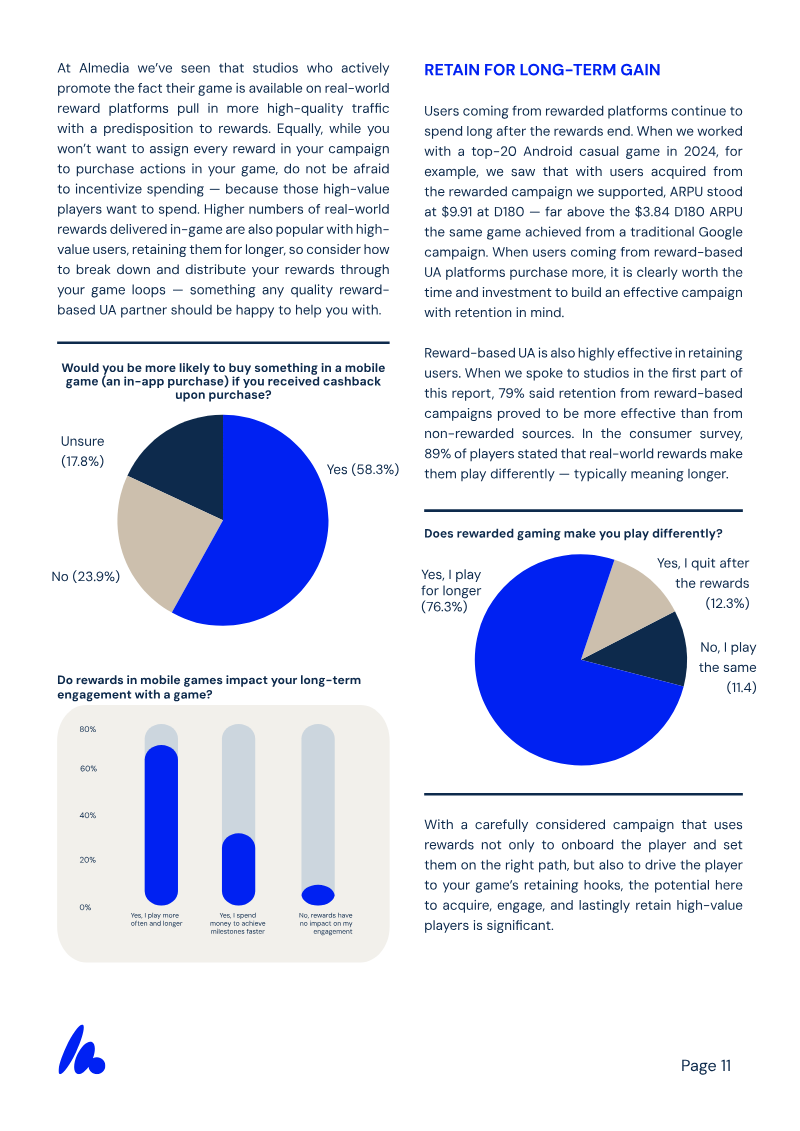
Strategic implementation requires a shift toward long-term event architecture. Data shows that campaigns optimizing for multiple, layered events—such as daily streaks, VIP tiers, and repeat purchases—consistently outperform single-event models. By extending reward structures to 90 or 180 days, developers can significantly improve retention and return on ad spend (ROAS). Furthermore, the industry is increasingly adopting automated bidding technologies, such as dynamic ROAS-based bidding, to replace fixed cost-per-install models. While gaming remains the primary sector, the model is rapidly expanding into non-gaming verticals like fintech and e-commerce, where gamification features are being leveraged to drive similar habit-forming behaviors and sustainable user value.
Two & a Half Gamers · 2026