VideoGameMakers
Epic Won the Fee War. So Why Is Everyone Losing? (Liam Wiltshire, Tebex)
16 Jun 2026118 min video
Transcript
A few weeks ago, Epic Games cut the value of V-Bucks by 20%. Same dollar, 20% less currency. And the reason they gave was simple and honest. They needed to pay the bills. Now, a lot of people jumped on that, called it a betrayal. Here's a company that fought the 30% tax, turning around and raising prices on players. I want to push back on that because I think it misses the entire point. Tim Sweeney took a principled stance that nobody else in the industry was willing to take. Epic spent five years and north of $100 million fighting Apple and Google. An unpopular fight, a lonely fight. And every developer watching or listening to this benefits from how it ended. Google at 20% fee cuts in China
and linkouts. The right to put a link inside your own game that sends players to your own checkout is actually on the table for the first time. So, you don't get to dunk on the one company that actually went to war for you. But you should ask a question almost nobody is asking. If Epic, the company that won that war, the company with the biggest game in the West, its own store, its own engine, if that company still has to cut V-Bucks value to pay the bills, what does that tell you about everybody else? That's today's episode because the V-Bucks move isn't an epic story. It's a margin story. The entire games industry has a profitability problem and it's about to get much, much worse. Let me
lay out the math from first principles. On one side of the equation, player attention is finite and the competition for it is not just other games anymore. It's Tik Tok, it's YouTube, Netflix, it's streaming, it's everything with a screen. I've talked about attention compression on this channel before. Players now evaluate a game in roughly 16 seconds. 16 seconds to earn the next minute. On the other side of the equation is supply. iOS app store submissions jumped over 60% year-over-year in December after 3 years of basically no growth. Why? Because AI is collapsing the cost of building software towards zero. People who could not ship apps are shipping
apps and games are next. I've been deep in this personally and I'm telling you the flood has already started. We are heading into an era where entertainment supply is functionally infinite. Infinite shelf finite attention. When supply explodes and attention does not, two things happen mechanically. The cost of acquiring player goes up and your pricing power goes down. That's margin compression. That's the V-Bucks story. That's the layoff story. That is the story of the industry right now. So ask the first principal question in that world. What's actually scarce? not content. AI just made content abundant. Now, the obvious next answer is distribution. And in one sense, distribution has never
been more abundant. Shelf space is infinite. Steam will list you. The app store will host you. Anyone can publish. But getting on the shelf is not distribution. Getting a player to walk down your aisle is distribution, and that is the most expensive it has ever been. And it gets more expensive with every game that ships. Discovery is a choke point. So, yes, distribution is what's scarce. And here's a move most people miss. A player relationship is distribution. A player who knows who you are, trusts you, and comes back without being paid to come back. That's not a brand metric. That's a distribution channel. One you own instead of rent. Every other channel, paid UA, store
featuring the platform algorithm, you rent by the impression and the rent is going up. The player relationship is the only distribution channel whose cost goes down the stronger it gets. The scarce asset is the player relationship because the player relationship is owned distribution. And here's how you know that's true. Watch what the platforms refuse to give up. They'll negotiate the percentage. Google settled. Apple cut fees in China. But look at the fine print. Google lowers the headline fee and introduces a charge for steering. A fee for telling your own player your own web shop exists while chargeback costs quietly move on to developers and Steam. Valve is in federal court right now. a certified
class action of some 32,000 developers over rules that stop you from selling your own game cheaper anywhere else. Their position, no such written policy exists. The emails in evidence, however, suggest otherwise. That's not me speculating. It's in the court record. The platforms will give you margin before they give you the relationship, the login, the payment method, the purchase history, the refund. That's the part they keep because they've understood for 15 years what most studios are only starting to see. The relationship is the moat. Now, last week I interviewed a guy who said it better than I can. The real story isn't the 30%. It's that regulations are quietly changing who owns the player
relationship. Who owns the player relationship? In an attention economy, that's a whole game. And it's why what I'm about to tell you next is, I think, one of the most under reportported stories in our industry. Because while everyone argued about percentages, somebody already solved this, not in theory, in production, at scale for 15 years, just not anywhere the industry press ever looks. It's something of a shadow games industry. There is a Minecraft server, not a game, a server called Hypixel that holds the Guinness World Record for concurrent players and is closing in on year 15 of operation. Microsoft doesn't run it, a community
does. There are 5M role-play servers, the multiplayer layer on top of GTA 5, where players have held the same job in the same city with the same friends for years. Thai communities, Portuguese economy servers, German servers. No publisher pays for the hardware. No platform processes the payments. The people who run these worlds own the entire player relationship and the players pay them directly happily. In a brutal attention economy, these communities have held people for a decade plus. And here's a number that made me sit up. The company that built the payment rails for this world, a company most people in this industry could not have named six months ago, but this company has
processed $1.5 billion in lifetime payments. Now, precision matters. That's their total volume. These days, it includes direct to consumer for studios you have heard of, Rockstar, Take 2, Hightail, and they're not the only payments company serving game servers. So, what's the UGC server economy worth in total? Honest answer, nobody knows. No earnings call reports it. No analyst covers it. The best window anyone has into this market is one company's books and through that one window a billion half dollars. This market is big enough that the number should exist and it doesn't. That's how deep in the shadows this thing runs. And that company started by a 16-year-old in his
childhood bedroom in Nottingham, England with 20 the price of the domain name. And we'll get to that story because I think it's worth it. Now, why should you care what Minecraft kids and GTA role players are doing? because their data tells you what a real player relationship is worth in dollars. Three numbers. Number one, when a purchase goes through a creator code, a streamer the player actually trusts, average spend goes from $24 to 41. In Rust, from 18 to 60, a 227% lift. And before you say promo effect, 84% of players only ever use one code. One, that's not a coupon. That's loyalty. Number two, the same player
buying the same content spends 50 to 70% more with buy now pay later than with a card. Players are budgeting entertainment like an investment. Now, the guest you're about to hear calls every player purchase a capex decision. And once you hear it framed in that way, you can't unhear it. Number three, on desktop games, desktop, 35% of purchases happen on a phone. Players keep one screen in the game and buy on the other. Players are optimizing their own checkout flow because nobody designed one for them. Put those numbers together and the conclusion writes itself. In a world of infinite entertainment, players pay more, meaningfully, measurably more, when they trust who they're paying. The relationship isn't a soft metric.
It's the margin you've been looking for. The industry spent 15 years engineering pressure. The data says we should have been engineering trust. So here are the three questions I couldn't check. If even the winner of the fee war is squeezed, where does margin actually come from? When AI makes content infinite, what's the asset that appreciates? And what do a million Minecraft kids know about player relationship that billiondollar studios still don't? To get the answers, I spoke with Liam Wiltshshire. Liam is a GM of TEDex. They power direct to consumer payments for Rockstar, Take 2, Hightail, and 5M. And they're the company behind that $1.5
billion. Liam joined when it was two kids in a kitchen table and he's been there for a decade. We get into the merchant of record model. What Brazil can teach you about checkout. How Hightail launched off Steam and secured two years of runway from pre-orders alone. And what happened the day a 16-year-old's side project started making money in his parents' house. Our discussion with Liam Wiltshire, GM of TEX starting right now. I think while a lot of people in the industry, me included, we have a kind of a very simplistic understanding of DTOC and what people mean by DTOC, there's a lot of focus in terms of mobile web shops, for example, but in fact, it's a more complicated and dynamic landscape
than I think most people are aware of. a number of headlines. For example, Epic just slashed V-Bucks per dollar by 20% to quote unquote pay the bills while there were layoffs happening as well. Apple cut fees in China. Google settled with Epic at 20%. Fortnite is back on the Play Store. Hightail, who you work with, have launched with 0% server commission. And we can go into more about what these kind of UG UGC servers are all about, but from your perspective, what's going on in the industry today? Yeah, absolutely. I think this is really important because we see Epic changing V-Bucks because they needed to increase their margins and pay the bills. But on the flip side, studios such as Hypixel Studios when they launched Hightail forgoing the opportunity to produce additional revenue because they felt that was the wrong approach to take. And for a lot of that, I think they you could say, well,
how can those two things be true at the same time? What we see and what we need to recognize from this is that players have a much bigger say now maybe more than ever about how they are spending their time and their money. We have recognized that spending power across the world has gone down right like everybody's kind of quality of life and cost of living has gone up but salaries haven't kept up. Everyone is making a lot more intentional choices about how they spend both their time and their money. The reaction to some of these things being actually the winners right now are the ones that are recognizing that and the ones that are respecting the players. That's the theme we're going to continue to see this year is the studios and the games that are going to win are the ones that are actually treating players as almost an equal partner in this whole situation and are trying to find a way that works for both sides fairly. I think that's an interesting point that
you're mentioning, Lyn, because it does seem that with the way that the world economy is going and with what's happening with AI, where there's so much supply now in terms of well, not not just because of AI, but because of just in terms of all the things that games are competing with that it sounds like what you're saying is that players are going to be more discerning. And if a company wants to actually be more successful in terms of generating more revenue, it's got to link better or get more player feedback or input and could you talk about how do people do that?
Yeah, I think partly it is just treating players with I don't want to say more respect because that's unfair. We all know that our players who play our games pay the bills, right? Look, this is the end result. If we don't have players, we're not going to get very far. It's recognizing that today's player has a level of sophistication around they're making capital expenditure decisions and that that capex is both time and money as we talked about but it's not just a
oh well they're playing this game of course they're going to make a purchase. It's players are making a real conscious decision on like is this worth am I going to get enjoyment am I going to get a return on this investment of time and money playing a game and that's the same whether it's a purchase or whether it's watching ads are a time investment just the same as buying a battle pass is a monetary investment right and so I think lesson number one is recognize that is the reality you know games that still and we've all seen it we've seen these monetization kind of cycles and mechanics that that even when you look at them, they they feel a little bit like this is a little bit icky. It's a little bit, you know, pulling the wool over the players's eyes. Players are far too savvy for that. They will sniff that out immediately. So, that's kind of number one is even without talking to the players, just understand they have a level of sophistication. Gamers today have a level of sophistication that's not going to wash. But second of all,
like owning the relationship with your community. we we are moving and one of the things with D2C is very much this whole concept of it's not just about kind of saving fees and all that stuff. It's it puts you rather than it being a gatekeeper between you and your player base. You have direct contacts and direct relationships with your player base and you can build those meaningful relationships and then that can expand into Discord or forums or just how players are playing. You give people options on how they want to spend. Certain players might prefer cosmetics. Certain players might prefer kind of level skips, whatever that might be, and give them the options and understand what players are choosing to buy and give them give them that option. Don't try and force something down their throats that isn't the thing that they want. The other headline that we talked about is like the app store fees and certainly if you think about the game studio it has this relationship with the customer but sitting in between them is that app store and it's at least on the
mobile side they've been taking 30% and there's been a lot of push back against that now with what we saw in terms of Google to 20% Apple to 25% in China and we've we're seeing stuff happening in the EU would you say that debt is a 30% % dead and where do you from your perspective where do you see that kind of heading towards?
I mean it makes a great headline doesn't it? You know it's the big thing that you can put up 30% is dead. It's going to get clicks.
It is I think it is true like with a massive asterisk. And what I mean by that is I think what studios and indie devs have recognized is that there are alternatives. Now whether that is through fee reductions in app stores, meaning that more money is being passed on, a a cynic might argue that Google's change now to start passing the cost of chargebacks on to developers is maybe a way to take some of that back. I can't say that it is, but there is certainly a
cynical viewpoint that you could take the timing of those two things. You know, maybe there's a relation, maybe there's not. But I think we are going to see different ways where you know these platforms still want to make their margins. They will find other ways to do that. Whether that's leveraging data in different ways, whether that's like I said passing on certain risks that maybe they previously absorbed onto studio onto the developers. So I think is it is 30% dead from a platform perspective? Yes to a point but no in other ways. But I think the bigger thing is that what it has done is many more app developers certainly and game developers, mobile developers, PC game developers have recognized is there is an alternative. There's another way they can do this that isn't necessarily going to be a replacement for those distribution channels, but certainly as a supplementary route will give them a much more significant cut of that revenue than maybe they've received in the past.
I actually have a quote from you here.
Maybe you could like I don't know if I have this quote right, but I think you've publicly said something along the lines of that the real story isn't this 30%, it's that regulations are quietly changing who owns the player relationship. And so I was wondering if you can go into that into a little bit more depth because it's certainly like you can make the argument that from a game studio perspective, the stronger the relationship with their customers and players, that is what is actually putting pressure on the app stores to reduce their fees. But it it'd be great to get a better characterization of what you meant by that.
Gaming in some ways is a little bit behind in in some ways when it comes to like culture and popular culture and media and that sort of thing. What I mean by that is if you think about movie stars or music artists, media artists, whatever any of these other sorts of like creative industries, we talk about these individuals and these bands having fans and sometimes even super fans. You you have I'm too old to understand half of this Swifties and they have their names and they're almost like their law
within these different groups, right? And they and you have these massive fans of actors and art musicians and all of these things. But we don't tend to talk about fan bases within gaming. And that is and I think a lot of the reason for that is because there has always been this kind of artificial divide. never felt truly connected with the developer of a game or with the studio that developed a game or whatever it might be whether you know so whether it's an indie or a larger studio there was never that kind of connection and so one of the things that we really advocate for with DTOC is using that as your opportunity to build that connection and have that real kind of those touch points almost expose yourself a little bit more to your player base convert them from being players to being fans that proud to support your game. It's it is a unique opportunity having those direct purchasing points and having that direct interface. So yes, absolutely. Will you save fees using DTOC? Most
certainly you will. But is that the key moral of the story? Less certainly in our opinion. But using that as an opportunity to create a long-term fans of your game and your studio that want to buy the games that you play or support other things that you want to do is super super valuable and in our opinion certainly in some ways more important than the fee savings in the short term. Yeah, I actually think that's a very critical point that you're making, Liam, because to the point that we actually touched upon attention economy, there's going to be so many entertainment options in that if there are like no switching costs, people will just go wherever, right? And just getting a user, acquiring that user is so difficult. So, to the point that you're making, sure, maybe you could save a little bit of money on your app store fees, but more importantly, if you can help game studios develop a stronger relationship or bond with their audience, that is just so much more
valuable than just saving that whatever 5, 10, whatever percentage that you save on the the app store fees. And so I actually wanted to before we move forward into a little bit more detail, I I was hoping you could actually help characterize the market because again I think one of the things I mentioned is that for some of us I'm in the mobile gaming industry. When I think about DTOC, the thing that just comes to mind is oh a web shop. Oh, you save some fees. But the landscape is actually much bigger, right? It's not just mobile. It's mobile. It's it's web. It's PC. It's and I'd love for you to help characterize this UGC server space which I think a lot of people don't know a lot about. There's way more similarities than we recognize. And the reason for that and again this is another one of those examples of where we can learn from the wider kind of e-commerce industry. There are things practices that have been in e-commerce for a long time that only now we're starting to see come across to to to gaming. So for
example, yeah, I'll take UGC. So UGC and game servers was TEX's genesis. Happy to talk about that a bit more later, but that's where we started. We started doing monetization for Minecraft servers and Gar's mod servers and Rust and then we went into mods and all these things way before we got into working with studios and helping them grow their player relationships through DTOZ. But a lot of what we learned there, for example, is very similar to what we see in mobile. The average transaction value is often the same. The kind of short life cycles of some of these experiences. It's not like a PC game where you might play for how many hours of gameplay there is. A platform like Hypixel, you know, largest Minecraft server, Guinness World Record holder for a number of concurrent players, they have lots of mini games. So they have hide-and-seek and they have sky block and they have all these different types of gameplay. They are in terms of the cycle and the mechanics much more akin to a mobile
game. Short sessions, snappy activity. You play something for 3 minutes and then that's it. You move on to the next level or whatever it might be than traditional PC gaming. So there's a lot of overlaps and a lot of things that we can learn around how to share value between gameplay sessions. It's not like a DLC on PC where you're going to you're you know you're buying hours of additional content. You when you're making that investment decision as we talked about for a game server or mobile it's like is this value going to carry on to my next play session or is it one and done because if it's one and done the the ROI calculation in my head and yeah I might not think of it in that way but that is the calculation we're doing is much lesser but those lessons apply both. And then likewise, we see PC as these you're selling premium games, double A, AAA, whatever. But a lot of the logic behind microtransactions in PC games, and there's a lot of views on that, positive and negative, take a lot of lessons from the smaller transaction
value, the kind of immediate kind of payback that we see in some of the design patterns in in mobile and game and UGC game servers as well. So I think there's a lot of ways you can leverage the same ideas and the same techniques across these different things. But fundamentally yes like the key difference that we do see is a lot of it is to do with I guess game session length. So it's are we talking short sharp mechanics, short sharp cycles of this is a threeinut kind of set piece almost or is it a sprawling 5hour adventure and you know how you leverage the players's attention and the right time to strike. You know, we talk in marketing around you want to have the right message to the right person at the right moment. And the what that right message in that right moment is going to be very different for someone who's dedicated 20 30 40 50 hours to a game versus someone who might be playing in short five minute sessions. So that's kind of
the big difference is when the right moment is. But in terms of like a DTOC perspective, in terms of a monetization perspective, you know, the same concepts, the like I said that right message at the right moment is exactly the same. A lot of things that we're seeing around the massive impact in influencers and social proof applies across all whether it's console, whether it's mobile, whether it's console or PC. That is applying in the same way. a lot of the same kind of ways to build that loyalty and that kind of sense of fandom apply across them all. So I think there's a lot more similarities than people give it credit for. Right. So it sounds like the similarities you're talking about are like some lessons you learn from pattern buying patterns that you see from players. But in terms of the if we were to just try to explain to our audience what payments looks like or what the service looks like from a D2C perspective on the different platforms I think mobile is simple to understand right there's like a web shop it takes you to a web browser experience on PC
there's Steam so what where does the TEX or the DTOC kind of solution sit with with a game developer that might have a Steam game and being and paying fees to Steam where do where does a DTOC kind of payment solution come in.
Sure. And actually again, I think it's becoming less and less different because most gamers these days are crossplatform. You don't have very many I only play on PC or I only play on mobile or I only play on console. Yeah, people do a little bit of everything. So where a few years ago absolutely the concept of going to a standalone web shop for a desktop game would have been very alien 100%. But I think you know we are seeing less and less now that's the case. Certainly for live service games, having a web- based presence that your again your the people that know your game, the people that know you, they see in Discord, whatever else is absolutely and I also think kind of the other side
for selling the games themselves because you know Hightail which is a launch that we were involved in is a classic is a great example didn't go live on Steam at all only launched via their website but players again when you build this sense of fandom players are then prepared head to sacrifice a little bit of convenience. You know, I'm from an age where I remember when my games were all on a big stack of floppy discs and then I thought it was the best thing ever when my games were in a CD wallet, but I had this whole stack of CD CD wallets and you'd pull a CD out to find it was scratched and you couldn't play it and all the I remember all that. But Steam is brilliant. You know, it has this amazing library management that players absolutely love. But and and trying to get ask someone to give up that convenience without having that existing relationship is definitely tough. But you build that relationship and you go like, "Hey, we're going to release our next game direct on our web store. You know, that's the place that you're going to buy it. You know, it's really going
to support us. It's going to help us out." And those players that are proud to support your game will absolutely then go, you know what? I love this. I love this studio. I love this title. I want to support them as much as I can. I'm okay with having that extra in launcher on my desktop. I'm okay with it coming via a different channel.
Right. So on the PC side, it it looked like a a separate launcher and a DTOC solution would essentially be very similar to the mobile side where it's like where you guys would be powering the the web shop and handling the transactions and things like that. And we can go into a little more details and because I do think that another thing that would be useful is for some some of the folks in the audience to understand what is the value that they're getting from TEDex right like they may not understand things like merchant of record chargebacks fraud all that kind of stuff but um but just just to kind of close the loop in terms of the platforms so mobile web shops PC like launcher and kind of web store web I assume that
would also look somewhat similar in terms of like um having a web shop that you guys would also power. Is that correct?
Yeah, in some ways web is almost the most native, right? So I still think back to some of the classic games that the the classic web games that I played as a kid like Neopets and then just as I got out of Neopets like Club Penguin came along and all those things and a lot of those games still exist which is amazing. But obviously in that sense there is a reality right now that if you download a game via via the the Google or the Apple App Store or you buy a game via Steam or you receive a game via Steam, there are restrictions in those platforms about promoting external payments or external web shops from within the game. Obviously you now can with the new steering rules on Google, but they charge you for that. And again, that's another way that 30% isn't really dead because the steering thing comes back in. So with web games, web native games, you remove that hurdle of it needing to be outside of the game. You can literally have the almost the
classic inapp purchase experience where it's like, hey, I'm going to buy this directly from the game. I'm going to click that button and the checkout pops up and you go and make your payment and and you get on with your gameplay. Interestingly, and this is related, that whole concept of being quote unquote distracted from the game, players are very good at solving themselves. So, we see a lot. So, even with our UGC game server space where most of those are desktop, most of them are like Minecraft, Rust, Arc, those sorts of games, right? And yet, even on those 35% of purchases are made on mobile devices. So players are actually using the web shop on their phone so they don't have to leave the game experience. And that is something that we find super interesting and something that you know certainly for desktop games more broadly we talk a lot about actually you know optimizing your purchase experience for mobile even if it's a desktop game because players can you know I I see my
kids doing my kids will have three devices on the at the same time. They'll be playing they'll be playing something on the PC or on the console. They'll have YouTube on their phone. they'll have something going off having a phone call on their watch, whatever it is. And it I find it incredible. The ability to multitask in that way, I find incredible. But we see a lot of it and a lot of the data, the growth in mobile payments even on desktopbased games really is evidence of that. I'm going to stay plugged into the game while multitasking my purchase on a sec a second device.
I was hoping you could also talk a little bit more about like the steering rules, right? So on mobile, there are a set of regulations about how you can inform and try to drive some of your players to your web shop. For PC Steam, how is that different? And then and then what you were saying on web is like it's so native and direct there's no real like you can do whatever you want, but can can you talk more about like on the PC Steam side, how do you effectively drive more of your player base to your own web web shop?
I I guess that's a very timely question.
Obviously, I'm sure we all saw the news in the last few days with the with the current case and and the statements that being made that no Steam doesn't have a an anti- steering policy. Uh but then there being evidence of emails and things that suggest they do. So, you know, it's a little bit unclear right now like we've got statements that say they don't have one. There is an evidence that suggests they do and indeed in their terms it suggests they do. So in many ways in that sense the mechanics are very similar to to I guess traditional mobile mechanics it's very much a case of we are going to build this relationship and this is one of those things that I say about learning from you learning from other e-commerce so you make that first kind of you know and I'm going to use mobile as an example for a second then I'll go back to steam but you know we talked about the fact that Google are now going to charge a steering fee if you steer out to pay for a third party payment, they're going to charge a fee. I kind of like that as as a mobile if I was a
mobile developer, I would be okay with that as long as I see it as a cost of initial acquisition. So, what I mean by that is this is something that that that I've seen if if you buy things from say back in the day from eBay and you'd buy something from eBay, particularly if it's like a new item rather than an actual second pound item. And you'd often get it lovely packaged in a box and you get a little card. They would say, "Hey, I'm so grateful for your purchase, but actually next time you purchase, come straight to my store. This is where all the best deals are." And that same mechanic certainly on mobile works really well. Where it's like actually pay the extra 5% for the steering the first time, no problem. But when they make that purchase, send them a follow-up going, look, we are so grateful for your purchase. We're so grateful that you've supported our game the next time. Check out our web shop. And we're starting to see with this suggestion that actually linkouts are are potentially going to be permitted on Steam. Certainly from kind of what the quotes that we're seeing in the media now. We need to see if that turns into reality. I think that same mechanic will
become very very powerful in in PC gaming as well where it's like okay you link up the first time and if there's a fee attached you consider that an initial cost of acquisition. You build that into your business plan. Cool. you then promote from that purchase. That's how you then set up the hey visit the web shop next time start to build that connection
right and that's an interesting way of thinking about it as the the platforms are kind of like your acquisition channel and then from there if you are able to to the point that you made earlier develop a stronger relationship with the player then you can own that player relationship going forward have better economics going forward and so when you're modeling your your P&L or your business case for a game that that's something that you should consider because there will be some conversion where those players don't need to keep paying those app store fees over and over again.
Yeah.
So,
just just to jump in on that, that is also a really big mindset shift as well because we the story for the longest time and we still have these conversations with studios today. It's
like how can I maximize the one-time spend? Like there is still a lot of a mindset that it's like how can I get them to spend the most right now? And actually that's when that kind of you know initial cost of acquisition model struggles a little bit because it's like if they're only going to buy once you've paid that five that extra 5% and you're never going to make it back. The whole focus exactly as you rightly said is actually I don't mind if that first purchase is only $5. If I can then get them to come back and build that relationship and build that that fandom that we talked about and they come back and make 20 $10 purchases over the next year that I don't have to pay that acquisition cost on and goes directly via my web shop and I'm only paying maybe 3 to 7% or whatever that might be depending on the payment method and all those things that initial acquisition cost suddenly becomes the best business decision you've ever made.
Right? And so going back to our framework, so we we've talked about mobile. I think that's probably the most
well understood at least by the the audience that that watches game makers, but then web is relatively straightforward. We've talked about PC, Steam. In terms of the console space, I mean the way that my simple understanding is it's a very tightly controlled walled garden. Does DTOC fit in the console space as well or does it not apply?
It absolutely does. It is okay. It's more challen it's it's more challenging but with all these things it takes the brave individual to take the first step right so and the example I use of that so our parent company we're part of overwolf um we have been for the last four four and a half years uh which has been amazing and obviously they are leaders and we leads in so many areas about UGC not just game servers but mods and the wider creator economy asks Five Lended was the first game that allowed third party mods on console.
Wow.
Everyone said it would never happen. Everyone was like, "No, these Sony and Microsoft are never going to allow this to happen." And without giving too much away, it was hard work. It took a lot of conversations and a lot of building trust. That's a lot of it is they're those are very power like important brands. They're very meaningful brands. They have a lot of impact. And the last thing completely understandably that Sony or Microsoft want is for their brand to suddenly be kind of dirtied in some way because these things are cropping up and illegal content or whatever that might be. So absolutely makes sense, but it takes somebody who is prepared to put in that time and effort to to change that paradigm. And we're now seeing other games that are following up with modding, following that kind of template of high trust, moderation, enforcing the rules, all these things that that that we started alongside Studio Wildcard and their team
in ASA, we're now seeing starting to replicate in in other games. And that's incredible. And so, actually, D2C can be very similar. The most obvious example being Roblox. Of course, you can buy Robux in game, but you any Robux that you buy on the web, you can also use in your on console with that same user. And indeed, Roblox are very open about the fact that if you buy on web, you get more bang for your buck as it were. You know, you get more value for that same purchase. That is a model that there are other games that do very similarly. And as such, are we would we even want to remove the consoles and the console platforms from that conversation? No, because there is a level of trust and certain players will always have more trust in I'm going to buy it directly from here or it's more convenient whatever absolutely I would say to any game developer you absolutely you know having a smaller percentage of a purchase is still better than having no purchase at all right but again you
build that relationship and for those players that understand that they want to support what you're doing and they want to make sure you get the biggest level of kind of leg up and the biggest level of support that you can having that third party option like actually you can buy our virtual currency direct from our store and use it in game on console is absolutely a valuable play. Speaking now maybe talking about servers and UGC which is where you guys have operated for a long time and where you have a lot of expertise but probably I would suspect the least understood by our audience. First, could you help characterize what is in terms of like whether it's Minecraft servers or what is 5M Rust? Maybe you could speak a little bit more about Hightail since you guys work with them. And so on the serverbased DTOC side, could you kind of characterize first explain that market a little bit and then characterize how you guys fit in?
Absolutely. I would, you know, that'd be great. So, as I mentioned, game servers and UGC was our genesis. That will always be a really big part of our DNA.
We are so thrilled to be able to work with the likes of Rockstar and Wildcard and all of these guys. But actually supporting small indie creators running their game servers, building mods is something we will always love to be a part of. And the reason the reason it is so important and the reason it is actually super relevant is that a lot of these servers in some ways I like to say it's kind of like the original Roblox. So Minecraft servers have always had different experiences. You can join 50 different Minecraft servers and they're all run like Microsoft don't run these servers. They're all run by the community by different different groups and different people and different organizations. But you can join any of a number of different servers and have a very different experience. You have economy servers where the whole thing is about increasing your net worth through through doing activities or mining or whatever that might be. You have miniame servers where again much more like that mobile experience where it's short, sharp, you get in, you play a couple of
rounds of hideand-seek or whatever it might be and you get out again. You have other experiences where it's role-play type experiences where you live out a kind of virtual life. And these different experiences completely change the value proposition of the game for the player because it's no longer about just kind of punching trees and mining for gold and emeralds and whatever it is, you know, it's no longer about just playing the story through and you get to the end of the story and you go, "Okay, well, what's next?" It is a complete universe of different experiences and different worlds and different gameplay mechanics and all of these things. So the way that works as I said is very rarely do the studios and the publishers have much to do with running these servers. There will be guidelines. There will be things that you can and can't do on these servers. There'll be rules about you can't clearly illegal content obviously but also other things to protect the brand. So they have that kind of side of things but they don't
get involved in the management of these servers. They're not providing infrastructure. They're not providing CPU runtime or anything like that. That is done by the community. Uh and some of these servers have been going for years and years. Hypixel is I think closing in on 15 years now. Again, I said world record holder. Some of the 5M roleplay servers, which is the multiplayer layer on top of GTA 5. again, they've been going for many years and like there are storylines within some of these roleplay servers where people have gone literally from like graduated through jobs and and they almost treat it like a second life in in in many ways. And so because of that, because there is no kind of other than providing the software, there's no operational support from the studios, these servers historically ran into a lot of challenges because you have to pay for the hardware. Like I said, that hardware is not coming from the studio. It's not like a game like a matchmaking type game like a Rocket League or whatever where these servers are spun up by the game and by by the publisher that
you have to run these servers. You have to you if you're producing custom gameplay either you have to build it yourself or you have to pay a developer who can do so. If your game grows to a certain scale and you need kind of moderation and support and all these things, all that stuff costs money. Um, so that historically was a big challenge for a lot of these a lot of these servers. They wanted to grow. They wanted to be able to create these unique experiences. Some of them might be geographic. You might have Portuguese speaking servers or Korean speaking servers or, you know, or or French-sp speakaking servers or whatever. Some of them might be unique gameplay. And to to do that, you have to generate revenue. The very earliest servers used to do this through kind of donations. And yes, there might be like some reward for it, but it was very I don't want to say black market because that makes it sound wrong, but it there was like no automated way for this to happen. It was like you would send some money to a PayPal account and when that person got
an opportunity to do it, you might get the rewarding game, but that might take two days by which point maybe you you've got worried that you've not received it, you might then open a dispute, whatever it might be. So that was the very first version and that was the problem that that kind of TEX tried to solve. So we were like hey if we provide that kind of layer so we provide the web shop interface and we produce you know we provide the integration into the game so that the minute that purchase happens the the the reward that you get is immediately fulfilled in game and honestly that was the genesis of TEX back then we didn't actually process the payments we had integrations with all these different things but we just provide the integration you had to plug in your API keys and you had to have the agreements with PayPal or Stripe or Molly or whoever it might be you had to deal with sales tax, all these things like we didn't touch any of that. We just had this web shop solution and this Yeah. And this integration into the game, but that whole thing of actually making the creators life easier really was the thing that kept us going. It was
the thing that we got up to do. It's the thing we still get up to do today. And so we very quickly started to realize we started in Minecraft and then we started supporting other games because we saw these exact same challenges in games like Garismod and Rust and yeah ASSE at the time and games like that. So we started supporting other games. We then recognized that actually as these servers continue to grow people were running into different challenges. They're like well I don't know how to deal with sales tax. I'm selling, you know, I might be based in France, but if I sell items into certain US states, one purchase is enough to trigger a tax audit. Ser server owners who the thing they do is produce brilliant experiences. The thing they do is produce these communities that love what they do and want to play together and want to enjoy these experiences together, that's what they do best. They're not accountants, they're not tax experts, they're not fraud experts. And so we recognized that actually that is the way we could help these communities continue to thrive by as I used to term it back in the day dealing with the
crappy business stuff. So we dealt with all the tax, we dealt with all the risk and the frauds and the global payments and all of these things and let them do what they did best which was producing these brilliant experiences. And yeah, so that's how TEX fits in. We basically free up these wonderfully brilliant people to focus on their craft, producing brilliant games if they're developers, producing brilliant kind of in-game experiences for for modders and server owners. And we deal with the day-to-day kind of business activity. So that's what they can spend their time doing, not worrying about tax returns in Ohio or whatever. And so to some degree, the way that you're describing it, your business is trying to make the life of the developer from a DTOC perspective easier and maybe even the players experience easier. One of the things I read is that with Hightail in particular that you were able to enable a singleclick purchase experience because
you had customer data or something. Could you explain that? And then the other thing that I didn't understand is that something along the lines that Hightail launched with 0% server commission for two years. Could you kind of go into the detail about how you enable that single single click purchase experience and then how is Hightail able to have this 0% server commission? If you could explain that'd be great.
No, abs. Absolutely. So I guess the first thing is and this is the great thing about I guess a network effect of a merchant of record like TEX because we will see players
sorry sorry to pause you but could you explain that concept as well for our audience what is a merchant of record because a lot of payments companies talk about that just for our audience if you can explain what is a merchant of record.
Absolutely. So a merchant of record is when a company such as TEX takes the full selling responsibility for a piece of content. So you know what that means
is and the way TEX does it is if you as a say you've produced a game and you want to sell copies of that game rather than you selling it to the player directly you say hey TEX I've got this game I would like you to sell it to players instead of me we will buy copies of that game from you at a price that we agree which is much less than say the 30 our margin is much less than the 30% or whatever from steam or Google or Apple or whatever and we will then sell it to the customer. Now you are still involved in that whole process. We brand the web store is branded as your game. It's not like they're buying from the TEX game store or whatever else they are buying from the high the Hightail game store in in Hightails Experience or the Dawn of Ages store or whatever it might be. They still have that connection to you. But the principle in the transaction is TEX. TEX is the one that has the contract with the player and the benefits as a studio or as a game
developer for that is that TEX as the principal is responsible for the sales tax. So if there is sales tax to collect and pay in Singapore or Texas or Ohio or somewhere in the EU or Australia or wherever else in the world, we cover sales tax in 120 odd jurisdictions these days. That is TEX's responsibility. If there is risk and fraud, that should be the merchant records responsibility. We can talk about that a little bit more. I have quite strong opinions on that. But certainly for TEX, that is our responsibility. If there is a chargeback for a sale that we've made, we made the sale. We will cover the cost of defending that chargeback. We pay any penalties. If we can't win that charge back and then we have to return the money to the customer, we will return that money to the customer. As a studio, you will never pay a scent. Like, you keep the money. So, if that $5 purchase, if we might lose on a ch on a purchase that has a charge back, we might lose $20, but you will keep that $5. It's as
simple as that. We handle the first level of support. So, if someone has a billing type inquiry, like, hey, I don't recognize this transaction, or I made this purchase, but I've not received the content. Any of those sorts of things, rather than you suddenly having to hire support agents to handle these queries, we handle that for you. Now clearly if it comes to game specific things it will eventually get to a point where it's outside of our kind of area of expertise and we would have to escalate at that point but a lot of that the majority of that kind of fairly straightforward billing type inquiries delivery inquiries compatibility inquiries those sorts of things we deal with for everyone that uses TEX as a motion of record. We handle the challenge of global payments. Gaming is wonderfully global. You know, you can be playing with players from literally anywhere on the globe, and that's amazing. But not everyone makes payments the way that maybe I might do or you might do. I very much I use my I I use my points card for basically everything because we're
trying to maximize the points. And I get that. But lots of players in in even countries, the Netherlands for example, most online payments are made using Ideal. For TV specifically, it's about 70% of all purchases of content from players in the Netherlands use a local payment method called ideal. They don't use cards. They don't use PayPal. Likewise, in Germany, actually paying with card is quite rare. Local wallets and account payment methods reign supreme. Other countries have local card rails like Rupay in India. picks in Brazil is a brilliant story where five years ago most even online purchases in Brazil were made using cash over the counter. You would make your purchase online and you'd get this little receipt and uh called a bleta. You would take that to a local convenience store and you would hand it to the the cashier and they'd scan it and they'd be like you need to pay 100 ray or whatever it is and you'd pay your money over the counter. They would then transfer that's been paid and they'd send the money off to the central agent
and all of this stuff and that was wild. But that was still five years ago. That is how the majority of Brazilian online quote unquote payments were made. Pix was a central bank kind of exercise to create a a true online accountto payment method so that when you make a purchase using Pix, it immediately comes out of your bank account and goes into the retailer's bank account. And all of in literally in the space of five years, Palttos have basically disappeared. TEDex now on on a given month is like less than 0.2 two of a percent of all Brazilian purchases use a baltto now the vast majority of picks but if you don't know that if you're not okay with the purchasing habits of Brazil if you're not okay with the purchasing habits of Japan or Korea or Germany or the Netherlands or wherever how like how are you supposed to do that it's impossible right so handling all these things this is the stuff that merchant records do this is why it's not just about understanding gaming but We
we bring in experts from the world of payments companies like Trainline in the UK and ASOS and like our head of fraud came from a gambling company because actually fraud and gambling is even worse than fraud in video gaming. And we bring together like these true experts in their fields so that you can focus on producing kick-ass content and amazing games and we will handle the rest of it and you can sleep much better at night knowing that the your merchant record has it covered.
Yeah, I can totally see the value in that. just it's hard enough to get a successful game, but then to have to understand all of those geographically specific payment issues and options and all that kind of stuff. Certainly, I think there's a lot of value in that. And maybe I could ask you one last question related to the platforms and the landscape. And then I would like to talk more about specific payment innovations which were new to me and I think the audience would be very interested in. But one last question in terms of the platforms is the notion of crossplatform, right? And so we've seen there are certainly a number of games
that are maybe increasingly I don't know where the trends are going but certainly a number of games are crossplatform in those scenarios what happens how should game studios think about payments from a crossplatform perspective where do you guys fit in and how should studios be thinking about D2C in a crossplatform scenario
I love crossplatform games because again if you're trying to build that connection we as a species we are increasingly on the We're not sat in one place all the time. We travel for work or we we commute every day or we fly to a foreign country and we've not got a massive gaming rig with us, you know, or for myself when I'm playing games in the evening, maybe I don't want to go through a bunch of driver updates again. So, I will just turn the Xbox on because it's easier. Like that's the reality. And so having a game that I know I can pick up on any of those devices, having a game that I know I can continue exactly where I left off, I'm going to get not the same experience because then
you're sacrificing somewhere, but a level of consistency so I feel comfortable. I talk I talked about my kids and how they work on multiple devices. Their gaming experience is very much the same. They play these games where they'll pick up and they'll be playing a game on their phone and then they'll be playing it on a console, then they'll be playing it on the PC, but they can instinctively pick up any of these devices and there is enough about the experience that is consistent that they even if it's the first time they've played it in that particular format, they can just pick it up and run with it. And I think that from a gameplay perspective is super important and we're seeing more and more of that like trying to build these kind of consistent design patterns. But it's the same with your payments because the habit is and this is that whole thing that we talked about earlier where the default mentality is well the the playbook for mobile must be different from the playbook for console must be different from the playbook book for PC. And actually, if I'm playing across all of those and I I've built that connection with you as a studio or
you as a developer, I want to have that consistency. I don't want to buy something on mobile and it not be available on PC when I switch over there. I don't want to buy something on PC and it not be available on console. So that actually having that consistency and having a crossplay session benefits. So not something that you're buying and the minute your play session is over that's it, you've lost it. something that the next time you log on, you still have that benefit. The next time you log on after that, you still have that benefit. That is like taking these things we're already seeing from a game design perspective, but applying it to your payment design. And this is like an important lesson that your payment design shouldn't be something you add on as an afterthought. You know, it is part of your gaming experience. how someone supports your game. Be be that through when they buy the game first of all, be that through in-game purchases, microtransactions, battle passes, whatever it is. That should be thought about as part of your core game design, not a, oh, how are we going to monetize,
put something on, you know, put something on top after the fact. And so that's like I I think we can just shifting gears from kind of the platforms and the landscape and maybe getting a little bit more tactical now. I have been reading and hearing about certain alternative payment options like BNPL for example and crypto and also hearing more about creator codes. So maybe we could take each of those in turn but just getting a little bit more uh tactical here. Let's start with creator codes. Could you talk about how do creator codes fit into some of these games? And actually, I've got a few stats. Let me try to pull this up and it'd be great. And I think this was data from you guys actually where so one transactions using a creator code is growing. So it's grown from 5.2 to 6.9% in two years. Revenue share is now 9.6%. average spend with the code is 70% higher to $41 instead of $24. In Rust, I
think you guys have said that there's a 227% lift, $60 instead of $18. And in Minecraft, 16% of all transactions use a code with an over 100% spend lift. So, could could you help us understand like why is this happening? Can you talk to us about creator codes and then how should game studios think about creator codes and integrating that within their payment experience?
Yeah, so first of all, I love creator codes. Anybody who will listen, I will say you absolutely should have an influencer kind of strategy. You should be leveraging creator codes. I could do an entire six hours on creator codes, I think. So, just be warned. Ultimately, the way we see it and the way we've seen it being used is creator codes are the ultimate in social validation. So, we talked at the very beginning, and I'm going to go back to that very first point I made that every purchase that a
gamer makes these days is a capex decision. They are choosing to invest their money, which we've already talked about. You know, there is everybody has less money at the moment due to all the things that are going on. they're investing their time and they want to know gonna get a return through enjoyment, entertainment, whatever that justifies that capex. And so having a source of validation of proof is so so valuable. having being able to see the game play and being able to experience someone that you trust play much like we talked about this concept of fandom. Many players have whether it's streamers or YouTubers that they they watch over and over again. I hear the same voices coming out of some of my children's devices every single day or it feels like I'm sure it isn't but it does feel like it. So do I. I have certain arc arc ascend arc evolved streamers that I
watch and YouTubers that I watch a lot and there is a level of trust. You build that kind of fan fandom for some of these for some of these content creators. And so if they are playing a game and you get to see them play it, you get to understand what are the what is the game play like? Is this something I'm likely to enjoy? And at the end of it, they're saying, "Hey, you can really support me. you can help my channel grow by using this creator code at checkout. They have done the work of going actually yes I think this is worth that investment. I think this is worth me investing my time and my money to try this game out and to make this purchase. But on top of that I now want to also support because I am a fan. I want to support this streamer or this YouTuber. And so by doing this you get that double value. So, as a player, I'm actually almost getting double the return because I'm supporting someone that I have a real affinity for and I'm getting entertainment and enjoyment from this game that maybe I wouldn't have known about otherwise. So, I think creator
codes in that sense, that's the way it should be thought about is it is the ultimate kind of social proof, social validation. It does lead that additional trust, that additional confidence that yes, this is a purchase that I feel comfortable making naturally leads to a higher spend. If you've got two options, it's like, okay, I can buy this bundle or I could, you know, that's that's 40 bucks or I can buy this bundle that's that's 25 bucks. If you've got uncertainty, you're going to hedge your bets. You're going to go for the smaller bundle. And the mindset might be, well, if I really enjoy it, I'll come back and buy the bigger bundle. We all know that doesn't always happen. I do like I will always I every single day I'll be like, right, I'm gonna come back to that. I I will definitely go do the dishes in in in 20 minutes. I'm just gonna get this email done first and the dishes will still be there when I go to bed. And it happens in our lives every single day. So absolutely, you know, giving them that confidence to be like, actually, I don't need to hedge my bets. I can go in. I can make this purchase. I I get, like I said, that feel good factor. I'm supporting this creator. I get to enjoy this this great new game that I've
discovered. It is absolutely a a double positive. It's one of those one of those rare occasions where the the sum of the parts is is much greater than than the whole.
Right. And so to the point like even at the beginning of our conversation that you had mentioned was the criticality of having a player relationships and it's these these influencers and creators that do have that relationship. And to your point, when a player is purchasing in in your game, one, there's the trust aspect where, you know, there there's there may be influencers that the players are watching over and over. They trust that person and they want to support that person. And so it sounds like and just looking at some of the data, it does seem like that is actually driving monetization in the sense that I think another one of the stats that I saw is that over half of um of of the people that use creator codes will use it on that very first purchase for for example. And so, um, how do you how do
you recommend to game studios that they incorporate that more strongly within within their games? Is it just establishing these relationships with creators and letting them know what's what's available or what what is your recommendation on how to leverage this? Because it seems like it works if you can get that influencer to like promote your game
and and that is you know, I think there's there's two approaches here. There is the what I kind of call the quote unquote agency approach. You know, there are platforms out there that maintain kind of rosters of influencers that are looking for um those those kind of opportunities. Now, my concern with those is that does it always come across as authentic? You know, if if I've got a a creator that one day is playing one genre of game, the next day is playing a completely different genre of game with zero relationship, like zero kind of relation between the two. Maybe they do
like both genres, but but the critical kind of critical analysis part of your brain is always going, you know, is this is this legit? Is this, you know, is this really what what I what I see? Sometimes it absolutely is. Um, but for me, the way I always look at it is, um, you know, find creators and find streamers that are already playing similar games to just give a an honest review, like give it an honest play test, give it an honest playthrough.
A great example of this is James Turner. James Turner, he's a well-known Sims, predominantly Sims YouTuber,
but he then does things with other kind of life sim style games. He's done things with Craftton's Enzoy and so you know that is that natural thing because if he's playing a game that is within his wheelhouse it is a life sim and he is infusing about it and sometimes he will compare it be like oh well kind of in in if I was playing the sins it'd be this but actually this is the mechanic here and actually you know what I prefer
this that like is like social validation through the roof like you know you're going
as a as a viewer it's like he's playing he's playing a game that fits into this category that I know and respect his opinion on. It is a category that I enjoy myself. He is enthusing about this game that sits within this category. I need to check that game out. And so definitely like yes, going down the agency route absolutely can work. And in in some ways is easier because it is, you know, you're not trying to pitch to the streamer almost that they should do this thing. you know, it it's more a case these are people that are looking for these opportunities. But kind of the real like the highest levels of social validation do tend to come from building again is that our word relationships with the streamers and the YouTubers that are within this genre of game, this style of gameplay that they're already known for,
right? And a couple other interesting data points that I saw, one is that 84%
of players just use one creator code. So to the point that you're you were talking about earlier, these players do have that relationship and loyalty to a specific influencer. But the other thing is that Hightail hit 20% of pre-launch purchases via creative co code which is I if I understand correctly three times your platform average and so maybe you could talk to us about what did Hypixel do specifically to make creator codes work on at their launch and it maybe it's some of the things that you've already mentioned but was there anything specific that they did.
So there's kind of two parts to that. So the first of all, again, it's exactly what we what we already talked about is they found or not found, they built relationships with YouTubers and streamers that were massive in Minecraft, were massive in kind of Rust, in these kind of communities that have
very similar sentiments, modding, multiplayer servers, block game in in Minecraft's case. you know, they found and built these relationships with these YouTubers and streamers that that their audiences were already going to be interested in what they what they were selling effectively because that's what these these streamers influencers are doing, right? It's very different like if I watched a creator that produced Minecraft content and it was always kind of quite kind of child-friendly and whatever else and suddenly they're doing a a one-time video on Dead by Daylight. incidentally an absolutely cracking game. But if if I know this creator for their Minecraft content, there's always going to be that little question going, "Well, why are they suddenly doing a one-time video on Dead by Daylight?" That seems there's a there's a jarring there. It doesn't seem kind of completely kind of legit, completely, you know, doesn't make sense. There's a there's a there's a friction there. Whereas if you find players that this is their natural habitat, Minecraft
multiplayer servers, modding, that sort of community, the the the fans, the viewers that watch them are going to be or receptive to this new game. They just need to be drawn attention to it and they need somebody that they trust to be saying, "Look, I know this style of game and I think this is great." That's like that is what the the viewers are are asking for to have that social validation. So that's kind of the one element is is absolutely you know finding the relevant streamers that their audience base is going to trust their opinion within this play style this genre whatever you want to call it. The second item is also finding kind of influencers let's call them that are doing multi-platform kind of activations. So, it's not just about the video, but they're putting them they're putting their code on Twitter or they're putting their code on um you know, their their their Twitch bio. It's not just in the video. You can get to it in other places because sometimes you might watch the video and
you might not be ready to make that purchasing decision right then, but something jogs your mind later and you're like, "Oh, Yeah, no, I was going to do that thing and you know, I you know, now's the right time. I want to support this this this streamer. Um I'm absolutely going to go make that." and maybe you can't find the video or you you you know you don't you don't want to keep scrolling to the end to try and find the code. So have you knowing that you can go and grab it from from their their well I guess ex x ex x ex x ex x ex x ex x ex x ex x ex x ex x ex x account now or Instagram or you know their their their Twitter profile or their Twitch profile or you know their their YouTube profile whatever it might be. Being able to get it from those other like multiplatform approaches um is the other thing that that I think is really important. And if you've got a, you know, an influencer, a streamer, YouTuber that's only announcing it in game, then they're missing out on a big opportunity and so are you as a as a as a studio or as a developer.
Okay. And I've got two more questions just to go a little bit deeper in terms of creator codes. And the and the first was that I found it interesting that there also seems to be like this kind of
geographic differentiation, right? where Romania has a very high creator code adoption rate I think over 13%. Norway, Denmark, Sweden also are relatively high. US not as high and could you speak to some of these regional differences and how should game studios be thinking about this? Is there any way that they they should factor in some of these regional differences in terms of creator code adoption? Yeah, I mean in in many ways I think it's actually funnly very similar to some of the approaches and why we see some of the smaller kind of geographic game servers do very well and the reason for that is that typically speaking and I am making some generalizations here and I do apologize in advance for these these generalizations but YouTubers and and streamers that are trying to attract a global audience so they're doing all their stuff in English. They are um you know that they're covering everything in
English. They're trying to keep it fairly kind of high level because they want to appeal to a broad church that the level of trust and social validation you're going to build there still exists and people still use those codes, but there's going to be a a a less level of uplift. Whereas, if you do a some of the greatest game servers, for example, are actually kind of language specific ones. So it might be a German language server or a Portuguese language server or you know or there's a there's a Thai um 5m community that does incredibly well and that's because they are targeting and tailoring the experience to that specific community. They're not trying to appeal to everyone. And my and I will be honest, this is a hypothesis. I don't have data to to back this up. But taking those learnings that we know are true in game servers, my my hypothesis has always been that the same applies that if you've got locally targeted influencers that maybe aren't known in the US,
aren't known in the wider the wider kind of internet as it were, but are well known in a particular region or by particular language speakers and they're speaking in their language. It's like I'm I am telling you about Hightail in Portuguese for my Portuguese audience. immediately that level of trust, that level of validation is going to be a few notches higher than if it was just, hey, I'm telling the world, whoever you are, and everyone's mum and aunt and dog and cat and everyone else how great this thing is. So, like I said, entirely a hypothesis. I I don't have any data to back that up, but I would say having a healthy mix of local influences. Um, and that's something that, you know, a a merchant record can certainly help with and help introduce you to some of these people that they know and they've got relationships with as well. But yeah, absolutely being able to introduce you to these kind of local YouTubers and streamers is definitely should be part of your strategy.
And so, last question on creator codes is like speaking a little bit more practically. Let's say I'm trying to set something up. I want to offer an
influencer some kind of commission split for to to that creator and um whether it's, you know, discount to the player. Um how do you what are some of the the the the industry benchmarks or standards and how should you come up with uh some of these splits? How how do you think about that?
That is the million-dollar question, isn't it? Um, to a I hate to say it depends, but it really does. Um, and what I mean by that is to a degree it it depends on the average transaction per size and all of these things. So, if you've got a a a a large game that's AAA pricing, you've got a game that's going to be selling for for 40, 50, 60 bucks, um maybe even 100 soon. Um, you know, watch this space. Um, but you have one of these games, you have kind of high high purchase value, a streamer knows that even if it's a
even if 1% of their viewers go and use their creator code on a smaller percentage like maybe a 5% of that purchase, that's still a significant source of revenue. On the flip side, if you are, you know, selling in-game content, and this is one of the things for say like mobile or even game servers, the average spend on game in-game purchases for UGC game servers is lower than the price of a AAA game by some margin. You have to, if the percentage is still that kind of 5%. You would have to convert a lot more of your viewers into buyers to make that same level of revenue. So, it does like honestly it does scale. We typically, I would say, see between 5 and 15%. That's probably the range that we see. But there is a a definite, without giving too much away, there is a definite correlation between the average ticket value of the items that players are going that viewers are going to buy, sorry, versus the kind of fee that is or
the cut that is often often shared. But like I said, you know, as a rule of thumb, we tend to see in the majority of cases between, like I said, five and 15%. Is the thing the standard that we tend to see. And the other thing that might be surprising to a lot of people, certainly was surprising to me was this notion of alternative payments through BNPL and crypto. And I I've got some data points here, but let let me actually have have you speak about that. Like what is going on with BNPL and crypto? Because I think that the typical game studio is probably not aware of just how powerful be buy now pay later. And for our audience, there actually have been like huge companies that have been built just on this concept. And as we talked about during the beginning of our conversation, we are in a world now where the economy is getting a little bit harder for some folks. And so having these kind of alternative payments, can you speak to the impact of those and how do you view
it? How popular are these alternative payment forms on your platform?
Yeah, I I mean I I'll start by saying actually it is something that kind of crept up on us a little bit. So, you know, one of the things that we're always doing clearly is looking at, as we talked at the beginning, how do different players, whether that's geographically, by age, by socioeconomic kind of status, whatever it might be, how do different types of players want to buy and want to spend? That is something we have an entire team that's dedicated to that. It's literally what they do all day is like comb the world for payment methods that are becoming popular in Vietnam or Chile or whatever it might be. by now pay age and crypto payments are things that we added a number of years ago just more of a we knew there was going to be some interest but honestly when we integrated them we didn't know what the interest was going to be in some ways I and I often say internally one of my
greatest not greatest regrets that's that's overstating it but one of the regrets that I've always had is I wish we had integrated crypto payments earlier because for years like it when I I used to be head of payments but so I I totally this blame sits squarely on my shoulder And for years we looked at crypto and I was like I I don't see it making sense. Like if you're holding Bitcoin, you're probably holding it because you think it's going to go up in value. You're not going to spend it, you know? And I I never see it saw it as more than a kind of a niche a niche thing. And then eventually I was like, yeah, maybe I'm wrong. Like I I I I kind of I was checking my own have I just got a preconceived notion that that's wrong here. So we went, you know, we're going to try it. We added it to the platform. We genuinely didn't know what the uptake was going to be like. It could have been completely nothing. It could have been, you know, crazy. It could have been in between. And very similar with BNPL, like we knew that it was growing in popularity. We knew that certain regions of the world it was it was picking up traction. We didn't know if it was going to work in the gaming space, but we felt it was worth taking that as a as a yeah,
you know, trying it and seeing what happened. And then we put them on and we let them run for a little while. And then, as we do, we check the data. And it was what we saw was insane. It varies by geography a little bit, but the average order value, the average kind of per transaction spend between say a credit or debit card and buy now pay later in some regions is double people. The average transaction value is double for someone using B now pay later. For crypto again very similarly and actually in certain regions I think it's LATAM it's more. It's about 150%. you know, it's over double the average spent. And we see that. We thought, okay, maybe it's a quirk in the data, maybe it's a is it just that these are quite sophisticated buyers because if you're holding crypto, you're probably quite sophisticated. You probably know what you're doing. You know your way around a computer. So, is it just that they're more sophisticated and they spend more anyway? So, we then started doing cohort analysis and we were like, well, hold on. Maybe it's not. Maybe, you know, let's look at just players that have used crypto made card transaction. and
we would look at their average spend on car transactions and their average spend on crypto. And yes, the difference isn't quite as big. They did typically spend a bit more, but it was still like 70% higher than their non-crypto spend. And by now pay later very similarly was was depending on the the region whether it was US or Europe or or kind of Australia and New Zealand interestingly um you know anywhere between 50 and 70% uplift on what that same cohort spent if they were using a card. So yeah we found that super fascinating. We actually wrote a white paper on this or co-authored a white paper last year with new related to this. So that's well worth checking out. It's a it's a good read. But yeah, absolutely. Like anybody who isn't considering crypto, isn't considering buy now pay later, BNPL honestly is missing a trick at this point. Got it. And in terms of the kinds of players, you mentioned that the average spend is roughly similar. Um, but would you
characterize it that way? So the these are just like from from at least a payments perspective, the they're going to act like a a typical spender in your game. it's just that um they're leveraging, you know, whe whether it's because maybe you have crypto assets, so so now you're able to more easily leverage those crypto assets, so you're going to be able to spend more from that. But would you characterize them as essentially your typical player or do you think there are differences in terms of the kinds of players that are either using crypto or using BNPL?
In many ways, I I think I think they're two slightly different cohorts. I I will start by saying I think although the the the data is very similar across the two I think they are slightly different cohorts um BNPL um kind of users um from the data that we've seen and kind of some of the investigations that we've done it it does tend to be a you know again it comes back to this thing that we've talked about that you know people still need entertainment people still need
leisure we can't just because you spending money is is having to be stretched further. People are having to budget more carefully. That doesn't mean we can, you know, retreat into a world of I wake up, I work, I go to I eat, I go to sleep. Like that's not healthy for for us as humans. We need entertainment. We need, you know, art and community and all of these things. And so B now pay later BNPL is absolutely a way for you know it's a tool to enable these players who still are craving that um that entertainment and know that this investment is worth it for their mental health as as much as anything but it allows them to budget that spend. So if they know they want to buy they're going to buy this new game they're going to play it for the next two months 3 months. So actually splitting the cost over that time that they're going to be playing this game absolutely makes sense because that that's literally what they're doing there. They are spreading the cost over
the time that they're using that that they're playing that game. So I think so for Ber later I think that is very much the case and the data that we've seen and definitely reflects that. Uh for crypto I think you're spot on. I think it is the fact that not everywhere accepts crypto. spending crypto isn't necessarily easy. And so when you see an opportunity to spend it on something that you that you enjoy and something that that you see the value in, it absolutely makes sense. And you're probably going to be incentivized into spending, if you have it available, spending a bit more because it's not the money that you're using to buy your groceries. It's not the money you're using to pay rent. It's not the money you're using to, you know, put fuel in your car or charge your car or whatever it might be. It is this kind of separate pool of resource that you have that is more discretionary in by its very nature.
Got it. And maybe I'll ask you one more question around BNPL and crypto which was some data I saw about there being a surge in January of this year with the
Hightail launch, but a lot of it was attributed to BNPL in crypto. And so could you explain that for our audience? Why would that support lead to kind of this this surge in Hightail?
Yeah. And I think again I think it's exactly that that first thing that I pointed to where Hightail is such a great story. It's a story worthy of Hollywood if you ask me. Maybe that's [clears throat] just me. But yeah, it was started out of a UGC server. Like this is that that thing that it brings this whole thing full arc. Hightail was born out of Hypixel Studios which was born out of them running the Hypixel Minecraft server. That is what gave them the money to start this whole project kind of a number of years ago. Obviously got acquired and it went through some different kind of rebuilds and rewrites and and hope you know it was going to launch and then it was delayed and it was going to launch again and it was delayed and this kind of album flow um definitely happened and then kind of the redemption arc almost where the studio was shut down, right? sort of said, "Look, we're we're closing the studio.
This game's not going to be released." And for the original founders to acquire it back and obviously we worked very closely with those guys. I am pretty sure some of like the actual founder, Simon, who reacquired this didn't sleep for about two weeks straight. I swear it's like he seemed to be on constantly to get this game ready. And the the dedication and the passion that went into it was honestly incredible. It was incredible to witness. It's incredible to have a tiny like our parts playing it is tiny. Like let let's be real, we we try and leverage and make that business stuff easier, but those guys are the heroes. Getting it from the point that they acquired it to to game ready in in a few months is is honestly like an incredible incredible achievement. And that was very much clear because at the very beginning, you know, Hightail said, "Right, we're going to have three different tiers." So you've got the basic game and you'll get you will get access to the game, but there's different benefits to the different tiers. There's the basic game. Anyone who wants to play, you know, buy the basic tier, absolutely, we are so appreciative of of everybody's support.
And then there was the mid tier, offered a bit more for people that wanted to support them a bit more and and are able to do so. And then there was the curse breaker tier. And now I love the name Cursebreaker because for so long, the the kind of it's a bit like the whole X is going to happen before GTA 6 is released or whatever. Like it was this whole thing that Hitel is cursed every time the these things happened and it got delayed and everything else. So to be able to say as Simon to be able to say, "Look, we're breaking the curse. It is going live on this date. The curse is lifted. The curse is broken." And allowing the supporters in the community to be part of that is super super super powerful. But again, it's that thing that the curse breaker, it is the most expensive. And if if you know you're going to be playing this game for a long time, and again, the joy of games that have UGC at their core, the joy of games that recognize that actually allowing servers, allowing modding is what keeps a game relevant for decades. We are measuring the life cycle of some of these games in decades now. Minecraft still super popular, well into its
second decade. GTA 5 with 5M and roleplay servers. Again, super relevant in a decade on knowing that I'm buying a game that I'm going to get value out of for years to come. Absolutely makes sense. Well, why I want to make make the biggest kind of show of support that I can, but I don't necessarily want to pay all that right now. So, actually splitting it over a couple of months when I know I'm going to get far more than a couple of months of value out of it totally makes sense. So, I think is a lot of it is that it's very much that there's the opportunity to really support a game. It was incredible. The pre-orders alone, as Simon announced on X, the pre-orders alone secured the future of the studio for two years. And then on top of that, obviously, they then had kind of actual launch sales and all that. So, which which completely gives them such a long life cycle for this game. But yeah, pre-orders alone secured the studio the studio's future and secured the game survival. I'm being
able to do that, but as a player, maximizing the support I can give without unduly stressing my kind of finances right now, being able to split it and budget for it over multiple months is kind of a no-brainer in in so many ways. And that's why you that's why there was such a big, you know, uplift in in the use of BAP pay later and and crypto for the the, you know, the the kind of more discretionary spend um argument that we talked about that we saw with with with Hightail. And Liam, in the interest of time, maybe there's one other aspect to payments that I'd love to ask you about. And if you have time, I'd love to hear a little bit more about your story, a little bit more about TEX. But but the last aspect about around payments that I'd love to hear more about is this notion of like payment optimization. And you've already touched upon, for example, geographic. When we think about geographical differences, there's a lot of local payment options. We've also talked about singleclick checkout. Presumably, you guys are working with so many different platforms. You've seen a lot of
different kinds of checkout data. So, in theory, you guys would have a lot of understanding of how players pay and you would be able to optimize that. So, could you speak to that? Like, what are some of the things that you guys are doing to like optimize payments and how would that be beneficial to a game studio?
Absolutely. So I I think there there's kind of three different parts to this. So um you can almost see them as different levels. There's like levels of optimization a bit like you know as you progress through a game and and the game gets progressively harder. So you know the the the easy the easy answer um and you know anyone who's looking at payments whether that's in gaming whether that's you know in other areas absolutely this is like the thing you have to understand first is how do players want to pay locally and what I mean by that is we talked about at the beginning that even within kind of Europe there are certain countries
where cards do not have the same penetration and a lot of these players Like a lot of players in Germany absolutely do have a credit card or a debit card. They will have a Visa card or a Mastercard or an MX or whatever, but they don't want to use them. And the minute you throw any type of friction and and this is honestly this is payments 101. Anytime you throw any level of friction, you are going to see drop off. And if they have to go, well, yeah, but I don't like I feel uncomfortable using my card, which is very much kind of the thing that we see, you are going to lose a portion of that audience. And so that's number one is understanding like in Germany, what is how do people think, how do people want to spend in Brazil, how do people think, how do people want to spend in Korea or Australia or wherever, how do people think, how do they want to spend? So that's like your first layer is understanding geographic kind of nuances. The second one comes back to that thing that we've just talked about. Comes back
to even within an individual player, how I choose to spend might vary depending on what I'm buying and how much I'm spending. For example, if I am making a large purchase, even though it is actually slightly less convenient because I might have to go and find my card or whatever else, I'm likely to use my points card because I go, actually, I'm I'm making a $100 purchase or1 100 pound purchase, I'm going to use my points card because I'm going to get some points. If I'm making a $5 purchase, I'm probably going to go what it's not worth the effort to go and find my wallet, go and find my card. There's an option there that I know account to account or open banking in Europe something that's happened over the last few years where I know straight from my PC I can click that my bank screen will come up I can key my details it sends the money easy I'm not going to get points on it but it's convenient so even as an individual how I purchase and understanding kind of that human kind of
psyche element almost on different purchases have different payment styles is is number two. Number three is very much again it it's back to reducing friction but in a different way. So trying to optimize for payment methods that the least amount of work. So we talked about it like open banking is an example but safe payment methods. Now when we talk about safe payment methods most people just think of saving cards. So and that that that's a good example. You put your card details in. You click save this card for next time. And we do that. And again, leveraging this network effect of TEX, we can, you know, see a player that's maybe bought on a Minecraft server and they choose to save their payment methods. So now when they go to Hightail to buy Hightail or they go to a different Minecraft server or they go and buy they join a 5M roleplay server, we already know who they are. We already know their payment details. We they don't have to go through all that process again. They can go, "Oh, yep. I recognize TEX. I'm used to TEX. I've done this before. They've got my
details." Click, click, done. There's no keying anything. There's no going through authentication and any of that stuff. They can literally just get straight back into playing. So, that is super powerful as well is having that network effect and that third tier of saving seeing players across the ecosystem. And it's something that if you if you're doing this kind of yourself, that's challenging because you only have your environment, your ecosystem of data. Whereas, like I said, we can have players in and coming back to the point we made earlier about a lot of Hightail players because they already played Minecraft. They had already made purchases, whether that was on a Hypixel server or somebody else's server, they had already made these purchases, saved their payment details, so they could come straight in and be like, "Oh, this is great. This is TEAX. I know this flow. I've done this plenty of times before. My card's already saved. Click the button. Happy days." So, that's kind of the third tier is, yeah, those three tiers. Understand geography. understand that even within an individual player, how they behave will different depending on context. And then third of all,
giving players as many opportunities as possible to reduce friction, save payment methods so that the next time they come back, it's a one-click process.
Right. I think maybe the most interesting point at least for me of what you just talked about is like this notion of the friction in payments to DTOC and relative to the average transaction value, right? So to to so one thing one argument you can make is that by using TEX or kind of like the the knowhow and the things that you guys can do to just reduce that friction that you might be you can argue that you're going to be able to then allow a DTOC transaction to to occur at a lower average transaction value. So I thought that was a really interesting point and yeah I I can totally see that happening from my own personal experience. I know like when I'm buying stuff online whether it's shoes or you know a desk or whatever and I can just use Google payments and just
click rather than ah I got to put all this stuff in again then yeah it's definitely like yeah it feels like okay yeah now I want to do it [laughter]
and and you're right the level of intent that you need definitely scales with like
you know price and spend and all these sorts of things right so yeah absolutely I mean you know I'm still of you know it's taken me a long time And you know, it's kind of an aside, but it's an amusing story. And I think it does illustrate the point that up until probably the last couple of years, I was still of a certain or I am of a certain generation where big purchases were laptop purchases. Like I would never buy flights from my phone. Like it seemed like the amount that I'm spending didn't compute with me doing it on this tiny mobile mobile device for a long time. I know that is absolutely insane. like I fully recognize this and yet up until probably the last couple of years like I had oh no this is a laptop purchase I need I need my actual like screen and keyboard to make this purchase versus this is a
couple of a few dollars yeah absolutely I'll buy my phone now I have I have kind of seen the light in the last couple of years and now like I actually did buy flights from my phone uh to to LA uh not that long ago um but you know it's that same concept that the higher the spend the more kind of intent that has to be from the player or the buyer's perspective and you know giving them the information they need being very transparent is super important but also you know making it easy so when it is a lower when they don't need to think as much making it as easy as possible for them just to go okay cool yeah I'm good with this let's get on let's get back to playing and spend as as we like to say internally spend as little time paying and as much time playing as possible that is something that is absolutely super important
and to that point in terms terms of the trust factor too, like if somebody's already paid with TEX and if you're a relatively unknown studio and it's like, oh, do I trust this? Oh, wait, it's TEX. Okay, I've already paid there, so why not?
Exactly. A lot of we have those
consistencies and standards across the board where it's like things like subscriptions, you know, if if you see TEX and you're you're like, okay, I'm going to subscribe to this battle pass, you know that actually the experience if if you do need to cancel that subscription, it's like, you know, we we were happy. we have financial things. I might need to pause it for a month. I might need to cancel it for a couple of months because, you know, maybe there's been a medical bill or, you know, whatever else it might be. You know, with TEX, that's going to be dead straightforward. You're not going to be asked to jump through, you know, 50 hoops and make a phone call to a call center in the middle of nowhere or anything like that. You know, the experience. You know what it's going to be. And then the next time you come back to renew that subscription, you've got that level of confidence that, hey, actually, I know that this is safe. I know I can trust this. And that in itself, I think, is a really valuable thing to to build consistency and trust and confidence in your player base.
So Liam, I've had you for quite a long time that so I'll like end my DTOC questions, but for me, I actually find
some of the more personal stories and like the story behind the scenes of a business even more interesting. So if you have some time, I'd love to ask you a few more questions about TEDex and about you personally.
Of course, I did warn you I could talk about this for years. [laughter] Yeah, great. Awesome. So, let let's start with TEX because I think this is a really fascinating stories and some of our audience might be familiar with TEX, but maybe not so much about Lee McNeel who founded Bcraft when he was 16 years old out of his I guess his you know parents house,
his his childhood bedroom. Yes. [laughter]
And so the business I think started with a 20 pound investment or something like that. Could you tell us the story like how how did this business kind of start?
Yeah, absolutely. I'm a little bit jealous like I've always said this and I said this very openly internally. Lee, you know, to start kind of Bcraft, what became TEX at the age of at the age of 16 with literally 20 I think it was $26 or 20 to buy the domain. That was it.
That was the starting money was to buy the domain and that was the whole thing. And to go from that to kind of where we are now is incredible. So yeah, he He had always been involved in gaming. He saw this need as we talked about Minecraft was starting to take off and he saw this absolute need that these servers were popping up and there was it was almost like this wild west as we said you know like how you supported a server would be you'd send money to a random PayPal address and maybe your reward would turn up maybe it wouldn't and obviously that wasn't going to be sustainable. you know, servers would be up one day, down the next, they didn't have money to cover the ser the hosting costs, whatever apps. And so Lee started Bcraft as it was then to address that to address that painoint to be like, look, he could see that need was there and that's what he did. So yeah, he started it with with that initial money to buy the domain. And he told me the story about the fact that basically in those early days, every time someone subscribed to TEX, he would run down run
down the stairs and tell his parents, "Oh my god, like someone's just subscribed. Someone just paid me$9.99 or whatever it was $4.99 then I think." And I know and I'm sure he won't mind me sharing this story. And his dad would look at him and be like, "Tomorrow it's going to be even more. And one day you'll be a millionaire." Um, which is I mean it's so lovely. Like I love it. And every time, you know, I've heard him tell this story many times and I love it and I've met his dad and it is absolutely exactly what he would say. So I can I can verify the authenticity of that as well. And so yeah, so he started it. He kind of did the original thing. So the original codebase, the original version of bikecraft and teax was built with his hands. We didn't have AI to the [laughter] degree we have now 16 years ago. It wasn't a vibe coded thing. It was like every line of code painstakingly written. And then I joined a few years later. He ran it himself and one childhood friend ran Bcraft for the first five years of his life basically five six years of his life and that was incredible and they got to a point where I was like okay we want to take this to the next level. I I joined and yeah I I
it's one of those interesting things.
Could you actually talk about that? So so like you have these two kids two kids I guess he's 16 operating for two years so he's 18 years old. So, what were you doing and what was his pitch to you, you know, to to get you to join him?
I you know what this you're not the first person that's asked me honestly. Um, so yeah, definitely. So, I think my family thought I was mad honestly. So, I I mean, yeah, I don't want to talk about myself. It's boring, but I will do slightly. Um, you know, I came from a you know, I've always been a gamer. Uh and actually when I joined like Bcraft my kind of journey came full circle but I'll talk about that in a second. So I was working at a digital agency doing kind of magenta websites back then that was like the height of e-commerce at that point. How times have changed and I was was in was looking around. I was going you know I was thinking about whether it was time to make a move into something else and someone that I
someone that I knew was like oh there's this role at this company called Bcraft. And I was like okay so what do they do? And so she gave me the summary going, oh well, they're they're building kind of gaming kind of game server uh kind of monetization and web shops and things. I was like, okay, that's it was kind of relevant to what I've been doing with kind of Magenta and stuff and and I was always, you know, like I said, the reason I got into technology was to build a a clan website for my the Unreal Tournament clan I was part of way back in in the day. So, you know, this whole thing kind of bringing it back full circle, I kind of like the idea. So yeah, I I spoke to Lee and you're right, it's like even at that point, so I had two children of my own or at that point and stepchildren. I have four kids and I was talking to these these, you know, almost kids themselves. I I feel terrible saying that cuz he is quite literally the smartest guy I think I've ever met. But they both and I'm sat in this room going, "What am I doing?" But I really believed in what they were trying to build, you know? I really believe that supporting creators, UGC,
game servers, mods, all of these things are going to be what creates long living games. I fully understood that. I fully bought into this whole concept. And so, yeah, I was like, you know what? I I I sat and I spoke to spoke to them for way more than I was supposed to. I think we were booked in for an hour and two hours later, we were still talking about this stuff and I was like, you know what? I need to get in on this. Like, I love it. this is the thing that I was meant to be part of. And so, yeah, I I I joined I I had a I think the company I was at, I had a three-month notice period. It was probably the the longest three months of my life like a kid at Christmas. Like, I can't wait to get started. And yeah, and I joined actually to run the tech side of the business. As I said, my my background, I I learned to program to build a matchmaking and clan website for an Unreal Tournament clan. So, it was like I said, it was almost like a homecoming in that sense. Joined to do the technology side of the business. There was still that those days we were all sat around Lee's kitchen table. Like every day my commute was traveling to his apartment to sit around his table as
we built some of this stuff out. Like that was the that's how it was. And we continued to grow and I said we we moved from just doing Minecraft into doing other game servers. Then we moved into doing kind of the actual merchant and record piece and handling the payments and the tax and offering. We've always offered chargeback insurance from day one. We've never taken money for chargebacks off of creators, you know, in the UGC space, in in the game server space as well. And and then we started having conversations with with Overwolf. This happened over a course of a couple of years where their view on these things was very similar. It's like, you know, mods and overlay apps and creative content absolutely should become a profession. And you know, our job and and Oval's job was like, how can we strip away all the complexity so they can focus on that thing that they do, building these brilliant apps, building these brilliant mods, and we'll handle the rest of it. And so we started talking with the leadership team at Oval, and it was just so apparent that our view on these things was so tightly
connected. We absolutely saw the the progression of UGC as a career in very much the same way. And I think honestly had we not joined forces, had we not been acquired by Overwolf, I think that would have been crazy. Like it wouldn't have made sense. It it seemed like the most natural thing ever. Unless as with all lemonades, it took a while. Um but yeah, that was that was over four years ago. Um we've continued to grow individually as TEX since when we were acquired, we only had a headcount of eight still. We were still a very small company. We never took investment. We never took debt. Like everything that we did to grow, every cent that we spent was we made money, we then used it to grow the business further. We made money, we used it to grow the business further. So, you know, it we were a very small, very lean team of eight. Thankfully, with overall support over the last four years, we've been able to grow. We've now got a headcount just within TEX of just shy of 60 across payments and support and tech and and partner success and operations and all
of these things as well. So, it's been an absolute kind of in many ways a joy ride. I do still, and it sounds very cliche and I almost regret saying it, but I genuinely wake up every morning like excited to get started. The kids will go off to school and I'm like, "Right, I'm going to, you know, I can't wait to I can't wait to jump in and and and and do what we do." And and it's Yeah, it's it's something that I've I've thoroughly enjoyed for the last decade. I've been with now for a decade of my life. I love the fact that we help developers from indie developers to individual creators to large studios support their teams and people are putting money on the table, pe food on the table, people are paying mortgages and paying rent and all these things because of what we enable them to do and that's kind of the most exciting thing about being part of TEDex I suppose.
A couple more questions. So like going back to when you joined and you know obviously at when you joined it was not it was a much smaller scale but for our
audience there was that exit as you mentioned I think it was reported as like $29 million exit and so there and you've grown to 60 so there's been a big success there but when you were sitting there at that kitchen table did you imagine it would have this kind of success like what what was in your mind in terms of what the potential of the business was. And maybe the other question to ask along those lines is what was the inflection point that was able to turn the business into this much more highly scaled kind of business?
Honestly, no. I have said this to Lee before and I've been very very very honest with Lee. There were times kind of in some of the early days that even I I mentioned and I joked about the fact that that my family as I said I when I joined TEX I already had four kids and there was there were times that I looked I went what are you doing like I like and I don't mind disclosing this when I first joined TEX I took a pay cut from my role I was I was incredibly some
might say overpaid in the role I was in before and then I I joined TEX and I believed that much in what we were doing that I took a pay cut to join. But that doesn't mean in those early days there weren't times that I I sat there and went I don't know if I've made the right the right choice. Like did I honestly think we would get to to the point that we did? I had faith and conviction that we would because I truly believed that what we building was important. But in in those days the original the original TEX and and Bcraft model was a subscription model. We charged $9.99 a month or $14.99 a month whatever it was and that was it. like the only way to scale was to was to get more people. Like we we were investing in the success of these servers. We were providing guidance and making recommendations to to make the the these these creators grow their revenue and help them make more money. But we were still, you know, you know, what we were able to kind of get from
that deal was was only very very small. And so that was very much the inflection point actually was recognizing in some ways our own value. Like I think you know as Yeah. And and so many small and startup businesses do this kind of almost under underestimate their own value and the value that they're bringing. And when we actually kind of sat and recognized actually hang on like we are we're helping these creators not have to hire huge numbers of people like there you know they're not having to hire fraud analysis and support staff and all of this stuff. And we're dealing with global payments. we're we're increasing their revenue sometimes like by enabling local payments in certain markets. We're enabled to double the revenue that some of these servers were making um by protecting them against chargebacks by going you know what you're never going to pay a scent for chargebacks. We've got that covered. That is on us. we brought so much value that maybe we didn't fully realize um to start off with and kind of the launch of of the TEX checkout product, the diverent record product uh
working with with 5M as the launch partner for that um was the point where we went actually we are like really like massively bringing value and we could sit there with complete confidence and complete kind of faith and say look we are going to take a cut of each transaction, but we are going to work damn hard to make sure we can justify it. Uh, and that was that was that was the the the the light bulb moment for me.
Okay. So, very last question. Uh, you mentioned it sounds like you're you're very um optimistic and you you thought that the relationship with Overwolf sounds like it was very good, but could you talk about that? So, postacquisition, how did things change for you personally, for the business? And then it sounded like you're able to to like get additional scale. Is that because of something to do with the Overwolf uh network or how did they add value to to TEDex?
It's a whole combination of things and I
will try and keep this as short as I can, I promise. Um but it is absolutely a whole a whole combination of things. So, um, day one, um, like not too much changed in many ways kind of early on. Like TEX still ran TEDex operations. We still did everything we did from from from from our team in the UK. Um, you know, Lee and I actually were together when when the contracts were signed and it was all made official and and we had a bottle of champagne that we were we we kind of had been there sat there for for many months while we were getting through all the due diligence and all of this stuff and and you know all the all the usual things and and yeah, that was an amazing amazing evening when you know finally the contracts are signed. It was all official. Um, you know, we spoke to Ary, the CEO of Overwolf, um, on the phone and we we opened the champagne and and, you know, we had a bit of a celebration, but the next day we were back to work. You know, we were still supporting thousands of game server
owners. We, you know, these people were still relying on us to put food on the table, to make rent, to pay mortgages, whatever else. So, you know, the next day we were back to work. and Oval has been fantastic to be part of that uh that business group um because we are still allowed to make you know a lot of our own decisions. We still decide how we sell what we do, how we position what we do, what vendors we're working with, what providers we're working with. They absolutely our HQ team provides so much support and one of the things that I loved was a lot of the operation stuff that I used to do I was able to give away. my role had changed from being kind of CTO when I first joined to being managing a lot of the operations kind of finance and HR and these sorts of things. So, you know, that you when we were when we were acquired by Overwolf, being able to say to to to the HQ team, here you go. Here's all this operations stuff I don't need to worry about anymore. That was an amazing that was an amazing experience. And so, they were super supportive on that side of things.
It's like, look, you tell us what you want to be doing, we will kind of deal with with everything else. And that that was that was amazing. Um and and you know what, you know, I'm I'm not going to sit here and and and lie. Um yes, being part of you of a well-known and wellrespected brand such as Overwolf, clearly it opened some doors. You know, I'm I'm not going to sit here and pretend it doesn't. You know, there were certain meetings, and I'm not going to name names, but there were certain meetings that we had tried for years to get, you know, we would hound execs, we would chase them down at Gamescom, we would chase them down at GDC, and it was always like, oh, you know, may maybe later. Yeah, we'll get some time in, speak to my, you know, speak to my assistant, whatever. Um, you know, we get acquired. We are now part of the Owolf pack. We're part of this this, you know, wellrespected, well-known brand. And like the next day, it's like, hey, can we meet? And I'm like, we've we've been trying to speak to you guys for like two years, but but you know, I get it. And it it's that it's that old adage, isn't it? It's, you know, no one no one ever got fired for buying IBM.
And you know, you go with a a small eight person team based in Nottingham in the UK and there's there is a kind of level of risk. If that all goes wrong, someone's going to look like an idiot. you go with a wellrespected, well-established, you know, well-known and respected brand such as Overwolf, you know, you've got that level of safety and security. So, absolutely, you know, I always had absolute faith and and, you know, I knew that we were doing things the right way, but having that, again, it's that social validation. It's that whole there's that extra level of comfort and proof that being part of this amazing family that that we are now part of um brings.
All right, Liam. Well, you know, I I think I've had your time for quite a while now. So, appreciate all of the the insights and um you know, kind kind of all of the description in terms of the industry. Um so, for anyone who's interested in you personally, is there any way that they can get in touch with you or find out more about what you're what you're doing?
Yeah, absolutely. Um always happy to
chat whether it's gaming, whether it's modding, whether it's payments. Um best thing is is find me on on LinkedIn. So I am just Liam Wilshire on on LinkedIn. Um otherwise you know reach out to to to the TEX team.io. Um absolutely always happy to talk payments modding and and everything in between.
Great. So I will leave a link to your LinkedIn in the show notes but thank you so much for your time Liam and for our audience. We will catch you next time. Thanks.
Awesome. Thanks so much. [music] Heat. Heat. N. You're out.
Auto-generated captions from YouTube — names and numbers may be misheard.
Key insights
7 takeaways · ~3 min read- 01The player relationship is the most critical asset in gaming, as evidenced by the shadow economy of UGC servers like FiveM and Hypixel, where community owners retain direct control and monetization power without publisher intervention.
- 02Creator codes significantly boost monetization, increasing average spend by 227% in titles like Rust by leveraging the trust and affinity players feel toward content creators.
- 03Alternative payment methods like Buy Now, Pay Later (BNPL) and cryptocurrency drive significantly higher spending, with transaction values 50–70% higher than traditional credit or debit card payments.
- 04Localization of payment rails is essential for global reach, as players in different regions prefer specific local methods such as iDEAL in the Netherlands or Pix in Brazil.
- 05Direct-to-consumer (D2C) web shops allow studios to bypass platform fees and maintain better control over the customer experience, including simplified subscription management and billing support.
- 06Modern players are highly sophisticated and will reject monetization mechanics they perceive as deceptive or 'icky,' making transparent value propositions essential for long-term retention.
- 07The 'fee war' between developers and platforms is secondary to the broader margin squeeze, as studios must focus on optimizing the entire player payment journey to remain profitable.
Ask AI about this video
Cite this video
Citation
Generating citation…















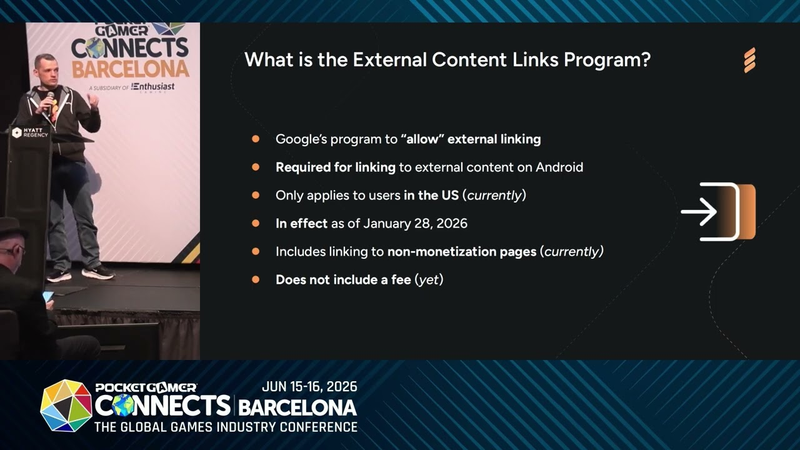

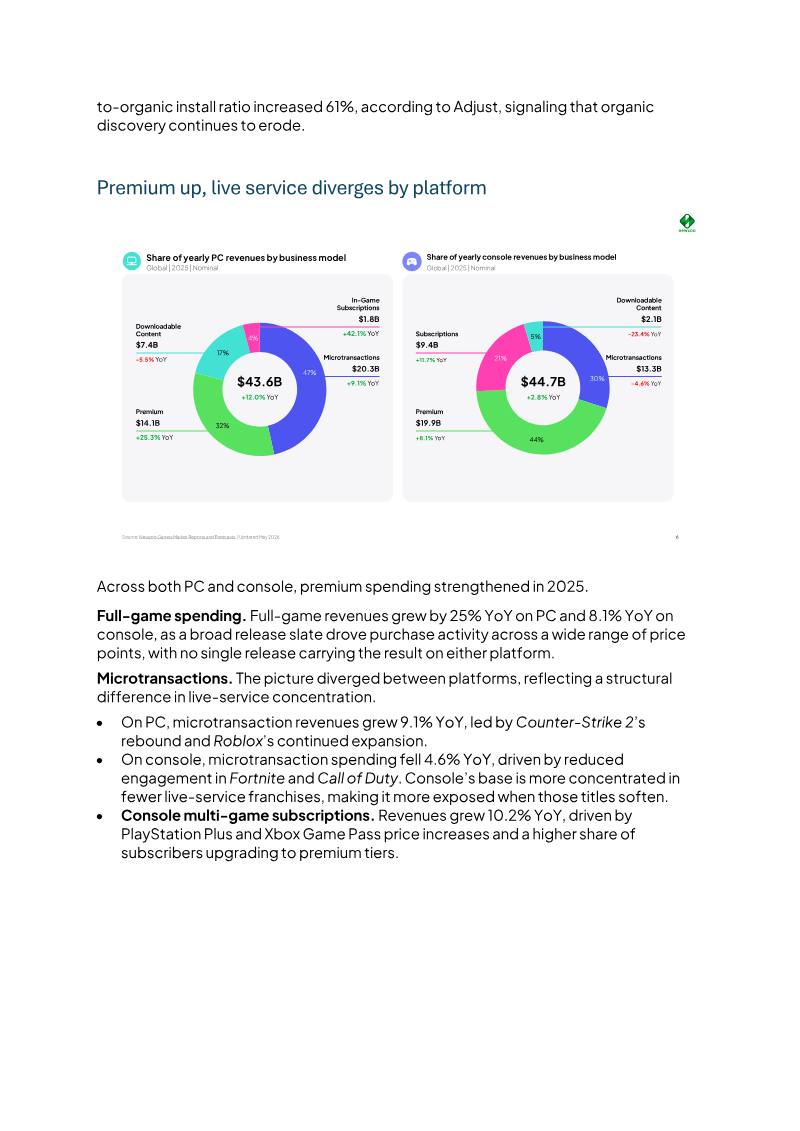
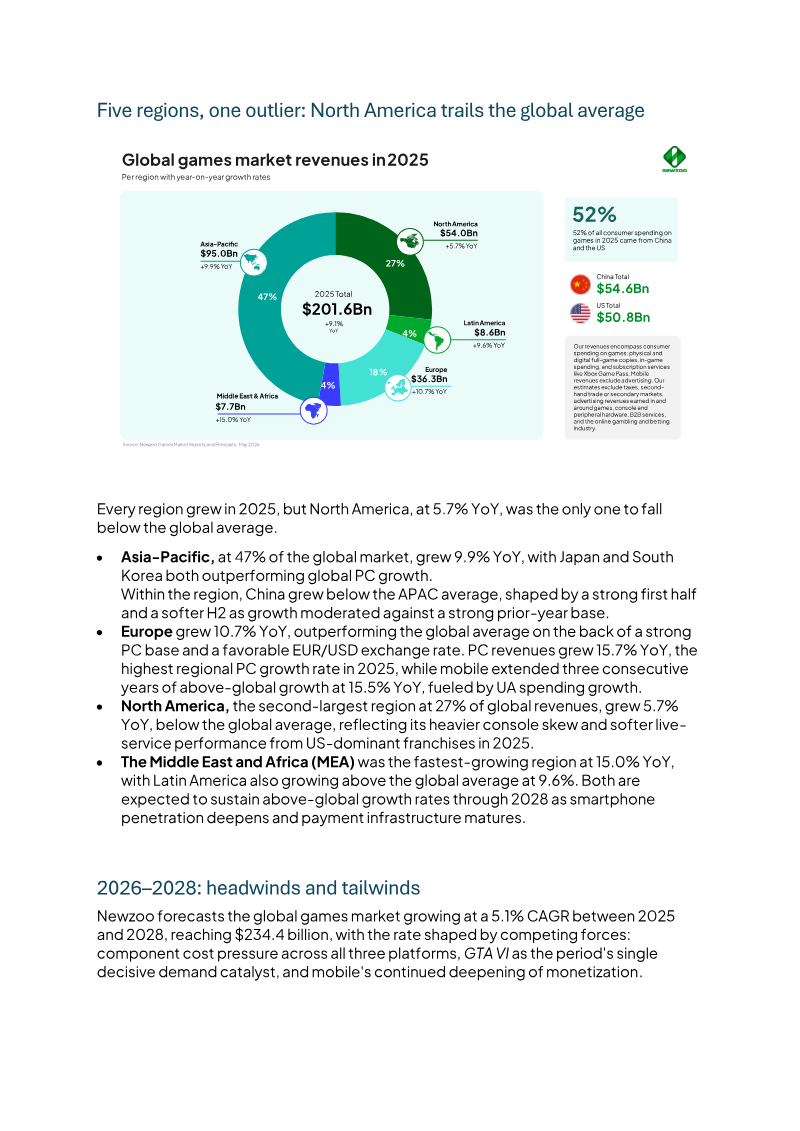


Comments