Monetization reports and market data
Documents
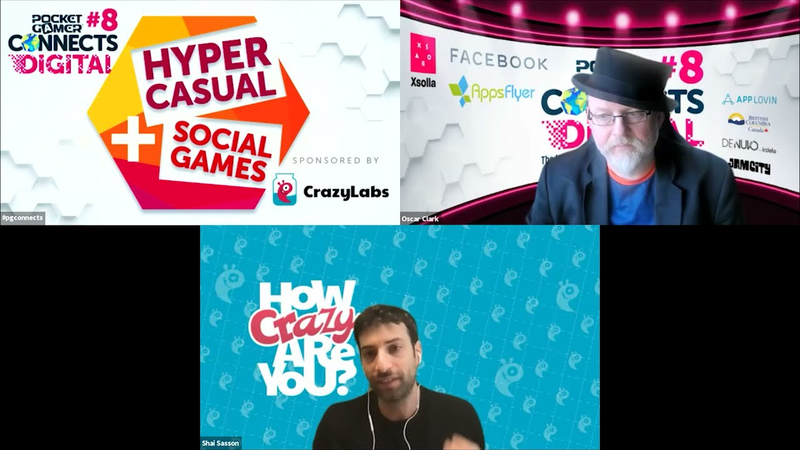
Superstar Session: Long-lasting Publishing- How to Create Hypercasual Hits That Cross 100M Downloads
The hypercasual gaming market is undergoing a significant maturation phase, shifting from a model defined by short-lived chart dominance to one characterized by long-term engagement and sustained growth.
- The hypercasual market is shifting toward a 'hybrid-casual' model that combines low customer acquisition costs with deep retention mechanics to sustain titles beyond the traditional one-month lifecycle.
- Achieving 100 million downloads now requires robust live operations that transform simple gameplay loops into dynamic environments through progression and self-expression features.
- Long-term player retention is driven by integrating social and creative mechanics, such as competitive contests, voting systems, collectible items, and photo albums for sharing in-game designs.
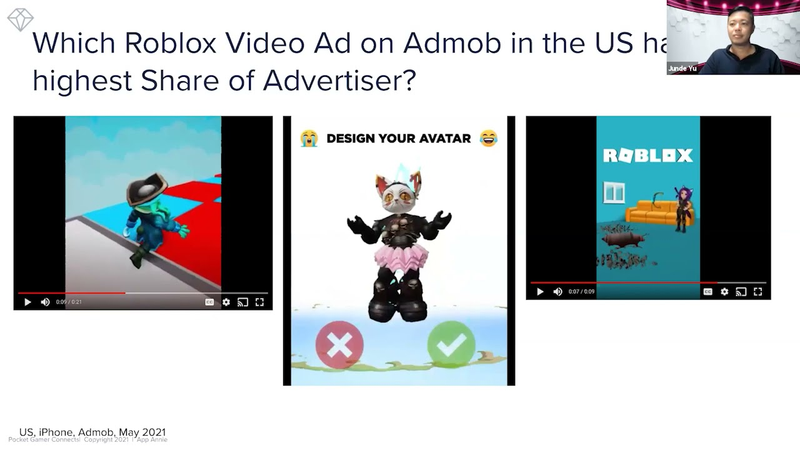
Superstar Session: Game On or Game Over: Level Up Your Gaming Strategy in the EU
The global gaming industry maintains robust momentum, with consumer spending currently holding at 80 percent above pre-pandemic levels.
- Global gaming consumer spending remains 80 percent higher than pre-pandemic levels, indicating sustained industry momentum.
- Revenue generation is heavily concentrated in 4X strategy, role-playing games, and match-3 titles, despite hyper-casual games leading in total download volume.
- Growth is increasingly driven by shifting demographics, specifically an influx of female and older players, alongside rapid market expansion in regions like Turkey.
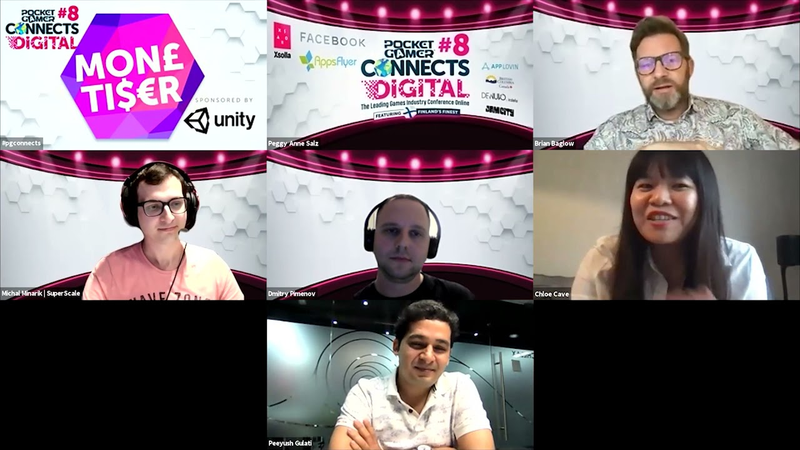
Panel: What Lessons Have we Learned from our Game Economy Mistakes?
The modern gaming industry has undergone a fundamental transition from traditional retail models toward complex, hybrid monetization strategies.
- Game monetization has shifted from purely progression-based models to include vanity-focused economies, exemplified by Fortnite's success in selling cosmetic items to a growing Gen Z audience.
- In the current freemium landscape, approximately 96% of users do not make in-app purchases, leaving the primary revenue burden on the 4% of players identified as 'whales'.
- Developers should simulate their game economies before launch, modeling player behavior across multiple segments over years of gameplay to identify potential imbalances or infinite scaling issues.
Grow Your Mobile Game Beyond Traditional Platforms
Mobile game publishers are increasingly shifting toward web-based storefronts to circumvent the restrictive payment ecosystems of traditional mobile platforms.
- Mobile game publishers are adopting direct-to-consumer web storefronts to bypass platform payment restrictions, thereby increasing profit margins and gaining control over monetization strategies.
- Integrating localized payment methods significantly expands market reach, increasing coverage by 40% in Latin America and 60% in Russia compared to default platform offerings.
- Web-based stores function as a growth engine by reducing transaction friction and improving conversion rates through payment options tailored to regional financial habits.
Fireside Chat: Ad Monetisation - Best Practices with Wooga
This discussion outlines best practices for mobile ad monetization, emphasizing the strategic balance between revenue generation and user experience.
- Prioritize user engagement and retention over aggressive ad tactics to ensure long-term success in free-to-play titles.
- Target an engagement rate where 80% to 90% of daily active users interact with at least one ad.
- Implement a robust mediation strategy using three to five ad networks from the start to maximize fill rates and eCPMs.
Balance Your Game’s Monetisation Mix for Greater Retention
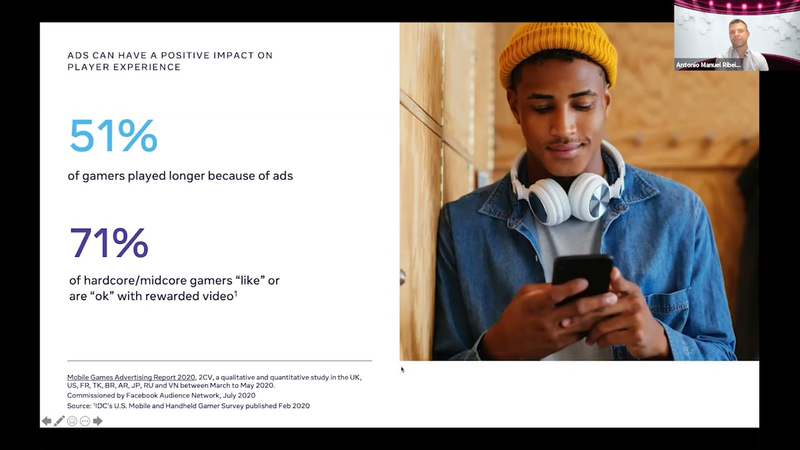
A hybrid monetization strategy that integrates in-app purchases with in-app advertising is essential for maximizing both player retention and long-term revenue.
- A hybrid monetization model combining in-app purchases (IAP) and in-app advertising is necessary because only approximately 5% of a typical player base engages with direct sales.
- Diversified monetization strategies are driving a 17% year-over-year growth in industry revenue.
- Incorporating opt-in rewarded video allows developers to monetize the remaining 95% of non-paying users without cannibalizing existing IAP revenue.
How to Design In-game Ad Placements
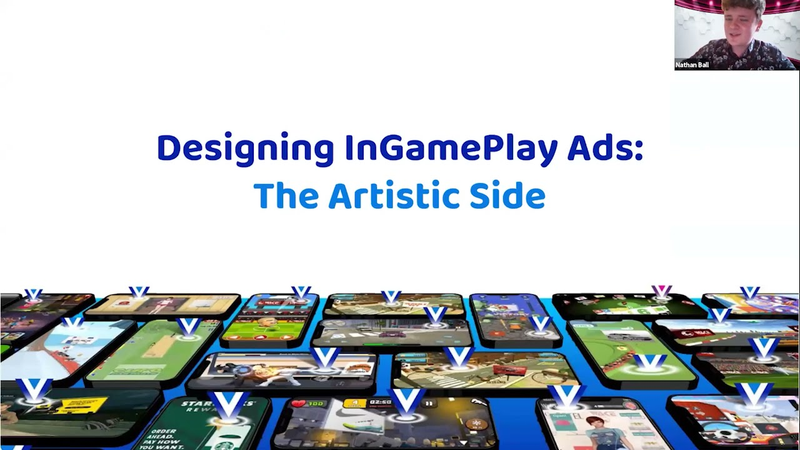
In-game brand advertising offers a monetization strategy that integrates ads directly into the game environment as native objects, providing a non-disruptive alternative to traditional banner or interstitial video ads.
- Integrated in-game advertising is preferred by 70% of consumers over traditional banner or interstitial video ads because it maintains immersion.
- Revenue for in-game ads is driven by viewability metrics—based on screen duration, size, and angle—rather than traditional click-through rates.
- To maximize impressions, developers should prioritize high-traffic static environments such as main menus, character customization screens, and level selection screens.
Superstar Session: Hybrid - Revolution: Searching the Missing Link Between Hyper & Casual
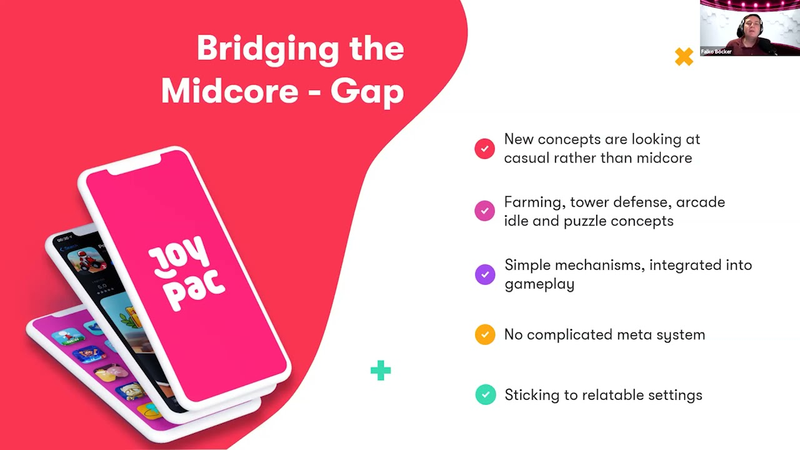
The hybrid-casual genre represents a strategic evolution in mobile gaming, functioning as a bridge between the high-volume, rapid-iteration model of hyper-casual games and the deeper, long-term engagement characteristic of mid-core titles.
- Hybrid-casual games bridge the gap between hyper-casual accessibility and mid-core depth by integrating meta-progression systems like character upgrades and skill trees.
- Hybrid-casual titles achieve double the day-seven retention rates of standard hyper-casual games and significantly increase average session lengths.
- In-app purchases in hybrid-casual models can account for 20% to 30% of total revenue, diversifying income beyond the traditional hyper-casual reliance on advertising.

Speed Panel: How to Get Brands to Advertise in Your Apps
This panel discussion explores strategies for mobile game developers and publishers to attract brand advertising, emphasizing the shift in brand perception toward mobile gaming as a primary engagement channel.
- Brands now view mobile gaming as a primary engagement channel, a shift accelerated by the COVID-19 pandemic that has moved interest beyond blockbuster titles to include mid-core and smaller games.
- To attract brand budgets, developers must provide standardized data flows, robust attribution, and viewability reporting to satisfy demands for measurable outcomes.
- Developers should prioritize direct integrations with major omni-channel demand-side platforms (DSPs) such as The Trade Desk and Google’s DV360 to increase accessibility for brand advertisers.
How to Build a Player-centric Business Model (That's Resilient Enough for the Next Decade)
The primary objective of this analysis is to provide a framework for building resilient, player-centric business models in the gaming industry.
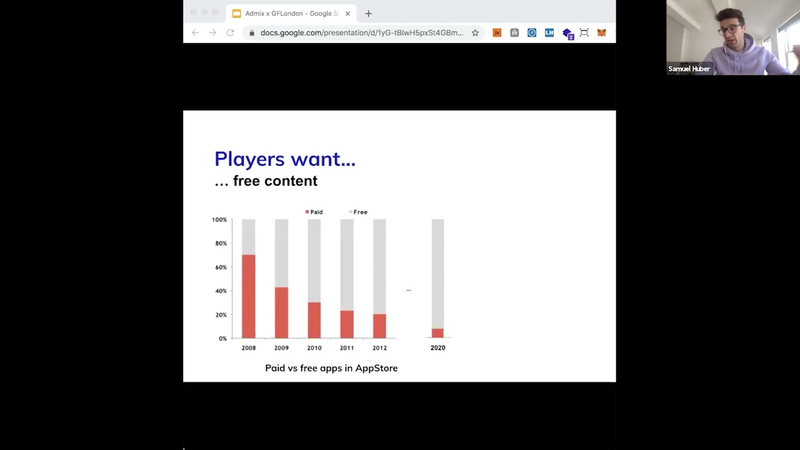
- Approximately 98% of mobile gamers are non-paying users, a figure expected to rise as the global gaming audience grows toward three billion monthly users.
- In-play monetization, which dynamically integrates branded content into the game environment, serves as a resilient alternative to traditional, intrusive ad formats like interstitial videos.
- Traditional interstitial ads negatively impact player retention once a specific threshold of impressions is reached, necessitating a shift toward non-disruptive advertising models.
Preparing for the 2021 Holiday Season
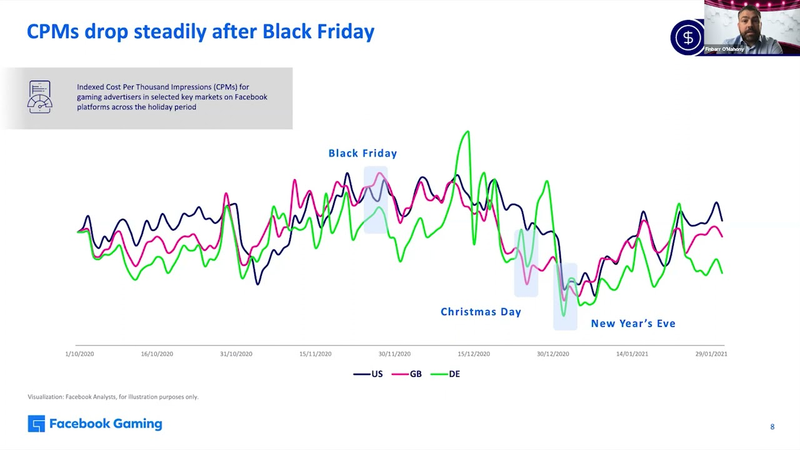
The global gaming industry is poised for a robust 2021 holiday season, characterized by sustained engagement levels that have persisted even as pandemic-related restrictions eased.
- The global gaming market maintains a strong 8.74% compound annual growth rate, supported by a player base of nearly 3 billion people.
- Advertisers must abandon pre-pandemic audience assumptions, as record-high consumer confidence in 2021 has expanded the demographic and increased spending intent.
- To maintain campaign stability and avoid the pitfalls of manual adjustments, automated ad solutions should be configured to achieve a minimum of 50 conversions per week.

How to Be a Great Product Manager (Philosophy Friday #1)
Product management in the free-to-play gaming industry centers on the synthesis of economic decision-making, product vision, and operational efficiency.
- Product management in free-to-play gaming requires synthesizing economic modeling, product vision, and operational efficiency to drive sustainable, ethical revenue growth.
- Effective product managers must transition from reactive task management to a proactive operating system defined by rigorous processes, root cause analysis, and iterative modeling.
- Success depends on balancing data-driven decision-making with human-centric communication to maintain team morale while ensuring contributions remain objectively measurable.