Monetization reports and market data
Documents

Deconstructing Pokemon Unite with Hadrian Semroud and Javier Barnes
Pokémon Unite serves as a case study in the challenges of balancing accessibility with long-term engagement within the mobile MOBA genre.
- Pokémon Unite achieved 30 million downloads during its launch week but has struggled to maintain long-term player momentum in Western markets.
- The game’s design philosophy prioritizes accessibility by removing traditional MOBA complexities like minion management, which ultimately undermines the strategic depth required for long-term retention.
- A singular late-game objective often renders early-game strategic efforts irrelevant, leading to a lack of competitive variety.
The Future of Apple App Store Economics
The current landscape of mobile application economics is undergoing a significant transformation as developers increasingly circumvent traditional platform commission structures.
- Developers are increasingly bypassing Apple’s 30% in-app purchase commission by shifting to direct-to-consumer web shops that utilize third-party payment processors charging approximately 5% plus transaction costs.
- Industry consensus indicates that a more equitable platform fee structure would fall between 7% and 12%, significantly lower than the current standard.
- Despite the user friction involved in moving outside native app environments, alternative payment channels are already demonstrating strong performance and occasionally outperforming traditional store revenue.

Capital Markets Day 2021: Presentation
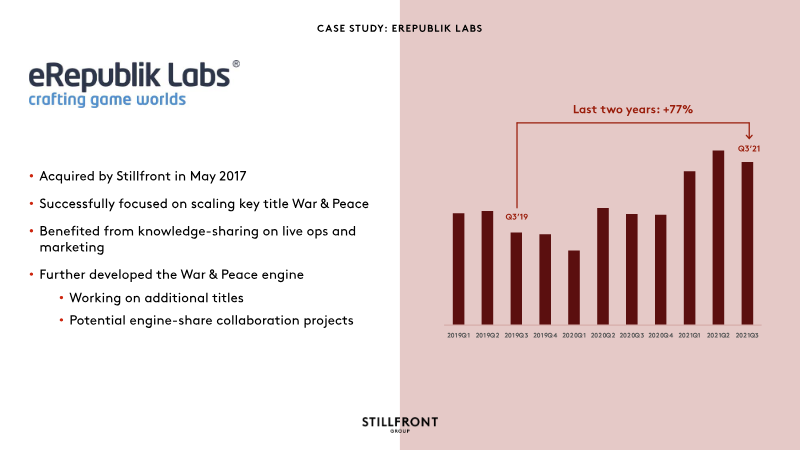
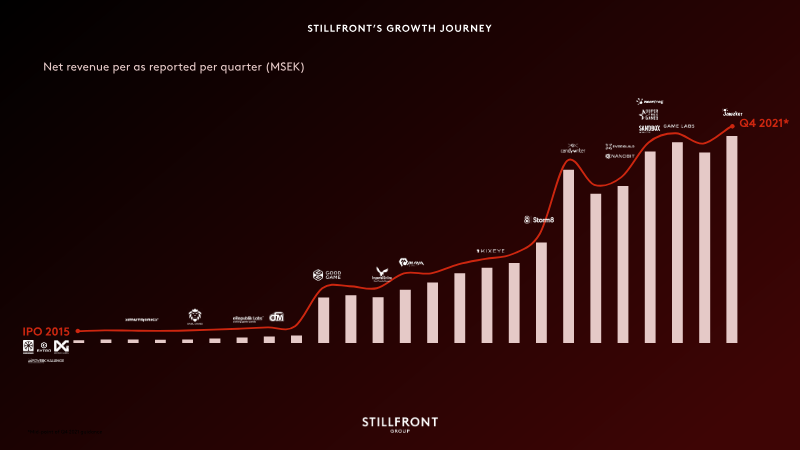
Stillfront Group pursues a strategy of aggressive expansion and operational integration to solidify its position as a leader in the global gaming market.
- Stillfront Group is targeting 10 billion SEK in annual revenue by 2023 through a strategy of organic growth and disciplined acquisitions.
- The company utilizes the 'Stillops' platform to centralize infrastructure, share game engines, and facilitate collaborative localization to reduce development costs and accelerate time-to-market.
- Acquisitions such as Moonfrog and Playa Games are central to the firm's strategy for scaling its portfolio and entering high-growth regions like India.

Blockchain Gaming for Dummies with Ethan "Crypto Kid" Levy
Blockchain gaming represents a fundamental shift in digital entertainment by transitioning in-game assets and currencies from closed, developer-controlled databases to tradable, player-owned tokens.
- Blockchain gaming shifts in-game assets from developer-controlled databases to player-owned, tradable tokens, formalizing secondary markets that previously operated as illicit black markets.
- The intrinsic value of in-game assets is driven by player demand and utility rather than the underlying volatility of the host blockchain.
- Developers must adopt central bank-style economic models to manage tokenomics and mitigate inflationary pressures within decentralized game economies.
Making Your First Indie Game (5 Tips for 2021 & 2022!)
The primary objective for aspiring indie game developers is to successfully transition from hobbyist to professional by prioritizing the completion of a first project over the pursuit of a perfect "dream game."
- Prioritize project completion over perfection by limiting scope, as time is the developer's most valuable resource for long-term sustainability.
- Develop a highly polished prototype to secure external funding from sources like publishers, Kickstarter, or platform deals, which provides the necessary accountability to finish the project.
- Build a community early through consistent social media engagement and devlogs to generate the momentum and wishlist requests required for visibility on platforms like Steam.

In-Game Events Snapshot: November 2021
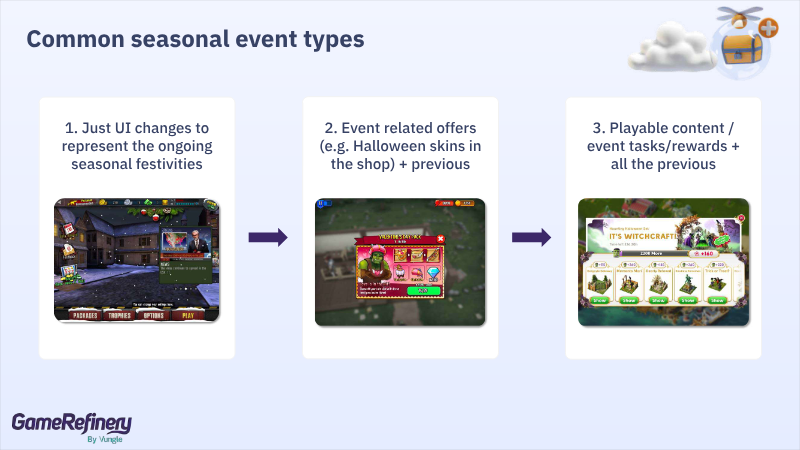
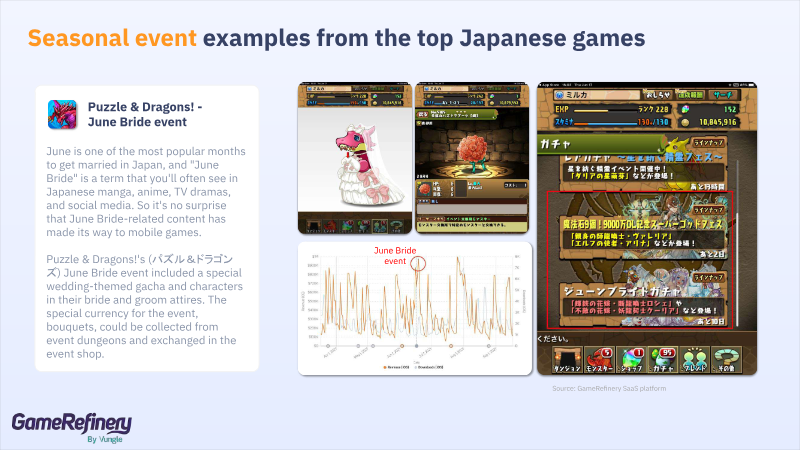
In-game events have become a cornerstone of mobile game monetization and player retention, with 90% of the top 100 grossing mobile titles utilizing seasonal events.
- Seasonal in-game events are a standard industry practice, utilized by 90% of the top 100 grossing mobile titles to drive player retention and monetization.
- External brand collaborations are a major growth area, appearing in 42% of top US iOS games, 51% of top Chinese games, and 62% of top Japanese games.
- Strategic event implementation can drive massive revenue spikes, such as Genshin Impact’s Lantern Rite event increasing daily revenue from $200,000 to over $1.25 million.

FY2021 Presentation Material
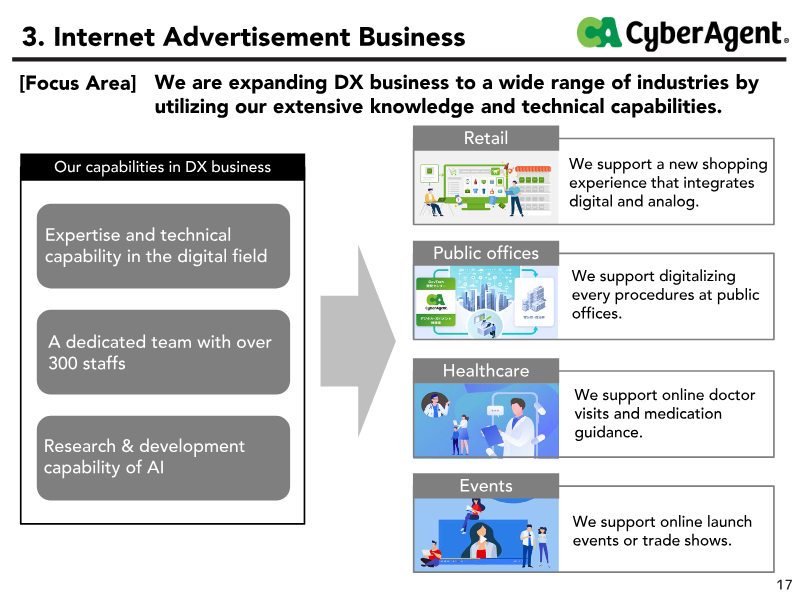
CyberAgent achieved record-breaking financial performance in fiscal year 2021, characterized by consolidated sales of 666.4 billion yen and a more than threefold increase in operating profit to 104.3 billion yen.
- CyberAgent achieved record-breaking FY2021 performance with 666.4 billion yen in consolidated sales and a 104.3 billion yen operating profit, representing a more than threefold increase.
- The Game business was the primary profit driver, recording 68.6% year-over-year growth fueled by the commercial success of Uma Musume Pretty Derby.
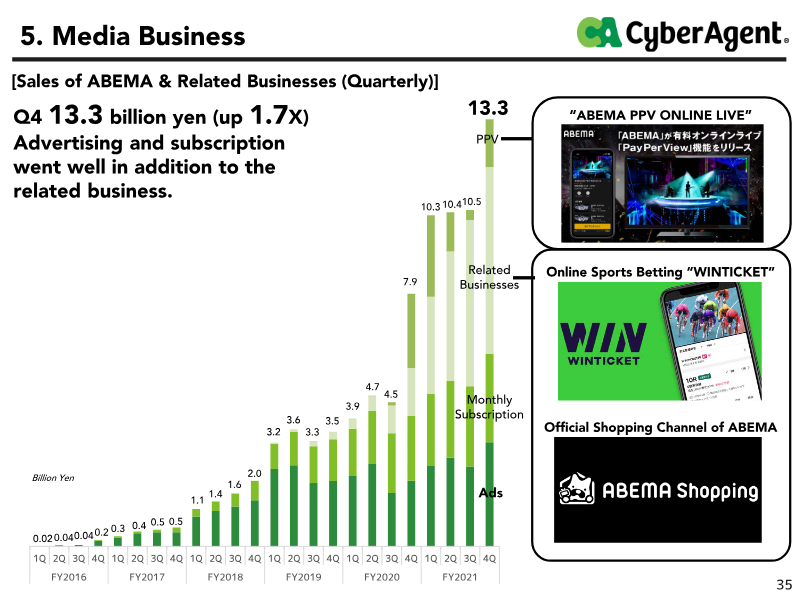
- WINTICKET captured 25% of the Keirin online betting market and tripled its transaction volume, significantly contributing to reduced operating losses in the Media segment.

What will be the Winning Monetisation Mix in 2022? | PocketGamer.biz RoundTable
The mobile gaming industry is undergoing a fundamental transition toward hybrid monetization models, which integrate in-app purchases, subscriptions, and diverse advertising formats into a single, cohesive ecosystem.
- The mobile gaming industry is shifting toward hybrid monetization models that integrate in-app purchases, subscriptions, and diverse ad formats to capture value from both paying and non-paying users.
- Developers are increasingly treating ad engagement as a form of in-game currency, allowing players to choose between spending capital or time to progress.
- Rewarded videos and surveys have become standard, non-intrusive monetization tools that generate incremental revenue without negatively impacting player retention or immersion.

Mobile Ad Revenue 2022 | Future and 2021 Retrospective
The mobile advertising industry has demonstrated remarkable resilience following the deprecation of the Identifier for Advertisers (IDFA), successfully navigating a transition that many initially feared would trigger a market collapse.
- The mobile advertising industry successfully adapted to the deprecation of IDFA by shifting to contextual targeting and on-device signals, avoiding the feared market collapse.
- Facebook’s dominance in the iOS ecosystem significantly declined, with its revenue share dropping from 25–30% to 3–5% following privacy changes.
- Monetization teams have evolved into highly technical, product-focused units that manage complex attribution requirements and act as strategic intermediaries between development and ad partners.

Data Ethics in Gaming (Philosophy Friday #2)
The gaming industry increasingly relies on alternative data providers to bridge information gaps, validate investment strategies, and inform high-stakes decisions regarding development and mergers.
- The SEC imposed a $13 million penalty on App Annie for misusing confidential data to manipulate market estimates, highlighting the severe legal risks associated with relying on non-public information for investment and development decisions.
- Gaming companies are facing increased regulatory scrutiny, with the SEC now utilizing financial disclosure requirements to address internal issues like harassment and discrimination, signaling an end to the industry's historical regulatory exemption.
- The industry is experiencing a shift toward a more virtuous model of data governance, where transparency and explicit user consent are becoming mandatory to maintain sustainable practices and avoid player backlash.

Panel: Gaming NFTs - Going Beyond the Hype
The integration of non-fungible tokens into the gaming industry represents a fundamental shift from speculative digital assets toward utility-driven mechanics and player-owned economies.
- The gaming industry is shifting from speculative, hype-driven NFT models toward utility-focused mechanics that prioritize long-term player ownership and sustainable in-game economies.
- Mainstream adoption depends on eliminating technical friction, specifically by replacing complex wallet requirements with custodial solutions and fiat-to-NFT payment bridges.
- Developers must move away from speculative fundraising models to avoid alienating non-crypto-native players and to mitigate the risk of increased regulatory scrutiny.

Panel: The Challenges of Being Innovative & Unique in the Hypercasual Market
The hypercasual gaming market is currently undergoing a significant transformation, moving away from simple, disposable mechanics toward more sustainable, hybrid-casual models.
- Hypercasual development requires a mindset shift toward rapid failure, where studios often test dozens of prototypes over several months to identify viable projects.
- Successful hypercasual strategies often involve aligning game concepts with a team's specific internal strengths and passions rather than blindly chasing market trends.
- Developers can pivot failed hypercasual concepts with high user retention into more complex, successful products by adding meta-progression systems, as seen in the transition of the game Spire Blast to Apple Arcade.