Monetization reports and market data
Documents
Data for Mobile Gaming 2022-2024
Mobile gaming maintains its position as the primary driver of industry expansion, fueled by widespread smartphone adoption and consistent engagement across both emerging and established markets.
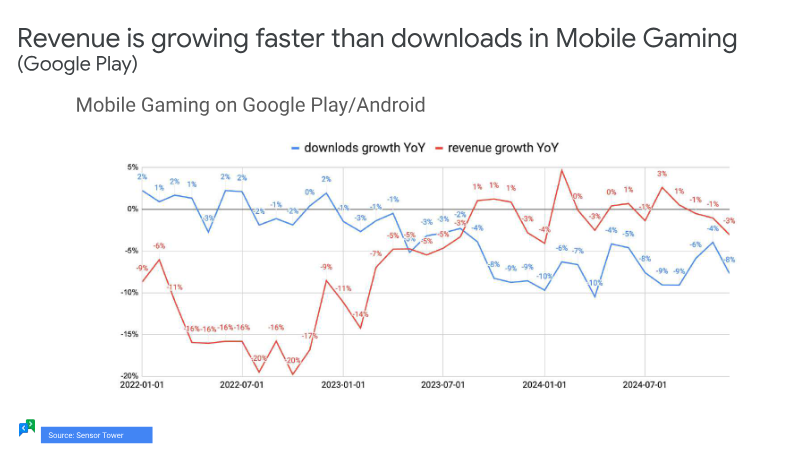
- Mobile gaming revenue growth is consistently outpacing download volume across iOS and Android platforms between 2022 and 2024.
- In-game advertising has overtaken traditional in-app purchases as the primary revenue stream for mobile developers.
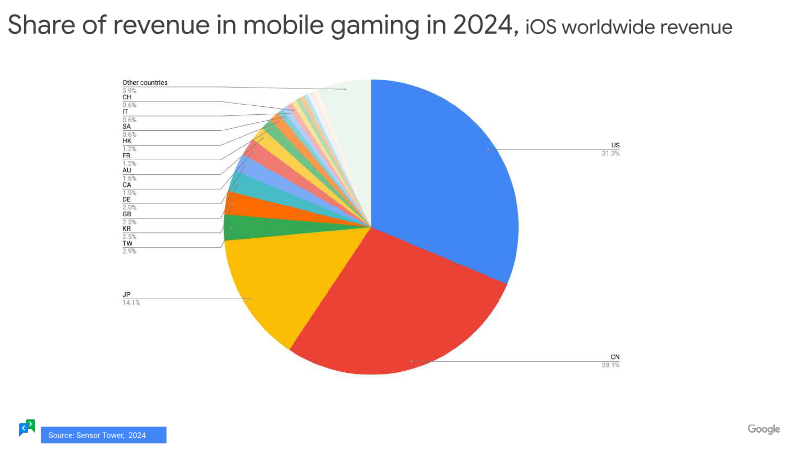
- The United States, China, and Japan remain the dominant global revenue generators, while Brazil has reached over 90% smartphone gaming penetration across all demographics.
The Hyper-Casual Benchmark Report: Q3 2022
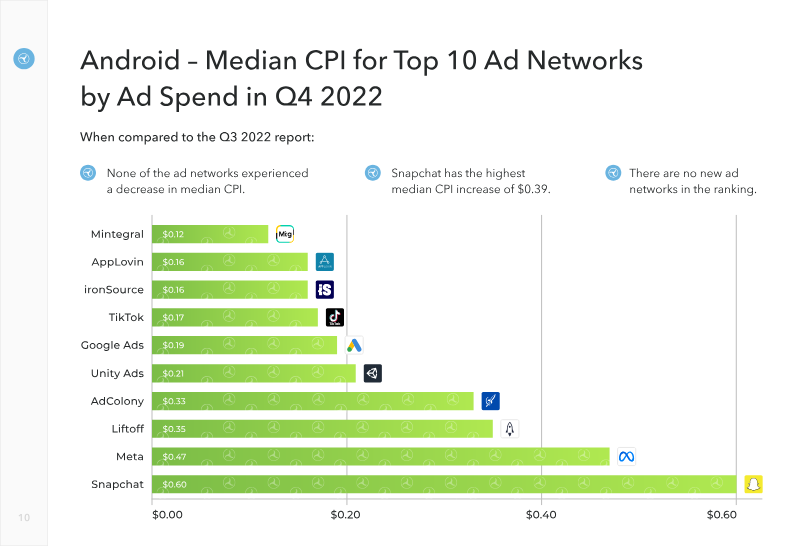
The Hyper-Casual Benchmark Report for Q4 2022 provides a comprehensive analysis of the mobile gaming landscape, focusing on key performance indicators including cost per install (CPI), ad spend distribution, and user retention.
- Retention is the primary differentiator for success, with top-tier hyper-casual games significantly outperforming the median cohort as acquisition costs rise.
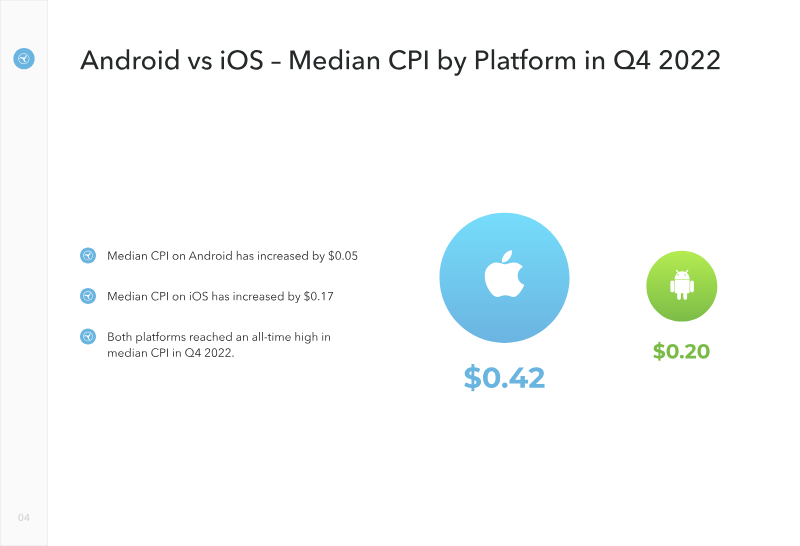
- Median cost-per-install (CPI) reached record highs in Q4 2022, hitting $0.20 on Android and $0.42 on iOS.
- iOS consistently outperforms Android in retention, with top-tier titles achieving 45% Day 1 retention on iOS compared to 38% on Android.
Modern Mobile Consumer 2022: App Monetization Report
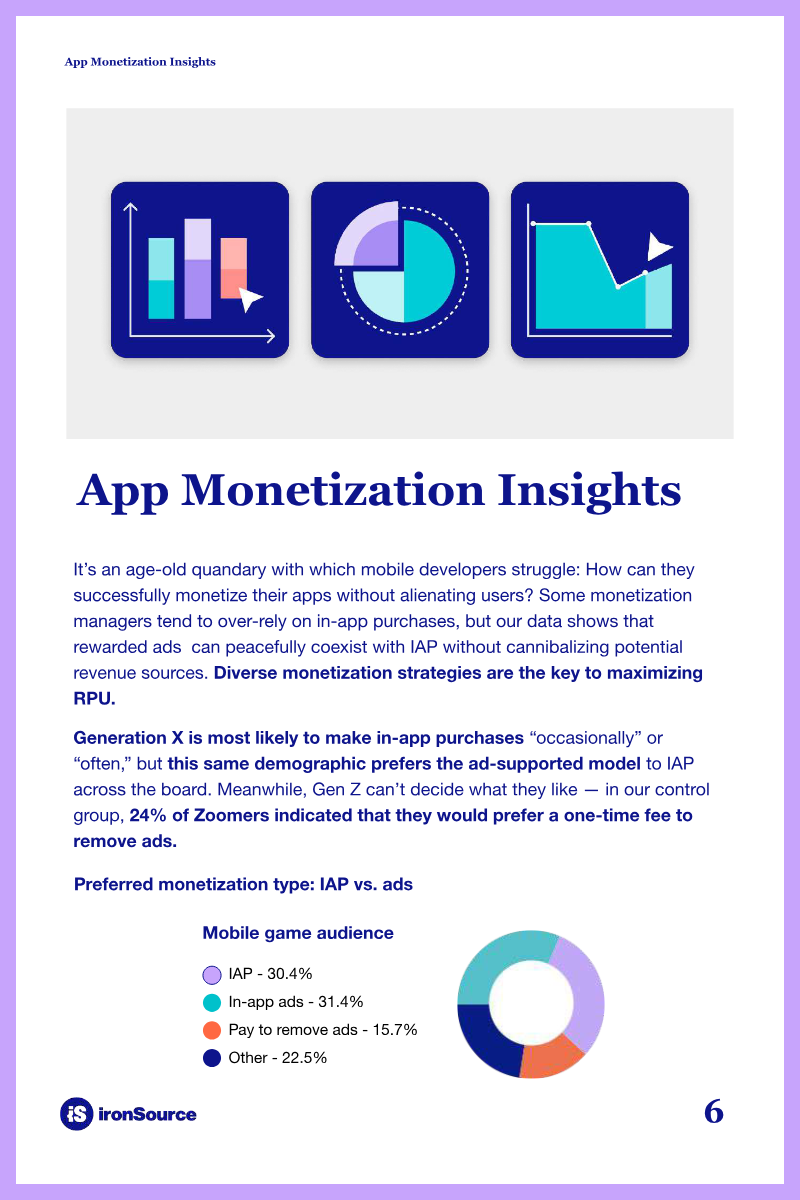
The report examines how modern mobile consumers interact with app monetization, revealing that rewarded ads and in-app purchases (IAP) coexist without cannibalizing revenue.
- Rewarded ads and in-app purchases (IAP) do not cannibalize each other, allowing for a hybrid monetization strategy that maximizes revenue without sacrificing user experience.
- The percentage of users making occasional IAPs has grown significantly to approximately one-third of the total user base, up from 2-3% five years ago.
- Free apps with IAP are the dominant model, accounting for 52% of all gaming app downloads.
Newzoo Trends to Watch 2022: Games, Esports, Live Streaming, Cloud and the Metaverse
The analysis projects that 2022 will be defined by a cautious expansion of emerging monetisation models and a deepening investment in immersive technologies.
- The global games industry generated $175.9 billion in 2021, with the Asia-Pacific region contributing $88.2 billion and maintaining an 8.7 percent compound annual growth rate.
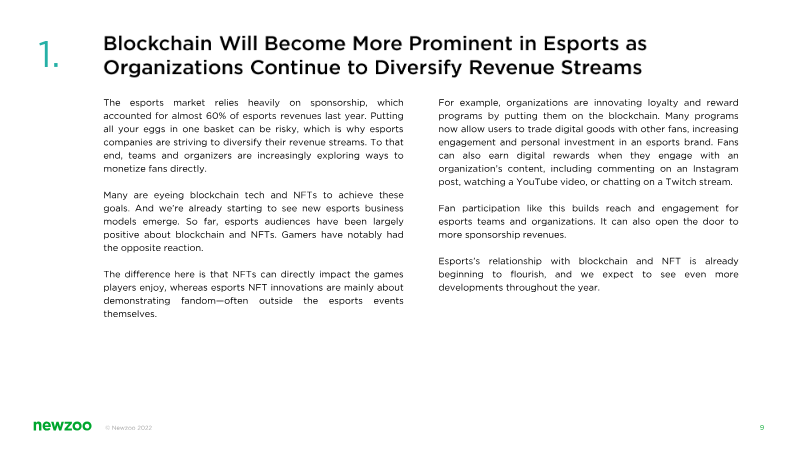
- Publishers are shifting away from explicit NFT branding due to player backlash and regulatory scrutiny, opting instead to experiment with 'NFT-like' features under alternative labels.
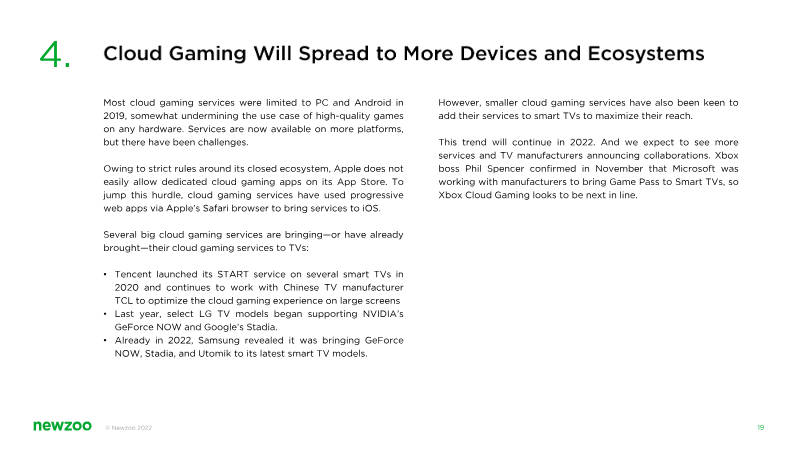
- Legal pressure on Apple and Google is expected to force a relaxation of app-store steering rules, potentially creating new payment pathways that will alter distribution economics.
Modern Mobile Consumer 2022: App Discovery Report
The Modern Mobile Consumer 2022: App Discovery Report examines the evolving journey of mobile users from initial app discovery to daily usage and long-term engagement.
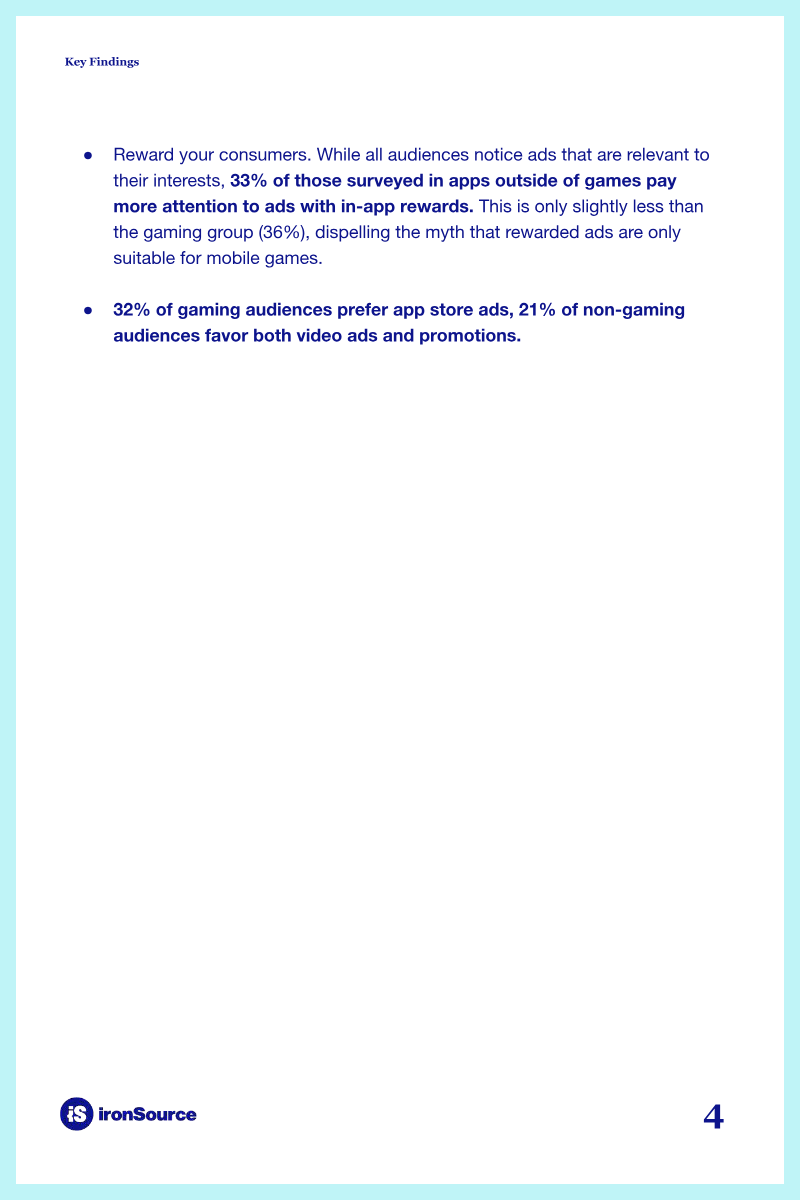
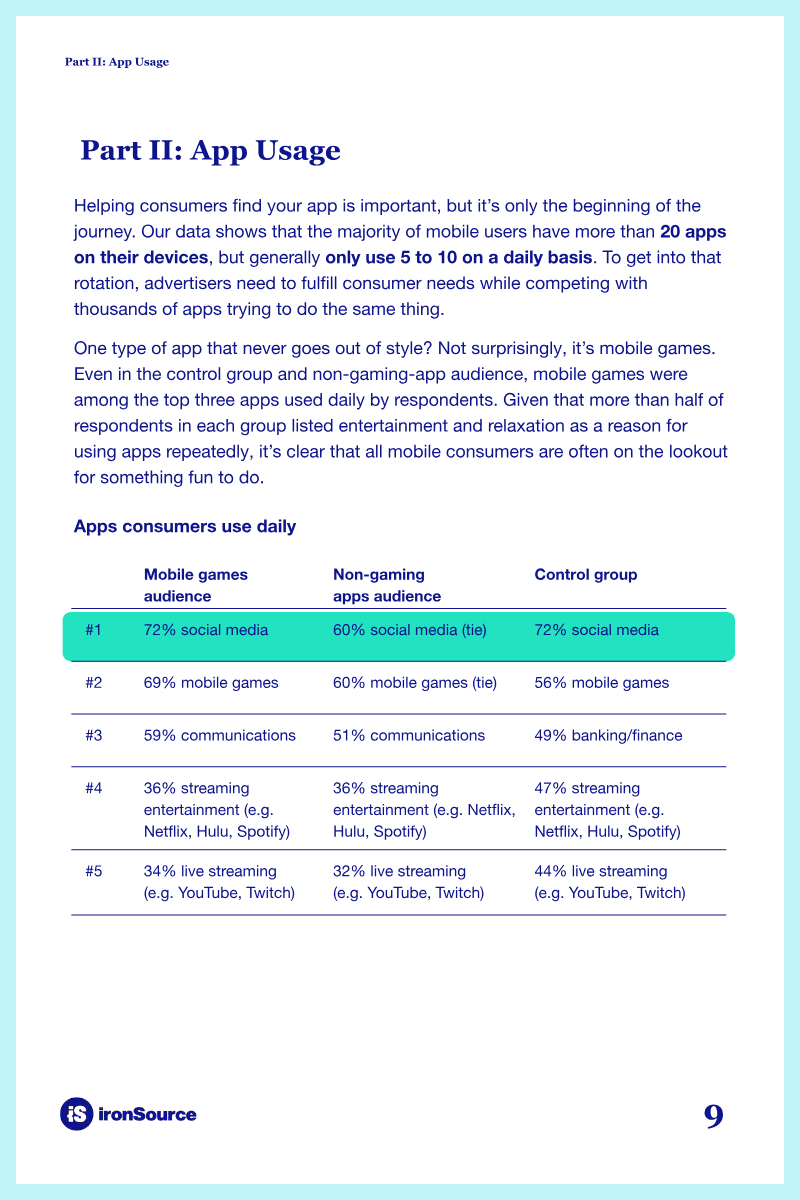
- Mobile gaming has become a universal behavior, with 60% of non-gaming app users playing mobile games daily, matching social media as the top usage category.
- In-app advertising is a primary driver for app discovery, leading to downloads for 70% of gaming audiences and 78% of non-gaming control group users.
- While users typically maintain over 20 apps on their devices, the majority limit their daily engagement to only five to ten apps.
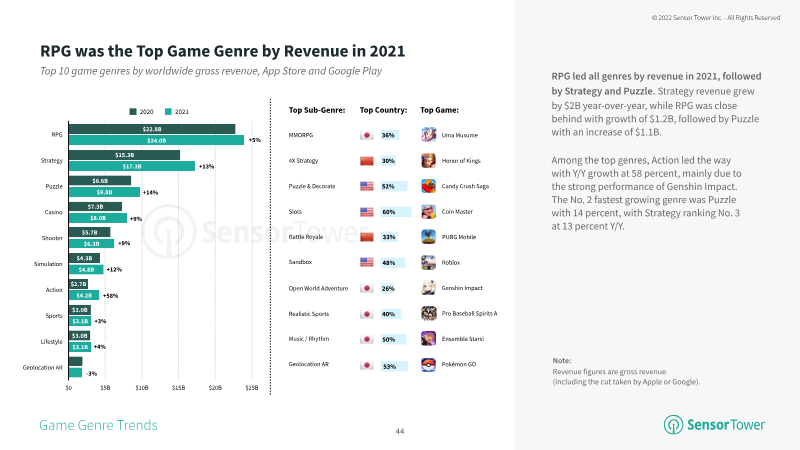
The State of Mobile Gaming 2022: Market Trends and Top Titles in the U.S., Europe, and Asia
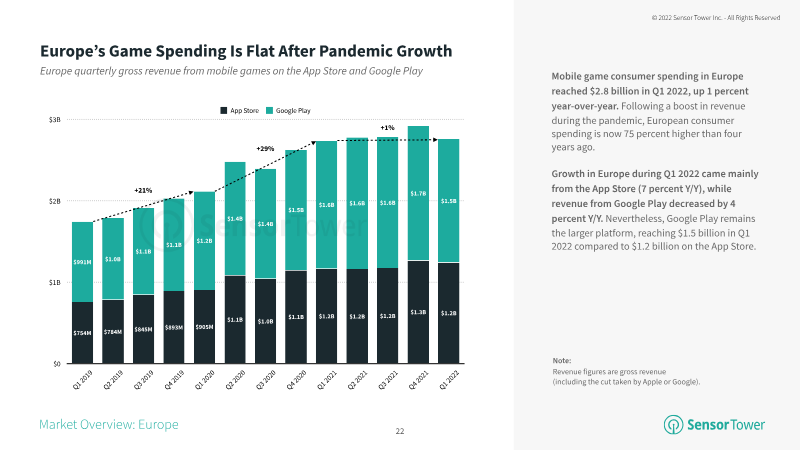
Global mobile gaming revenue experienced its first historical year-over-year decline in the first quarter of 2022, falling 6% to $21.2 billion.
- Global mobile gaming revenue declined 6% year-over-year in Q1 2022 to $21.2 billion, ending a period of pandemic-driven growth due to market stabilization and inflation.
- Consumer spending dropped 10% in the U.S. and 7% in Asia, while Google Play saw a 22% decrease in spending despite global downloads remaining resilient at 14 billion.
- Emerging markets are driving growth, led by India’s 73% increase in consumer spending and Turkey’s 36% revenue surge, which established it as Europe’s fastest-growing market.
IP-Based Mobile Games: 2022
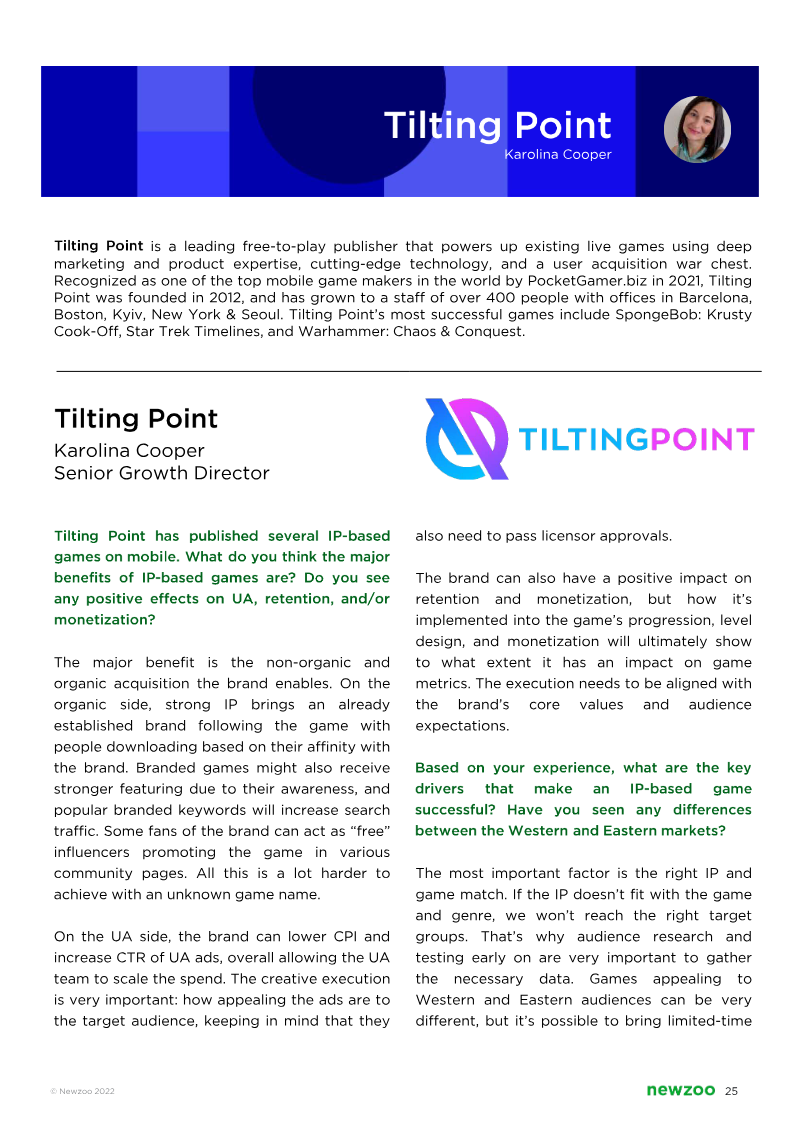
The mobile gaming landscape has shifted toward intellectual property (IP) as a primary strategy for navigating user-tracking challenges like Apple’s App Tracking Transparency.
- By 2021, nearly all top-downloaded new iOS titles were based on existing intellectual property, confirming IP as the primary strategy for organic user acquisition following privacy shifts like Apple’s App Tracking Transparency.
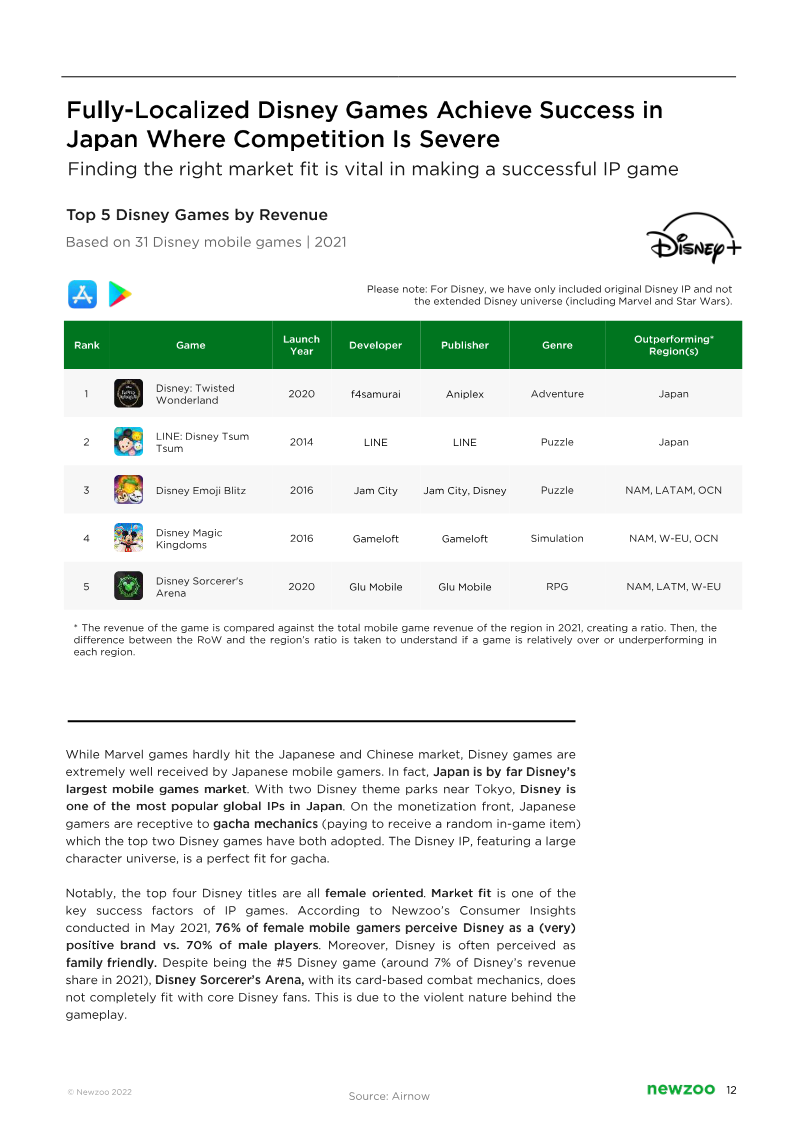
- Western IPs (e.g., Disney, Marvel) drive higher global download volumes, while Eastern IPs (e.g., Japanese manga, Chinese literature) generate superior revenue through specialized monetization models like gacha.
- Successful IP-based games require a 'perfect fit' between core gameplay mechanics and source material lore, as seen in titles like Marvel Strike Force and Umamusume: Pretty Derby.
State of Mobile: Germany 2022
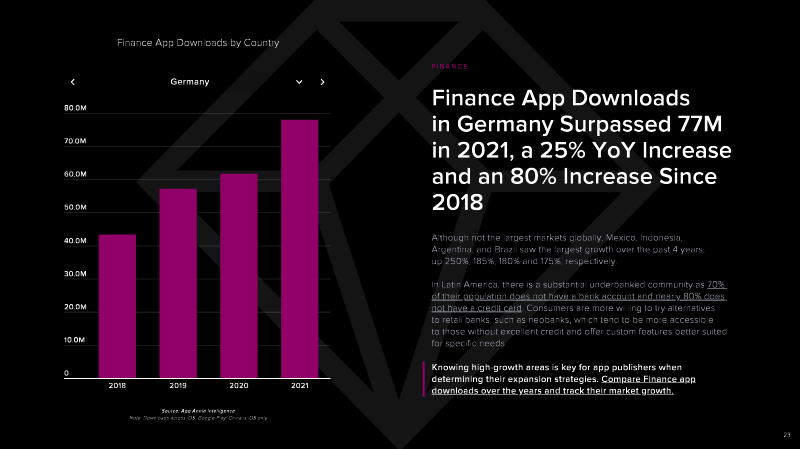
The German mobile market experienced a period of rapid acceleration in 2021, characterized by a 72% increase in consumer spending over two years to reach $4.0 billion.
- The German mobile market reached $4.0 billion in consumer spending in 2021, marking a 72% increase over two years.
- Gaming remains the primary economic driver, generating $2.8 billion in revenue and accounting for over 70% of total app spending, led by titles like Genshin Impact and Coin Master.
- Daily mobile engagement reached 3.4 hours per user, with social and video applications capturing 60% of that time.
Ad Monetization Insights for Mobile Game Developers 2022
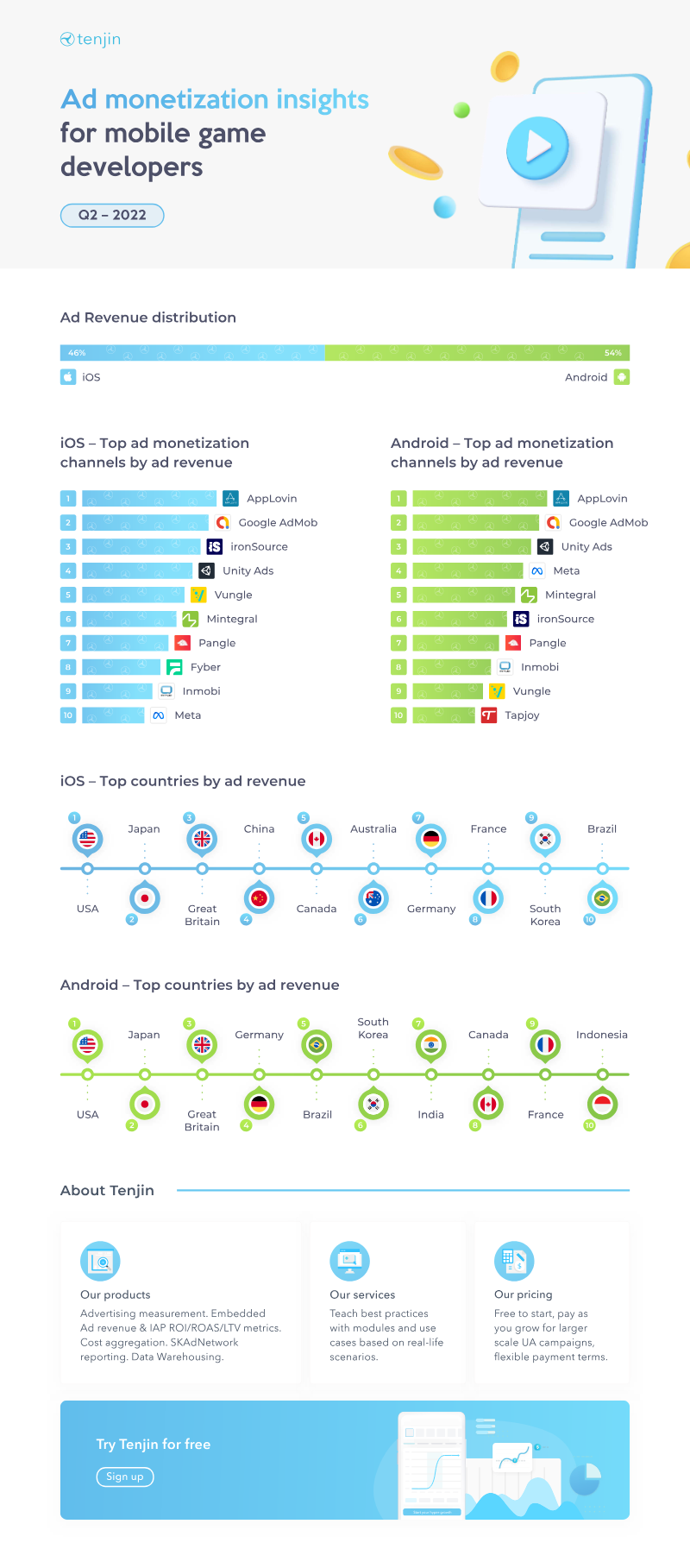
The 2022 ad monetization briefing delivers a data-driven overview of revenue-generation strategies for mobile game developers, emphasizing measurement, optimization, and regional performance trends.
- Advertising accounts for 54% of total revenue across the mobile game markets surveyed in 2022.
- Effective monetization requires integrating ad revenue, in-app purchase data, and cost metrics to accurately calculate ROI, ROAS, and LTV.
- Key regional markets for mobile game monetization include Germany, Japan, South Korea, Canada, and Indonesia.
The New Destination to Reach Global Gamers: The 2021 Global Mobile Gamers Whitepaper
Mobile gaming represents the largest and fastest-growing segment of the global entertainment industry, generating $93.2 billion in 2021 with a projected trajectory toward $126.1 billion by 2024.
- The global mobile gaming market generated $93.2 billion in 2021 and is projected to reach $126.1 billion by 2024.
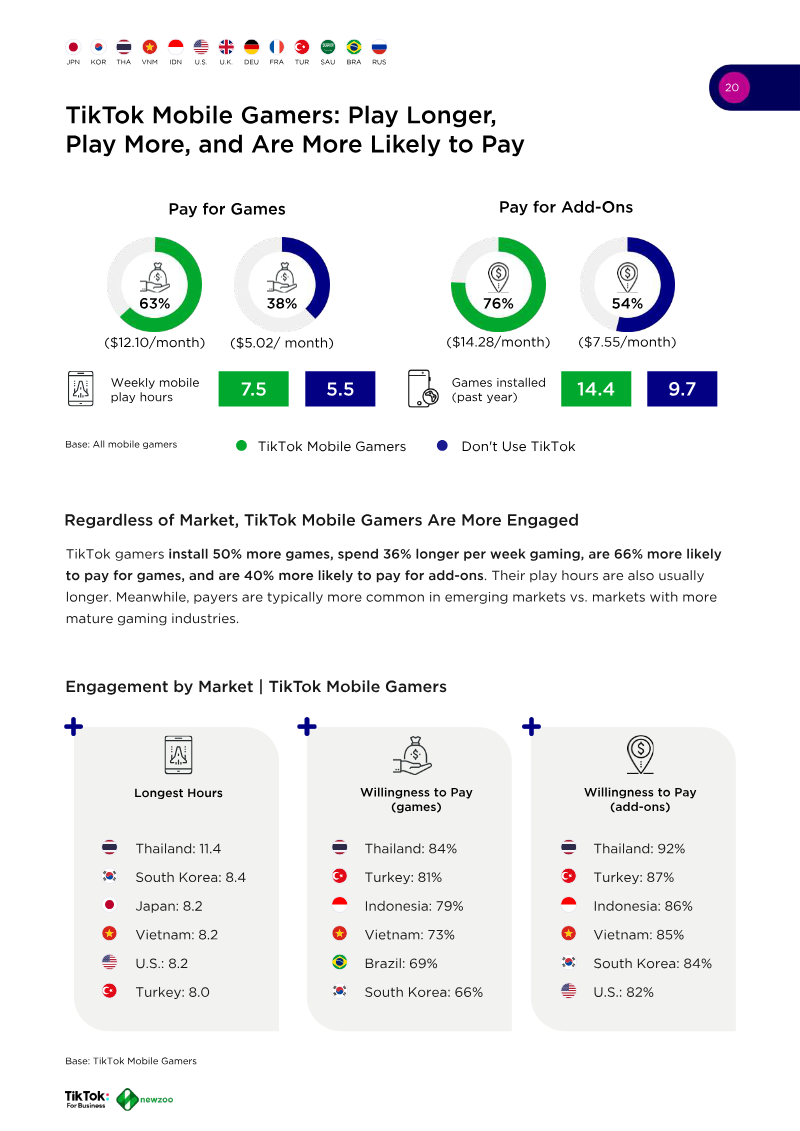
- Mobile gamers active on TikTok install 50% more games, play 36% longer, and are 66% more likely to make in-game purchases than non-users.
- While players primarily game to relax or pass time, long-term monetization is driven by progression-based incentives like unlocking content and bypassing difficult levels.
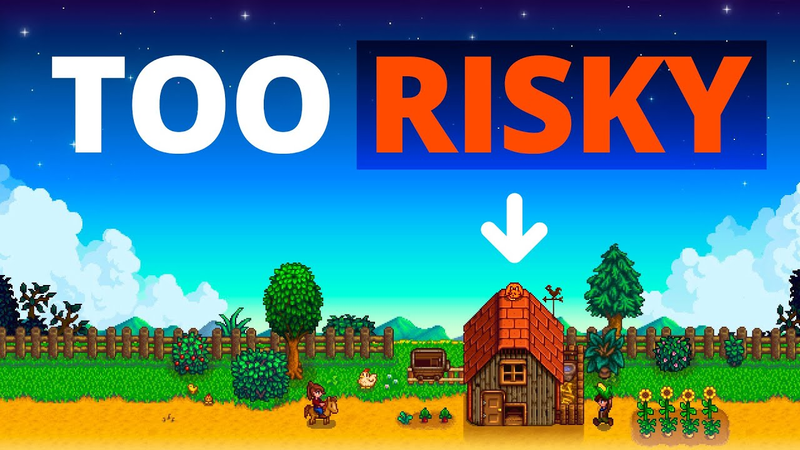
Indie Game Dev Is TOO RISKY
Indie game development is inherently high-risk, functioning as a form of entrepreneurship that requires a calculated approach to time and resource management.
- Indie game development should be treated as high-risk entrepreneurship where time is a finite financial asset that requires careful management.
- Developers must avoid over-investing in a single project by diversifying their professional efforts into multiple income streams, such as educational content, tool creation, or community building.
- To mitigate the risk of catastrophic failure, developers should adopt an iterative approach by releasing small, free projects to build technical proficiency and an audience before attempting large commercial launches.

Panel: What Techniques Can we Apply from Hypercasual Games & Bring into Living Games?
The gaming industry is currently witnessing a strategic convergence between hypercasual titles and live service models, driven by a mutual desire to optimize player retention and monetization.
- The mobile gaming industry is converging toward a hybrid model that merges the frictionless, low-barrier entry of hypercasual design with the long-term retention and monetization structures of live service ecosystems.
- Hypercasual developers are increasingly integrating live-ops and in-app purchase (IAP) frameworks to extend the traditionally short lifespans of their titles.
- Live service developers are adopting hypercasual design principles to simplify complex social and gameplay systems, making them more intuitive for broader mobile audiences.