Monetization reports and market data
Documents

Matching big data analysis with KPIs with Shalom Michaeli from Fyber
The mobile gaming industry is currently undergoing a significant shift toward programmatic monetization and data-driven transparency.
- The mobile gaming industry is shifting from manual waterfall optimization to real-time bidding (RTB) systems to increase competition and publisher revenue.
- Real-time bidding enables more precise user valuation, replacing historical reliance on less accurate estimated cost-per-mille (CPM) metrics.
- Transparency in publisher-network relationships is being improved through granular auction audits, which allow publishers to verify the true market value of their ad inventory.

Accessing global players and new markets with Sebastian Zechel from Xsolla
The mobile and PC gaming industry is currently undergoing a significant shift in monetization strategies, driven by a desire for greater control over player relationships and revenue streams.
- Developers are increasingly adopting web shops for mobile games to bypass centralized app store fees and establish direct-to-consumer sales channels.
- Integrating specialized payment platforms that support regional super-apps and digital wallets can increase payment coverage by up to 60 percent in specific global territories.
- Transitioning to independent sales channels allows developers to capture granular transaction-level data, such as player geography and preferred payment methods, which is often restricted by major platforms like Steam.
The Metacast by Naavik: Crypto Corner #14 - A Deep Dive into Crypto Raiders
Crypto Raiders functions as a pixel-based RPG dungeon crawler on the Polygon network, blending traditional gaming mechanics with decentralized finance.
- Crypto Raiders is transitioning from extractive play-to-earn models to a skill-based RPG economy on the Polygon network, utilizing RAIDER for governance and AURUM for utility.
- The project is shifting its economic strategy from rented liquidity to a bond-based program and implementing strict character recruitment controls to mitigate inflationary pressure.
- To scale the user base toward a target of 100,000 daily active users, the developers are migrating to the Unity engine to support an expansive overworld.

two & a half gamers session #3 - Is Roblox evil mega corp or money making machine?
Roblox functions as a highly profitable, closed-loop economic ecosystem that effectively leverages its $38 billion valuation to maintain dominance in the gaming sector.
- Roblox maintains a dominant 75.5% revenue share by classifying its content as 'experiences' to bypass traditional store-within-a-store restrictions.
- The Roblox internal economy uses Robux to create developer friction, requiring paid subscriptions for withdrawals and incentivizing reinvestment over cash-out.
- Rewarded interstitial ads are currently underperforming, with market data indicating poor competitive bidding and declining eCPMs for developers.

two & a half gamers session #4 - How to soft launch a mobile game Ad monetisation Perspective
The mobile gaming industry is undergoing a significant transformation, with ad spend projected to reach $130 billion by 2025.
- Mobile ad spend is projected to reach $130 billion by 2025, forcing developers to shift budgets from traditional platforms like Facebook toward emerging channels like TikTok.
- Developers should target at least five rewarded video ad impressions per daily active user during the soft launch phase to meaningfully increase lifetime value.
- Hybrid monetization models are essential for resilience, with a balanced 50/50 split between in-app purchases and ad revenue providing the flexibility needed for value-based user acquisition.
Personal Projects from Art Boost | Best of 2021 Part 4
The modern game art industry demands a sophisticated blend of technical proficiency and iterative problem-solving.
- Professional success in modern game art requires balancing labor-intensive manual techniques, such as hair card placement, with rapid prototyping tools like VR sculpting and voxel-based modeling.
- Concept artists must shift from static illustration toward modular design and architectural thinking to ensure artistic concepts function effectively within game level systems.
- Personal projects are critical for career longevity, serving as both a portfolio marketing tool and a necessary outlet to mitigate burnout from high-pressure studio production cycles.

Don't be a Victim of Dark Patterns! - Game Design - Extra Credits
The concept of dark patterns in game design refers to user interface and experience elements that intentionally or unintentionally obscure, subvert, or impair a player’s autonomy and decision-making.
- Dark patterns are user interface and experience elements that intentionally or unintentionally impair player autonomy, often sitting at the intersection of creative design and consumer protection law.
- Regulators, including the Federal Trade Commission, are actively targeting deceptive practices such as predatory monetization of children, bait-and-switch pricing, misleading loot box odds, and difficult subscription cancellation processes.
- Ethical lines are crossed when design techniques—such as environmental guidance or random number generation—are repurposed to manipulate engagement for financial gain rather than enhancing the player experience.

Tokenomics #3 How to Build a Blockchain Gaming Studio from Scratch
The blockchain gaming sector is currently undergoing a strategic maturation, shifting away from speculative, inflationary play-to-earn models toward sustainable, mid-core, high-fantasy titles.
- Blockchain gaming is shifting from inflationary play-to-earn models toward sustainable, mid-core, high-fantasy titles that prioritize long-term ecosystem health over short-term token performance.
- Studios are mitigating macroeconomic volatility by converting crypto assets into stablecoins to ensure treasury stability amidst rising interest rates.
- Competitive studios must achieve a sustainable economic balance where the cost-per-install (CPI) remains lower than the long-term lifetime value (LTV) of the player base.
3 Ways To Make Money BEFORE Finishing Your Game
Independent game developers can achieve financial sustainability by generating revenue streams before a game’s official launch.
- Publishing deals can provide upfront capital advances ranging from $30,000 to $300,000 in exchange for 30% to 60% of future game revenue.
- Developers can generate consistent secondary income by selling game assets, such as 3D models, 2D art, or sound packs, on marketplaces like the Unity Asset Store and TurboSquid.
- Crowdfunding platforms like Kickstarter and Indiegogo serve as viable funding sources, though they require significant community engagement and strategic planning to succeed.
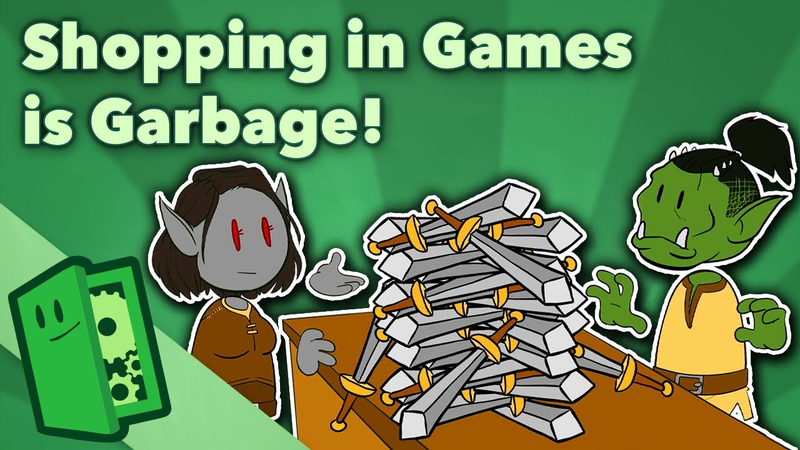
Shopping in Games is Garbage but it doesn't have to be! - Video Game Design - Extra Credits
Haggling mechanics in video games are currently underdeveloped, often functioning as superficial, zero-sum systems that resemble simple volume sliders rather than engaging gameplay.
- Current game haggling mechanics are largely underdeveloped, functioning as superficial, zero-sum systems that prioritize simple price adjustments over meaningful player agency.
- Developers should shift from hard positional bargaining to soft or principled negotiation models to transform store interactions into puzzle-like experiences.
- Titles like Potionomics demonstrate that integrating negotiation cards and social systems creates a multi-dimensional experience where NPC relationship history directly influences transaction outcomes.


User Motivations to Hit Your Target Audience
Effective mobile user acquisition requires a strategic shift from basic performance metrics toward a deep alignment between ad creative and core player psychology.
- Only 4% of casual game advertisements currently leverage the twelve primary psychological drivers necessary for effective user engagement.
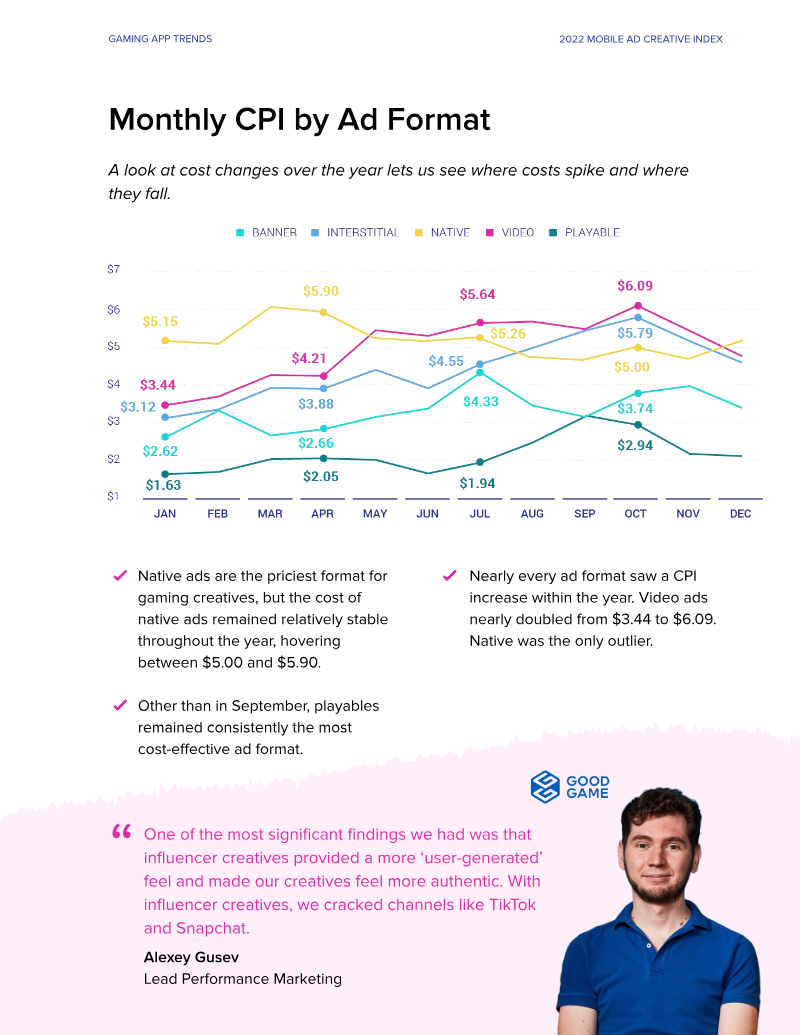
- While playable ads offer the lowest cost-per-install, banner ads consistently deliver the highest return on ad spend across the gaming, e-commerce, entertainment, and finance sectors.
- Casual gaming acquisition strategies should prioritize highlighting player milestones, whereas midcore titles require creative content focused on excitement and thrill.
Consumer Insights: Games and Esports 2022
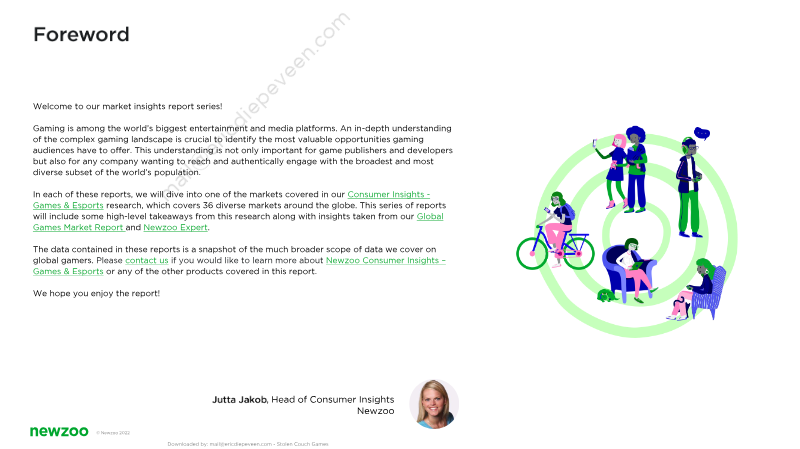
The Consumer Insights: Games and Esports 2022 report provides a comprehensive analysis of global gaming behaviors, motivations, and market engagement.
- The research is based on a global dataset of over 75,000 consumers across 36 international markets, covering North America, Europe, Latin America, the Middle East, and the Asia-Pacific region.
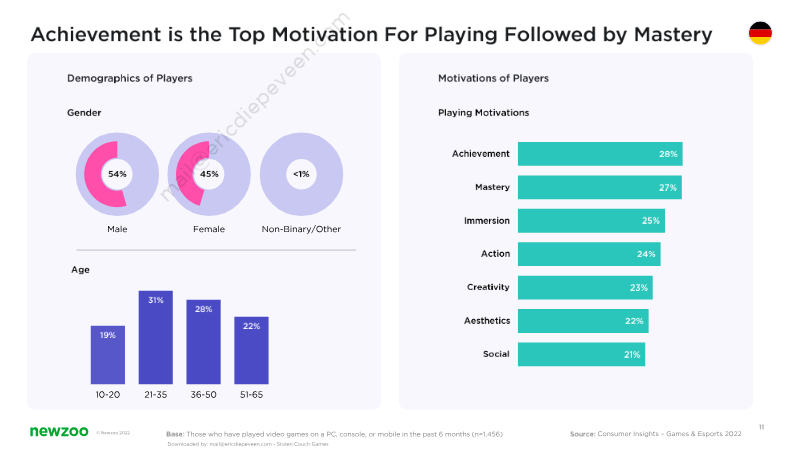
- Consumer spending is primarily driven by three factors: price sensitivity, the desire for exclusive content, and the need for social connectivity.
- Gaming engagement is categorized into distinct personas, with 'Time Fillers' and 'Mainstream Gamers' identified as the most prevalent segments.