Monetization reports and market data
Documents
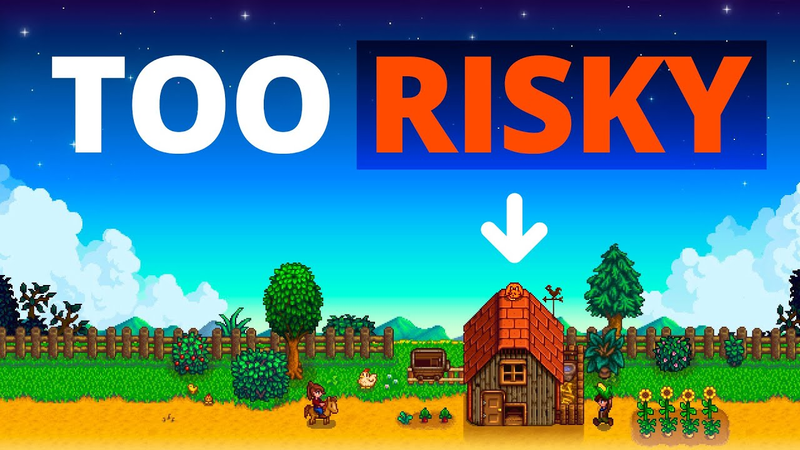
Indie Game Dev Is TOO RISKY
Indie game development is inherently high-risk, functioning as a form of entrepreneurship that requires a calculated approach to time and resource management.
- Indie game development should be treated as high-risk entrepreneurship where time is a finite financial asset that requires careful management.
- Developers must avoid over-investing in a single project by diversifying their professional efforts into multiple income streams, such as educational content, tool creation, or community building.
- To mitigate the risk of catastrophic failure, developers should adopt an iterative approach by releasing small, free projects to build technical proficiency and an audience before attempting large commercial launches.

Panel: What Techniques Can we Apply from Hypercasual Games & Bring into Living Games?
The gaming industry is currently witnessing a strategic convergence between hypercasual titles and live service models, driven by a mutual desire to optimize player retention and monetization.
- The mobile gaming industry is converging toward a hybrid model that merges the frictionless, low-barrier entry of hypercasual design with the long-term retention and monetization structures of live service ecosystems.
- Hypercasual developers are increasingly integrating live-ops and in-app purchase (IAP) frameworks to extend the traditionally short lifespans of their titles.
- Live service developers are adopting hypercasual design principles to simplify complex social and gameplay systems, making them more intuitive for broader mobile audiences.

Panel: Indie to Empire: Growing Your Game Through New Monetisation Models
The modern mobile gaming landscape has transitioned from traditional premium pricing toward sophisticated hybrid monetization models.
- To achieve statistical significance in casual gaming monetization, developers should reach a minimum threshold of 5,000 daily active users and 10,000 ad requests.
- Modern mobile monetization relies on hybrid models that combine in-app purchases, subscriptions, and diverse ad formats to lower entry barriers while maximizing average revenue per user.
- Monetization must be integrated into core game design from the earliest stages of development rather than treated as an afterthought.
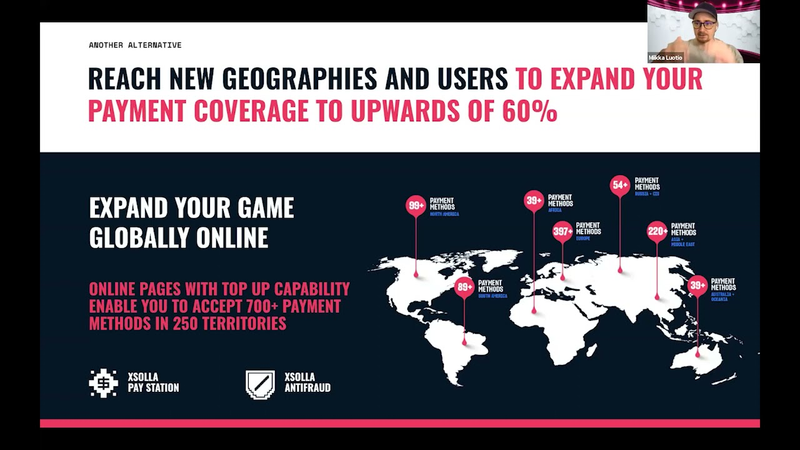
The Change in Mobile Landscape: What Does it Mean for You as a Developer?
The mobile gaming industry is currently undergoing a significant shift as traditional platform-controlled payment ecosystems, often referred to as walled gardens, face increasing pressure to open.
- Developers can increase revenue by over 40% by implementing web-based storefronts that bypass traditional platform fees and offer a broader range of payment options.
- Standard mobile platform payment ecosystems often fail to capture revenue in emerging markets like Latin America, India, Russia, and South Korea due to a lack of support for local payment methods and bank installments.
- Web-based storefronts allow developers to cultivate direct relationships with high-value players by offering exclusive bundles and promotions that are not available within the standard in-game store.

Panel: The Truth About Ads: Is Disruption, a Requirement or an Opportunity for Game Makers?
The mobile gaming industry is undergoing a fundamental transformation as privacy regulations, most notably iOS 14, dismantle traditional identity-based targeting.
- The mobile gaming industry is shifting from deterministic, identity-based targeting to probabilistic, contextual modeling due to privacy regulations like iOS 14.
- To maintain revenue, developers are prioritizing non-intrusive, brand-focused advertising and verifiable auction processes over traditional tracking methods.
- User acquisition strategies are diversifying beyond standard mobile ads to include influencer marketing, cross-platform campaigns, and traditional media channels.

Panel: How Have New Ad Formats Changed Mobile Gaming?
The mobile gaming industry is undergoing a fundamental transition toward non-intrusive advertising formats designed to monetize user bases without compromising the integrity of the gameplay experience.
- The mobile gaming industry is shifting toward non-intrusive ad formats like blended billboards, spatial 3D ads, and rewarded audio to replace disruptive full-screen interstitials.
- Rewarded audio ads have achieved a 90 percent user acceptance rate, demonstrating that seamless integration significantly improves player retention compared to traditional formats.
- Developers are increasingly adopting hybrid monetization models that combine native ad inventory with in-app purchases to balance profitability with long-term player engagement.
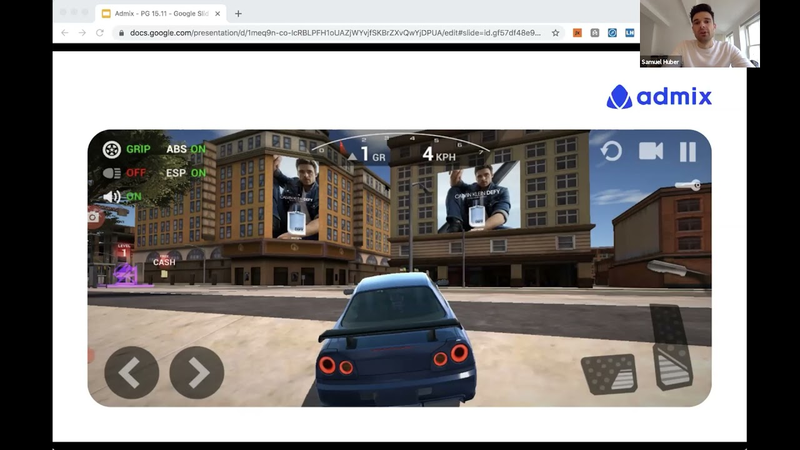
Superstar Session: Real Estate for Game Publishers: How to Monetise Your Virtual World
The monetization of virtual environments is shifting toward a real estate model, where game developers treat digital spaces as commercial property to host native, non-intrusive advertisements.
- Brand spending in the gaming industry currently lags 50 to 70 times behind social media platforms, representing a significant untapped revenue opportunity for publishers.
- Game developers are shifting toward a real estate monetization model that treats virtual spaces as premium, brand-safe commercial property for native advertising.
- Integration is facilitated through no-code plugins for Unity and Unreal engines, allowing developers to monetize high-traffic areas without relying on disruptive, interruptive ad formats.

How the Hell Do You Make Money!?
Sustainable game development relies on a diversified financial strategy that moves beyond traditional direct-to-consumer sales.
- Sustainable game development requires a diversified financial strategy that combines non-recoupable grants, equity financing, and work-for-hire contracts to move beyond reliance on direct-to-consumer sales.
- Developers in Canada, Europe, and Australia hold a competitive advantage due to more robust government and arts-based funding systems compared to those in the United States.
- Deals with subscription services like Game Pass or PlayStation Plus provide essential cash advances for future projects, though studios must account for long payment cycles and the logistical costs of multi-platform porting.
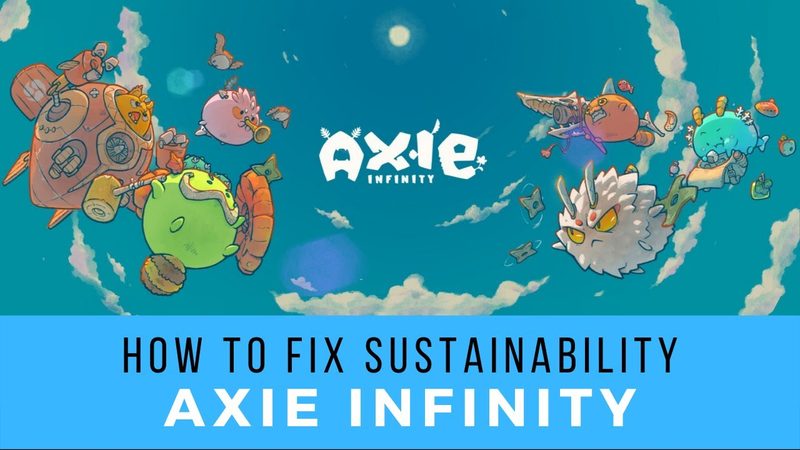
How To Fix Axie Infinity | Sustainability & Future of Sky Mavis
Axie Infinity serves as a critical case study for the challenges inherent in early play-to-earn blockchain gaming models.
- Axie Infinity’s initial economic model failed due to a reliance on continuous user growth to fund token payouts, which created unsustainable inflation and a lack of sufficient asset sinks.
- Sky Mavis is pivoting from a single-game economy to a platform-based ecosystem by leveraging the Ronin sidechain and Mavis Hub to capture transaction fees and foster network effects.
- The developer is transitioning from a 'play-to-earn' model to a 'play-and-earn' framework that prioritizes gameplay quality and user-generated content over speculative financial incentives.

PM Planning & Prioritization in Game Development (Philosophy Friday #7)
Product management in modern game development centers on the necessity of a rigorous, thesis-driven strategy to ensure market viability and operational success.
- Product planning should begin with a clear, research-backed thesis that identifies a latent human desire, such as the need for progress or social connection, to align marketing and development teams.
- Opportunity sizing for new concepts should use top-down analysis by comparing the proposed game to market competitors using data from tools like Sensor Tower or App Annie to estimate potential organic volume and revenue.
- Sensitivity analysis using Excel data tables is an underutilized but powerful tool for product managers to resolve team debates regarding key performance assumptions and project viability.

Design by the Numbers: Using Data for Good
This analysis explores the integration of data analytics into mobile game design, using the development of the RPG battler Looney Tunes: World of Mayhem as a primary case study.
- Designers should treat data as a core creative tool to identify friction points and optimize engagement loops, rather than delegating analytics exclusively to product managers.
- Comprehensive data logging of every player interaction—including taps, navigation, and resource spending—is essential to move beyond intuition and inform game balance decisions.
- Tracking store impressions allowed the developers of Looney Tunes: World of Mayhem to implement a three-hour free prize, which directly resulted in increased conversion rates.

Deconstructing Pokemon Unite with Hadrian Semroud and Javier Barnes
Pokémon Unite serves as a case study in the challenges of balancing accessibility with long-term engagement within the mobile MOBA genre.
- Pokémon Unite achieved 30 million downloads during its launch week but has struggled to maintain long-term player momentum in Western markets.
- The game’s design philosophy prioritizes accessibility by removing traditional MOBA complexities like minion management, which ultimately undermines the strategic depth required for long-term retention.
- A singular late-game objective often renders early-game strategic efforts irrelevant, leading to a lack of competitive variety.