Monetization reports and market data
Documents
Robbie Ferguson: How to Design and Scale Blockchain-Powered Game Economies - The Metacast by Naavik
The integration of blockchain technology into gaming serves as a foundational shift toward true digital ownership and decentralized economic agency.
- The gaming industry is projected to reach 100 million blockchain-integrated players within the next two years as content quality shifts toward AA-standard experiences.
- Sustainable blockchain economies must prioritize traditional gaming metrics like player retention and acquisition costs over speculative, inflationary play-to-earn models.
- Zero-Knowledge roll-up architecture is the technical standard for scaling game economies, as it provides Ethereum-level security while eliminating high transaction costs and centralized friction.
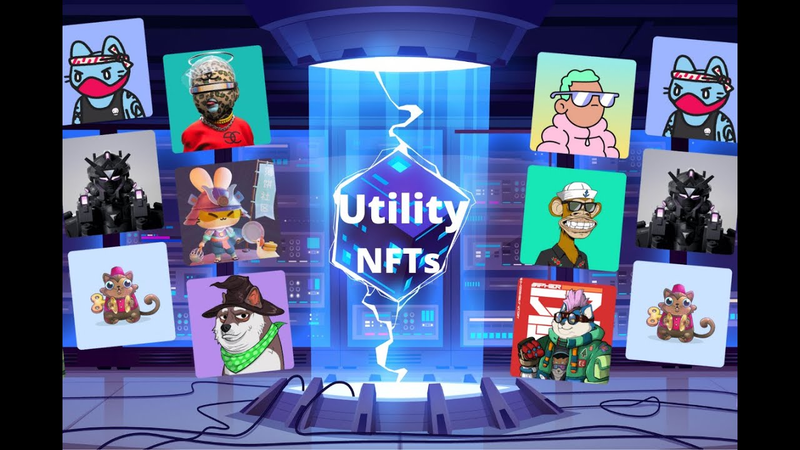
Tokenomics #8 Premium Utility NFTs and How to Build a Tokenized Community
Tokenized communities represent a fundamental shift in digital business models, moving away from traditional ad-supported revenue toward high-value membership structures.
- Tokenized communities shift business models from ad-supported revenue to high-value membership structures, as demonstrated by Moonbirds generating hundreds of millions of dollars through NFT access passes.
- Utility-driven NFT frameworks—including gated content, exclusive events, and governance rights—leverage behavioral economics to foster deeper user-developer engagement than traditional subscription models.
- Large-scale NFT implementations like the Yuga Labs Otherside land sale reveal critical infrastructure limitations, including network congestion, high transaction fees, and poor user experiences.
Treasure DAO - Building a Decentralized Nintendo - The Metacast by Naavik
Treasure DAO functions as a decentralized gaming ecosystem designed to operate as a community-governed equivalent to a traditional console manufacturer.
- Treasure DAO functions as a decentralized gaming ecosystem that operates as a community-governed console manufacturer, using the $MAGIC token as a universal currency to connect disparate metaverses and NFT assets.
- The platform employs a 'cartridge' model where individual metaverses act as modular components, mitigating the risk of isolated project failure and creating an interoperable economic layer.
- To support AAA-quality gaming, the ecosystem is transitioning to high-throughput architectures like Cosmos to achieve near-zero gas costs for high-transaction demands.

The Future of Axie Infinity with Philip La, Game Lead at Sky Mavis - The Metacast by Naavik
The future of Axie Infinity centers on a strategic pivot from speculative, earnings-driven mechanics toward a sustainable, fun-first gaming experience.
- Axie Infinity is pivoting from speculative, earnings-driven mechanics to a fun-first model that prioritizes high-quality gameplay, improved graphics, and intuitive progression.
- The platform has adopted a freemium model to lower barriers to entry, allowing players to access the 3v3 battle loop and PvE content without an initial financial investment.
- Economic stability is being managed through a balanced system of token sinks and sources designed to discourage pure extraction and promote long-term sustainability.

two & a half gamers session #14 - How to read Ad mon data for beginners? ATT & player segmentation
The mobile gaming industry is currently navigating a period of significant structural shifts, characterized by aggressive consolidation, shifting investment priorities, and the maturation of post-privacy monetization strategies.
- Post-privacy revenue success is increasingly driven by internal player segmentation and in-game progression depth rather than reliance on external tracking data.
- Apple’s App Tracking Transparency (ATT) opt-in rates have stabilized at approximately 40–42% in key Western markets, indicating a predictable environment for post-privacy monetization.
- To maintain bidding efficiency and prevent latency, developers should limit ad placements to fewer than 43 per geography.

STEPN: Move-to-Earn or Ponzinomics? - The Metacast by Naavik
Ubisoft currently faces significant instability, characterized by a halved market capitalization, persistent project delays, and internal cultural challenges.
- Move-to-earn models like STEPN currently function as speculative loops that rely on a continuous influx of new capital to sustain user rewards, mirroring the volatility of earlier play-to-earn systems.
- Ubisoft is a prime target for private equity acquisition due to a halved market capitalization, persistent project delays, and a workforce size that is disproportionately large relative to its recent performance.
- Long-term viability for move-to-earn projects requires a shift from speculative market-driven valuations to tangible utility, such as partnerships with health insurance providers or sustainable gameplay loops.

How a gaming executive Chris Heatherly red-pilled on crypto and joined Recur
The integration of blockchain technology into the gaming industry represents a fundamental shift from traditional free-to-play models toward sustainable, player-driven economies.
- The gaming industry is shifting from traditional free-to-play models toward player-driven economies that prioritize secondary market activity and long-term asset utility.
- To achieve mainstream adoption, platforms are removing technical friction by integrating fiat payment options and automated wallet creation, similar to the strategy employed by Epic Games.
- Recur is developing internal branded experiences for partners including the NCAA, Paramount, and Sanrio to refine infrastructure before scaling these tools for third-party developers.
Is Transmedia the Next Mainstream Game Dev Strategy? - The Metacast by Naavik
Transmedia storytelling has emerged as a critical strategy for game studios aiming to build evergreen intellectual property and mitigate the escalating costs of user acquisition.
- Transmedia storytelling is being adopted as a primary strategy to build evergreen intellectual property and reduce reliance on expensive user acquisition by fostering deeper emotional engagement through film and television adaptations like Arcane.
- Developers are increasingly integrating opt-in, rewarded video advertising as a sustainable revenue stream that mimics mobile monetization models without degrading the core user experience.
- Specialized fintech providers are becoming critical infrastructure for developers by navigating app store regulatory challenges and enabling localized payment solutions for unbanked populations in emerging markets like Southeast Asia, India, and Latin America.

State of Play-to-Earn: Finland
The play-to-earn business model represents a transformative shift in the gaming industry, leveraging blockchain technology and non-fungible tokens to facilitate decentralized ownership and new revenue streams.
- The long-term viability of play-to-earn models depends on shifting focus from speculative financial mechanics to high-quality artistic content and engaging gameplay.
- Developers are mitigating environmental and operational concerns by adopting greener consensus mechanisms and layer-two blockchain solutions.
- The sector faces significant regulatory risks, including potential reclassification as gambling and strict compliance requirements for anti-money laundering and data protection.

Web3 Opportunities for Game Devs
Web3 gaming represents a fundamental shift in digital entertainment, moving away from traditional free-to-play models toward systems defined by true asset ownership and secondary-market economies.
- Web3 gaming is shifting from speculative tokenomics toward sustainable game design that prioritizes high-quality player experiences over financial incentives.
- Blockchain integration enables true asset ownership, allowing developers to generate perpetual royalties and facilitate secondary-market economies for digital goods.
- Asset interoperability and composability allow developers to leverage existing communities and digital assets across multiple titles to build interconnected ecosystems.

How To Land A Deal With A Game Publisher!
Securing a publishing deal in the independent game industry requires a strategic focus on marketability and a deep, nuanced understanding of a specific target audience.
- Publishers prioritize projects that identify and serve a specific, underserved niche rather than attempting to replicate major studio flagship products.
- Developers must demonstrate proven market demand by targeting communities centered around specific gameplay styles, such as speedrunning or niche RPG combat.
- A successful pitch requires a game design document that explicitly balances honoring established genre inspirations with unique mechanical twists that differentiate the project.
The Rise of the Indian Gaming Market
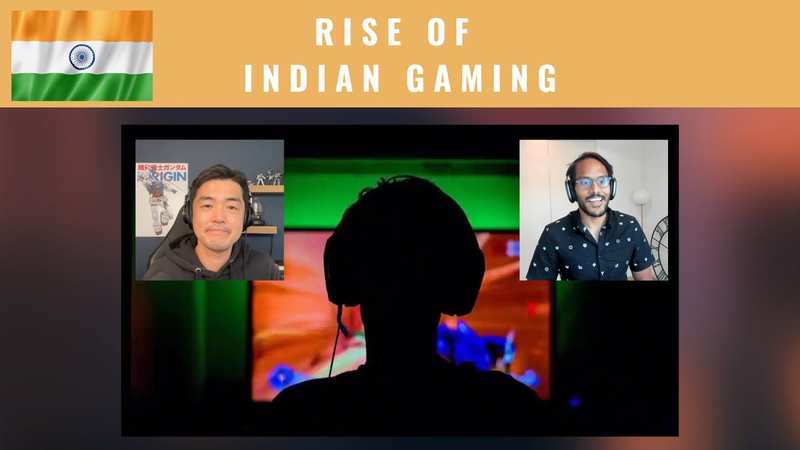
The Indian gaming market has undergone a profound transformation, evolving from a fragmented, arcade-centric landscape into a mobile-first powerhouse.
- The Indian gaming market is projected to grow from a $1.8 billion valuation to $5 billion by 2025, with the player base expanding from 500 million to 700 million.
- The industry is shifting from a high-volume, low-effort development model toward a focus on technical mastery and the production of complex, high-quality content.
- Investment is diversifying as capital flows from global gaming funds, generalist venture capital, and strategic players like Krafton into the local ecosystem.