Monetization reports and market data
Documents
Shaping the Metaverse Brick by LEGO Brick - The Metacast by Naavik
The gaming industry is currently navigating a period of significant structural transition, characterized by strategic experimentation with emerging technologies and a shift toward massive, consolidated ecosystems.
- Epic Games is partnering with the LEGO Group to build a child-safe metaverse environment, directly challenging the market dominance of Roblox and Minecraft by leveraging high brand trust.
- Large publishers are utilizing underperforming titles as low-stakes R&D to test blockchain and digital ownership frameworks, waiting for established best practices before committing to web3 at scale.
- The industry is shifting away from high-fee platform models toward developer-friendly policies and lower distribution costs, positioning this approach as a competitive alternative to Meta’s ecosystem strategy.
Web3 Gaming Business Models & The Future of Virtual Economies - The Metacast by Naavik
Web3 gaming is undergoing a fundamental transformation, shifting from traditional entertainment products toward the creation of complex, player-owned digital economies.
- Web3 gaming studios are transitioning from traditional entertainment providers to digital nation-states that generate revenue primarily through marketplace trading fees, royalties, and ecosystem-wide value accrual.
- The industry is shifting away from simplistic play-to-earn mechanics toward labor-based virtual economies that utilize friction and specialized roles to drive long-term player retention and community formation.
- Blockchain transparency enables aggressive user acquisition strategies, allowing developers to identify and target competitors' player bases with specific incentives for asset migration.

Inside Overwolf with Uri Marchand, co-founder and CEO
Overwolf serves as a foundational infrastructure provider for the gaming industry, dedicated to professionalizing the creator economy by empowering developers of mods, apps, and private servers.
- Overwolf operates as an infrastructure provider for the gaming industry, supporting a network of 10,000 creators and reaching 30 million monthly active users.
- The company utilizes a revenue-sharing model that distributes 70 percent of generated earnings directly back to the creators.
- The acquisition of Tebex allows Overwolf to manage complex financial operations for private game servers, including payment processing and tax compliance.
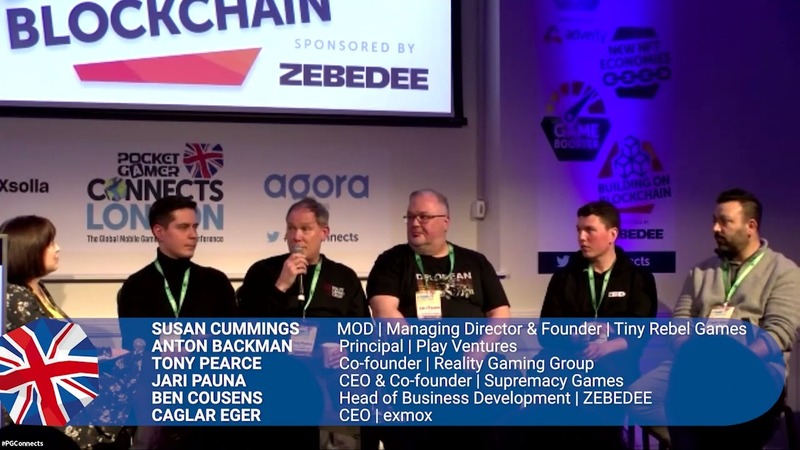
Panel: The Evolution of Game Economies: What is the Next Stage in the Progression?
Game economies are currently undergoing a critical transition, moving away from the volatile, speculative play-to-earn models that defined early blockchain gaming toward a more sustainable framework centered on high-quality, gameplay-first experiences.
- Game economies are shifting from speculative play-to-earn models toward sustainable, gameplay-first experiences where blockchain serves as invisible infrastructure rather than a primary marketing hook.
- Developers are adopting free-to-play best practices, such as custodial wallets and seamless credit card integration, to eliminate the friction that previously hindered mainstream adoption.
- The industry is moving toward bi-directional value transfer, prioritizing legitimate asset ownership and trading capabilities over predatory tokenomics.
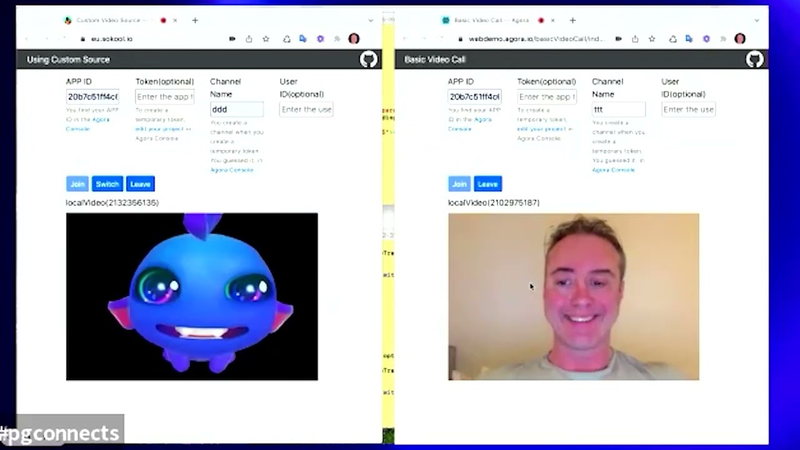
Increase Engagement, Stickiness & Revenue Opportunities with Real-Time Voice & Video
The integration of real-time voice and video into 3D gaming environments serves as a primary driver for increased user engagement, platform stickiness, and revenue growth.
- Integrating real-time voice and video into 3D environments increases user engagement and platform stickiness by enabling features like spatial audio and photorealistic human video streaming.
- The infrastructure supports over one million concurrent users per session and currently handles 50 billion minutes of traffic per month across hundreds of mobile applications.
- Latency and packet loss are minimized by using AI-driven routing through a global network of selective forwarding unit routers, bypassing the inefficiencies of public internet paths.

Garena Free Fire Deconstruction - The Metacast by Naavik
Garena Free Fire serves as a primary case study for the efficacy of mobile-first design in the global gaming market.
- Garena Free Fire achieved over one billion downloads by prioritizing mobile-first design, specifically optimizing performance and mechanics for low-end Android devices to capture underserved global markets.
- The game’s monetization strategy uniquely combines cosmetic items with temporary power-ups, successfully balancing revenue generation with player fairness to maintain high lifetime value.
- Garena Free Fire serves as a critical financial pillar for Sea Limited, providing the capital necessary to diversify into broader digital ecosystems such as e-commerce.

Data.ai and the mobile spend with Karl Knights from App Annie
The mobile app economy has experienced a permanent shift in consumer behavior following the onset of the pandemic, characterized by sustained growth in both usage and spending.
- Mobile gaming has established a new baseline of high engagement, with weekly downloads consistently exceeding one billion and consumer spending surpassing $1.7 billion per week as of mid-2021.
- Daily mobile device usage has reached an average of 4.8 hours per user, representing one-third of total waking hours and signaling a permanent shift in consumer behavior.
- Non-gaming sectors are seeing significant financial growth, with social apps projected to reach $9 billion and entertainment apps $12 billion in spending by the end of 2022.
PlayStation Subscriptions: The Good, the Bad and the Strategy - The Metacast by Naavik
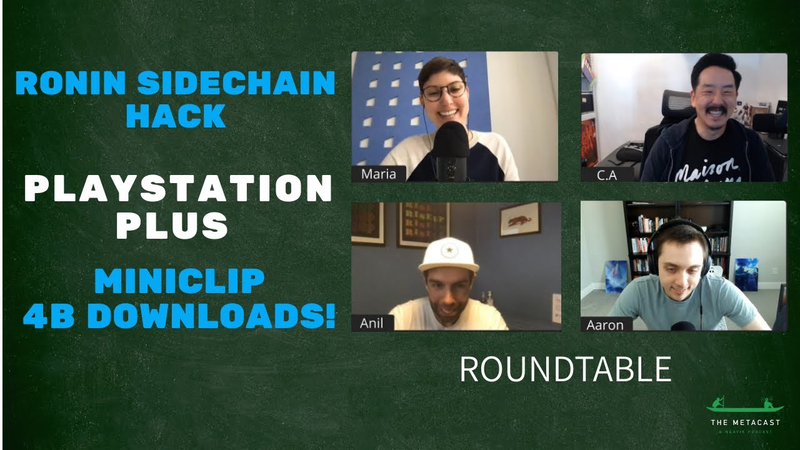
The Web3 gaming sector faces a critical inflection point following the $620 million Ronin network hack.
- The $620 million Ronin network hack highlights a critical need for Web3 developers to prioritize decentralized infrastructure and rigorous security audits over rapid development cycles.
- Sony’s PlayStation Plus strategy focuses on user retention through a curated library of legacy content, deliberately avoiding day-one access to new exclusives to protect the traditional console model.
- Microsoft’s Game Pass strategy pursues a platform-agnostic, Netflix-style model that prioritizes cross-device accessibility and immediate release value over traditional console exclusivity.
True data insight on mobile trends with Taha Karsli from MobileAction
Mobile growth and user acquisition strategies have evolved significantly in response to increased consumer reliance on mobile applications and the growing complexity of digital advertising.
- Prioritize intent-based advertising platforms like Apple Search Ads and Google Universal App Campaigns, as they capture users actively searching for solutions and consistently deliver higher conversion rates than traditional ad networks.
- Maintain compliance with evolving privacy regulations by utilizing proprietary intelligence tools that aggregate public-facing ad data rather than relying on third-party data providers.
- Shift mobile growth strategy from tracking raw metrics to extracting actionable insights that facilitate rapid iteration and experimentation.
Crypto Corner: OpenSea, BlockChain Gaming Monetization & Web3 at GDC - The Metacast by Naavik
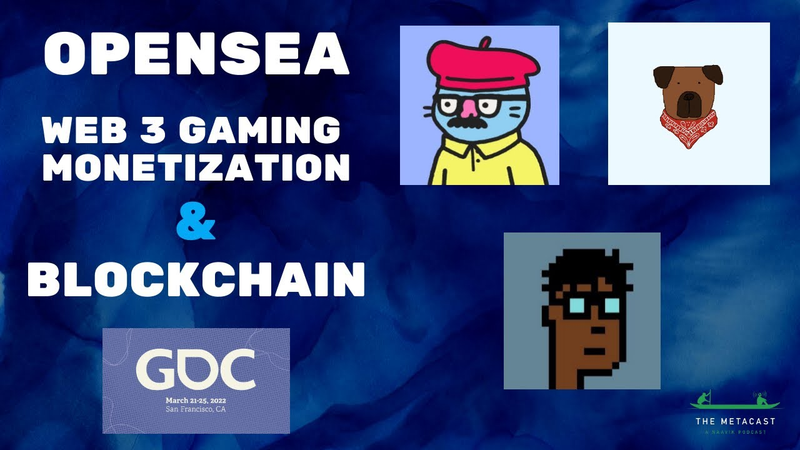
Gaming represents a critical vertical for the digital asset ecosystem, currently accounting for 30% to 40% of total NFT volume on major secondary market platforms like OpenSea.
- Gaming currently drives 30% to 40% of total NFT volume on major secondary market platforms like OpenSea.
- Long-term industry stability requires integrating traditional live-service models with player-driven secondary markets to capture value from both primary sales and peer-to-peer commerce.
- Mass adoption of blockchain gaming depends on developing high-quality gameplay loops that successfully bridge the gap between traditional gamers and investor-focused users.

Tokenomics #5 Line Goes Up - What Is The Problem With NFTs Anyways?
The crypto-gaming sector is currently navigating a period of rapid institutional growth and intense public scrutiny.
- The crypto-gaming sector is scaling infrastructure through low-fee blockchain layers to support micro-transactions, evidenced by a $200 million funding round for Immutable.
- The industry is shifting toward a model where tokens act as programmable, internet-native assets that replace traditional centralized marketing with direct community rewards.
- Public and institutional scrutiny is increasing due to speculative excess, scams, and the inconsistent performance of high-profile pre-sales like Champions Ascension.
Panel: What is Giving Hypercasual its Longevity? The Recipe for a Successful Game
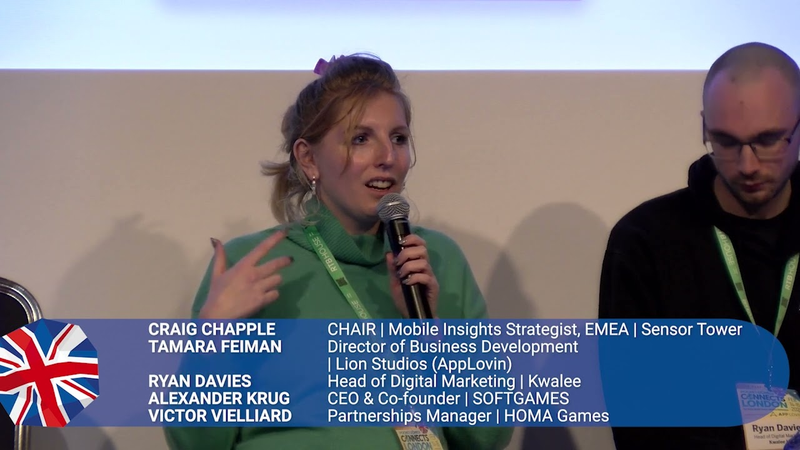
The hypercasual gaming sector has demonstrated remarkable resilience, maintaining its market position despite significant headwinds such as the deprecation of IDFA and rising acquisition costs.
- The hypercasual market has shifted from a primary focus on CPI (Cost Per Install) to a more holistic analysis of retention, playtime, and LTV (Lifetime Value) to justify higher acquisition costs.
- The deprecation of IDFA on iOS forced publishers to move beyond simple CPI-based decision-making and adopt more rigorous data-driven development cycles.
- Successful hypercasual games now require deeper engagement mechanics, such as clear progression paths and session planning, rather than the simplistic, short-level designs of the past.